Artwork
Cassone
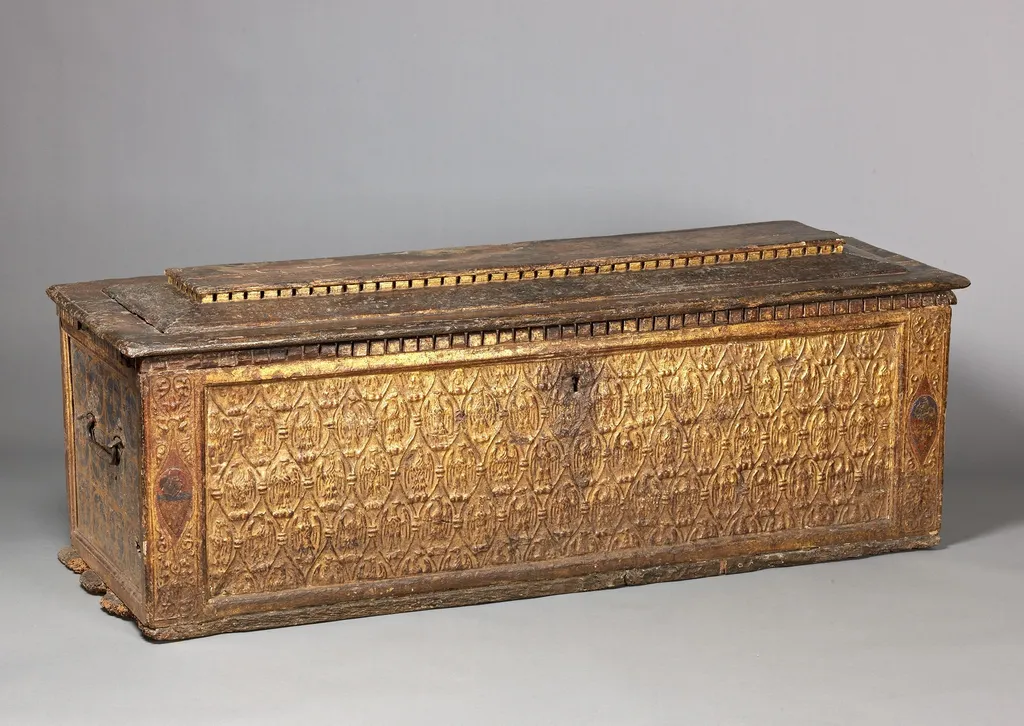
Cassone is a paint painting. It dates from 1425 and is held in the collection of the Metropolitan Museum of Art.
About this work
Overview
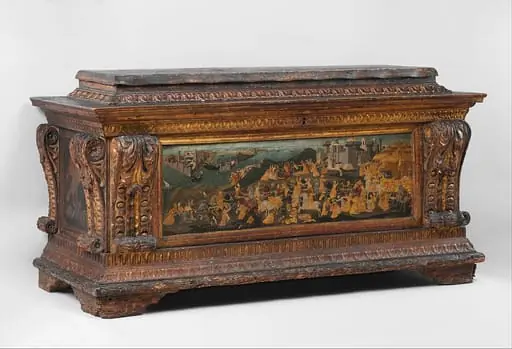
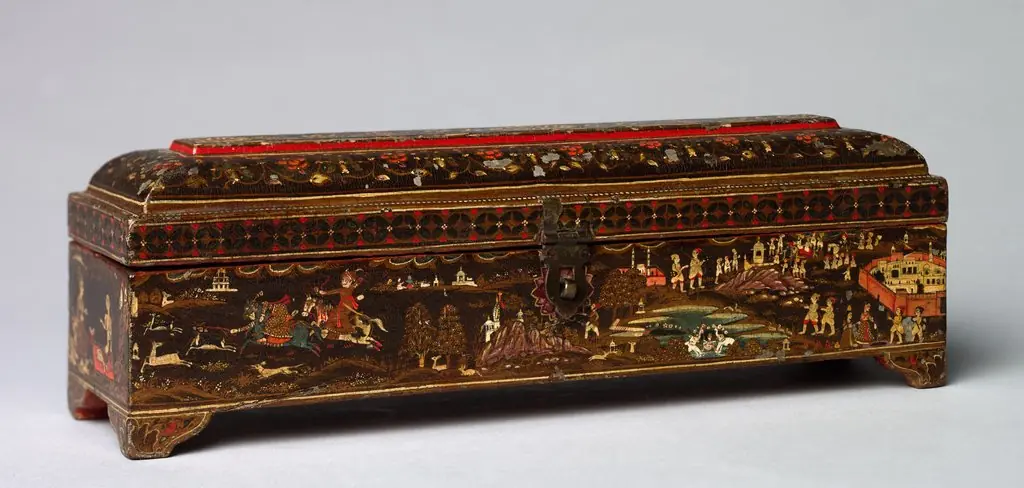
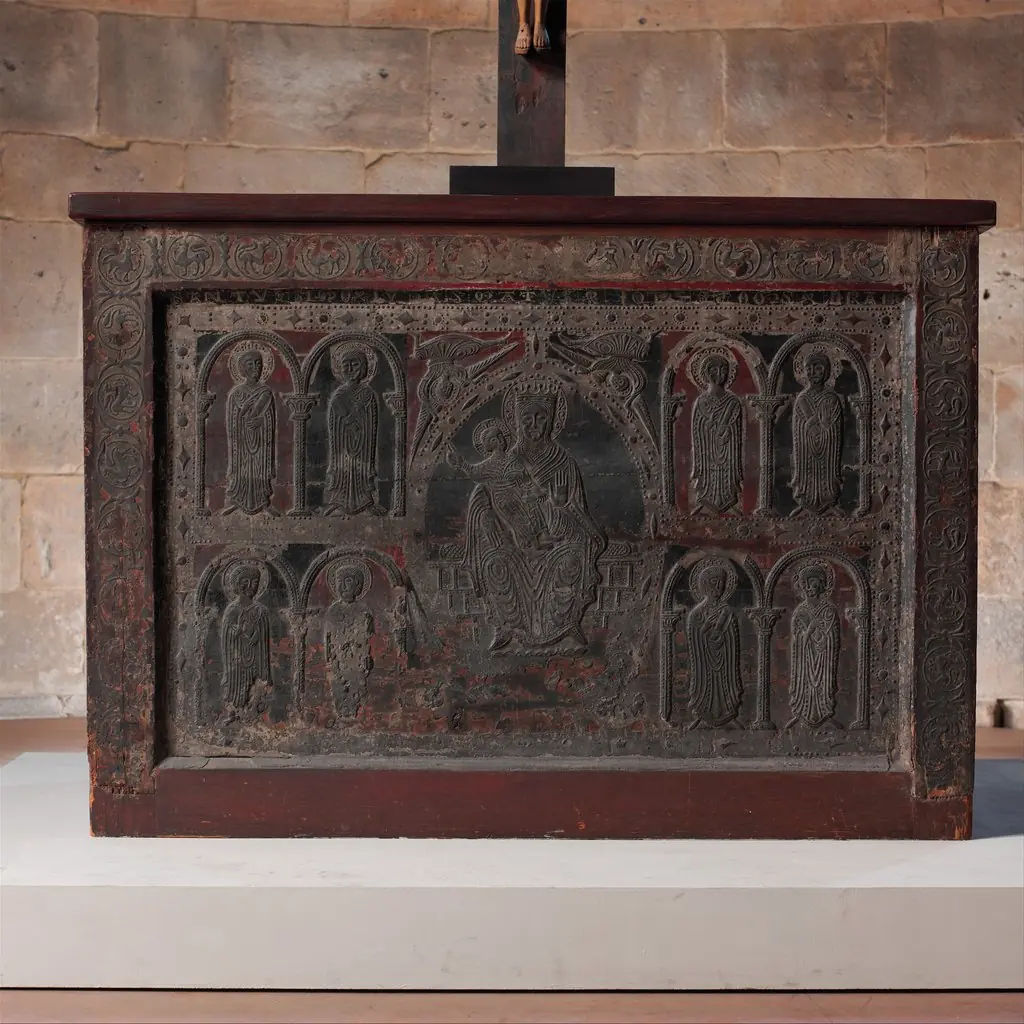
The object is a wooden cassone, a chest traditionally used for storing garments or personal items. Its surface is predominantly dark brown, overlaid with painted and carved ornamentation, and accented with gold leaf that highlights the intricate decorative scheme.
Subject & Meaning
The decorative program features entwining vines, diminutive figurative motifs, and recurring geometric forms, suggesting a celebration of abundance and craftsmanship. The gold leaf applied to select areas underscores the object's status as a display piece as well as a functional container.
Technique & Style
Carved relief panels are painted and then gilded, a common practice in late medieval and Renaissance furniture. The use of evenly spaced rectangular panels along the top edge creates a rhythmic border, while the worn patina and areas of flaked paint reveal the piece’s age and continued handling.
History & Provenance
Although the precise origin is not recorded, the cassone’s materials and decorative motifs align with European traditions of the 14th–16th centuries, when such chests were commissioned by affluent households. The presence of gold leaf indicates the patron’s wealth and the artisan’s skill.
Context
Cassoni were often part of a marriage dowry, serving both practical storage and symbolic display of familial prosperity. Their elaborate surfaces reflected contemporary tastes for richly ornamented domestic furnishings.
Legacy
Objects like this chest illustrate the convergence of utility and artistry in historic interior décor, informing modern understandings of social customs and material culture in pre‑modern Europe.
Artist & collection