Artwork
Kedara Ragini
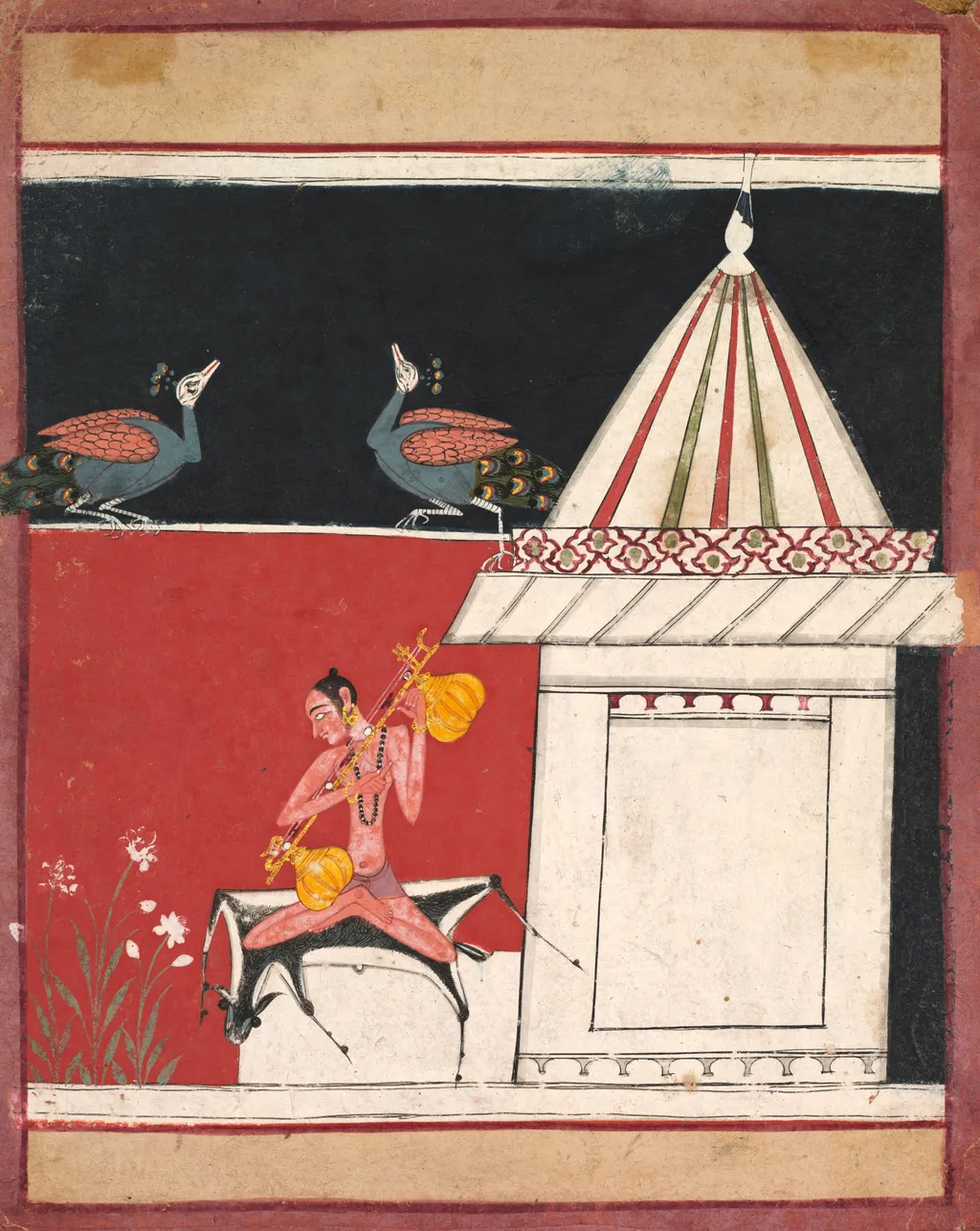
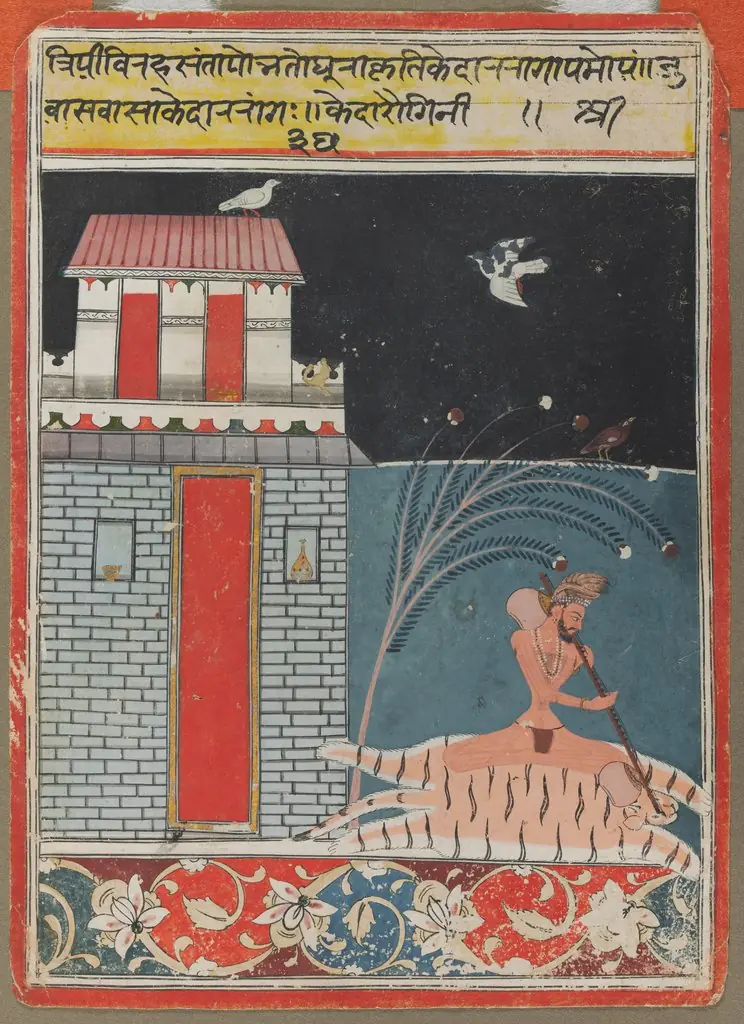
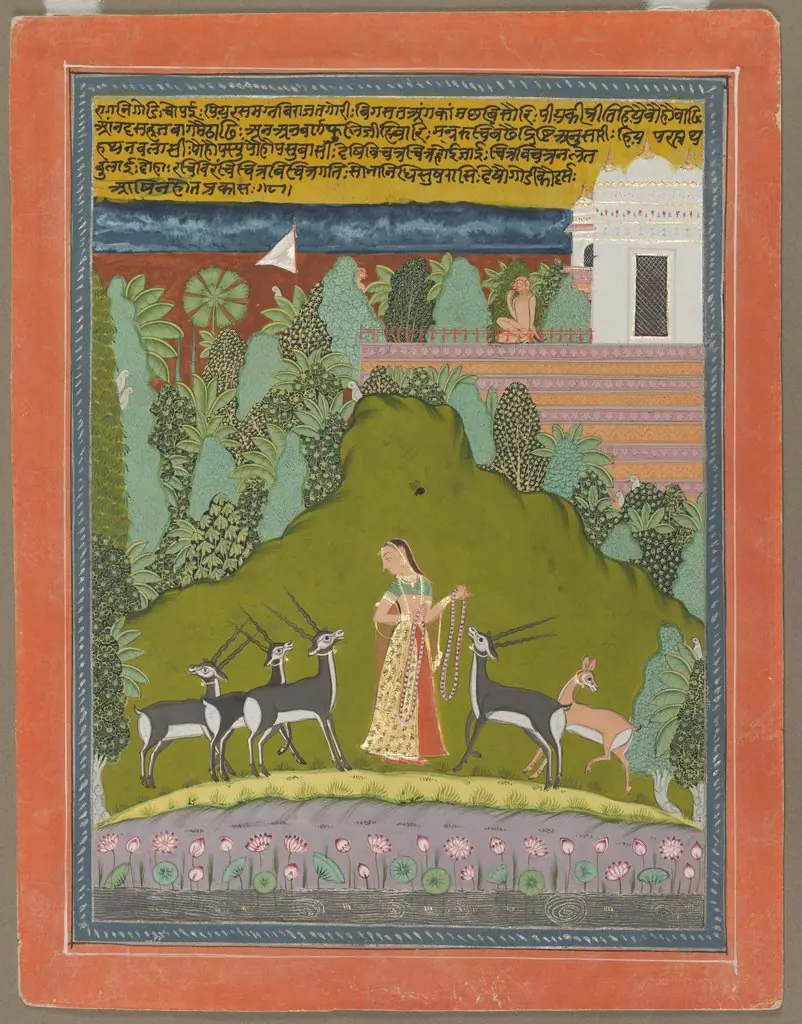
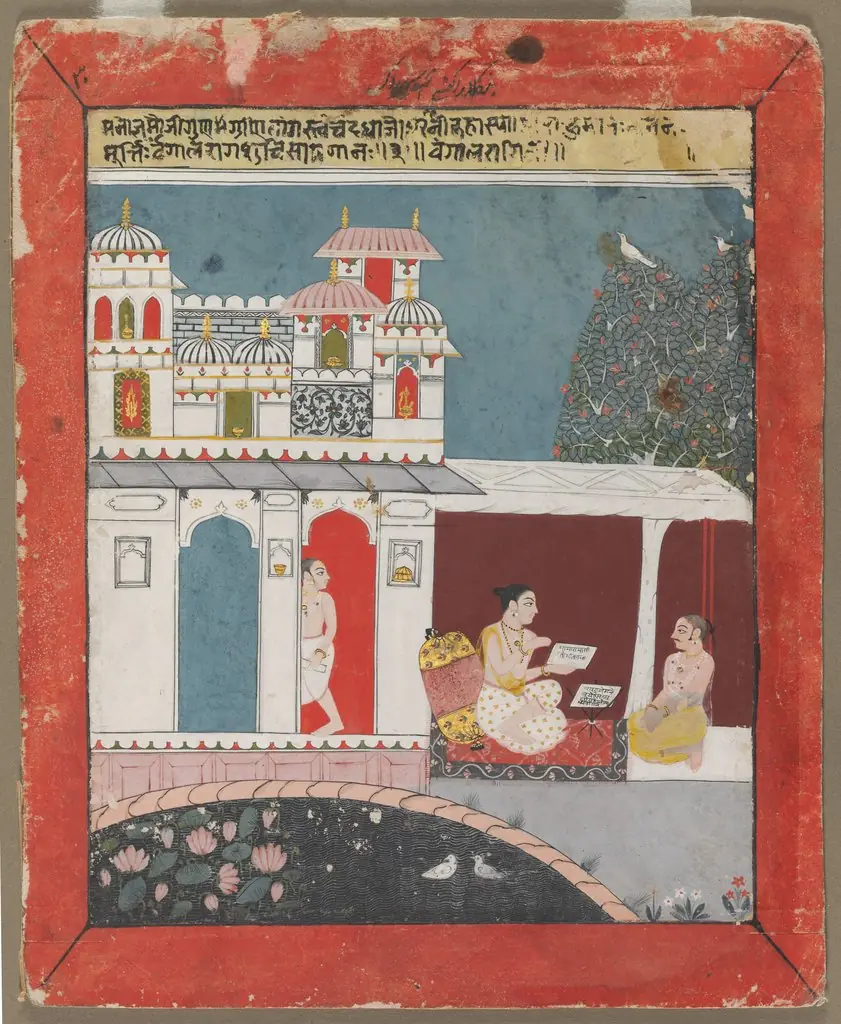
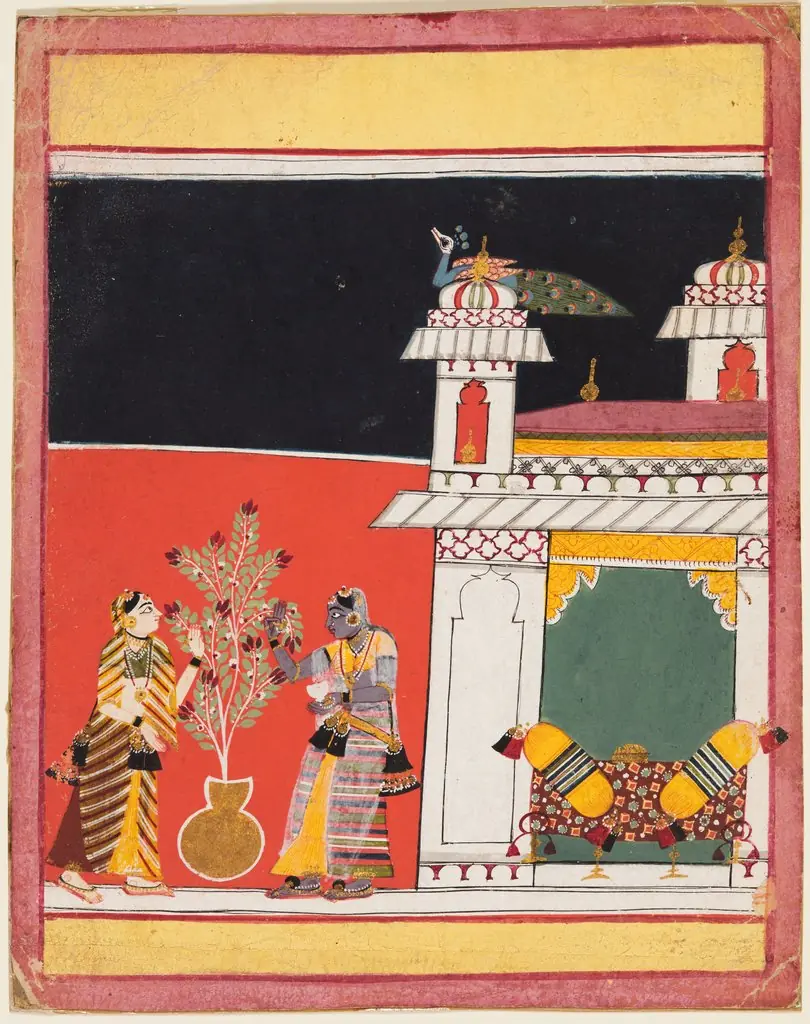
Kedara Ragini is an unspecified painting. It dates from 1650 and is held in the collection of the Cleveland Museum of Art.
About this work
Overview
Kedara Ragini is a painted work that shows a seated figure astride a white bovine, engaged in playing a stringed instrument. The scene is set against a vivid red backdrop, punctuated by white floral motifs on the left. Above the central figures, two peacocks occupy a ledge, facing one another, while a striped white structure with a finial crowns the ledge.
Subject & Meaning
The central figure, adorned with a necklace and holding a yellow object in his lap, appears to be a musician, perhaps evoking a courtly or devotional performance. The white cow serves as a symbolic platform, while the peacocks, traditional symbols of beauty and splendor, introduce a dynamic counterpoint to the stillness of the seated player.
Technique & Style
The composition emphasizes detailed rendering of the instrument and the animal’s flesh in the foreground, contrasting with a more simplified treatment of the background elements. The use of bright, saturated colors—red, white, green, and the peacocks’ blues—creates visual tension, and the patterned ledge adds ornamental complexity typical of decorative painting traditions.
History & Provenance
Kedara Ragini is part of the collection of the Cleveland Museum of Art. The museum acquired the piece as part of its holdings of South Asian paintings, though specific acquisition details and the work’s earlier ownership are not provided in the available record.
Context
The painting reflects a visual language common in Indian courtly art, where musicians, exotic animals, and ornamental architecture are combined to convey cultural refinement. The inclusion of peacocks and floral motifs aligns with aesthetic conventions that celebrate nature’s elegance within a stylized, narrative setting.
Artist & collection