Artwork
Kedara Ragini
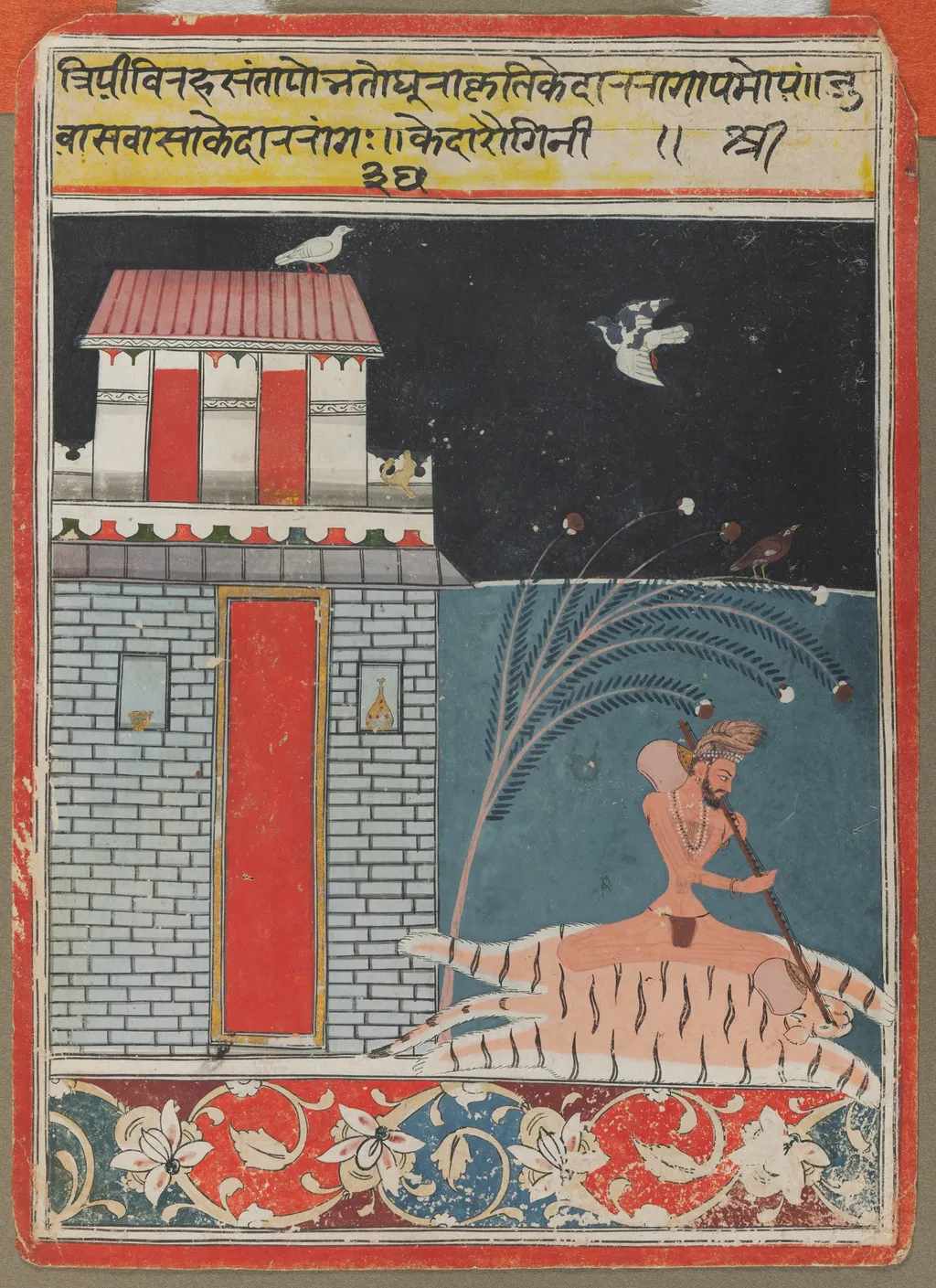
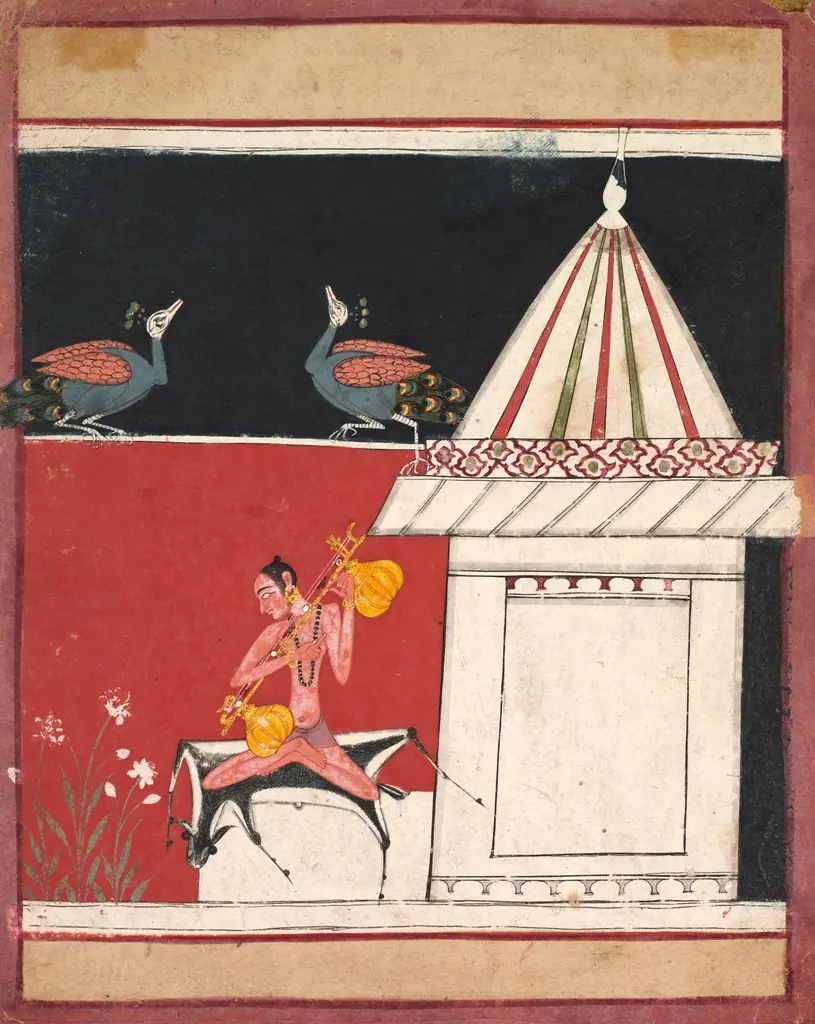
Kedara Ragini is an unspecified painting. It dates from 1665 and is held in the collection of the Cleveland Museum of Art.
About this work
Overview
Kedara Ragini is a painted composition that presents a seated figure on the back of a tiger beneath a tree. The man, adorned with a turban and jewelry, holds a flute while a vivid red building with white trim rises behind him, topped by a pigeon. Darkened sky and flying birds frame the scene, and the lower edge is bordered by stylized flowers and foliage in red, blue and white.
Subject & Meaning
The central figure appears to be a musician or deity, suggested by the flute and regal attire, positioned on a tiger—a symbol of power and protection. The juxtaposition of the bright architecture and the ominous sky may convey a balance between earthly splendor and cosmic forces, while the pigeon on the roof adds a subtle note of peace or messenger.
Technique & Style
The work employs bold, contrasting stripes to render the tiger’s fur, and a flat decorative border of multicolored flora that frames the lower portion. The color palette combines saturated reds, blues, and whites, while the figures are outlined with a clear linear quality, reflecting a stylized, possibly manuscript-inspired aesthetic.
History & Provenance
The painting bears an inscription in an older script across its upper margin, indicating a historical or literary source. Its provenance includes documentation linking it to collections that have been exhibited at institutions such as the Cleveland Museum of Art, though specific acquisition details remain limited.
Context
Kedara Ragini belongs to a tradition of narrative paintings that blend courtly or mythological subjects with ornamental design. The inclusion of architectural elements, animal companions, and musical instruments aligns with visual conventions found in South Asian courtly art, where storytelling and decorative motifs coexist.
Artist & collection