Artwork
The Thames at Richmond, with the Old Royal Palace
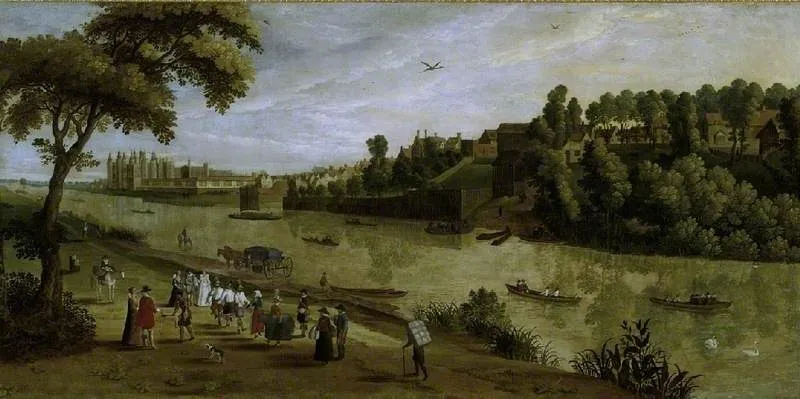
The Thames at Richmond, with the Old Royal Palace is an oil painting by Unknown. It dates from 1625 and is held in the collection of the Fitzwilliam Museum.
About this work
The painting is titled The Thames at Richmond, with the Old Royal Palace.
It was created in 1625.
The artist used oil paint to create this work, which is now held at the Fitzwilliam Museum.
I don't know much about the artist, but the painting's age and location are interesting.
You can learn more about this type of art at the museum: Fitzwilliam Museum.
Overview
The work titled *The Thames at Richmond, with the Old Royal Palace* is an oil painting dated to 1625. Measuring the river’s course beside the historic palace, the canvas captures a specific moment in early‑17th‑century England. It is part of the permanent collection of the Fitzwilliam Museum, where it is displayed among other period landscapes.
Subject & Meaning
The composition presents the River Thames as it winds past Richmond, foregrounding the former royal residence that once served the Tudor and early Stuart monarchs. By juxtaposing water and architecture, the scene reflects contemporary interest in England’s natural scenery and its association with regal authority, offering viewers a visual record of a notable riverside locale.
Technique & Style
Executed in oil on canvas, the painting employs a muted palette typical of early Stuart landscape art. Broad, layered brushstrokes convey atmospheric depth, while finer detailing delineates the palace’s silhouette against the sky. The handling of light suggests a calm, possibly early‑morning setting, emphasizing the tranquil relationship between water and built form.
History & Provenance
Created in 1625, the work entered the Fitzwilliam Museum’s collection through acquisition in the 19th century, though the precise chain of ownership prior to that remains undocumented. Its survival in good condition allows scholars to study early English landscape conventions and the visual representation of royal sites during the period.
Context
During the early 1600s, English artists increasingly turned to domestic scenery, moving away from purely religious or mythological subjects. Richmond’s palace, a favored royal retreat, was a frequent motif for painters seeking to combine topographical accuracy with an idealized view of the countryside, reflecting broader cultural shifts toward national identity and landscape appreciation.
Artist & collection

 Domestic Scene
 Giacomo and Cardinal Marco, investing Andrea, Abbot of San Zeno, with his Benefice
 The Nymph of Fontainebleau
 Portrait of a Woman
 Madonna and Child with Saints in the Enclosed Garden
 Venus and Minerva
 Family Group of Four on Sofa
 Wall painting from Room H of the Villa of P. Fannius Synistor at Boscoreale
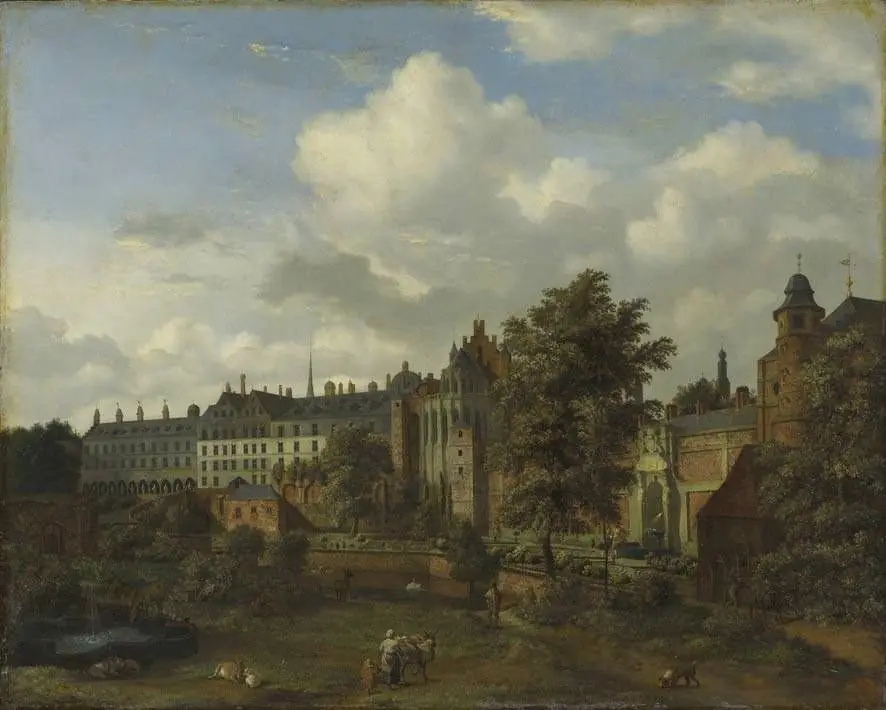 The Old Palace of Brussels
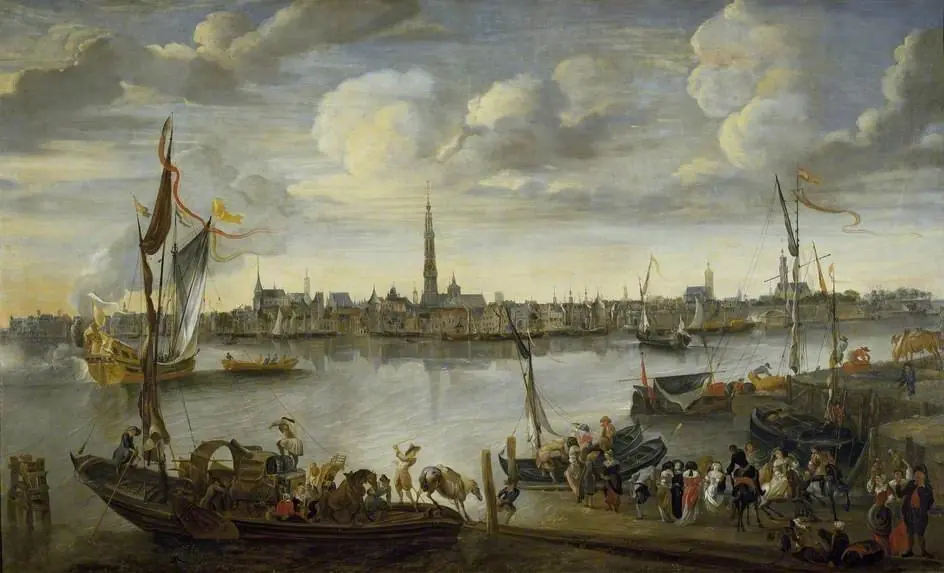 View of the Roads of Antwerp from the West Bank
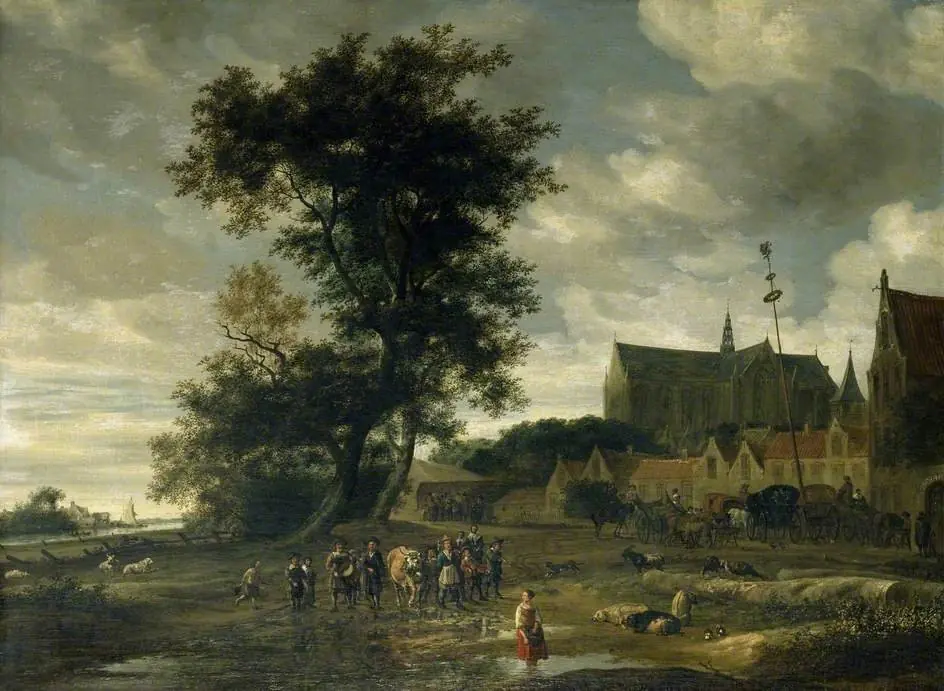 Scene before a Maypole with Alkmaar Church in the Background
 A Panorama of Kilkenny
 Pembroke Castle and Landscape
 View on the Rhine
 A Village with a Church
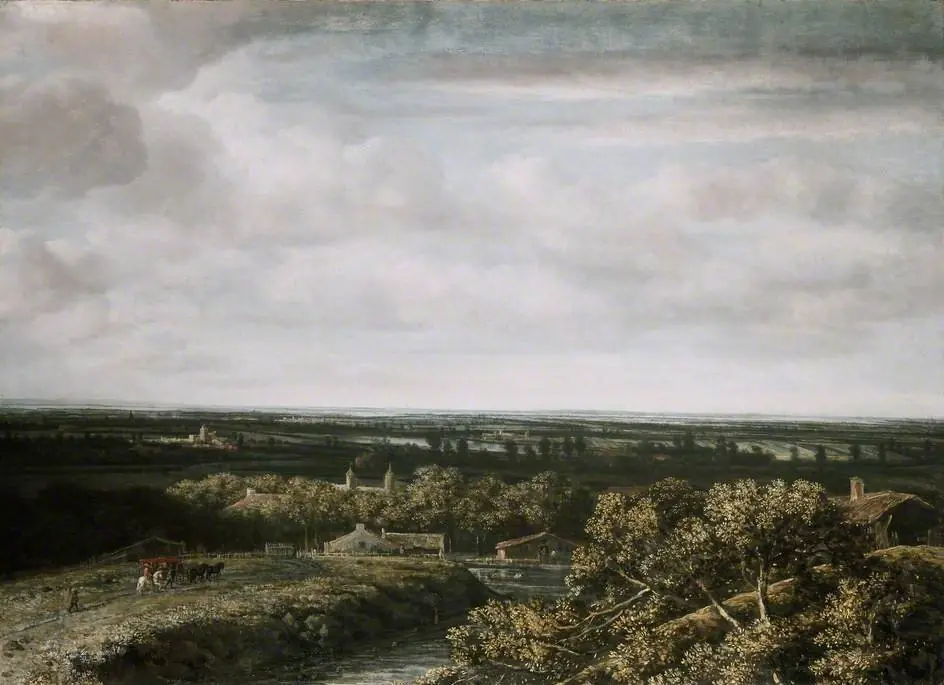 A View over flat Country
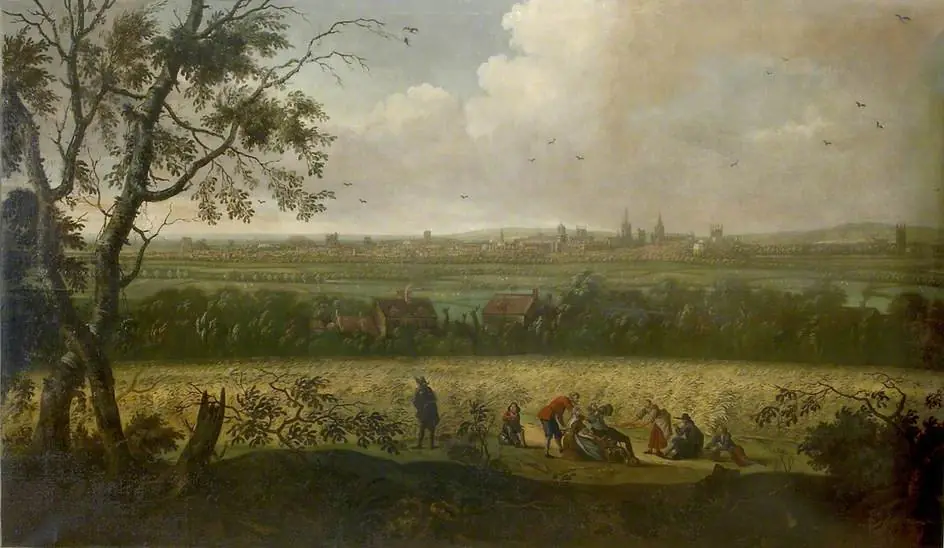 Oxford from the South-west
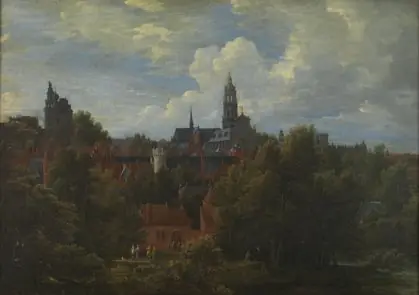 View on Brussels (inv. 3839)