Artwork
Tantric Manuscript "Sangrahani Sutra"
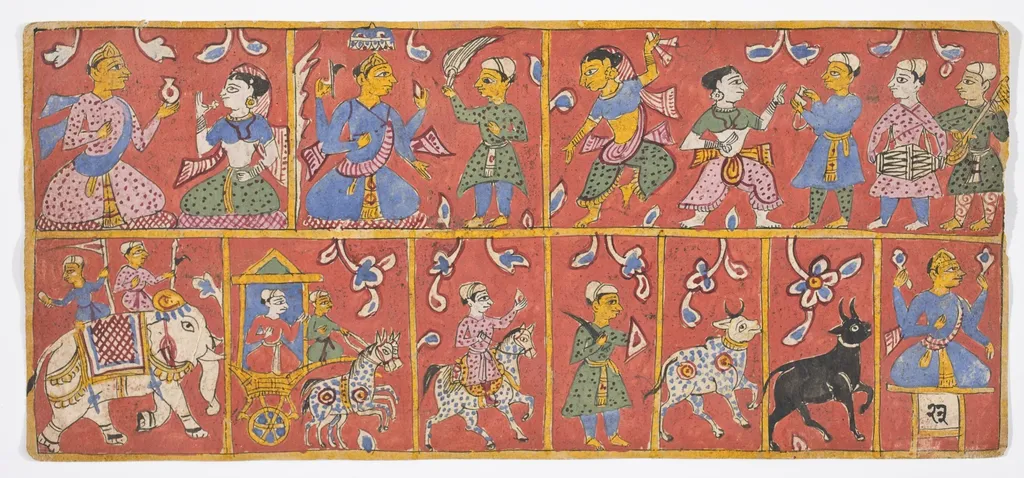
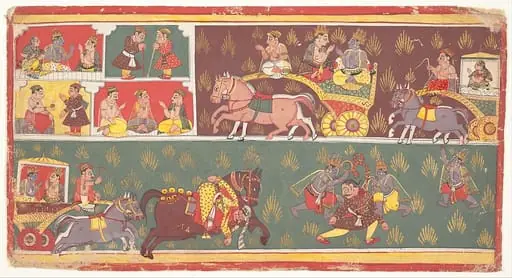
Tantric Manuscript "Sangrahani Sutra" is an unspecified painting by Unknown. It is held in the collection of the Detroit Institute of Arts.
About this work
Overview
The 'Sangrahani Sutra' is a painted manuscript from the tantric Buddhist tradition, likely produced in eastern India or Nepal during the late medieval period.
The 'Sangrahani Sutra' is a painted manuscript from the tantric Buddhist tradition, likely produced in eastern India or Nepal during the late medieval period. It combines sacred text with intricate visual symbolism, serving both liturgical and meditative functions. The work is executed on palm leaf or paper, typical of manuscript culture in the region, and reflects the integration of textual study with visual contemplation in esoteric Buddhist practice.
Subject & Meaning
The manuscript illustrates passages from the Sangrahani Sutra, a text concerned with the accumulation and protection of spiritual merit. Its imagery includes deities, mandalas, and symbolic motifs drawn from tantric cosmology, designed to guide practitioners through ritual visualization. Each figure and arrangement corresponds to specific meditative states or doctrinal principles, transforming the page into a map for inner transformation.
Technique & Style
The painting employs fine brushwork and mineral pigments, with outlines rendered in ink and colors applied in flat, saturated planes. Figures are stylized, with elongated proportions and detailed ornamentation, adhering to regional conventions of tantric iconography. The composition is tightly structured, emphasizing symmetry and hierarchical arrangement to reflect cosmic order and spiritual hierarchy.
History & Provenance
The manuscript likely originated in a monastic center in Bihar or Bengal, where tantric Buddhism flourished between the 10th and 13th centuries. It was probably copied and illustrated by trained monastic scribes, used within ritual contexts before being preserved in temple or monastery collections. Its survival suggests careful handling and continued reverence, though its specific provenance before modern acquisition remains undocumented.
Context
Produced during a period when tantric Buddhism was transitioning from India to Tibet and Southeast Asia, the manuscript reflects a syncretic tradition blending Indian ritual practices with local artistic forms. It existed alongside other illustrated texts used for teaching and initiation, where visual and verbal elements were inseparable. Such manuscripts were not public objects but tools for initiated practitioners within closed spiritual communities.
Legacy
The 'Sangrahani Sutra' contributes to the understanding of how Buddhist doctrine was transmitted visually in pre-modern South Asia. Surviving examples like this one inform contemporary scholarship on tantric art, illustrating the role of manuscripts as active ritual instruments rather than passive records. Its preservation offers insight into the material culture of esoteric Buddhist practice beyond textual study.
Artist & collection

 Domestic Scene
 Giacomo and Cardinal Marco, investing Andrea, Abbot of San Zeno, with his Benefice
 The Nymph of Fontainebleau
 Portrait of a Woman
 Madonna and Child with Saints in the Enclosed Garden
 Venus and Minerva
 Family Group of Four on Sofa
 Wall painting from Room H of the Villa of P. Fannius Synistor at Boscoreale
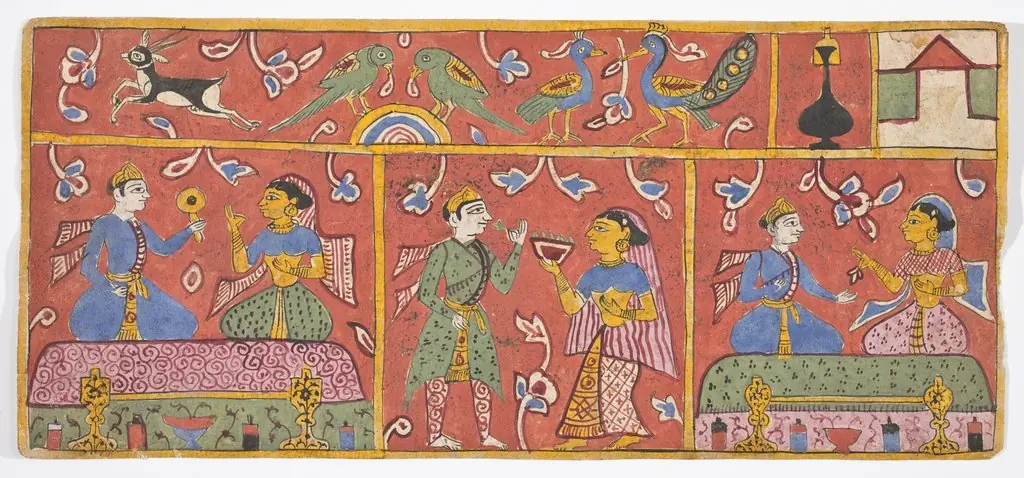 Tantric Manuscript "Sangrahani Sutra"
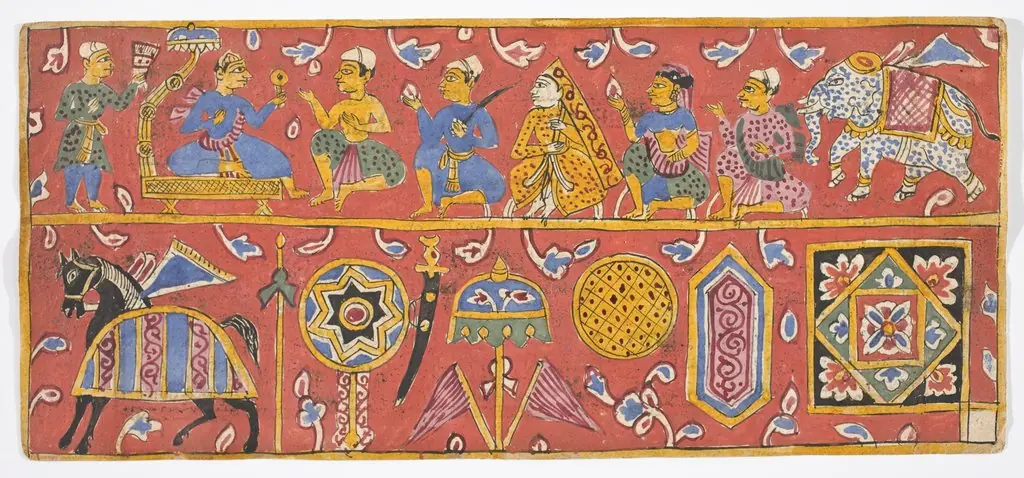 Tantric Manuscript "Sangrahani Sutra"
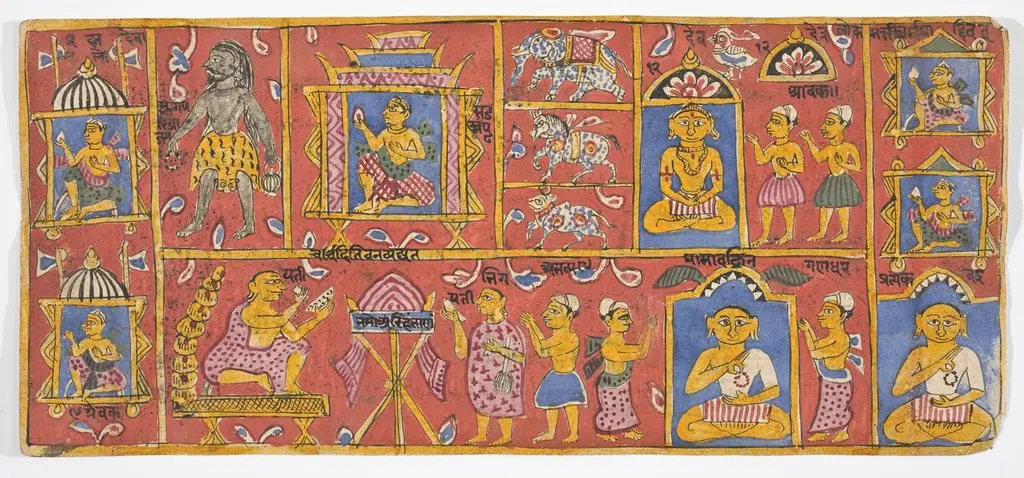 Tantric Manuscript "Sangrahani Sutra"
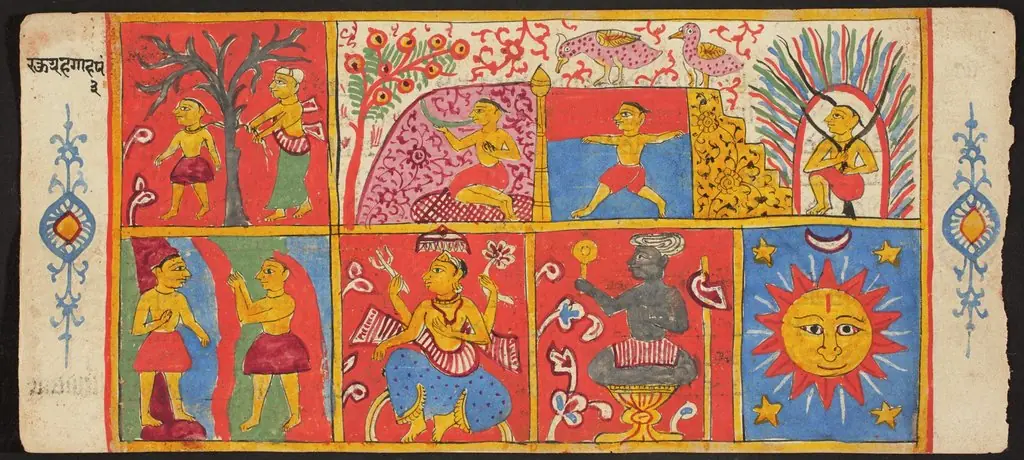 Tantric Manuscript "Sangrahani Sutra"
 Krishna Lifts Mount Govardhan, from a Bhagavata Purana
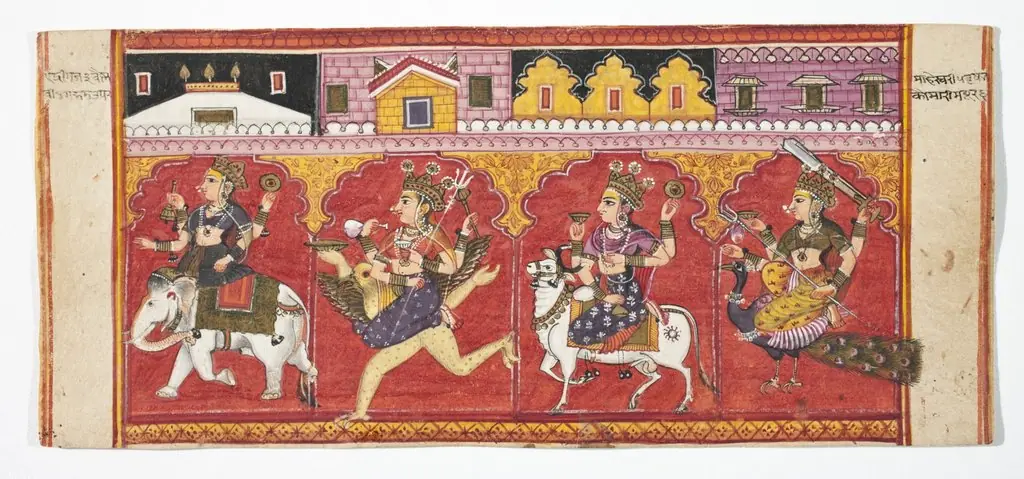 Legend of Durga
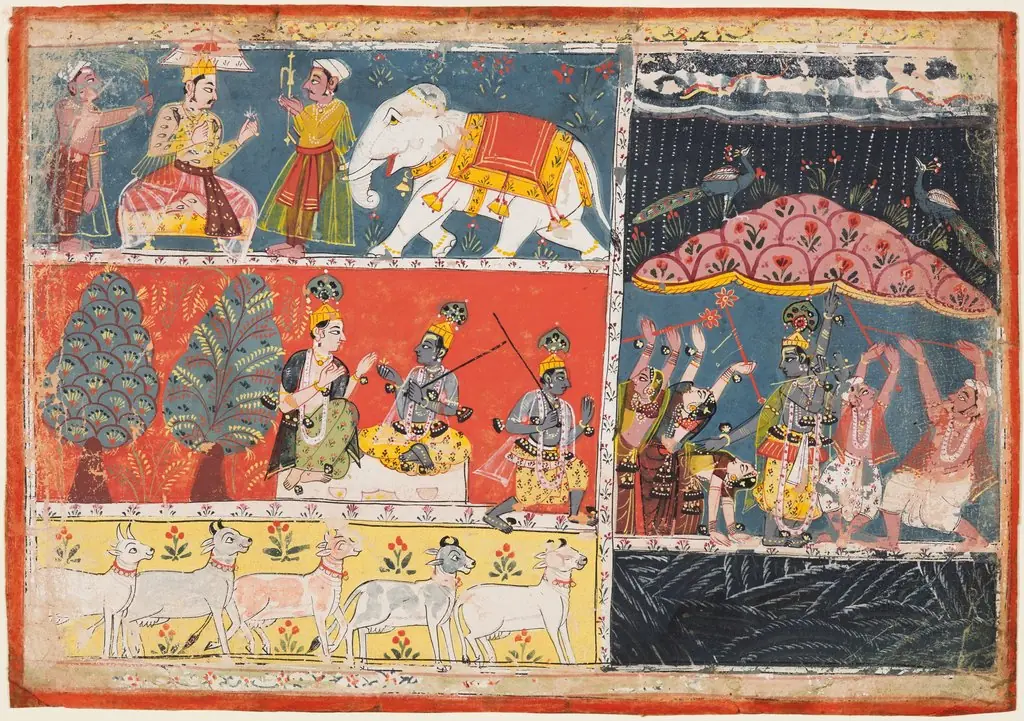 Krishna Lifts Mount Govardhan, from a Bhagavata Purana
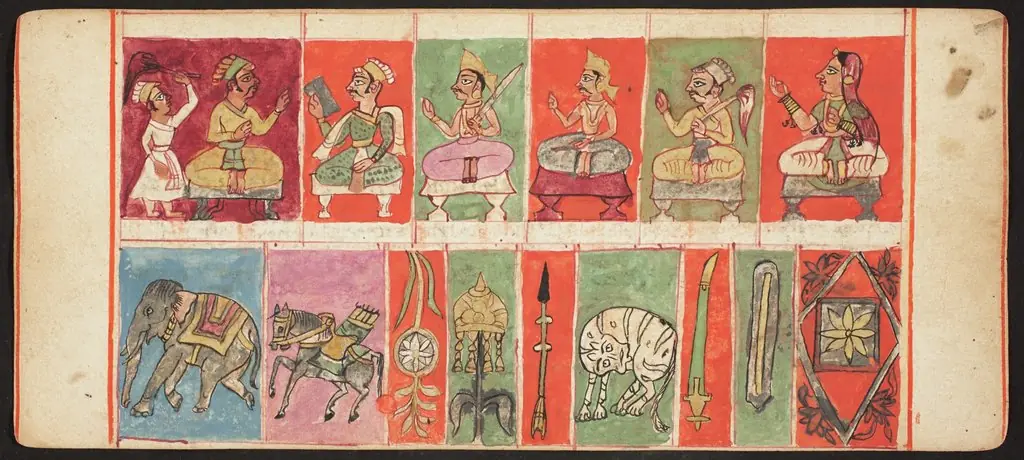 Tantric Manuscript, "Sangrahani Sutra"
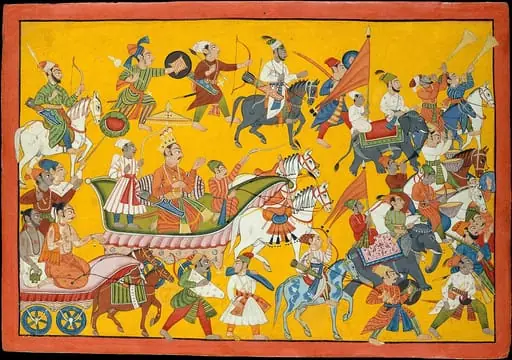 Untitled
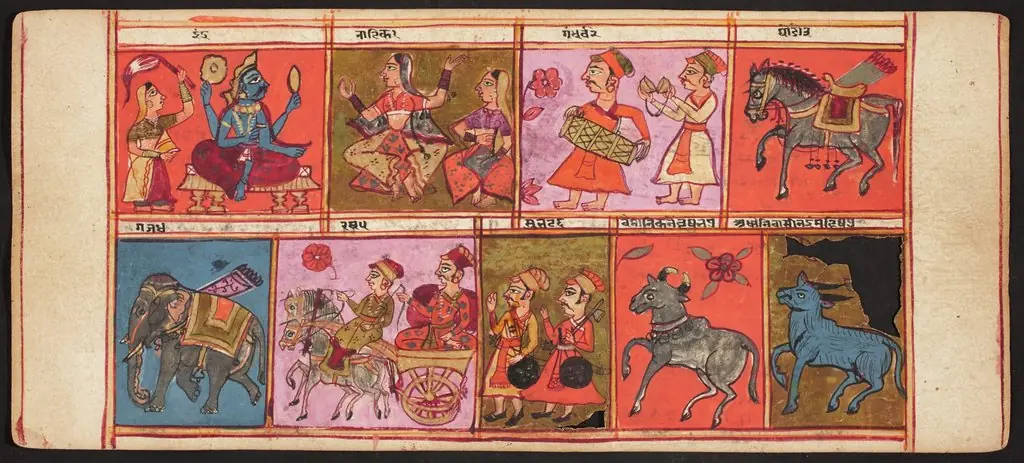 Tantric Manuscript, "Sangrahani Sutra"
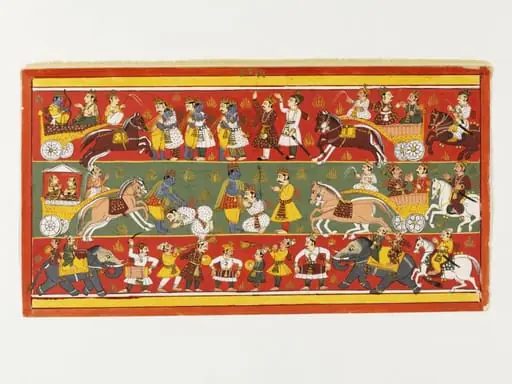 Krishna
 Untitled