Artwork
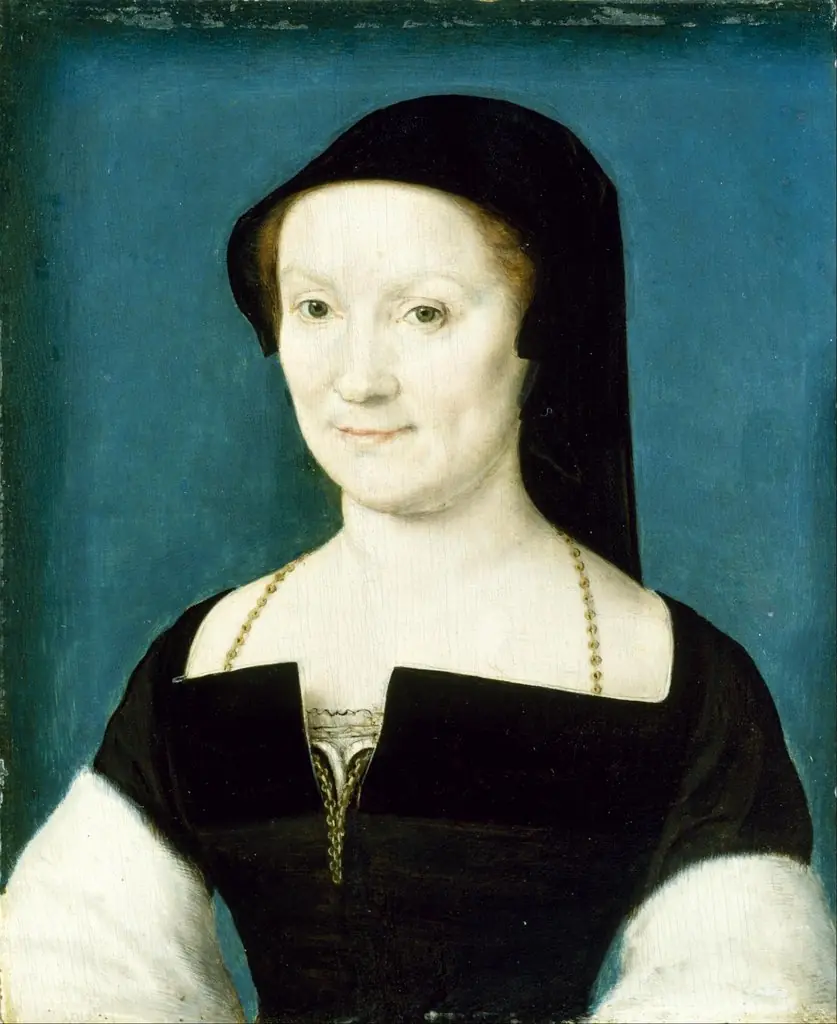
Portrait of a Woman
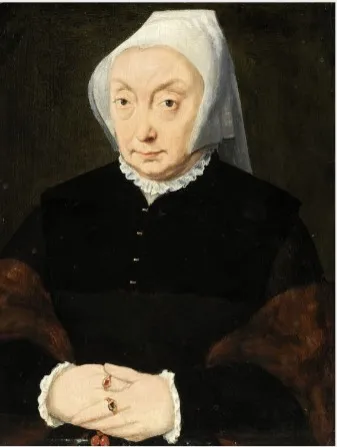
Portrait of a Woman is an unspecified painting by the Mannerist artist Unknown. It dates from 1540 and is held in the collection of the National Gallery of Ireland. This oil painting presents a seated woman in a formal, frontal pose, rendered with quiet precision.
About this work
The artist's use of dark colors and the subject's formal pose contribute to the overall somber tone of the painting.
This painting depicts a woman in a dark dress with a white collar and a white head covering. Her hands are clasped in front of her, adorned with rings on her fingers. The background of the painting is dark, which helps to highlight the subject's features.
The woman's attire and the style of the painting suggest that it may be from the 16th century. The artist's use of dark colors and the subject's formal pose contribute to the overall somber tone of the painting.
To learn more about the artist's use of chiaroscuro, explore the technique further.
Overview
This oil painting presents a seated woman in a formal, frontal pose, rendered with quiet precision. Her dark clothing contrasts sharply with the pale collar and head covering, drawing attention to her face and hands. The background is uniformly shadowed, eliminating distractions and focusing the viewer’s gaze on the subject’s stillness. The composition reflects a restrained elegance typical of Northern European portraiture from the late 1500s.
Subject & Meaning
The woman’s clasped hands and modest attire suggest piety and social restraint, common values in 16th-century elite portraiture. The rings on her fingers indicate wealth or marital status, though her identity remains unknown. Her direct gaze and composed demeanor convey dignity rather than emotion, aligning with the period’s emphasis on inner virtue and social propriety over theatrical expression.
Technique & Style
The artist employs chiaroscuro to model the face and hands with subtle gradations of light and shadow, enhancing three-dimensionality without dramatic contrast. Brushwork is fine and controlled, particularly in the rendering of lace and fabric textures. The dark, unbroken background isolates the figure, reinforcing the intimate, contemplative mood. Color is limited to earth tones and whites, heightening the sense of solemnity.
History & Provenance
The painting’s origins are undocumented, but its style and materials align with workshop practices in the Low Countries or northern Germany during the late 16th century. It lacks a signature or clear archival trail, suggesting it was likely commissioned by a middle- or upper-class family rather than royalty. Its survival indicates continued private ownership, possibly within a regional collector’s lineage.
Context
In the decades following the Reformation, portraiture in northern Europe shifted toward understated realism, reflecting Protestant values that discouraged religious ornamentation. Wealthy individuals commissioned likenesses to assert status through restraint. This work fits within that trend, where personal identity was conveyed through dress, posture, and subtle detail rather than symbolic allegory.
Legacy
Though unsigned and unattributed, the painting exemplifies the quiet intensity of non-royal portraiture from its era. It contributes to scholarly understanding of how ordinary elites expressed identity through visual culture. Its preservation offers insight into the aesthetic preferences of a time when personal dignity was rendered not through grandeur, but through disciplined composition and muted palette.
Artist & collection

 Domestic Scene
 Giacomo and Cardinal Marco, investing Andrea, Abbot of San Zeno, with his Benefice
 The Nymph of Fontainebleau
 Portrait of a Woman
 Madonna and Child with Saints in the Enclosed Garden
 Venus and Minerva
 Family Group of Four on Sofa
 Wall painting from Room H of the Villa of P. Fannius Synistor at Boscoreale
 Portrait of a woman
 Bildnis einer Frau mit Rosenkranz und Nelke
 Portrait of Maria Kitscher, Frau von Freyberg
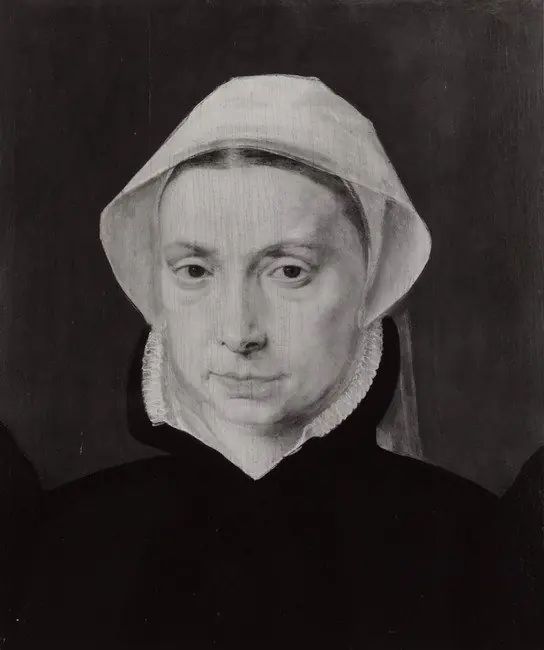 Portrait of an unknown woman
 Lidewij van Beveren (1522-1557)
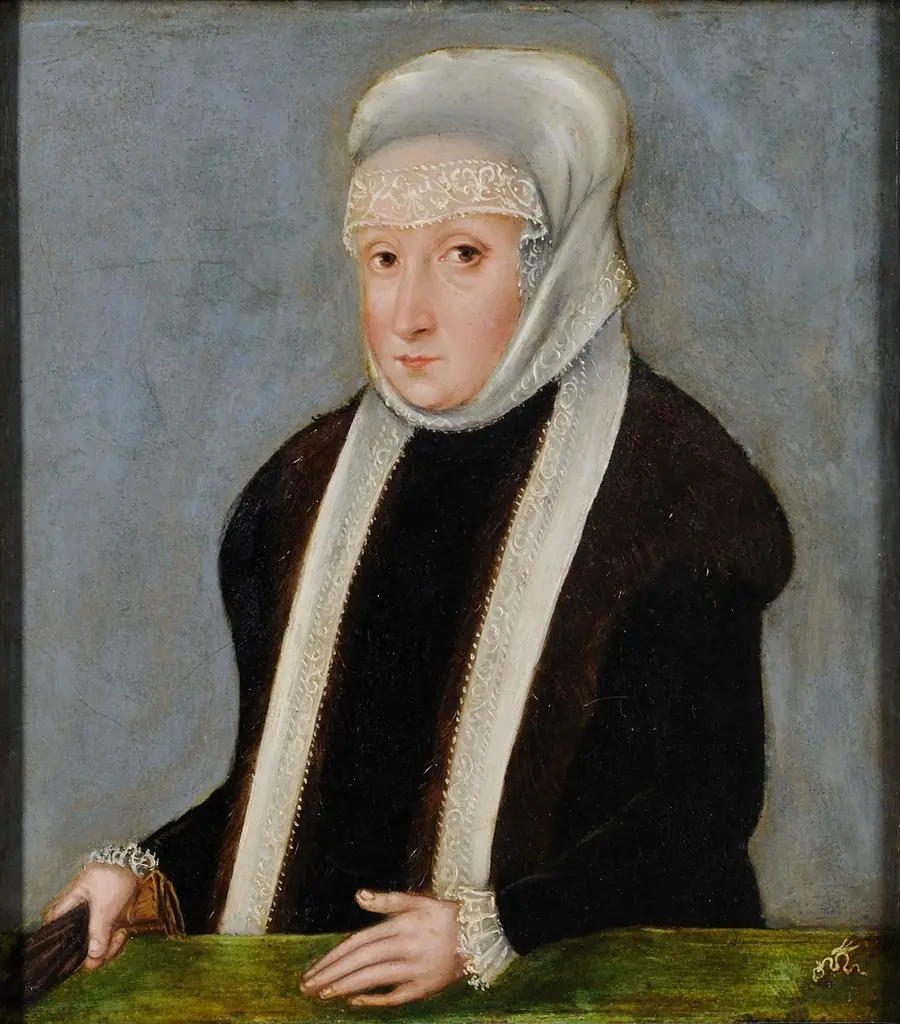 Isabella Jagiellon
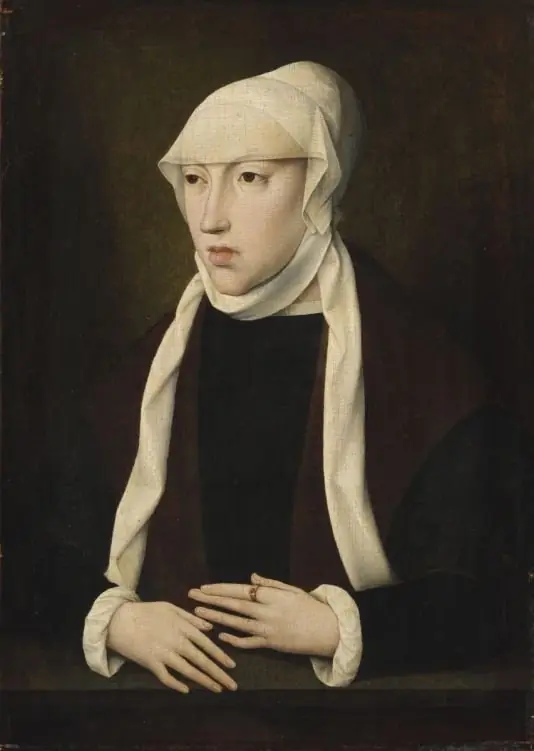 Portrait of Mary of Hungary (Mary of Austria, Queen of Hungary)
 Portrait of a woman in a black velvet dress
 Portrait of a Lady
 Portrait of Clara Boogaart (...-1560)
 Portrait of Anne Fernely, pendant to Sir Thomas Gresham
 Isabeau de Savoie, Comtesse du Bouchage