Artwork
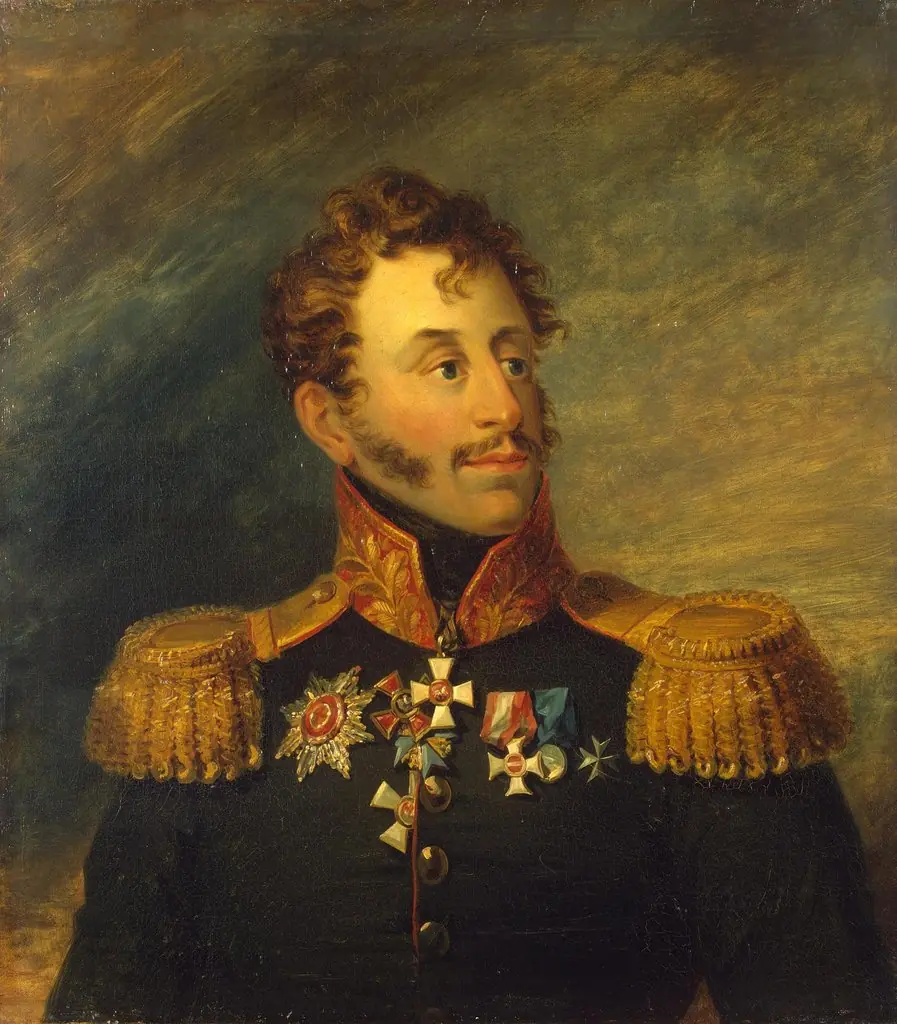
Portrait of Christopher A. von Lieven (1772/4-1838) (copy)
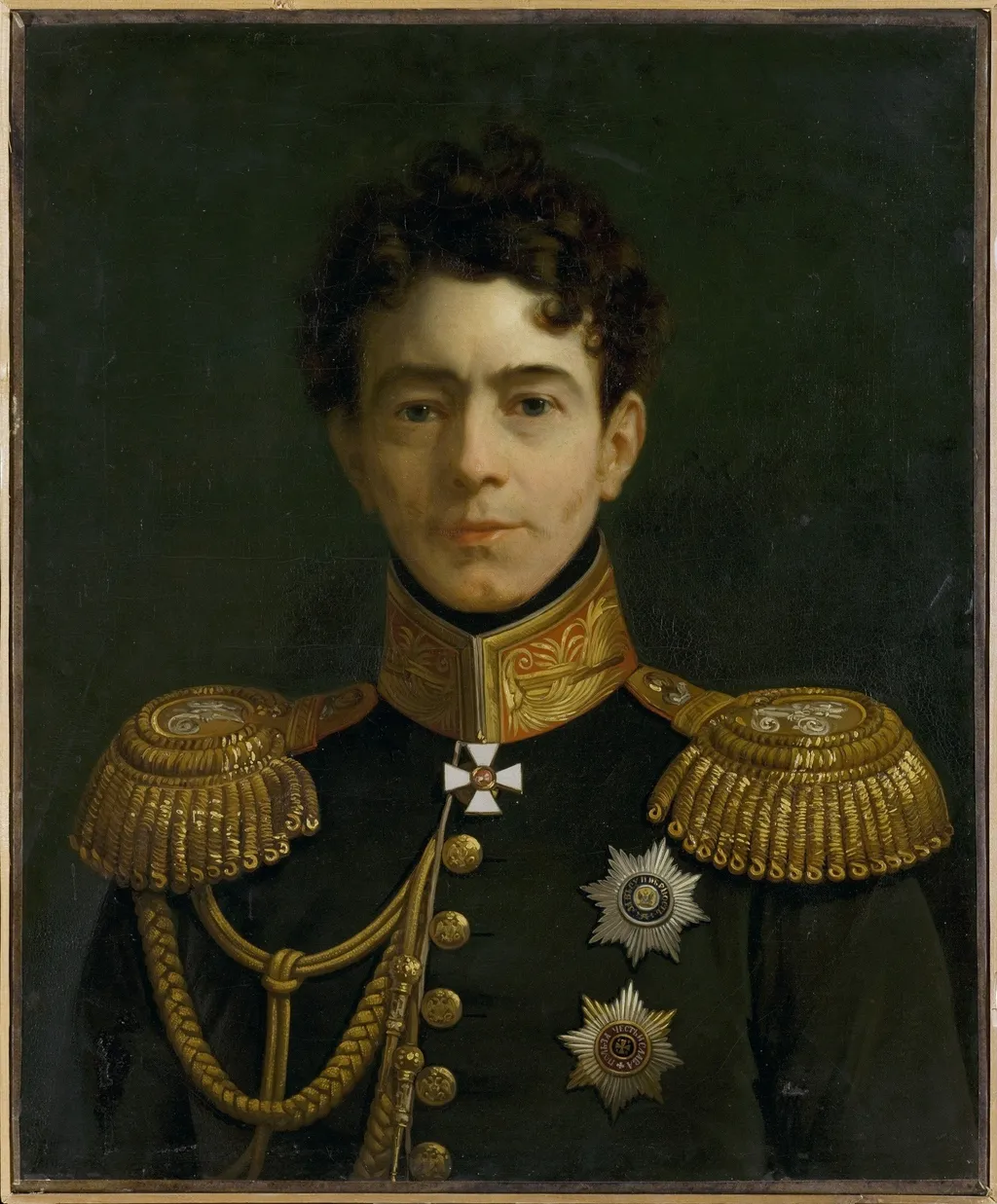
Portrait of Christopher A. von Lieven (1772/4-1838) (copy) is an oil painting by Unknown. It dates from 1851 and is held in the collection of the Hermitage Museum. This oil painting is a copy of a portrait depicting Christopher A.
About this work
Overview
This oil painting is a copy of a portrait depicting Christopher A. von Lieven, a Baltic German nobleman and Russian diplomat. Dressed in a dark military uniform adorned with gold trim, he is rendered with formal precision against a muted green backdrop. The composition emphasizes his rank and honors, reflecting his status within the Russian imperial service during the early 19th century.
Subject & Meaning
Christopher von Lieven is portrayed with the insignia of his military and civic honors, including a large cross on a ribbon and multiple medals on his chest. His direct gaze and composed posture convey authority and duty. The uniform and decorations signify his service to the Russian Empire, likely in diplomatic or administrative roles tied to the imperial court.
Technique & Style
The painting employs traditional portraiture techniques with careful attention to texture and detail. The dark uniform contrasts with the gold embellishments, while the soft rendering of facial features suggests a focus on individual presence. The background is intentionally subdued to direct focus toward the figure and his regalia, consistent with academic portraiture of the period.
History & Provenance
The original portrait was likely commissioned during von Lieven’s service in St. Petersburg. This version is a copy, possibly made for a family member or institutional archive. Its association with the State Hermitage Museum suggests it entered the collection through imperial or aristocratic channels, though its exact provenance remains undocumented.
Context
Von Lieven served as a Russian ambassador to several European courts and was closely connected to the imperial family. Portraits like this were common among high-ranking officials, serving as visual affirmations of loyalty and status within the Russian hierarchy. The style aligns with early 19th-century Russian academic portraiture, influenced by European traditions.
Legacy
As a copy of a diplomatic figure’s portrait, this work contributes to the visual record of Russian imperial service. It reflects the conventions of military and aristocratic representation in the post-Napoleonic era. While not widely known outside specialized circles, it remains a tangible artifact of the interconnected elite networks of the time.
Artist & collection

 Domestic Scene
 Giacomo and Cardinal Marco, investing Andrea, Abbot of San Zeno, with his Benefice
 The Nymph of Fontainebleau
 Portrait of a Woman
 Madonna and Child with Saints in the Enclosed Garden
 Venus and Minerva
 Family Group of Four on Sofa
 Wall painting from Room H of the Villa of P. Fannius Synistor at Boscoreale
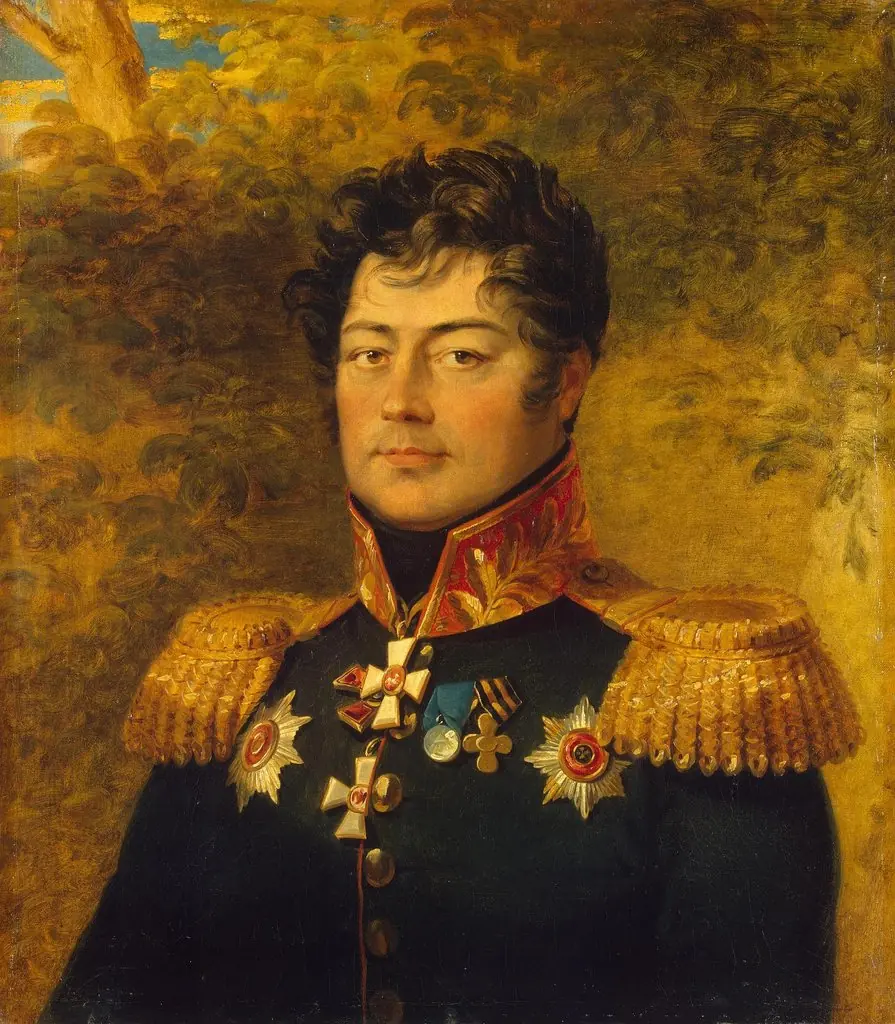 Portrait of Semyon D. Panchulidzev (1767-1817) (2nd)
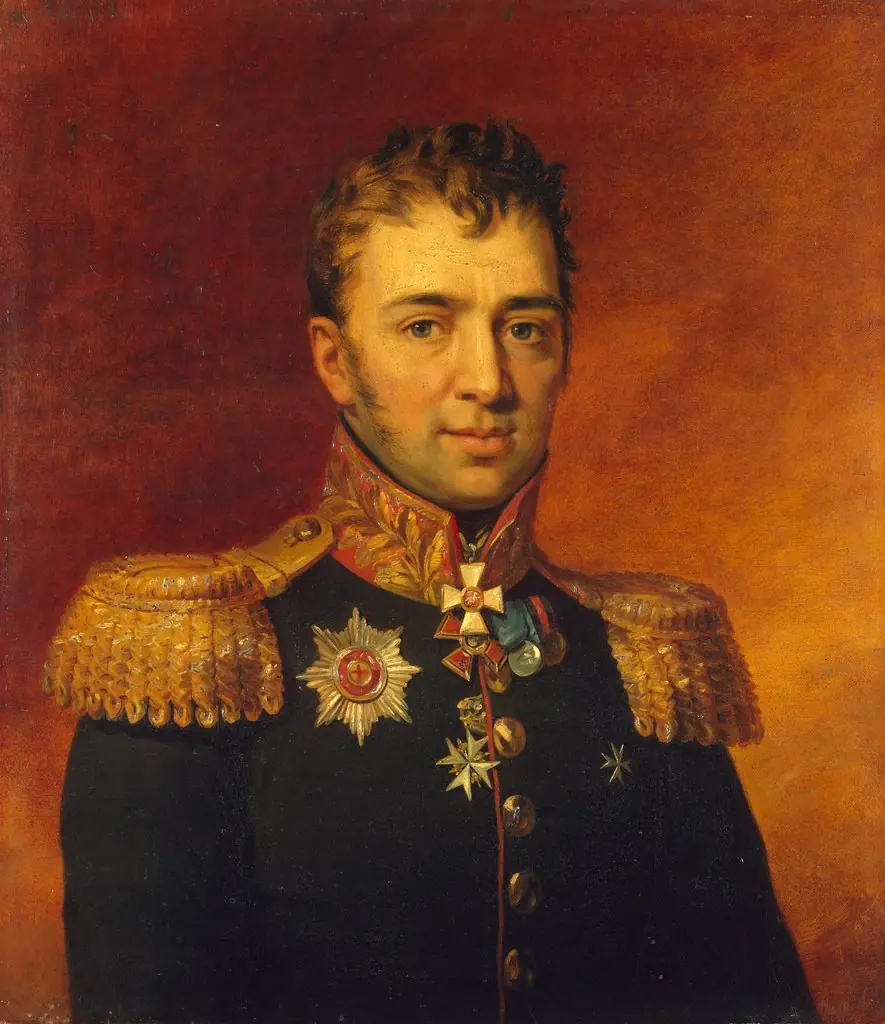 Portrait of Pyotr G. Likhachov (1758-1813)
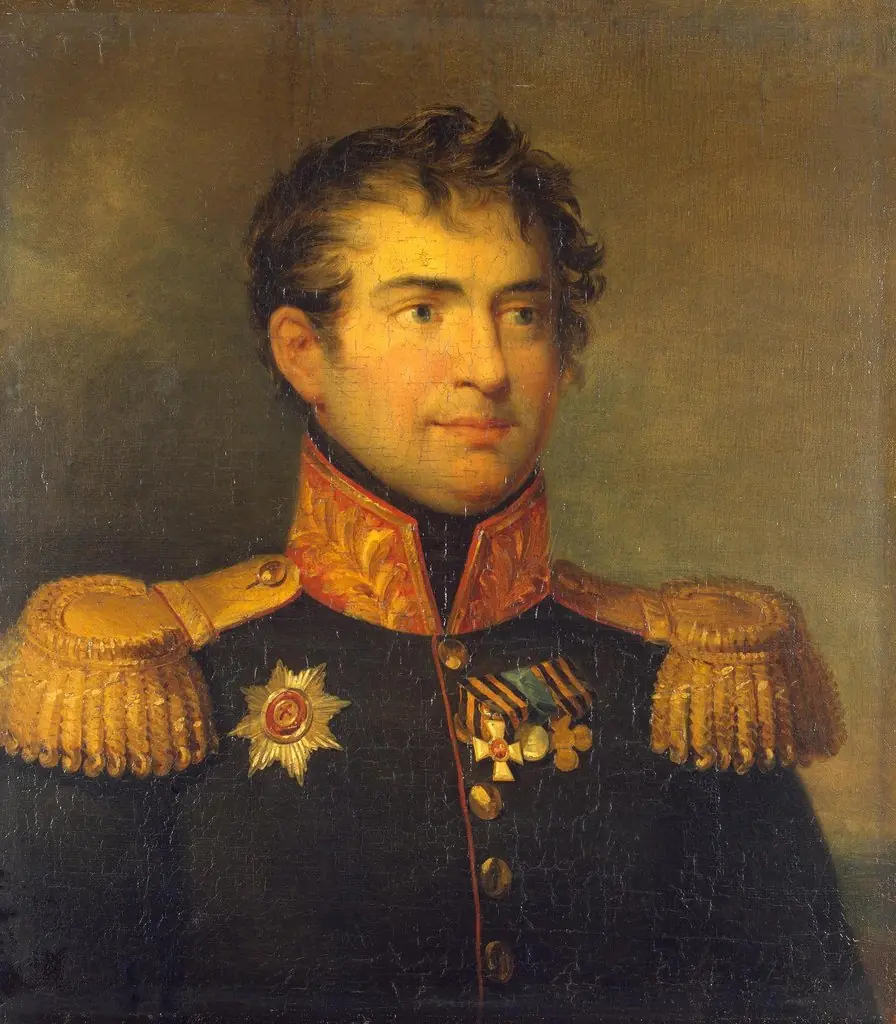 Portrait of Karl M. Herzdorf (1761-1813)
 Portrait of General Pyotr Bagration
 Portrait of Fyodor V. Driesen (1781-1851)
 Portrait of Sergei Volkonsky
 Portrait of Sergey F. Zheltukhin (1776-1833)
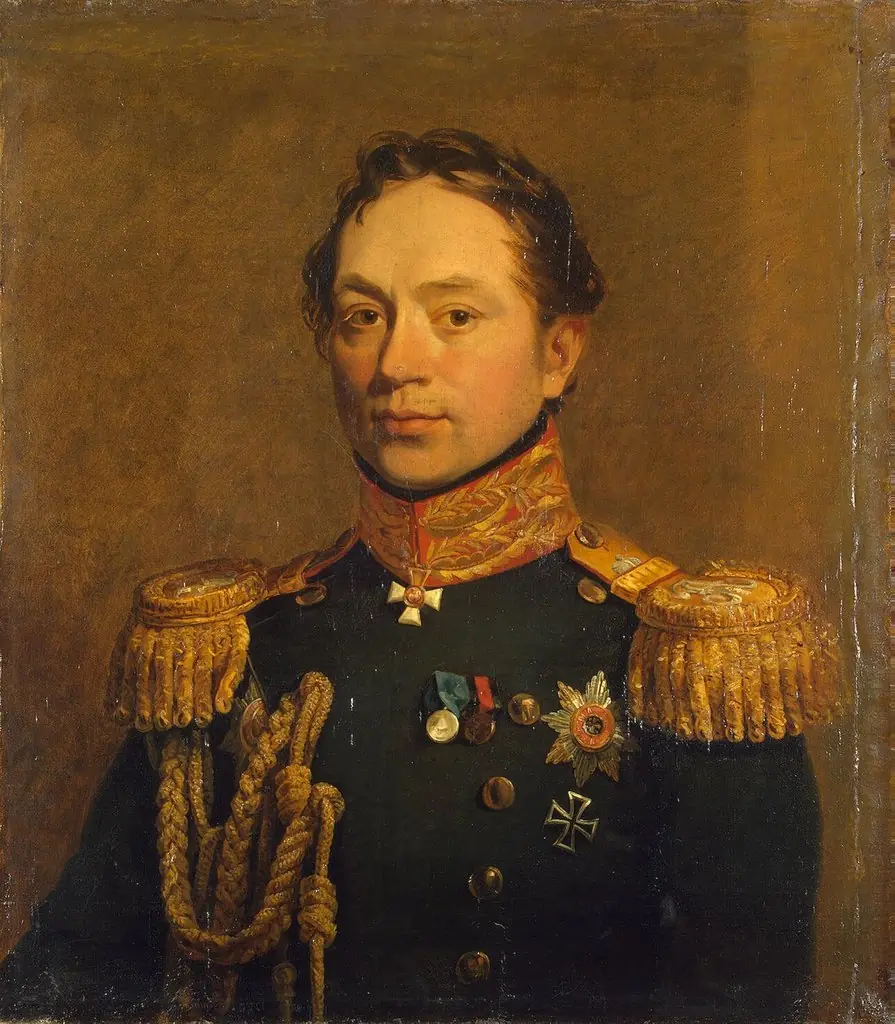 Portrait of Grigory V. Rosen (1782-1841) (1st)
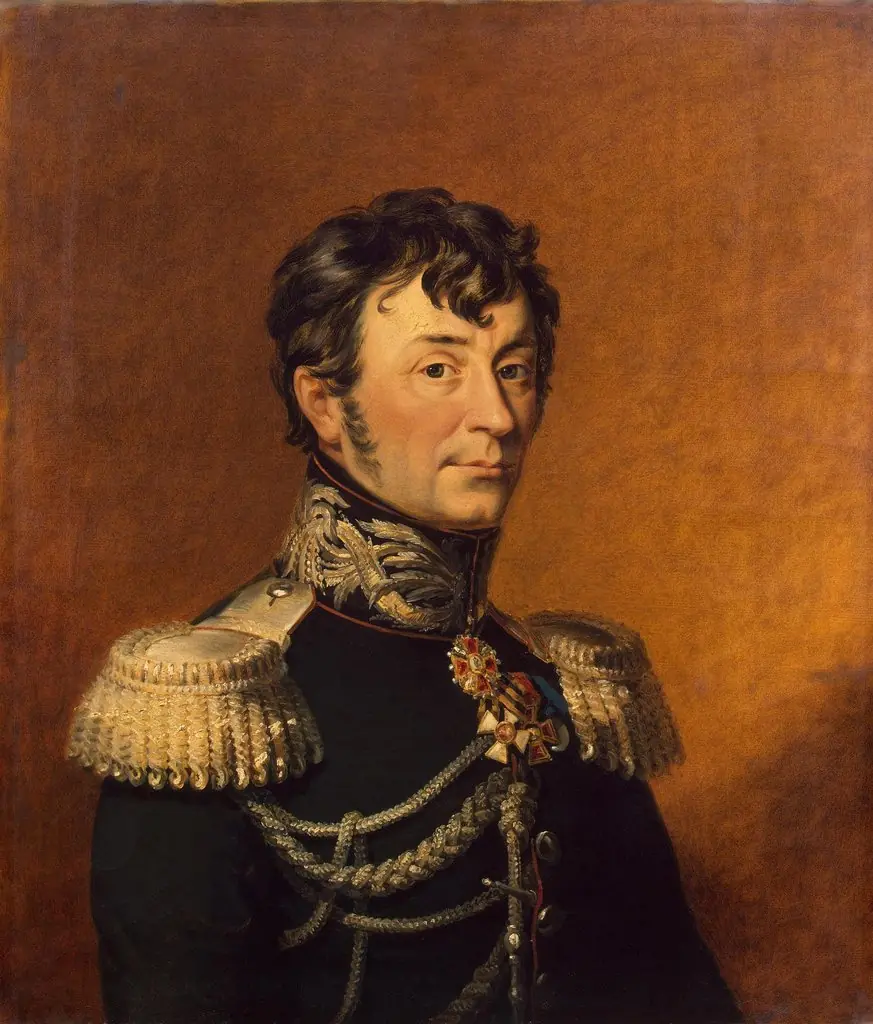 Portrait of Karl Klodt von Jurgensburg (1765-1822)
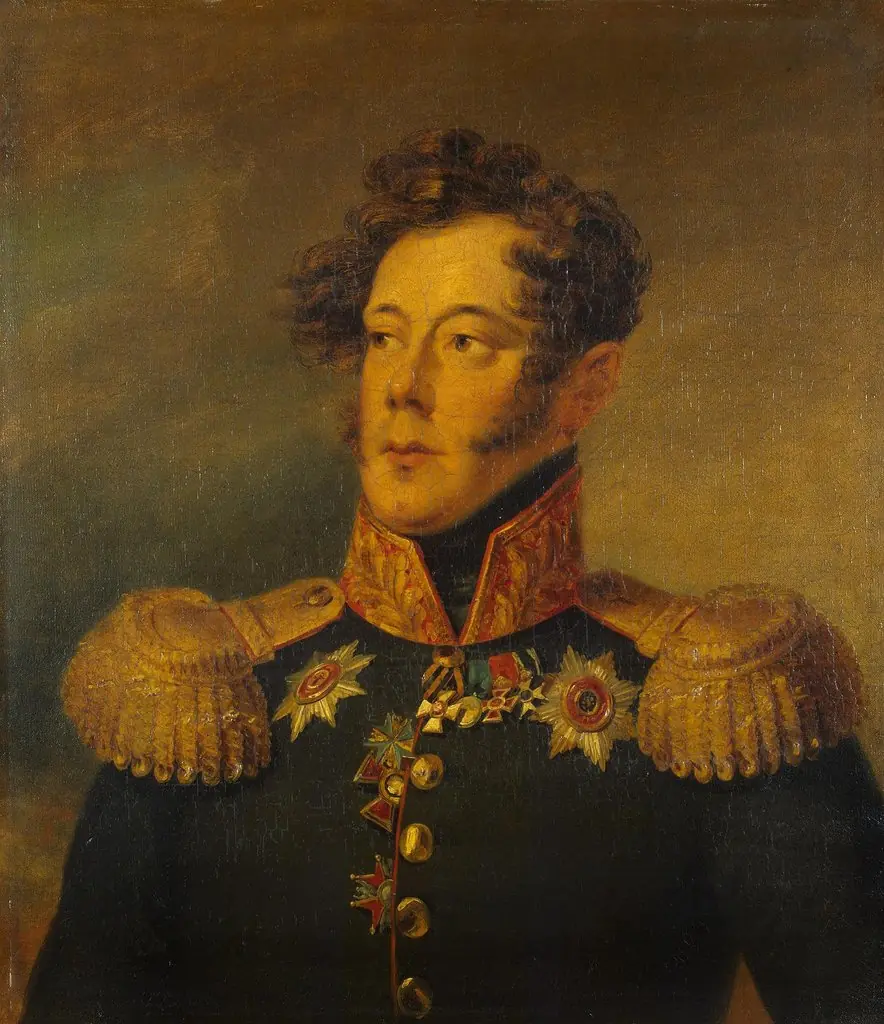 Portrait of Alexander I. Albrecht (1788-1828)
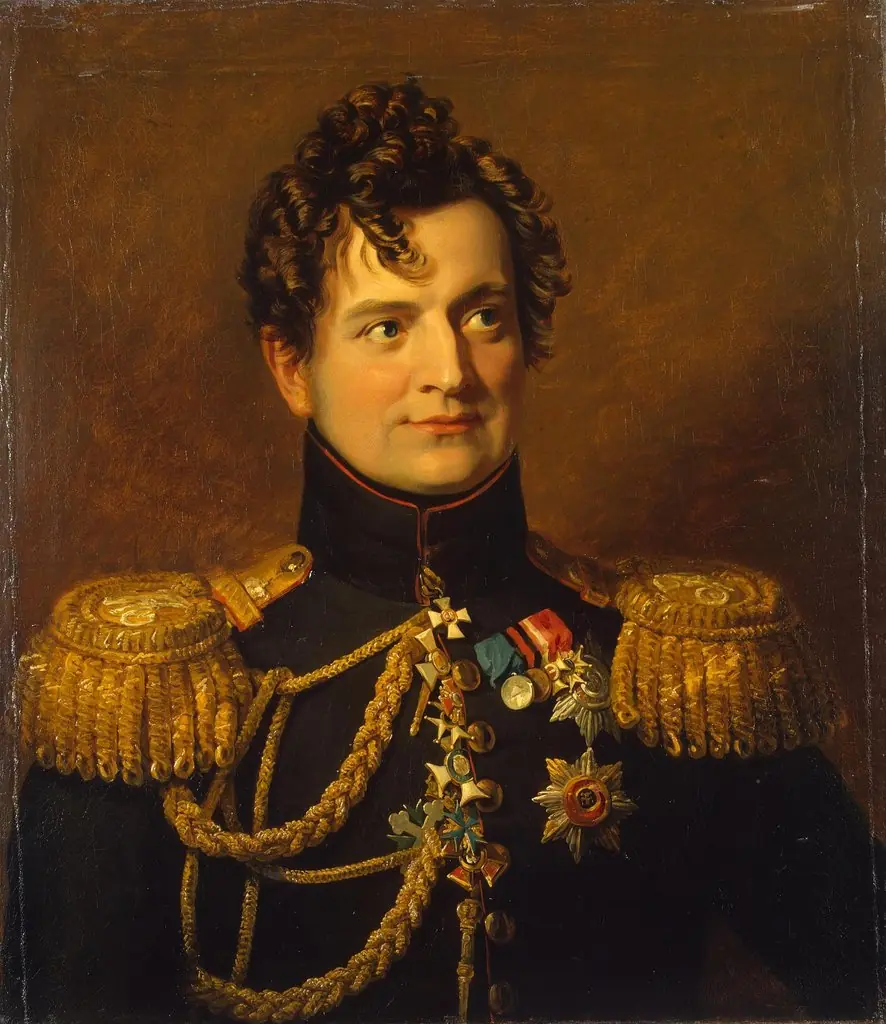 Portrait of Adam P. Ozharovsky (1776-1855)
 Portrait of Karl B. von Knorring (1774-1817) (3rd)