Artwork
Saint Barbara
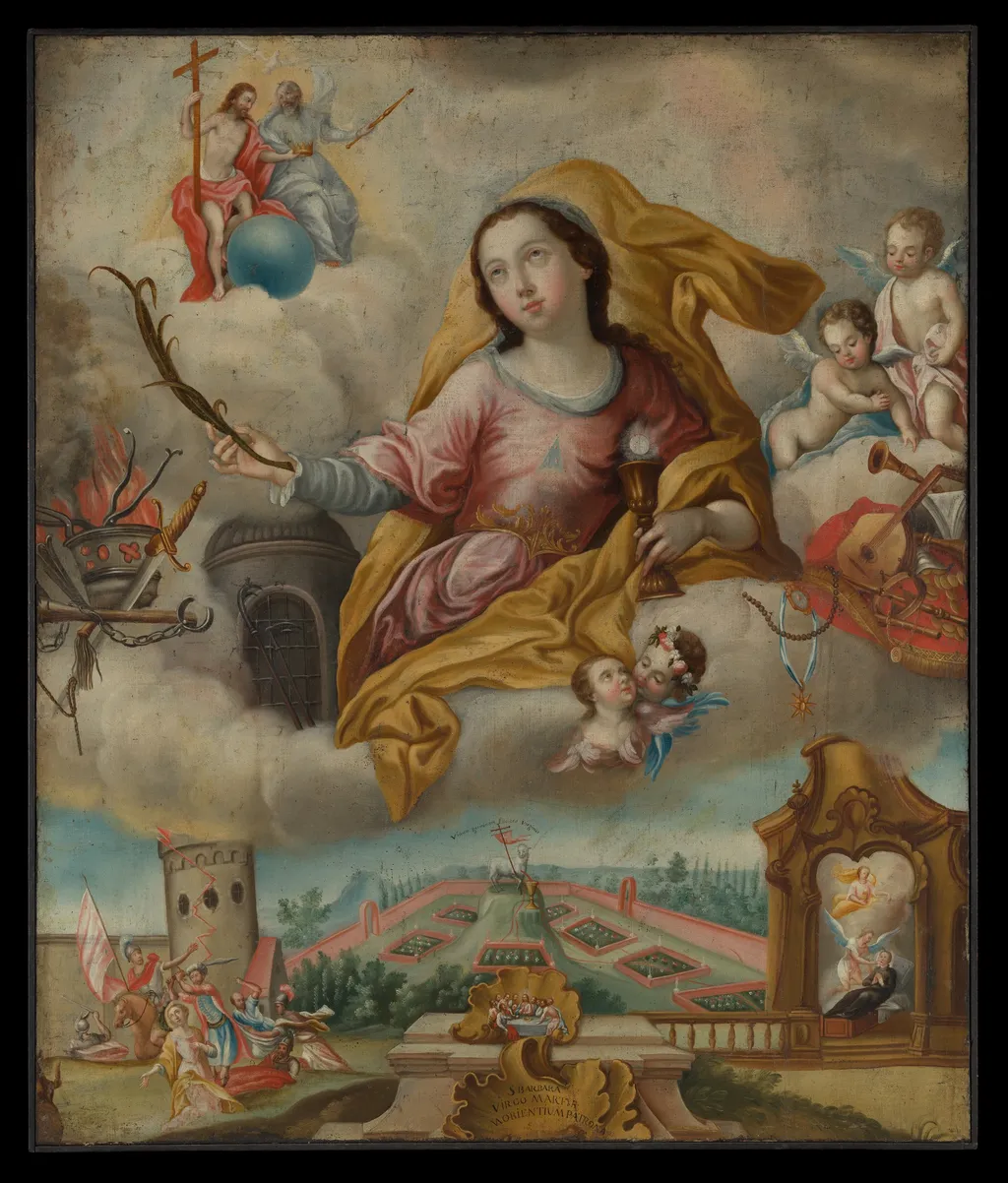
Saint Barbara is an oil painting. It dates from 1794 and is held in the collection of the Metropolitan Museum of Art.
About this work
Overview
The oil painting portrays Saint Barbara, dressed in a vivid red garment beneath a yellow cloak. She holds a chalice and a sword, symbols associated with her legend, while cherubic figures and angels surround her. A substantial castle and garden occupy the background, from which a plume of smoke ascends, adding narrative depth to the composition.
Subject & Meaning
Saint Barbara is presented as a martyr, her attributes—the chalice and sword—referencing her steadfast faith and eventual execution. The surrounding celestial beings emphasize her sanctified status, while the castle, a frequent element in her hagiography, alludes to the tower where she was confined. The rising smoke may signify divine intervention or the destruction of her oppressor.
Technique & Style
Fine detailing in the foliage, architecture, and angelic figures demonstrates a meticulous approach typical of Baroque religious painting.
The work employs chiaroscuro, juxtaposing illuminated areas against deep shadows to model forms and suggest three‑dimensional space. Rich, saturated colors—particularly the red dress and yellow cloak—enhance the visual hierarchy, drawing attention to the saint. Fine detailing in the foliage, architecture, and angelic figures demonstrates a meticulous approach typical of Baroque religious painting.
Context
Created within the tradition of devotional imagery, the painting reflects the Counter‑Reformation emphasis on vivid, emotionally resonant representations of saints. Its iconography aligns with established visual conventions for Saint Barbara, facilitating recognition and veneration among the faithful. The inclusion of elaborate architectural and natural elements situates the work within a broader narrative of martyrdom and divine protection.
Artist & collection