Artwork
Throat-cutting
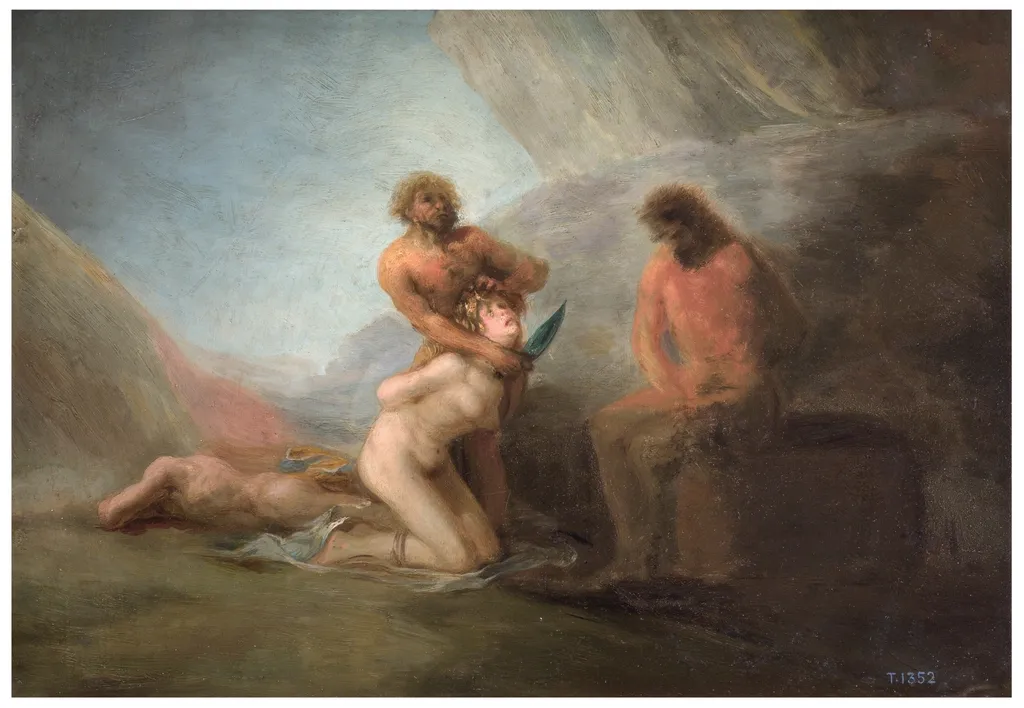
Throat-cutting is an oil painting. It dates from 1808 and is held in the collection of the Museo del Prado. The work depicts three unclothed figures within a shadowy, rocky interior.
About this work
Overview
A kneeling man grips a knife to the throat of a supine woman, while a second male figure observes from a short distance, his expression somber.
The work depicts three unclothed figures within a shadowy, rocky interior. A kneeling man grips a knife to the throat of a supine woman, while a second male figure observes from a short distance, his expression somber. The composition is dominated by muted browns and grays, contrasted by the pale pinks and whites of the bodies, and illuminated by uneven light that creates pockets of brightness amid deep shadow.
Subject & Meaning
The central act—a man threatening a woman with a blade—conveys a moment of violence and vulnerability. The surrounding figure’s watchful stance suggests complicity or contemplation, adding psychological tension. The stark nakedness of the participants strips away social identifiers, focusing attention on the raw physicality and emotional intensity of the scene.
Technique & Style
Executed in oil, the painting employs a chiaroscuro approach, using strong contrasts between illuminated and obscured areas to model form and heighten drama. The artist renders the flesh with soft, translucent tones, while the surrounding environment remains rendered in coarse, earthy hues, emphasizing the figures against the bleak setting.
Context
The work belongs to a tradition of dramatic, often moralizing scenes that explore human cruelty and power dynamics. Its use of chiaroscuro aligns it with Baroque practices, where light and shadow serve narrative and emotional purposes, though the subject matter is rendered in a contemporary, unidealized manner.
Artist & collection