Artwork
Portret van een vrouw in gebed
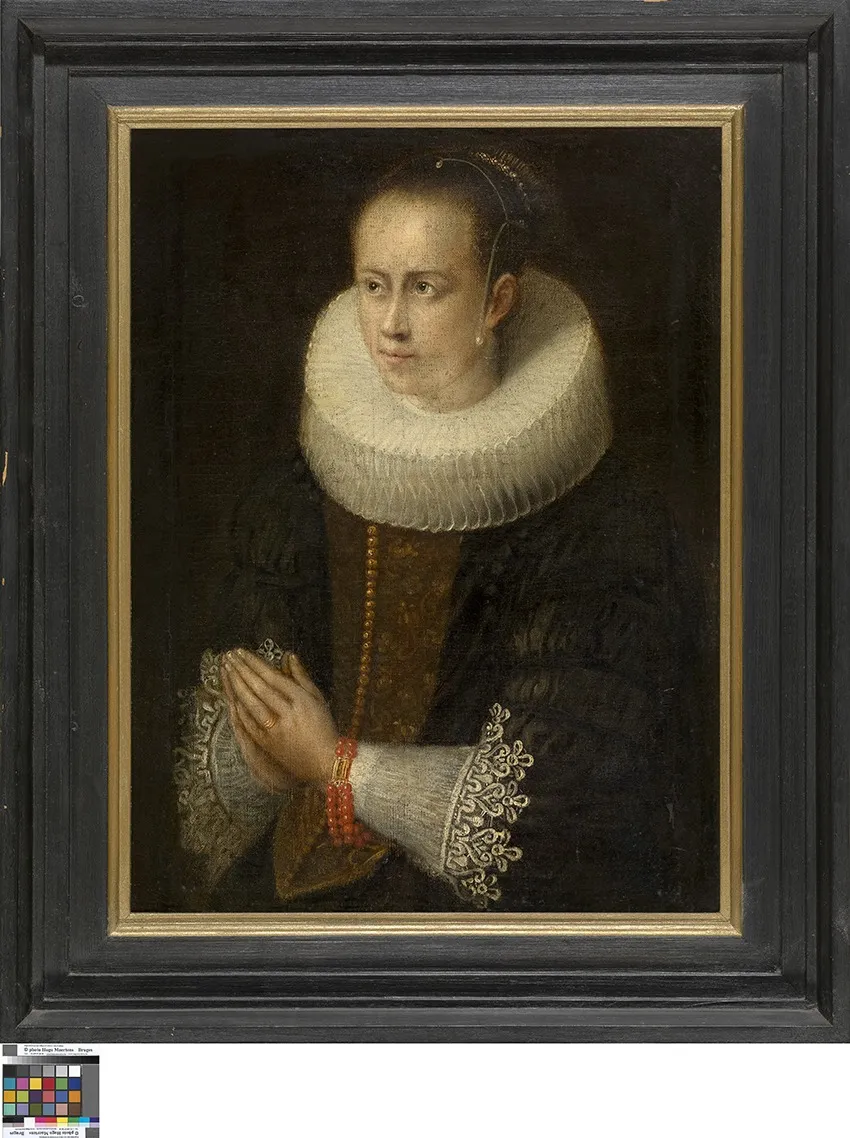
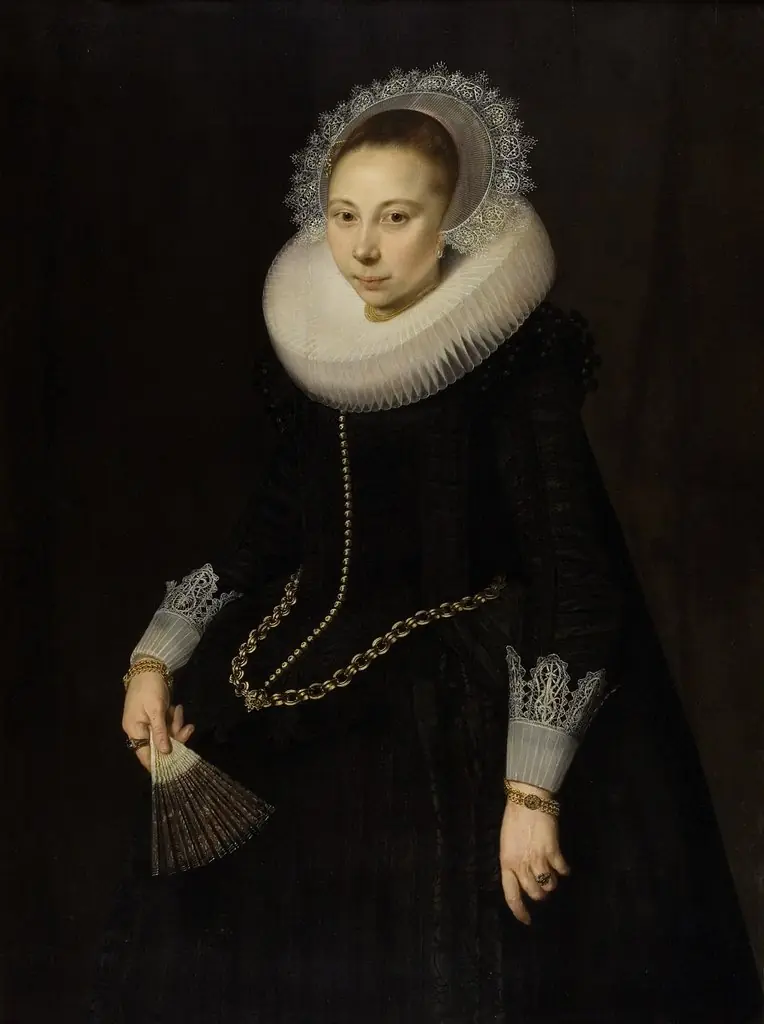
Portret van een vrouw in gebed is an oil painting by the Flemish Baroque painting artist Unknown. It dates from 1620 and is held in the collection of the Groeningemuseum. The work is an oil painting portraying a woman in a solemn pose, her hands pressed together as if in prayer.
About this work
The use of chiaroscuro, a technique that uses strong contrasts of light and dark to create a sense of volume, adds depth and dimension to the portrait.
This painting is a portrait of a woman, likely from the 17th century. She is depicted wearing a dark dress with a white ruff and lace cuffs, and her hands are clasped together in front of her. A bracelet adorns her wrist, and she wears a ring on her finger.
The woman's attire and the style of the painting suggest that it may be a work from the Dutch Golden Age. The use of chiaroscuro, a technique that uses strong contrasts of light and dark to create a sense of volume, adds depth and dimension to the portrait.
The Groeningemuseum, where this painting is held, is a museum that showcases a collection of art from the Middle Ages to the 20th century.
Overview
The work is an oil painting portraying a woman in a solemn pose, her hands pressed together as if in prayer. She is dressed in a dark gown trimmed with a white ruff and delicate lace cuffs, and she wears a modest bracelet and a ring. The composition is rendered with a clear focus on the figure against a subdued background.
Subject & Meaning
The sitter appears to be a private individual, possibly a member of the Dutch middle class, captured in a moment of devotion or contemplation. The clasped hands and modest attire suggest piety or personal prayer, while the jewelry hints at a degree of social standing. The portrait functions both as a personal record and a visual expression of religious sentiment.
Technique & Style
Executed in oil on canvas, the painting employs chiaroscuro to model the figure, using strong contrasts between illuminated areas and deep shadows. This handling creates a three‑dimensional sense of form, especially in the folds of the dress and the delicate lace. The brushwork is restrained, emphasizing smooth surfaces and a realistic rendering typical of Dutch Golden Age portraiture.
History & Provenance
The painting is part of the collection of the Groeningemuseum in Bruges, an institution that assembles works ranging from medieval to modern periods. Its acquisition history is not detailed in the source, but its presence in the museum situates it within a broader narrative of Dutch and Flemish art collected for public display.
Context
The portrait reflects the 17th‑century Dutch emphasis on modesty, individual identity, and domestic virtue. Attire such as the dark dress with white ruff and lace cuffs was common among respectable women of the period, while the inclusion of personal jewelry indicates wealth within acceptable bounds. The work aligns with contemporary portraiture that balanced realism with moral undertones.
Artist & collection

 Domestic Scene
 Giacomo and Cardinal Marco, investing Andrea, Abbot of San Zeno, with his Benefice
 The Nymph of Fontainebleau
 Portrait of a Woman
 Madonna and Child with Saints in the Enclosed Garden
 Venus and Minerva
 Family Group of Four on Sofa
 Wall painting from Room H of the Villa of P. Fannius Synistor at Boscoreale
 Portrait of Hendrickje Uylenburgh (1600-c. 1682)
 Portrait of a Lady
 Portrait of a Lady
 Portrait of Hortensia del Prado (died 1627), Wife of Jean Fourmenois
 Untitled
 Portret van een vrouw
 Portrait of Jeanne de Planque
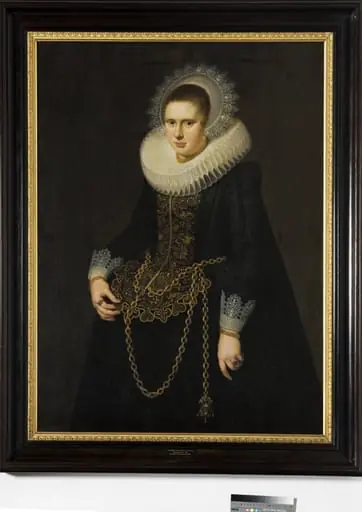 Portrait of a 22-Year-Old Woman
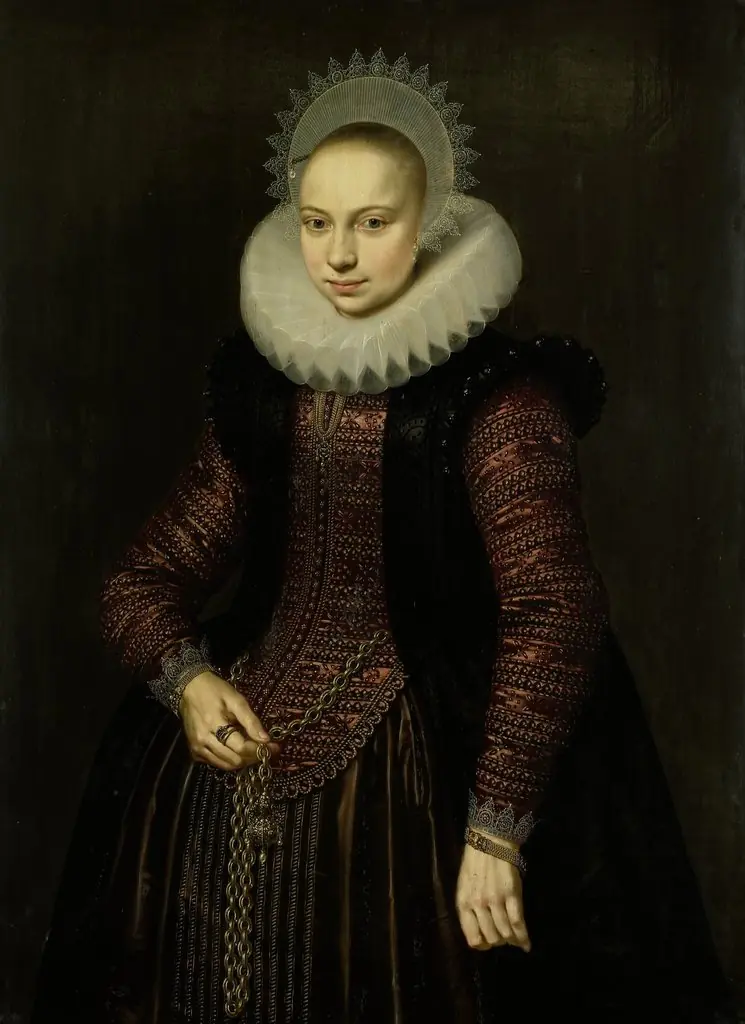 Portrait of Brechtje Overrijn van Schoterbosch (1592-1618)
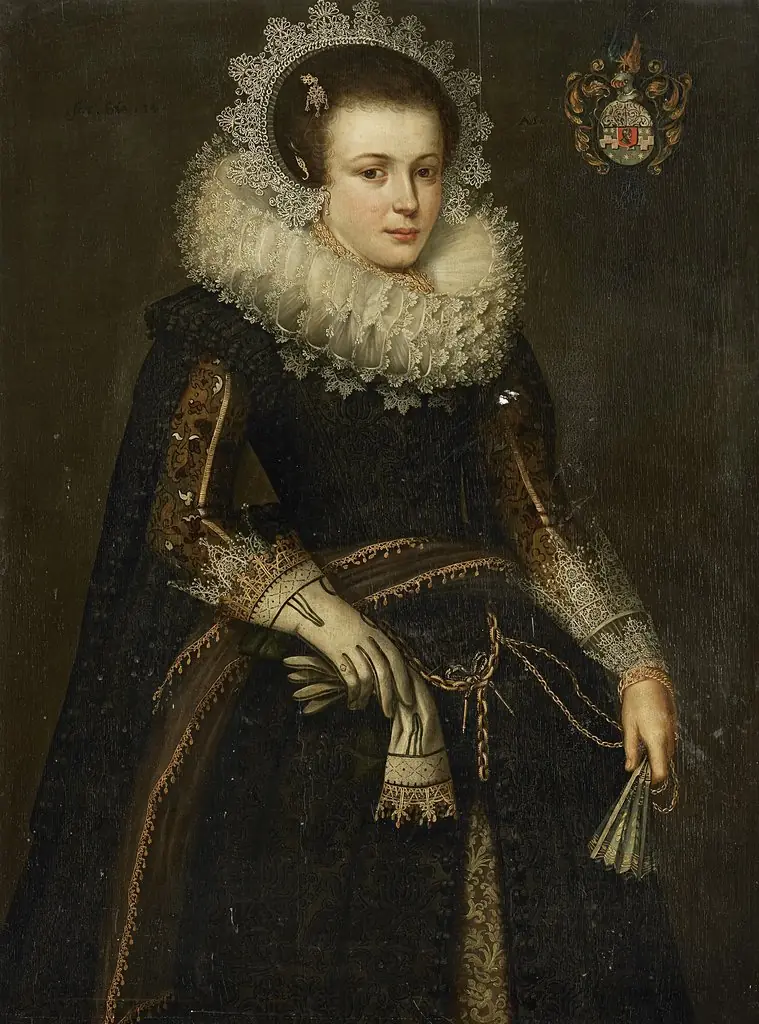 Portrait of Mertijntje van Ceters (1609-24)
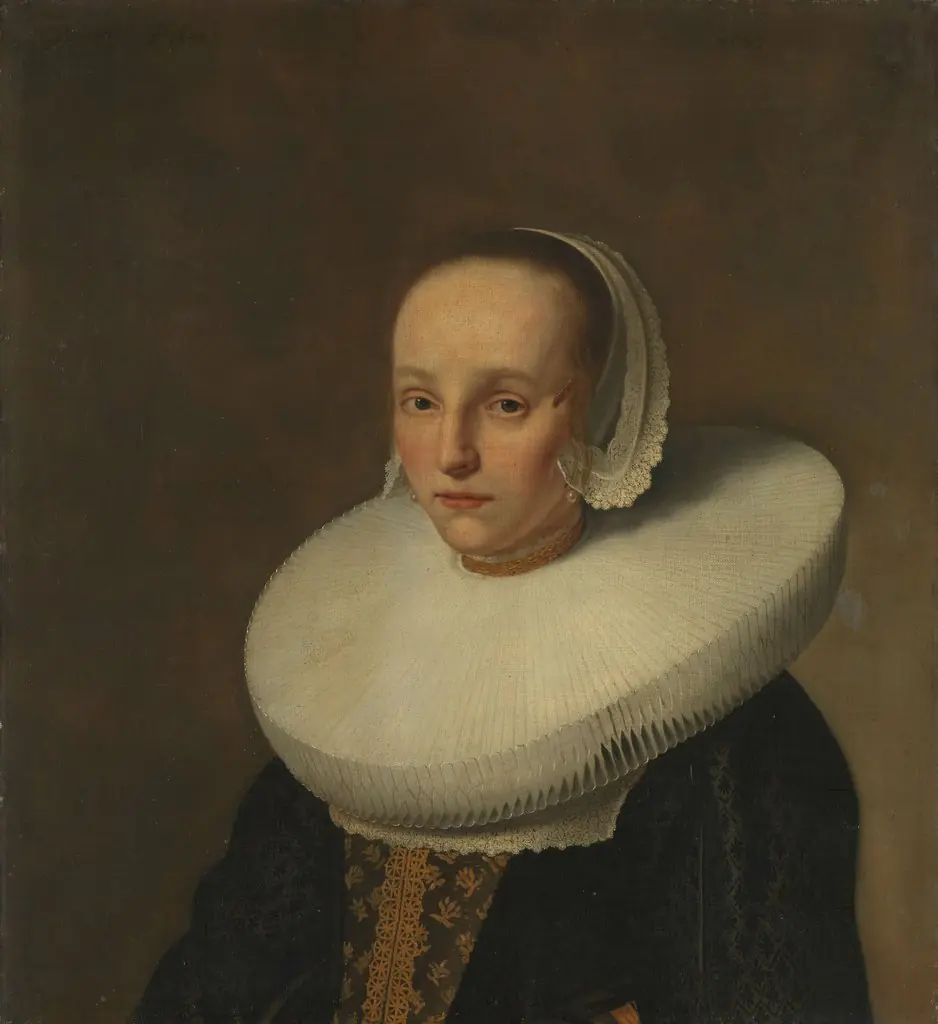 Anna van der Does (1609-50). Wife of Jan de Hooghe
 Portrait of Maria Overrijn van Schoterbosch (1599/1600-1638)