Artwork
Horse Racing at Kamo Shrine
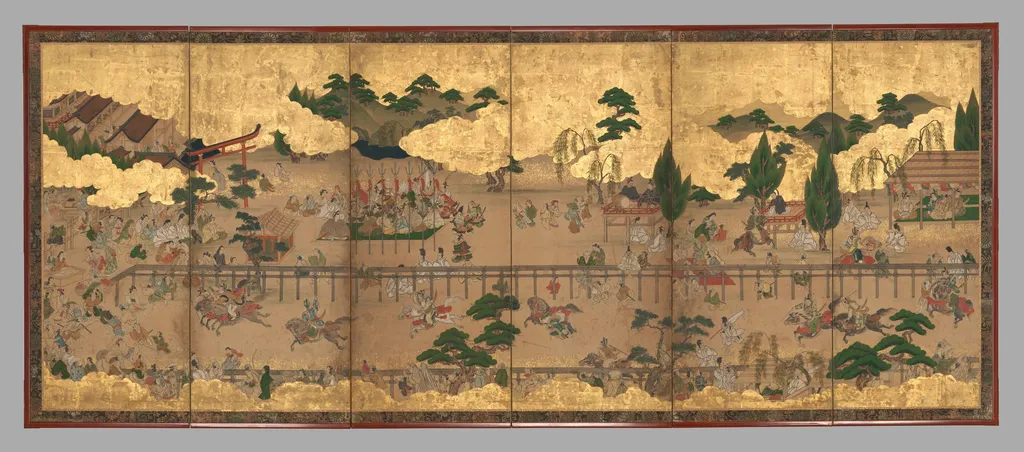
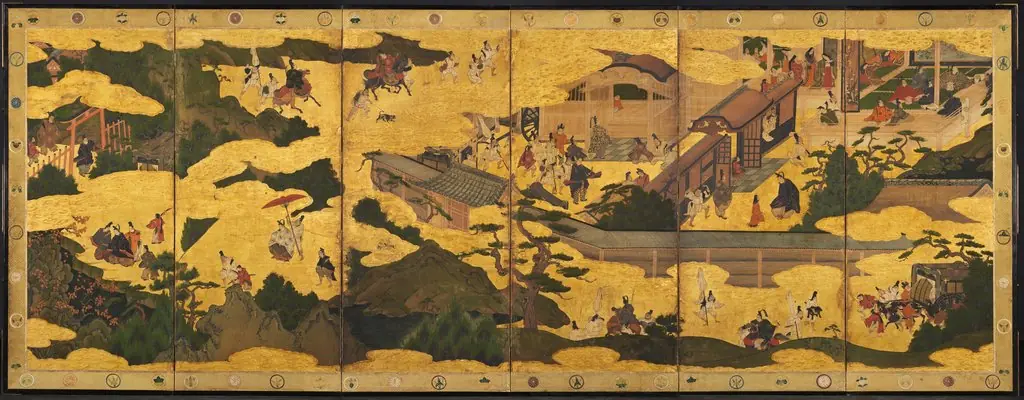
Horse Racing at Kamo Shrine is an unspecified painting. It dates from 1700 and is held in the collection of the Metropolitan Museum of Art. The work presents a multi‑panel composition that captures a horse‑racing festival at Kamo Shrine.
About this work
Overview
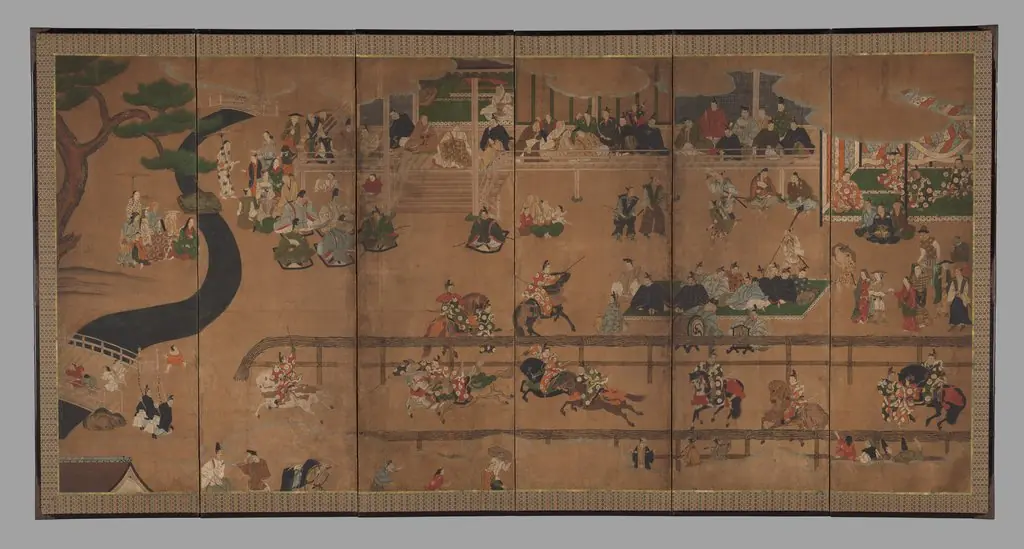
The work presents a multi‑panel composition that captures a horse‑racing festival at Kamo Shrine. Figures populate the foreground, observing the competition from the track, a bridge, and shaded spots beneath trees. Equine forms appear in motion and at rest, while distant structures and foliage create a layered sense of space.
Subject & Meaning
The painting records a communal celebration tied to the shrine’s annual rites, emphasizing the social dimension of the event. Spectators from various walks of life are shown together, suggesting the race’s role as a unifying public spectacle within the religious and civic calendar.
Technique & Style
Executed with a palette dominated by gold, green, brown and touches of red, the piece employs flat color fields and decorative outlines typical of Japanese narrative scrolls. The extensive use of gold leaf highlights architectural elements and adds a luminous quality, while the careful rendering of figures and horses demonstrates a refined level of craftsmanship.
Context
Horse racing at Kamo Shrine was a traditional activity linked to the shrine’s festivals, often depicted in visual culture to convey both the vitality of the event and its ritual significance. The work aligns with other Edo‑period genre paintings that document seasonal and communal festivities.
Legacy
By preserving a detailed visual record of the shrine’s racing ceremony, the painting serves as a valuable reference for scholars studying historical leisure practices and the visual language of Japanese festival art.
Artist & collection