Artwork
Portrait of Empress Maria Feodorovna, Wife of Emperor Paul I
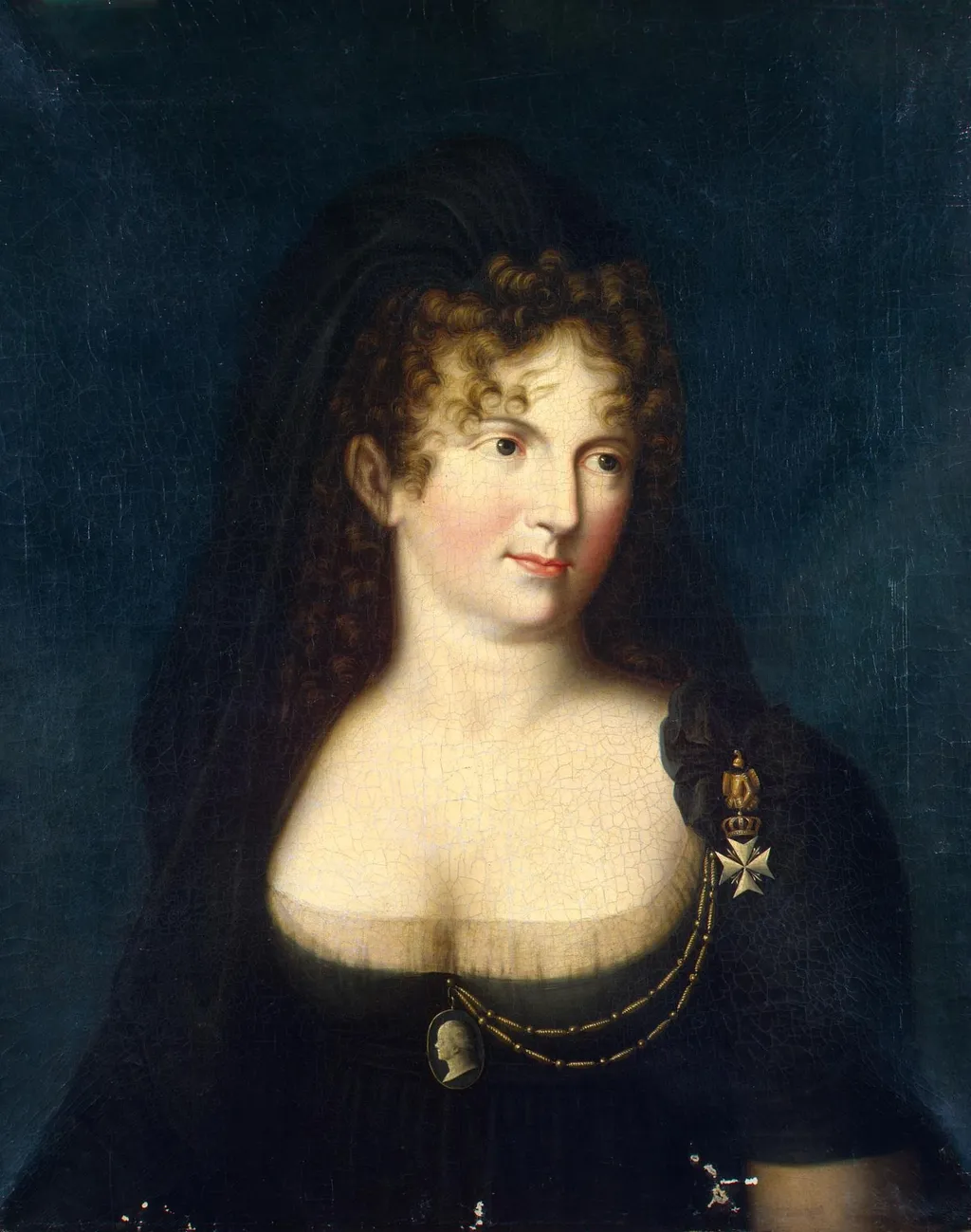
Portrait of Empress Maria Feodorovna, Wife of Emperor Paul I is an oil painting. It dates from 1825 and is held in the collection of the Hermitage Museum. The oil painting depicts Empress Maria Feodorovna, consort of Emperor Paul I, presented in a solemn pose.
About this work
Overview
The oil painting depicts Empress Maria Feodorovna, consort of Emperor Paul I, presented in a solemn pose. She wears a black mourning dress complemented by a veil, a gold necklace bearing a medallion, and a decorative brooch on her left shoulder. The backdrop is a deep blue, enhancing the work’s restrained palette and the dignified expression of the sitter.
Subject & Meaning
Maria Feodorovna is shown in traditional mourning attire, indicating a period of bereavement, likely following the death of a close family member. The medallion on her necklace, which contains a miniature portrait, suggests a personal tribute, reinforcing the intimate and reflective tone of the composition.
Technique & Style
Executed in oil on canvas, the artist employs a limited chromatic scheme of blacks, golds, and dark blues, creating a unified, somber atmosphere. Fine brushwork renders the texture of the veil and the sheen of the jewelry, while the soft modeling of the face conveys a calm, contemplative demeanor.
Context
The portrait aligns with late 18th‑century Russian court portraiture, where mourning dress and symbolic jewelry were commonly used to convey personal loss and dynastic continuity. The inclusion of a portrait medallion reflects the era’s practice of embedding familial connections within formal representations.
Artist & collection
