Artwork
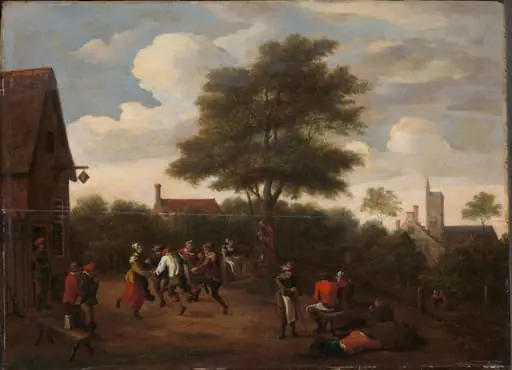
Peasants making merry
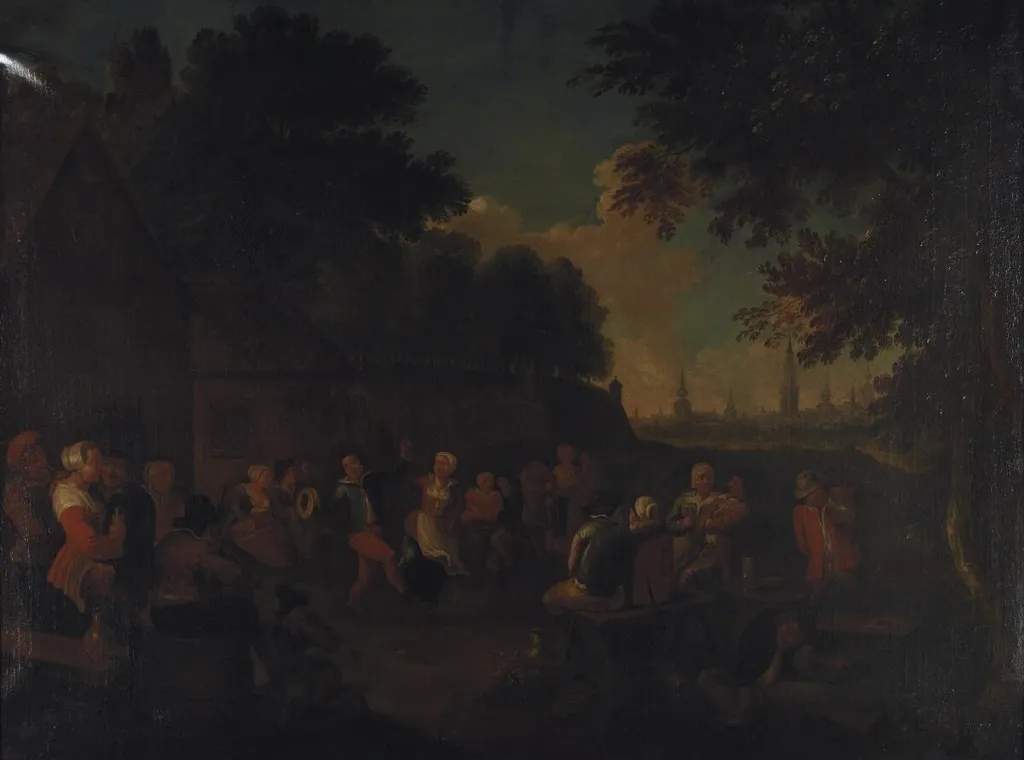
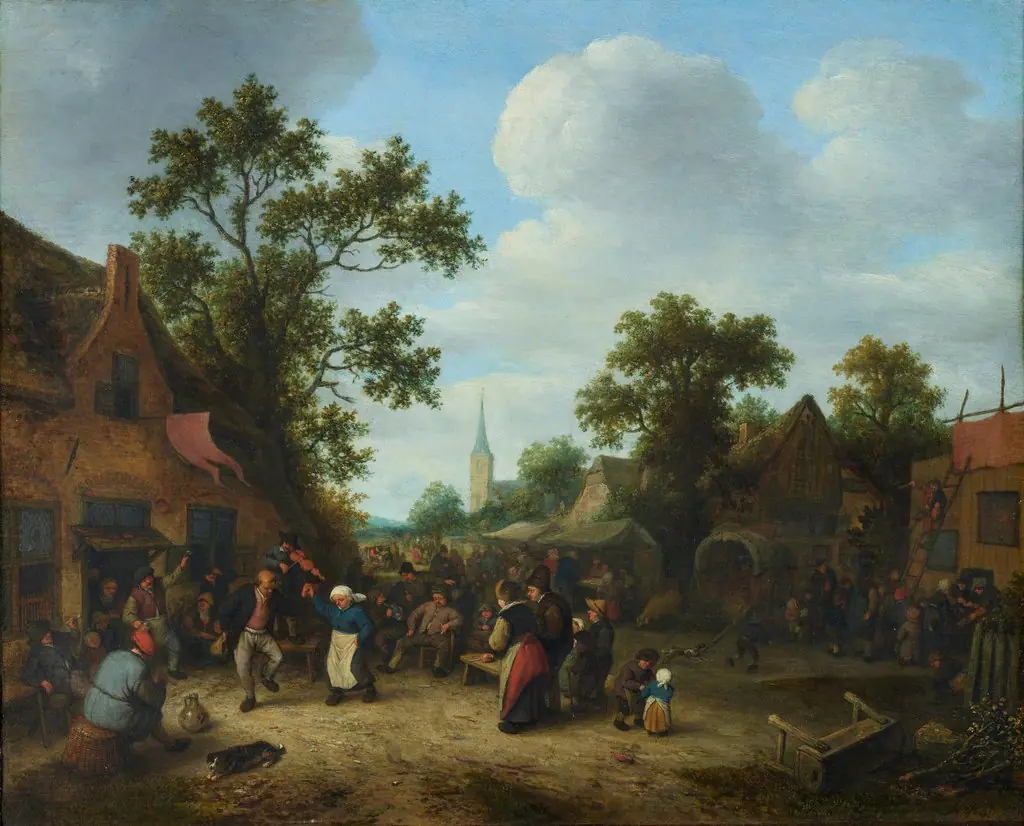
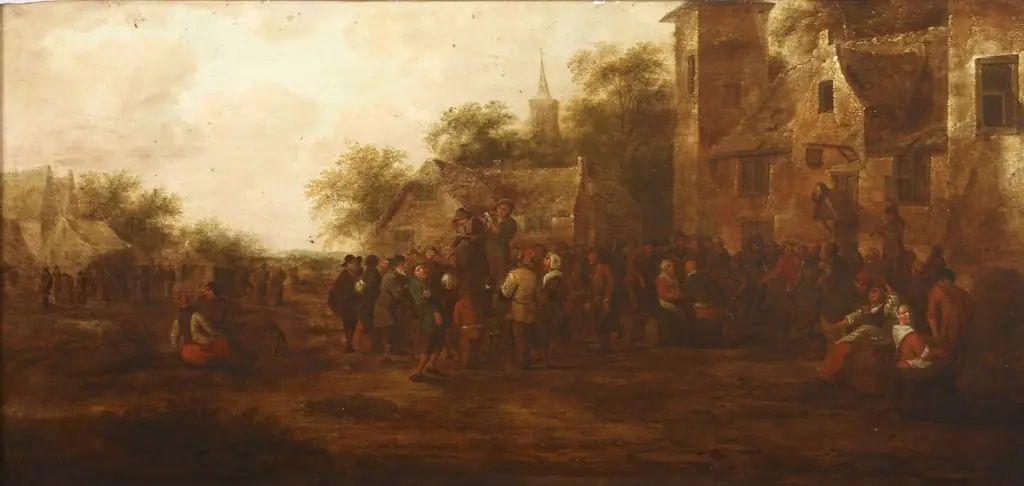
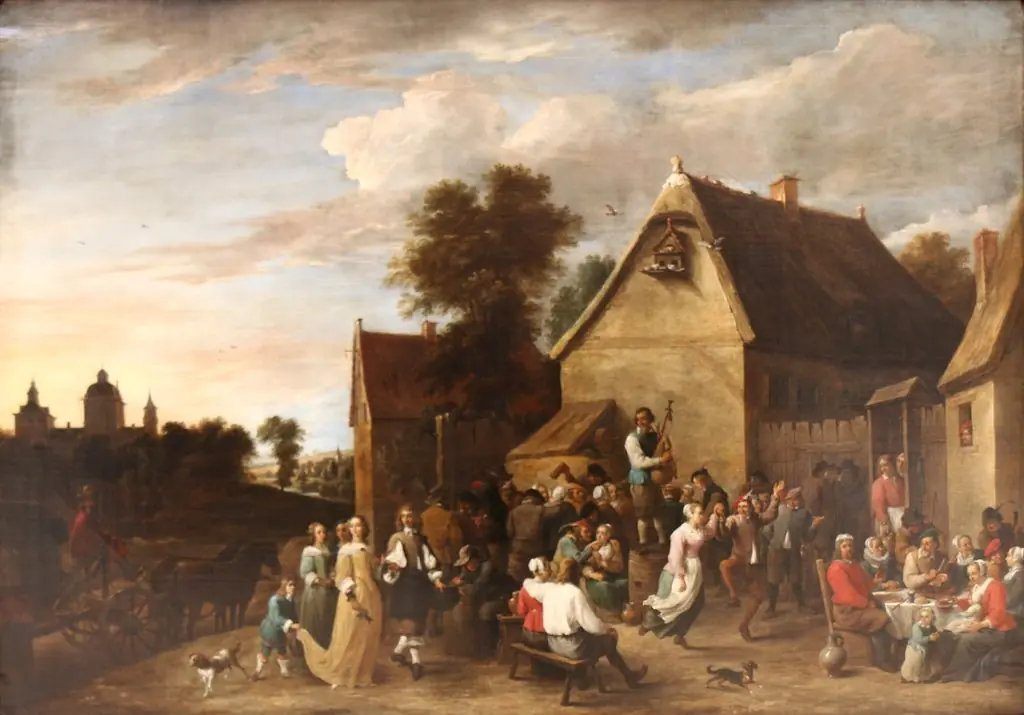
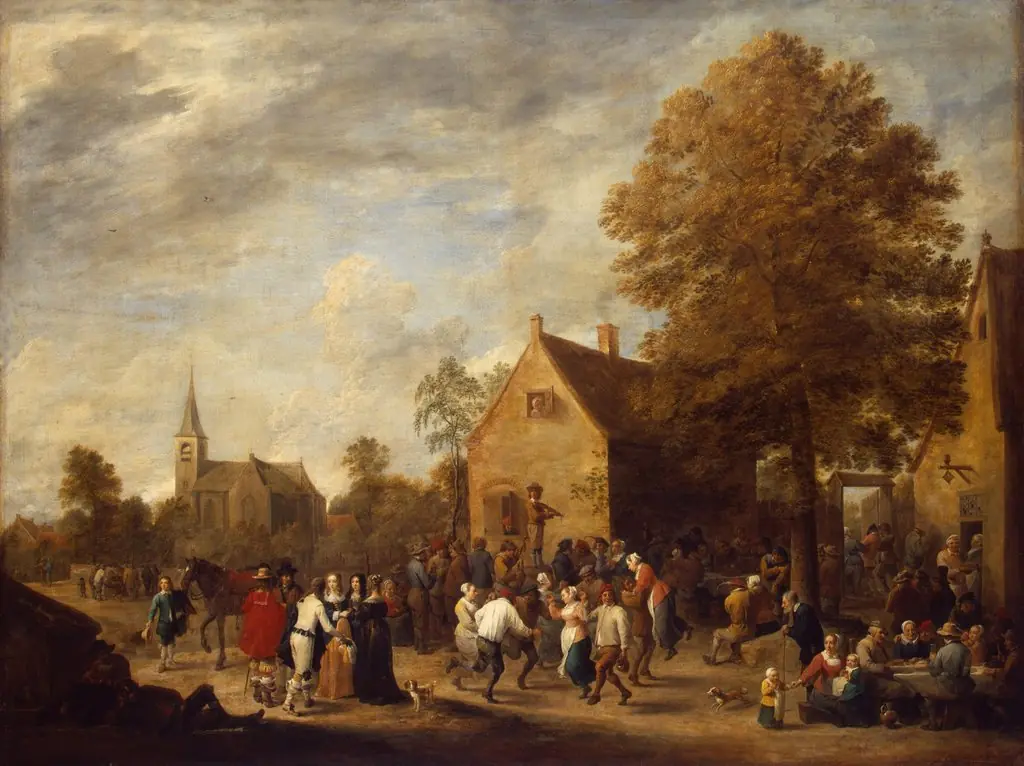
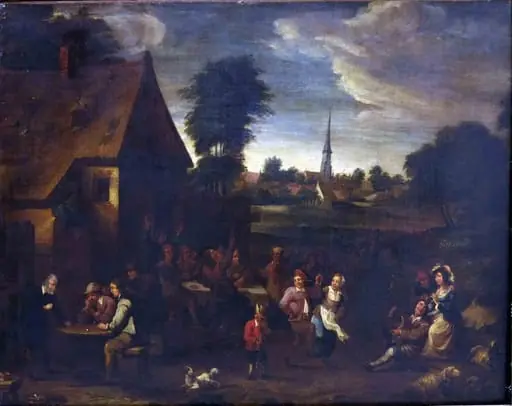
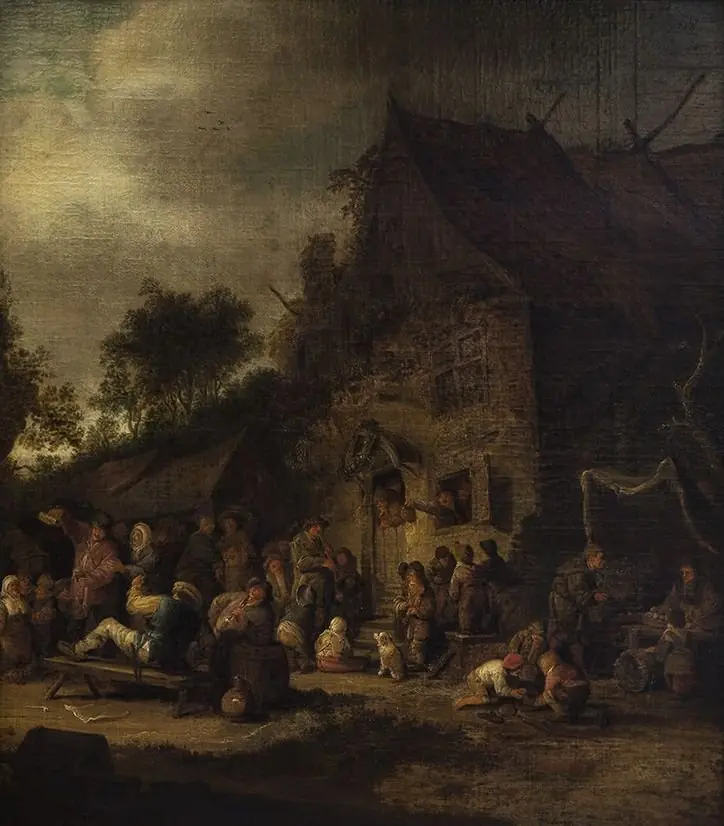
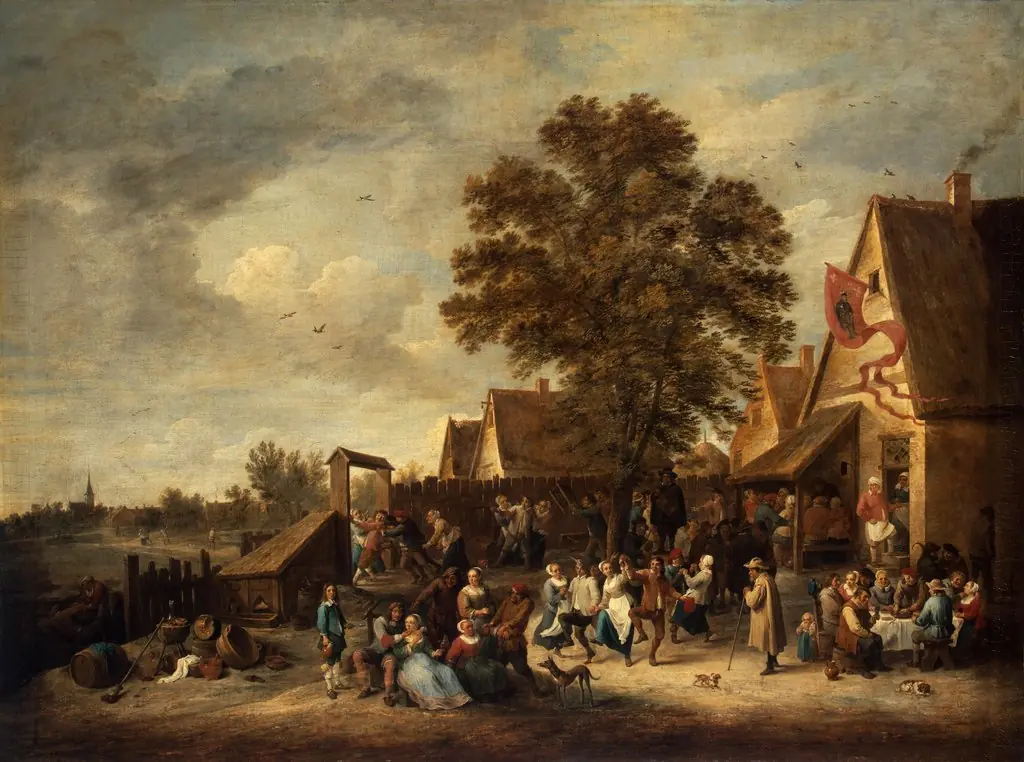
Peasants making merry is an oil painting by the Dutch Golden Age artist Unknown. It dates from 1660 and is held in the collection of the National Library of Wales. This oil painting captures a rural celebration in a forested setting, where peasants engage in dance and communal merriment.
About this work
Overview
This oil painting captures a rural celebration in a forested setting, where peasants engage in dance and communal merriment. The composition balances intimate human activity with a distant urban horizon, grounding the scene in both earthly immediacy and broader social context. The artist’s use of light, texture, and color draws attention to the vitality of the moment without idealizing it.
Subject & Meaning
The painting portrays ordinary laborers in a moment of respite, emphasizing collective joy rather than individual heroism. Their clothing, gestures, and interactions suggest seasonal festivity or harvest celebration. The presence of a distant city implies a contrast between rural life and urban centers, subtly acknowledging the social hierarchy of the time without overt commentary.
Technique & Style
The palette blends muted earth tones with bursts of red, blue, and yellow, reinforcing the vibrancy of the gathering without artificial brightness.
Chiaroscuro is employed to model forms and define spatial depth, with light falling selectively on faces and figures to guide the viewer’s eye. Thick impasto strokes in clothing and foliage add tactile richness, enhancing the sense of movement and texture. The palette blends muted earth tones with bursts of red, blue, and yellow, reinforcing the vibrancy of the gathering without artificial brightness.
History & Provenance
The work emerged from a tradition of Northern European genre painting in the late 16th or early 17th century, though its exact origin and early ownership remain undocumented. It likely circulated among regional collectors before entering a public collection. No definitive records link it to a specific patron or commission, suggesting it was produced for the open market.
Context
During this period, depictions of peasant life gained popularity in the Low Countries, reflecting both growing civic pride and a fascination with everyday realism. Unlike religious or aristocratic subjects, such scenes offered a secular view of society, valued for their authenticity. The inclusion of a distant cityscape aligns with contemporary landscape conventions that framed rural life within a wider world.
Legacy
The painting contributes to a broader artistic lineage that elevated ordinary life as worthy of representation. Its technical choices—particularly the combination of chiaroscuro and impasto—reflect evolving painterly methods in early modern Europe. While not widely reproduced, it remains a quiet example of how genre scenes helped redefine the boundaries of acceptable subject matter in Western art.
Artist & collection

 Domestic Scene
 Giacomo and Cardinal Marco, investing Andrea, Abbot of San Zeno, with his Benefice
 The Nymph of Fontainebleau
 Portrait of a Woman
 Madonna and Child with Saints in the Enclosed Garden
 Venus and Minerva
 Family Group of Four on Sofa
 Wall painting from Room H of the Villa of P. Fannius Synistor at Boscoreale