Artwork
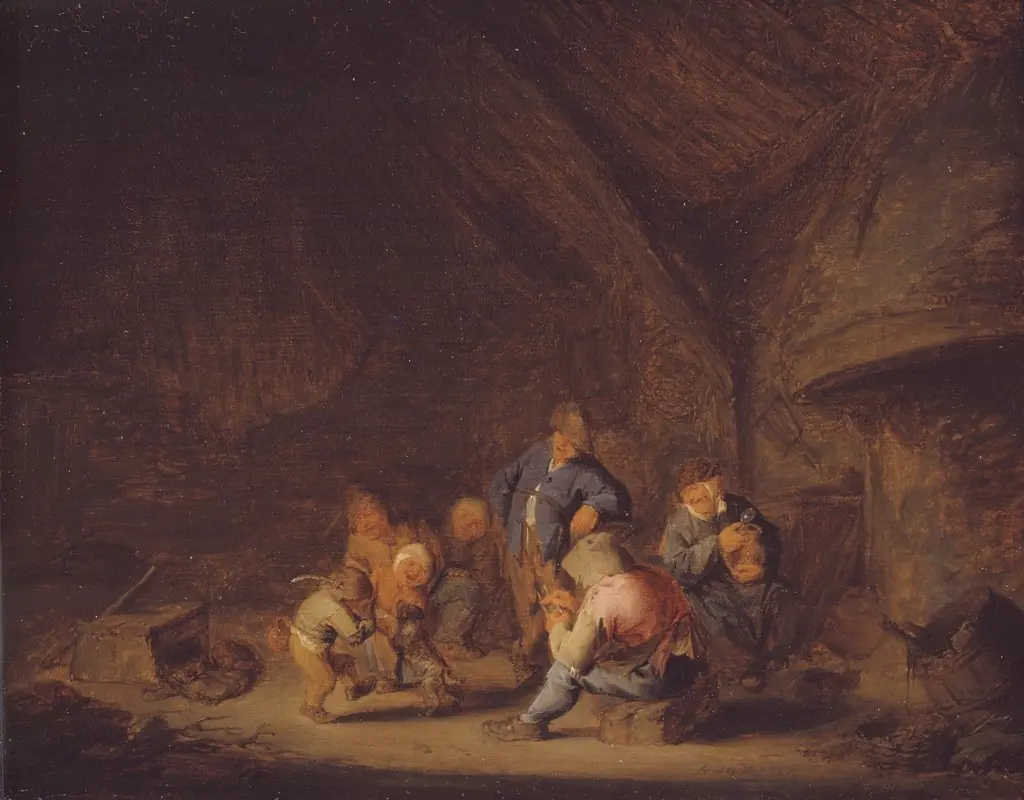
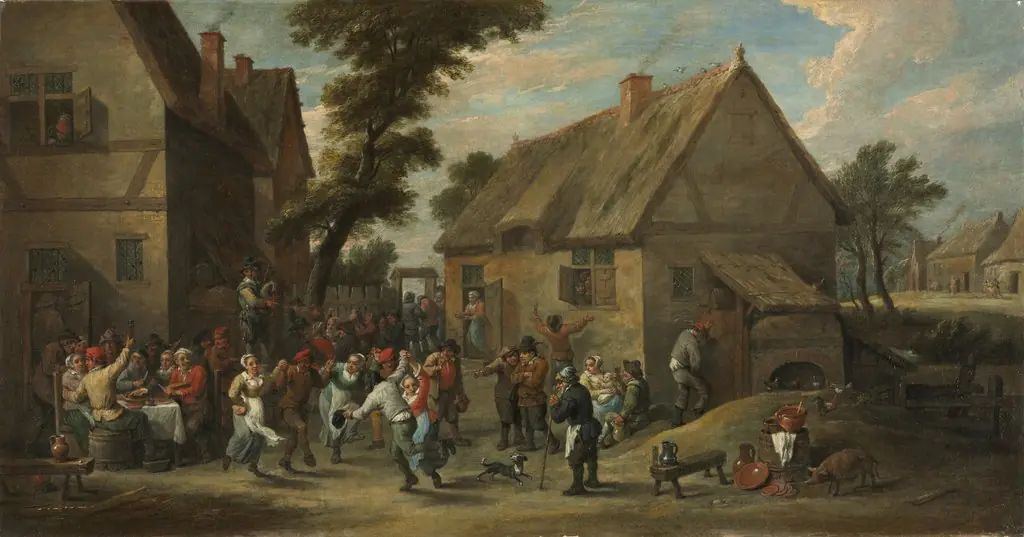
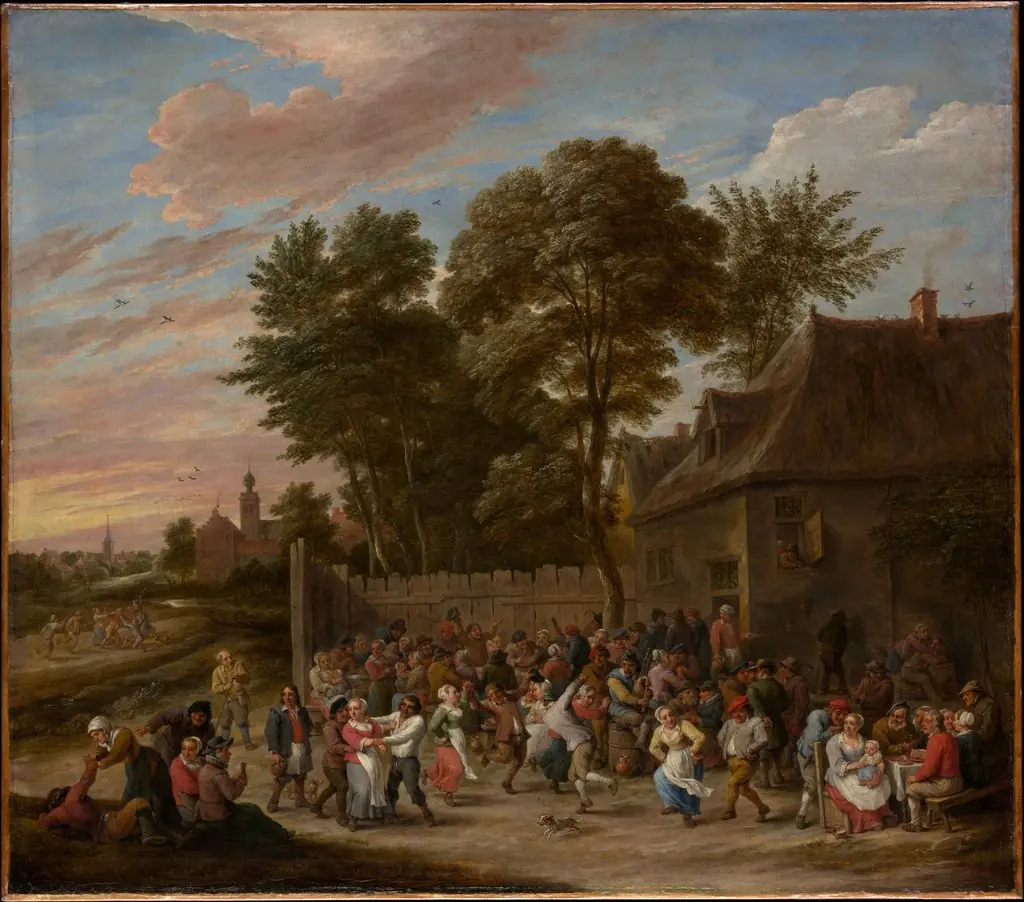
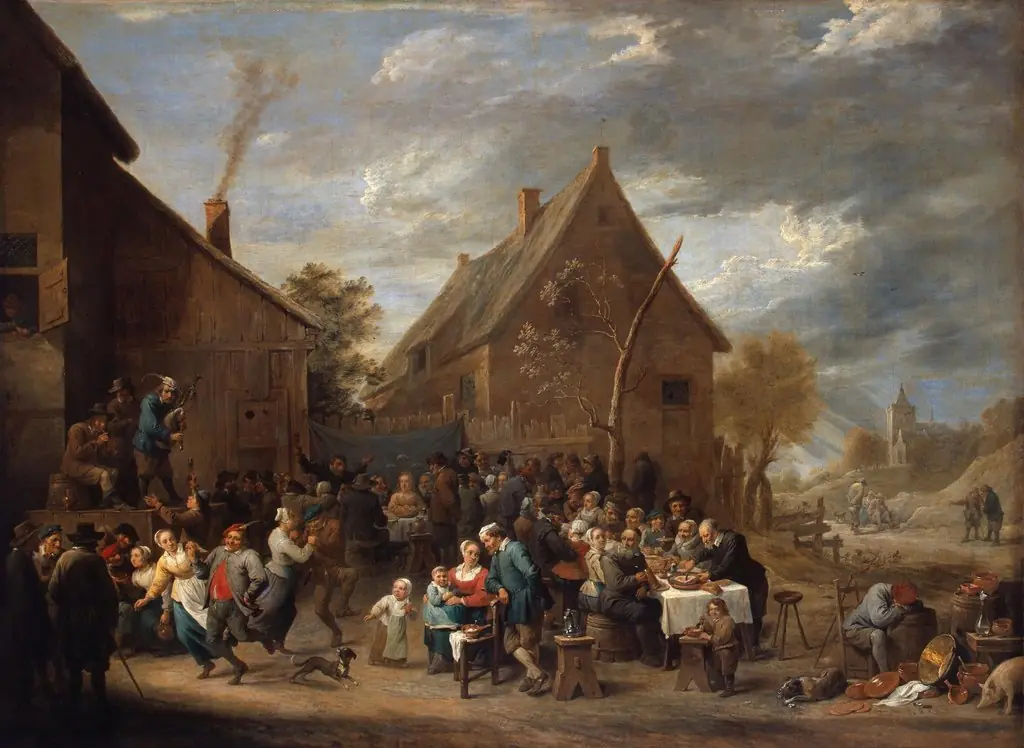
Village Festival with Dancing Peasant Couple
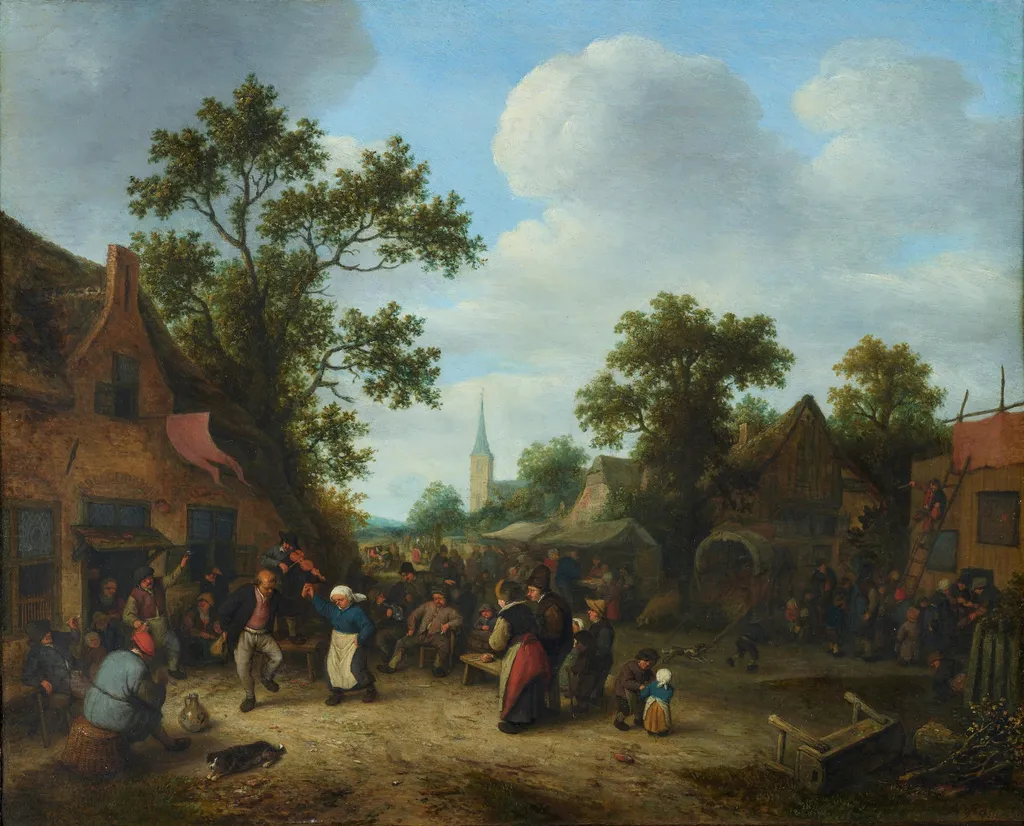
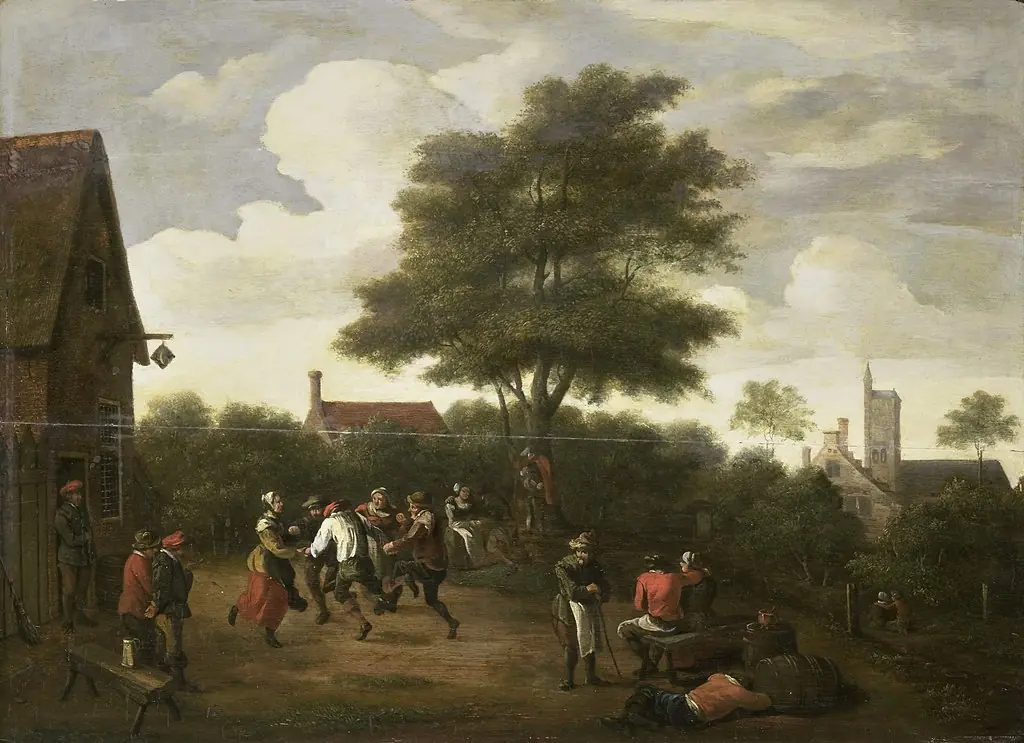
Village Festival with Dancing Peasant Couple is a paint painting by the Dutch Golden Age artist Adriaen van Ostade. It dates from 1665 and is held in the collection of the Gemäldegalerie Berlin.
About this work
Overview
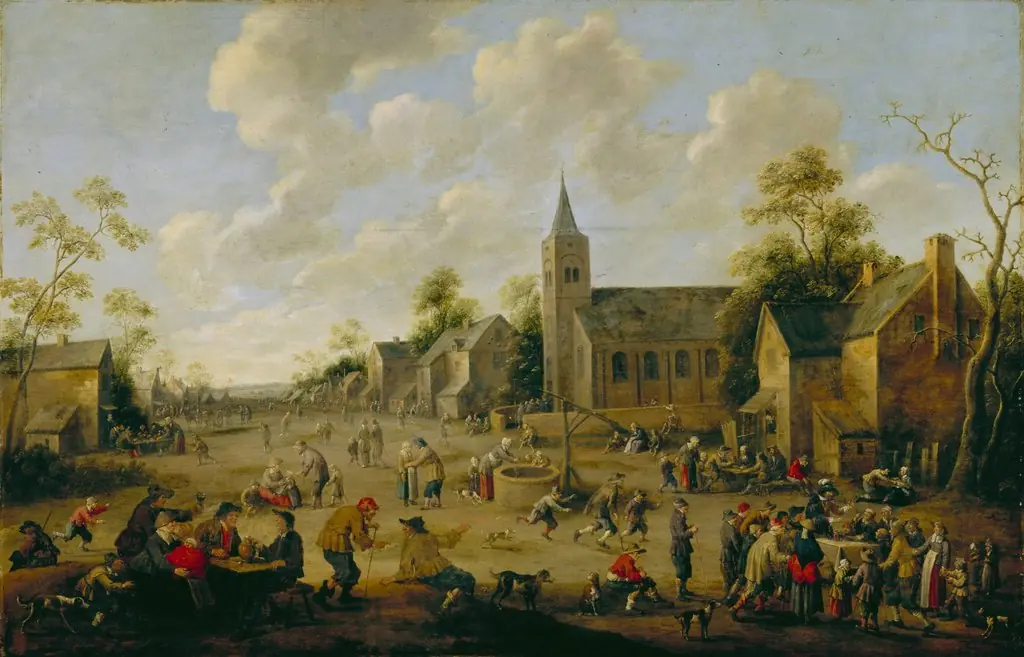
Painted in 1665 by Adriaen van Ostade, this oil on panel depicts a rural celebration in a Dutch village. The scene centers on a pair of peasants dancing amid a small crowd, their movements suggesting spontaneous joy. The composition captures a moment of communal festivity, framed by modest wooden structures and leafy trees that anchor the setting in everyday rural life.
Subject & Meaning
The painting portrays a local festival, likely tied to a seasonal or religious occasion, where villagers gather to dance, play music, and socialize.
The painting portrays a local festival, likely tied to a seasonal or religious occasion, where villagers gather to dance, play music, and socialize. The dancing couple, dressed in simple, worn garments, becomes the emotional core, symbolizing the dignity and vitality of peasant life. Ostade avoids idealization, instead emphasizing authentic, unpretentious human interaction within a close-knit community.
Technique & Style
Ostade employs a muted palette of earth tones and soft lighting to evoke the warmth of an outdoor gathering. Brushwork is detailed yet unobtrusive, capturing textures of fabric, wood, and skin with quiet precision. Figures are arranged in a loose, naturalistic group, avoiding theatricality. The background recedes gently, maintaining focus on the foreground activity without distracting detail.
History & Provenance
The painting entered the collection of the Gemäldegalerie Berlin in the 19th century, likely acquired during a period of renewed interest in Dutch Golden Age genre painting. Its attribution to Ostade has remained consistent since its cataloging, supported by stylistic parallels to his other works from the 1660s. No significant alterations or reworkings are documented in its history.
Context
In mid-17th-century Holland, genre scenes like this one gained popularity among urban collectors drawn to depictions of rural simplicity. Ostade, alongside peers like Jan Steen, elevated everyday moments into subjects worthy of artistic attention. These works reflected broader cultural values—respect for labor, community, and the quiet rhythms of provincial life.
Legacy
Ostade’s depiction of peasant life influenced later genre painters in the Netherlands and beyond, reinforcing the legitimacy of ordinary subjects in art. While not widely celebrated in his own time as a revolutionary, his consistent focus on authentic human behavior helped shape the trajectory of Dutch realism. Today, the painting remains a quiet testament to the social fabric of rural communities in early modern Europe.
Own this work as a print
Artist & collection
Artist
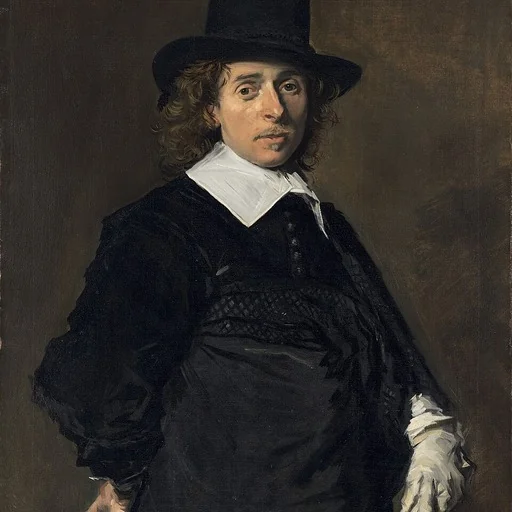
Adriaen van Ostade (baptized as Adriaen Jansz Hendricx 10 December 1610 – buried 2 May 1685) was a Dutch Golden Age painter of genre works, showing the everyday life of ordinary men and women.