Artwork
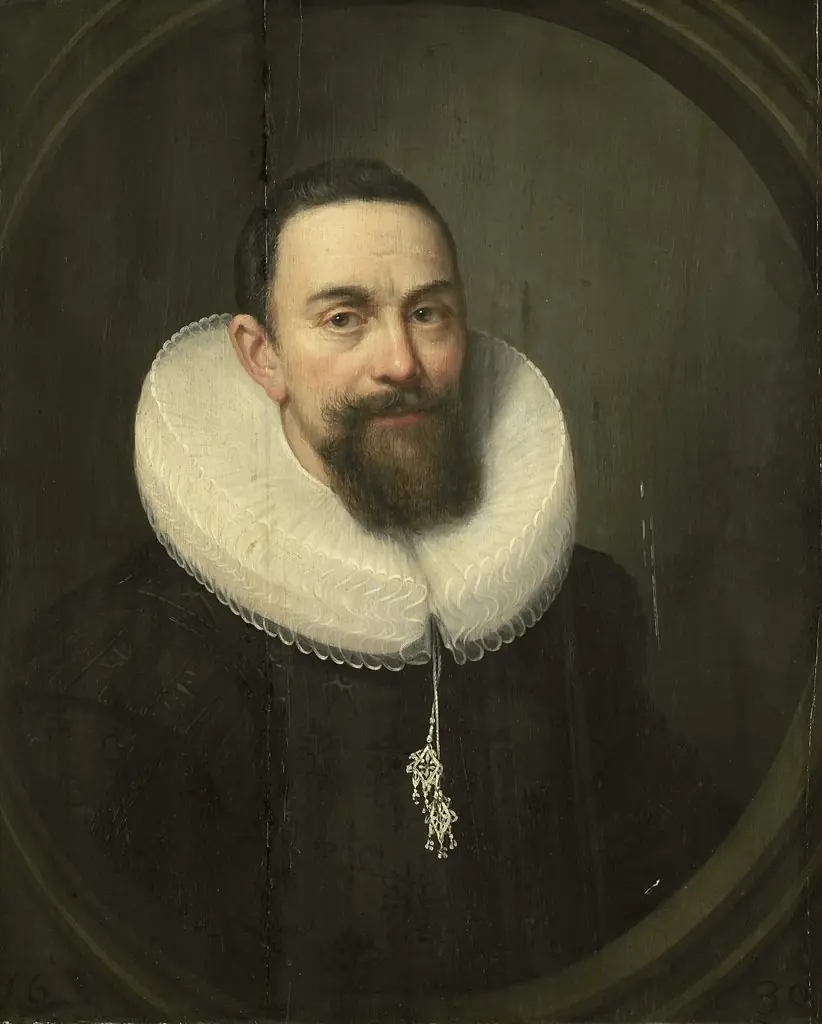
Portrait of Nicolaes Grevinckhoven (1577-1632)
Portrait of Nicolaes Grevinckhoven (1577-1632) is an oil painting. It dates from 1619 and is held in the collection of the Rijksmuseum. This oil portrait presents Nicolaes Grevinckhoven, a Dutch figure who lived from 1577 to 1632.
About this work
The use of chiaroscuro, a technique that emphasizes contrasts between light and dark, adds depth and dimension to the portrait.
The painting depicts a man with dark hair and a short beard, wearing a black shirt with a white ruffled collar. He is shown from the chest up, facing forward with a neutral expression. The background of the painting is dark, which helps to highlight the subject's features. The man's attire and the style of the painting suggest that it was created during the early 17th century. The use of chiaroscuro, a technique that emphasizes contrasts between light and dark, adds depth and dimension to the portrait.
Overview
This oil portrait presents Nicolaes Grevinckhoven, a Dutch figure who lived from 1577 to 1632. Rendered from the chest upward, the sitter faces the viewer directly, his expression restrained. The composition is set against a deep, unlit background that isolates the figure and emphasizes his facial features.
Subject & Meaning
Grevinckhoven is shown with dark hair and a neatly trimmed beard, dressed in a black shirt accented by a white, ruffled collar. The plain yet dignified attire reflects the modest status of a merchant or civic official typical of the Dutch Republic in the early 1600s, while the neutral gaze suggests a focus on personal identity rather than narrative.
Technique & Style
The painter employs chiaroscuro, contrasting the illuminated face and collar with the surrounding darkness to create a three‑dimensional effect. Fine brushwork renders the texture of the fabric and the subtle modeling of the skin, while the limited palette of blacks, whites, and earth tones underscores the sober aesthetic of the period.
History & Provenance
Created in the early seventeenth century, the work has been attributed to an anonymous Dutch artist working in the tradition of portraiture prevalent in the Dutch Golden Age. Documentation of its ownership is scarce, and the painting now resides in a public collection, where it serves as a representative example of period portraiture.
Artist & collection