Artwork
Vaishnava Devotee with Two Women
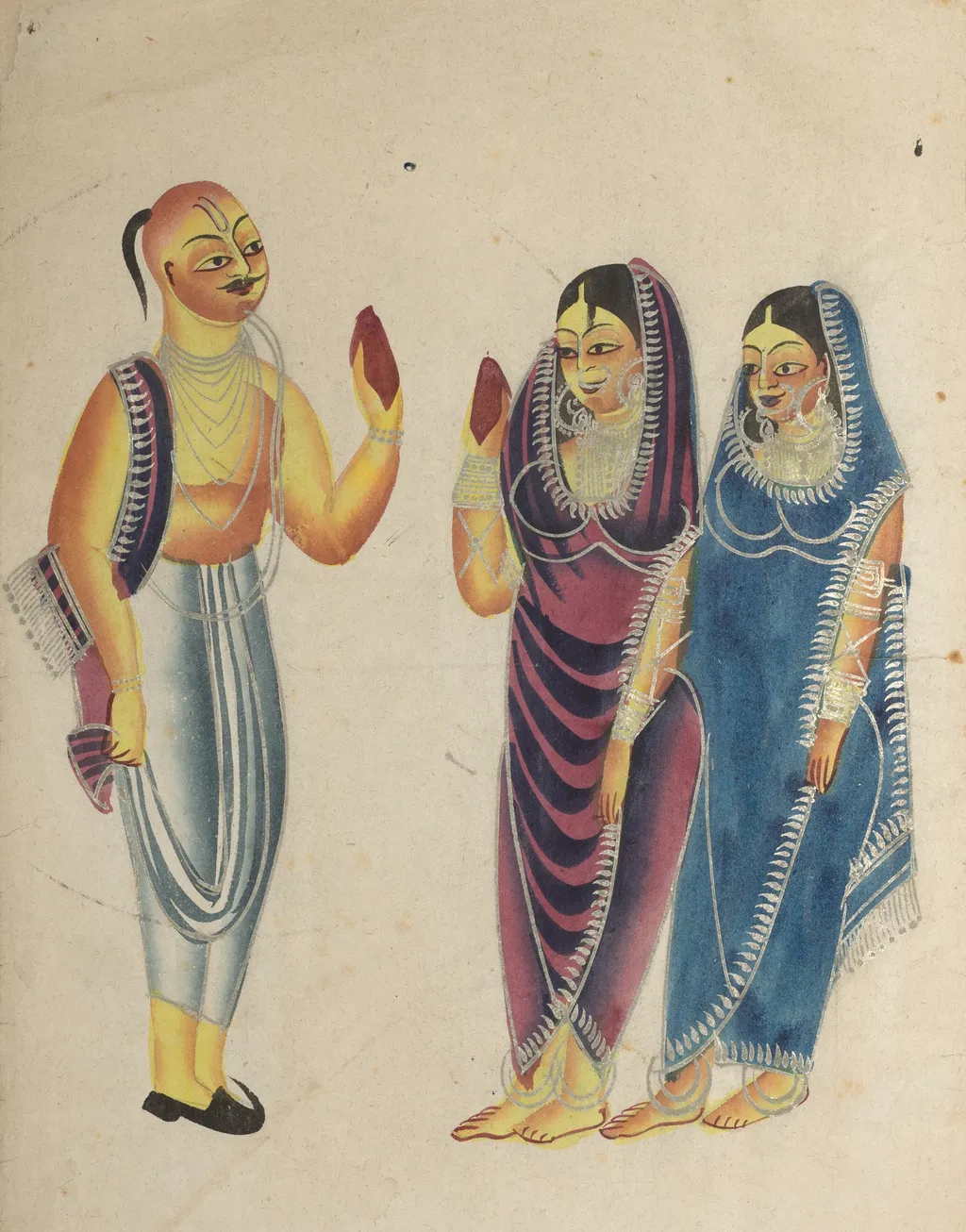
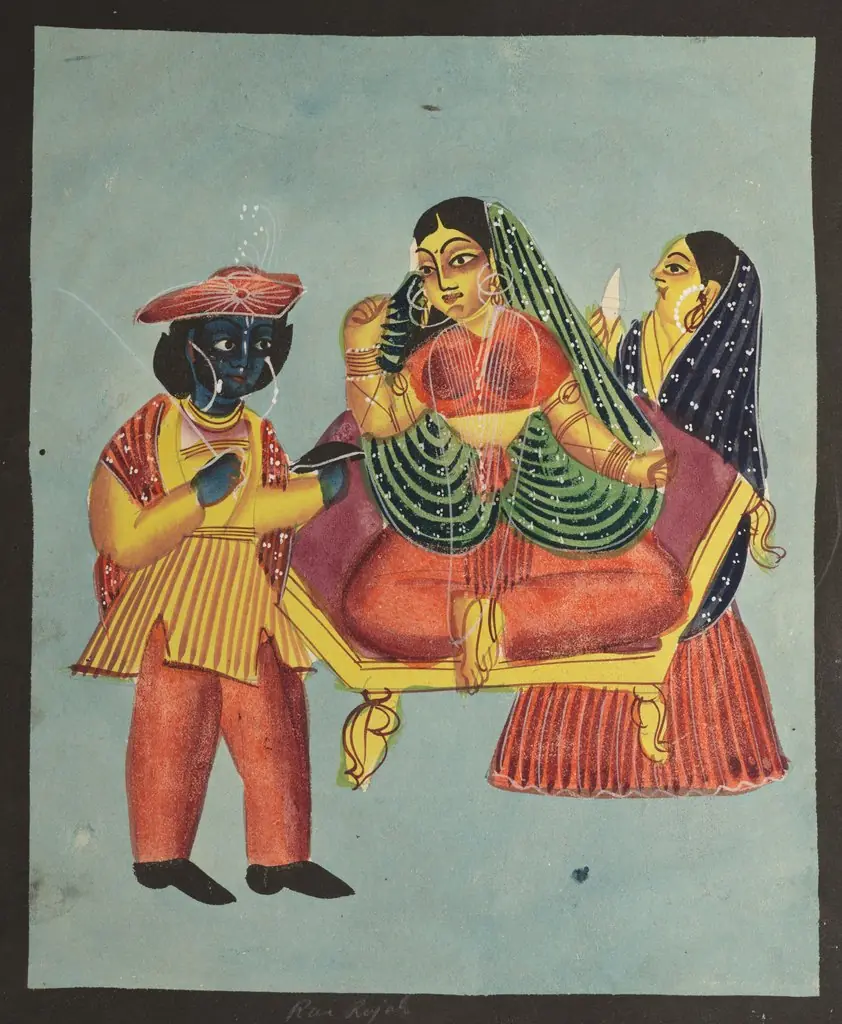
Vaishnava Devotee with Two Women is an unspecified painting. It dates from 1896 and is held in the collection of the Cleveland Museum of Art. The work depicts three figures arranged side by side.
About this work
Overview
A partially nude male figure stands on the left, adorned with a gold necklace and a striped lower garment, while clutching a red object in his right hand.
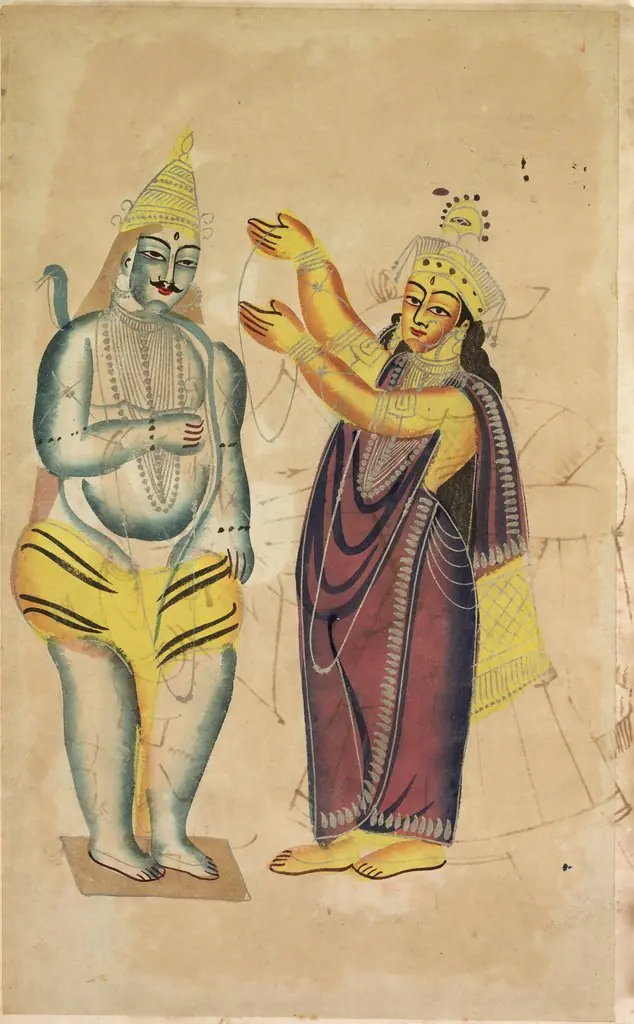
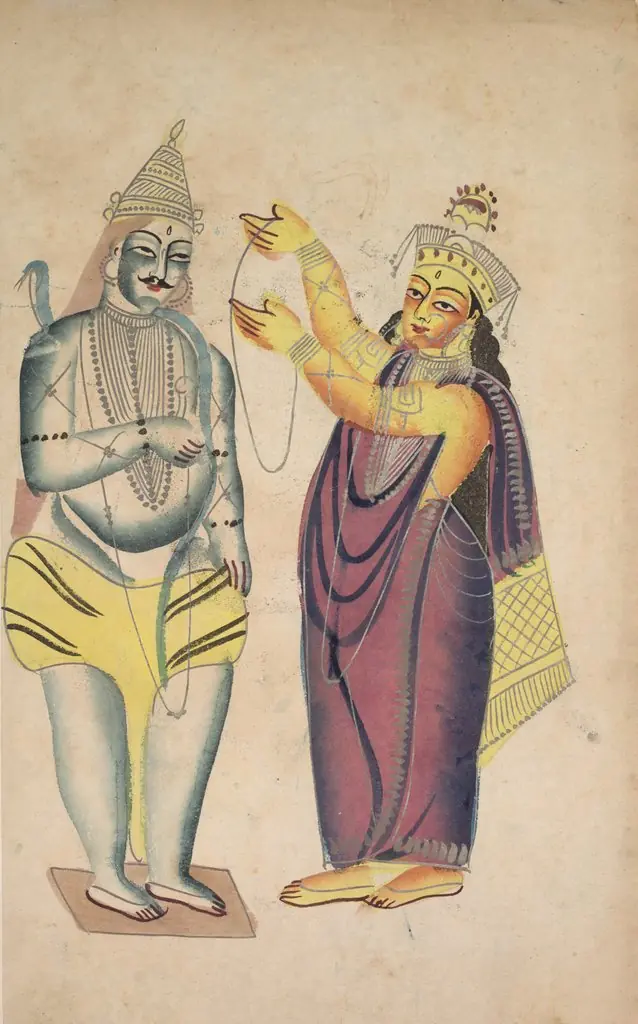
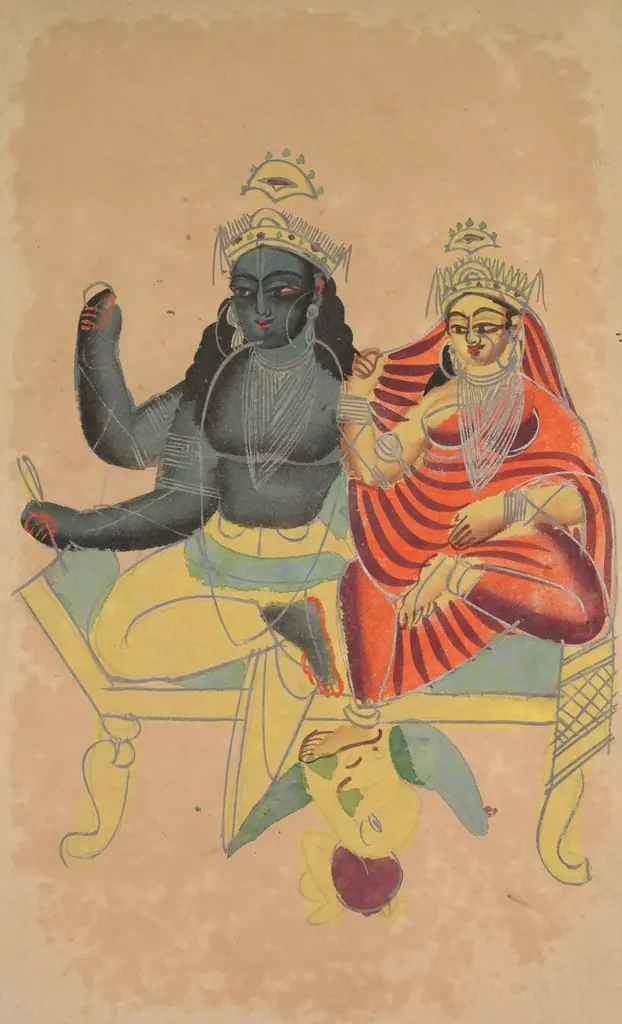
The work depicts three figures arranged side by side. A partially nude male figure stands on the left, adorned with a gold necklace and a striped lower garment, while clutching a red object in his right hand. To his right, two women are shown in richly colored, patterned robes, each heavily ornamented with necklaces, bracelets, and elaborate headpieces. The composition is flat, with little suggestion of a surrounding environment.
Subject & Meaning
The central male figure, with his exposed chest and gold adornments, is commonly identified as a Vaishnava devotee, a follower of the Hindu god Vishnu. The red object he holds may symbolize a ritual offering or a devotional implement. The accompanying women, dressed in opulent attire, likely represent attendant figures or devotees, underscoring themes of piety and communal worship within the Vaishnavite tradition.
Technique & Style
Executed in a stylized manner, the painting employs bold, contrasting colors and intricate patterning on the garments. The figures are rendered with simplified facial features, emphasizing expression through gesture and ornamentation rather than detailed realism. The use of gold leaf or pigment for the necklace and the vivid red accent highlights the importance of material wealth in devotional representation.
History & Provenance
The artwork originates from the Indian subcontinent, reflecting the visual language of Vaishnavite devotional art. Its precise date, workshop, and original patron remain undocumented, and it entered the public domain through a private collection before being catalogued by the museum that now holds it.
Context
During the period when Vaishnavism flourished, religious paintings often portrayed devotees in intimate groupings, focusing on ritual objects and elaborate dress to convey spiritual status. This piece aligns with that tradition, foregrounding the act of worship while minimizing narrative background, a common approach in devotional panels intended for private or temple settings.
Legacy
The painting contributes to the broader understanding of devotional iconography in South Asian art, illustrating how material splendor and simplified human forms were employed to convey religious devotion. It serves as a reference point for scholars examining the visual conventions of Vaishnava representation and the role of gendered participants in ritual imagery.
Artist & collection