Artwork
Krishna Exacts a Toll from the Milkmaids: Dana-Lila, from a Bhagavata Purana
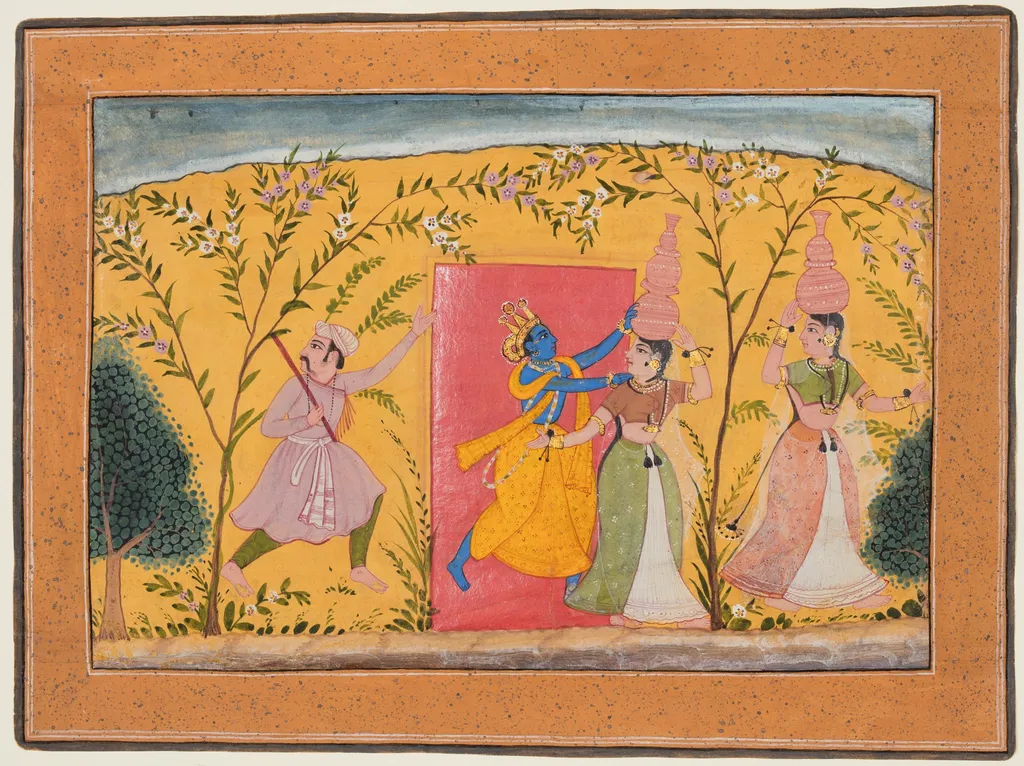
Krishna Exacts a Toll from the Milkmaids: Dana-Lila, from a Bhagavata Purana is an unspecified painting. It dates from 1600 and is held in the collection of the Cleveland Museum of Art.
About this work
Overview
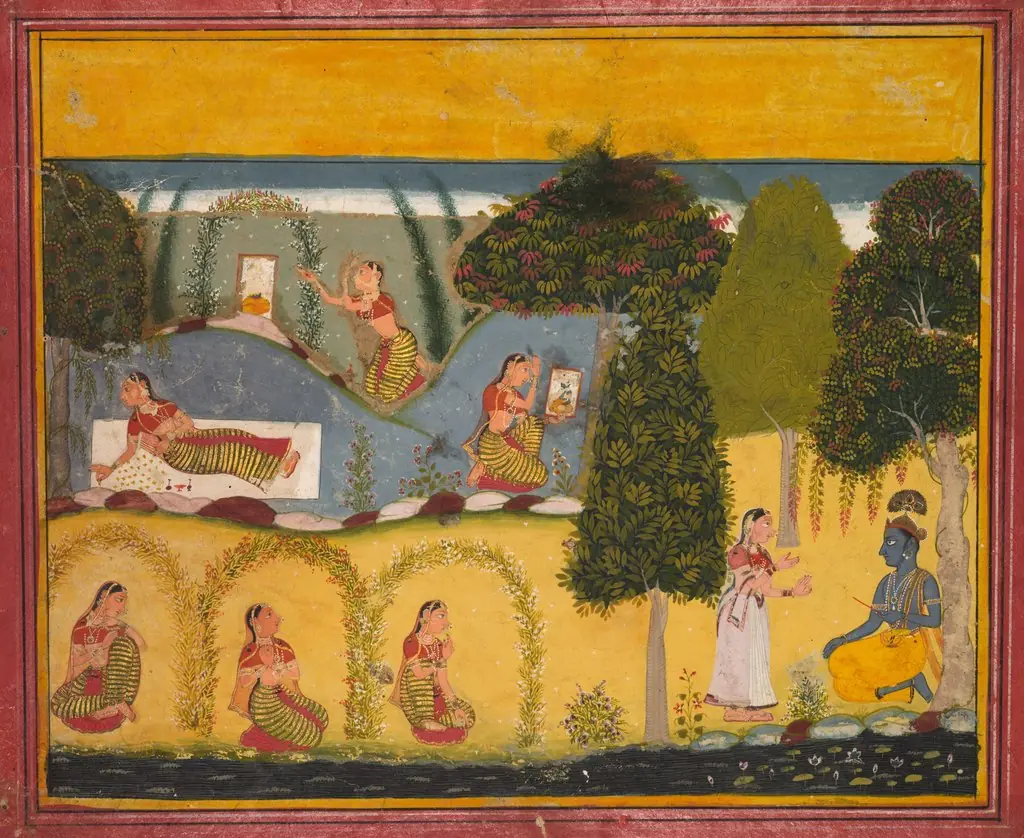
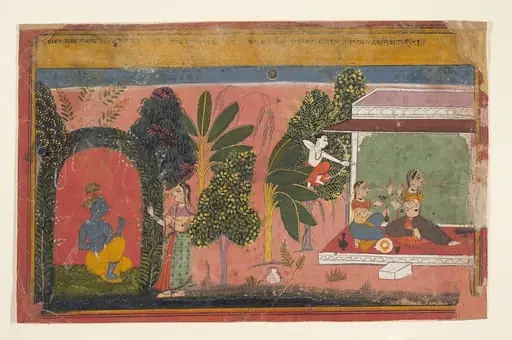
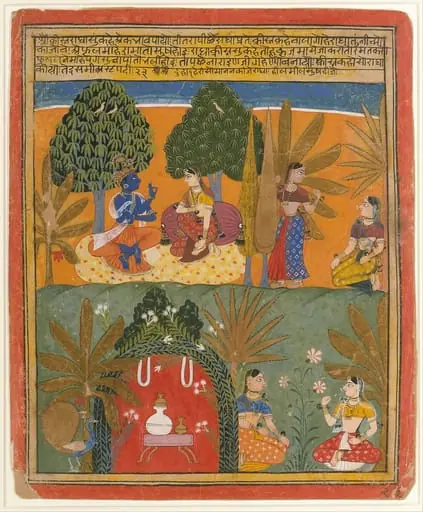
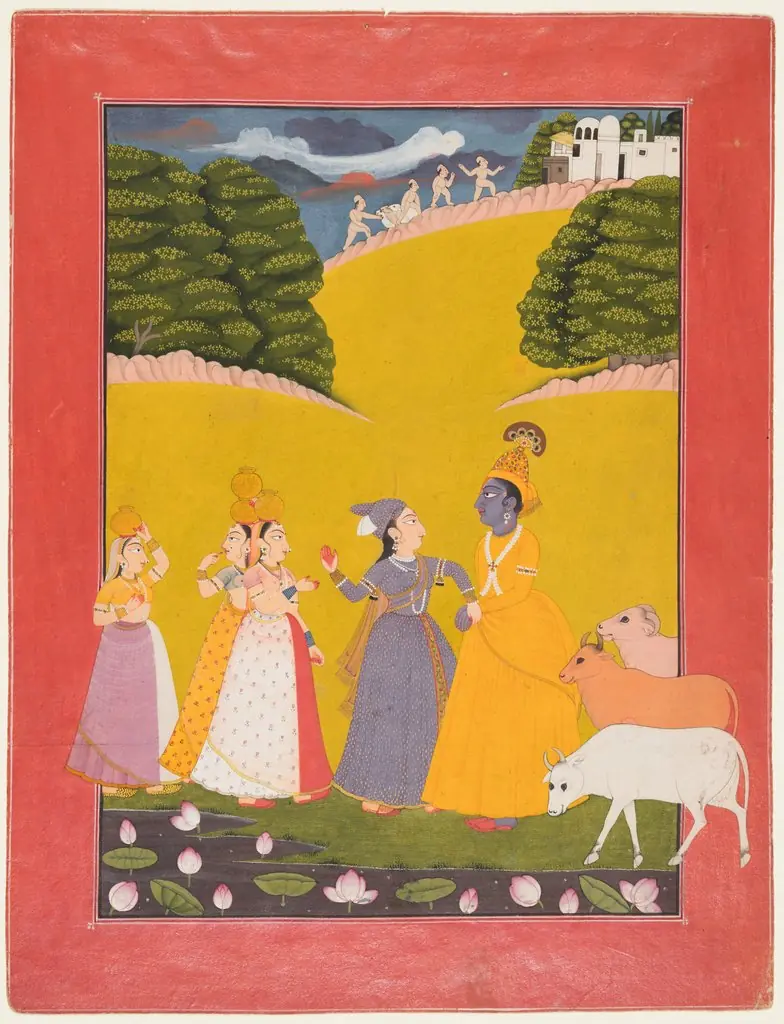
This painting, titled Krishna Exacts a Toll from the Milkmaids: Dana-Lila, illustrates a specific episode from the ancient Hindu text, the Bhagavata Purana.
This painting, titled Krishna Exacts a Toll from the Milkmaids: Dana-Lila, illustrates a specific episode from the ancient Hindu text, the Bhagavata Purana. It captures a moment of playful interaction between the deity Krishna and several milkmaids, known as gopis. The vibrant colors and distinct figures against a luminous background characterize this narrative scene, which is framed by flowering trees and a decorative border.
Subject & Meaning
The scene portrays the Dana-Lila, a popular narrative where Krishna, disguised or in his divine form, playfully intercepts milkmaids carrying their wares to market. He demands a "toll" of butter, milk, or yogurt, leading to a charming exchange. Here, Krishna, identifiable by his blue skin and flute, engages with the gopis, whose gestures suggest a mix of surprise, negotiation, and amusement, capturing the lighthearted spirit of this divine prank.
Technique & Style
The artwork employs a vivid palette, with figures rendered in bright hues like blue, yellow, green, and white, set against a radiant golden background. This luminous backdrop emphasizes the figures and their dynamic poses. The composition is framed by trees adorned with white blossoms, adding to the decorative quality. A distinctive speckled orange border further encloses the scene, characteristic of certain manuscript painting traditions.
Artist & collection