Artwork
Taking of the Toll, Dana-Lila
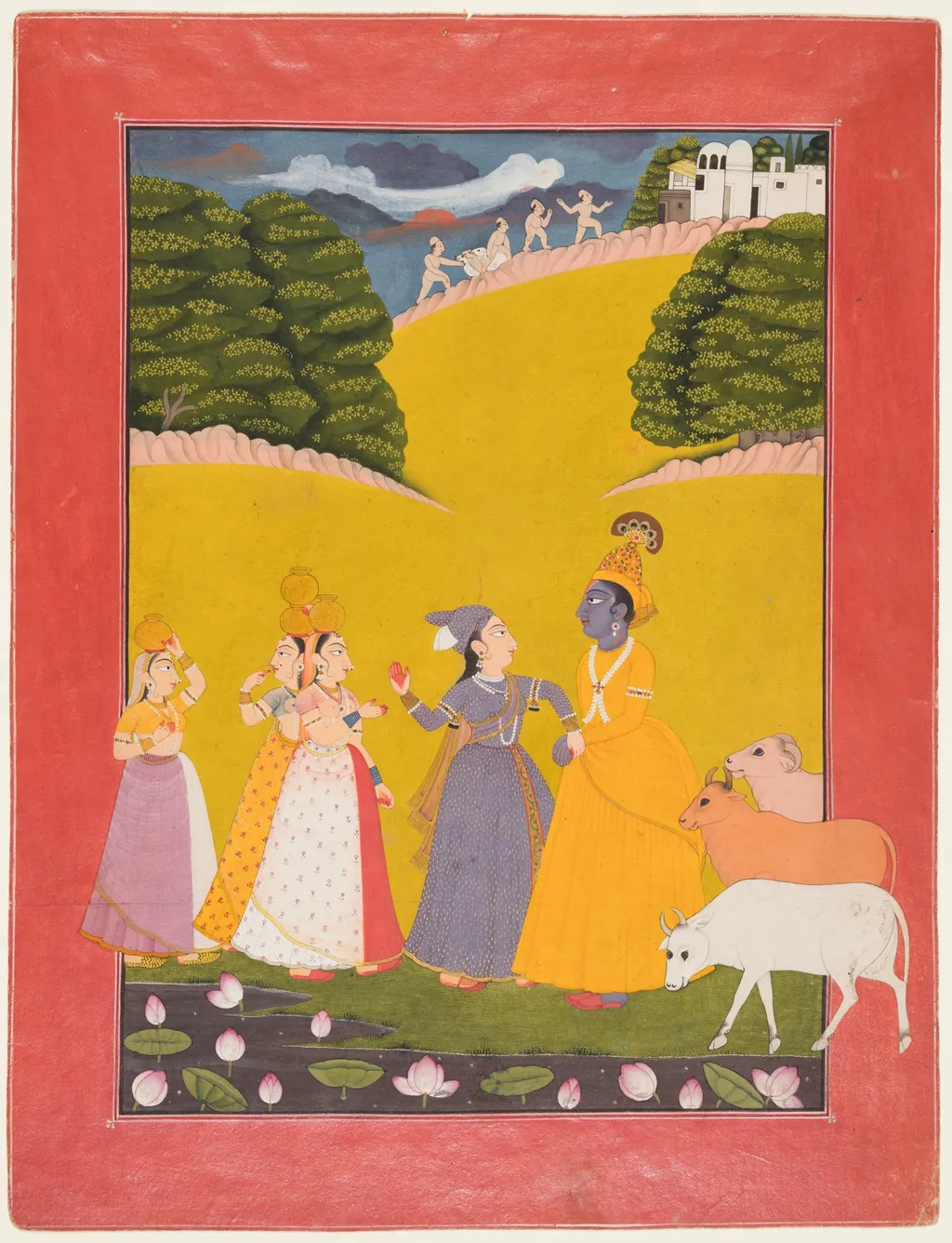
Taking of the Toll, Dana-Lila is an unspecified painting. It dates from 1760 and is held in the collection of the Cleveland Museum of Art. This painting depicts a vibrant outdoor scene featuring four figures amidst a luminous yellow field and rolling green hills.
About this work
Overview
Three women, adorned in richly patterned and colorful garments, are shown alongside a man distinguished by his blue complexion and a golden crown.
This painting depicts a vibrant outdoor scene featuring four figures amidst a luminous yellow field and rolling green hills. Three women, adorned in richly patterned and colorful garments, are shown alongside a man distinguished by his blue complexion and a golden crown. The composition also includes two cows grazing nearby and several pink lotus blossoms floating on a dark pond in the foreground.
Subject & Meaning
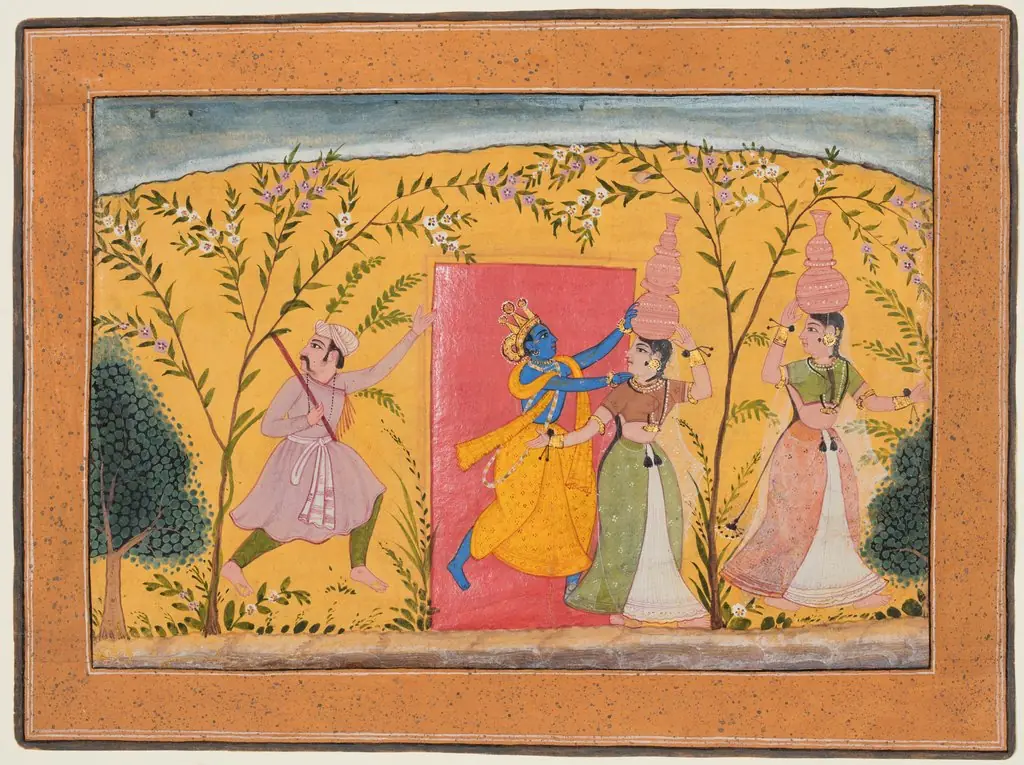
Titled "Taking of the Toll, Dana-Lila," the artwork likely illustrates an episode from Hindu mythology, specifically the Dana-Lila of Krishna. The man's blue skin is a conventional artistic representation of the deity Krishna, who is often depicted in this manner. The women, appearing to bear offerings upon their heads, allude to the narrative where Krishna playfully demands a toll from milkmaids carrying goods, symbolizing devotion and exchange.
Technique & Style
The painting employs a vivid palette, characterized by the striking yellow of the field and the diverse, intricate patterns of the women's attire. The stylized depiction of the male figure, notably his blue skin, diverges from naturalistic representation, aligning with traditional iconography. This approach emphasizes symbolic meaning over strict realism, creating a visually rich and culturally specific aesthetic.
Artist & collection