Artwork
Portrait of Philip the Good, Duke of Burgundy
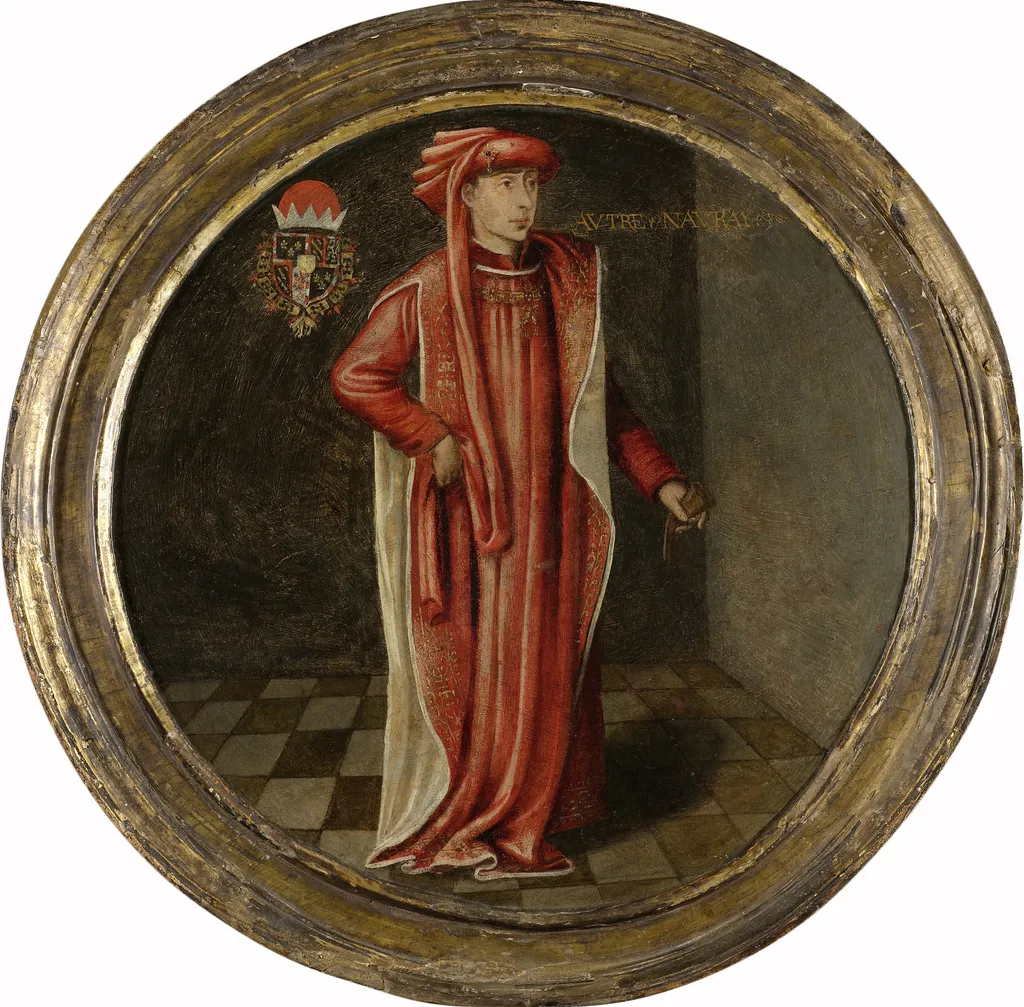
Portrait of Philip the Good, Duke of Burgundy is an oil painting. It dates from 1460 and is held in the collection of the Rijksmuseum.
About this work
Overview
The work is an oil painting that presents a solitary figure dressed in a vivid red robe and matching hat, set before a dark, undefined background. A checkered floor plane recedes beneath him, and a gold ornamental frame encloses the composition. The subject holds a small red cap in his right hand, while white garments are visible at the sleeves.
Subject & Meaning
The portrait depicts Philip the Good, the Duke of Burgundy, rendered with a solemn expression that conveys authority and dignity. The luxurious attire, highlighted by gold embroidery, underscores his high rank and the wealth of the Burgundian court during the mid‑15th century.
Technique & Style
The painter employs chiaroscuro, using strong contrasts of light and shadow to model the figure’s form and to make the red garments emerge sharply from the surrounding darkness. The precise rendering of textures—silk, fur, and metal—demonstrates the artist’s skill in oil medium.
History & Provenance
Created in the mid‑1400s, the portrait was likely commissioned for a ducal setting and remained within the Burgundian collection for several generations before entering a museum collection, where it is now displayed within a gilded frame that matches the period’s decorative taste.
Context
Philip the Good’s reign marked a flourishing of the arts in the Low Countries, fostering a court that patronized painters, illuminators, and architects. This portrait reflects the era’s emphasis on personal representation as a means of political propaganda and dynastic affirmation.
Artist & collection