Artwork
Portrait of Charles the Bold (1433-1477 ), Duke of Burgundy
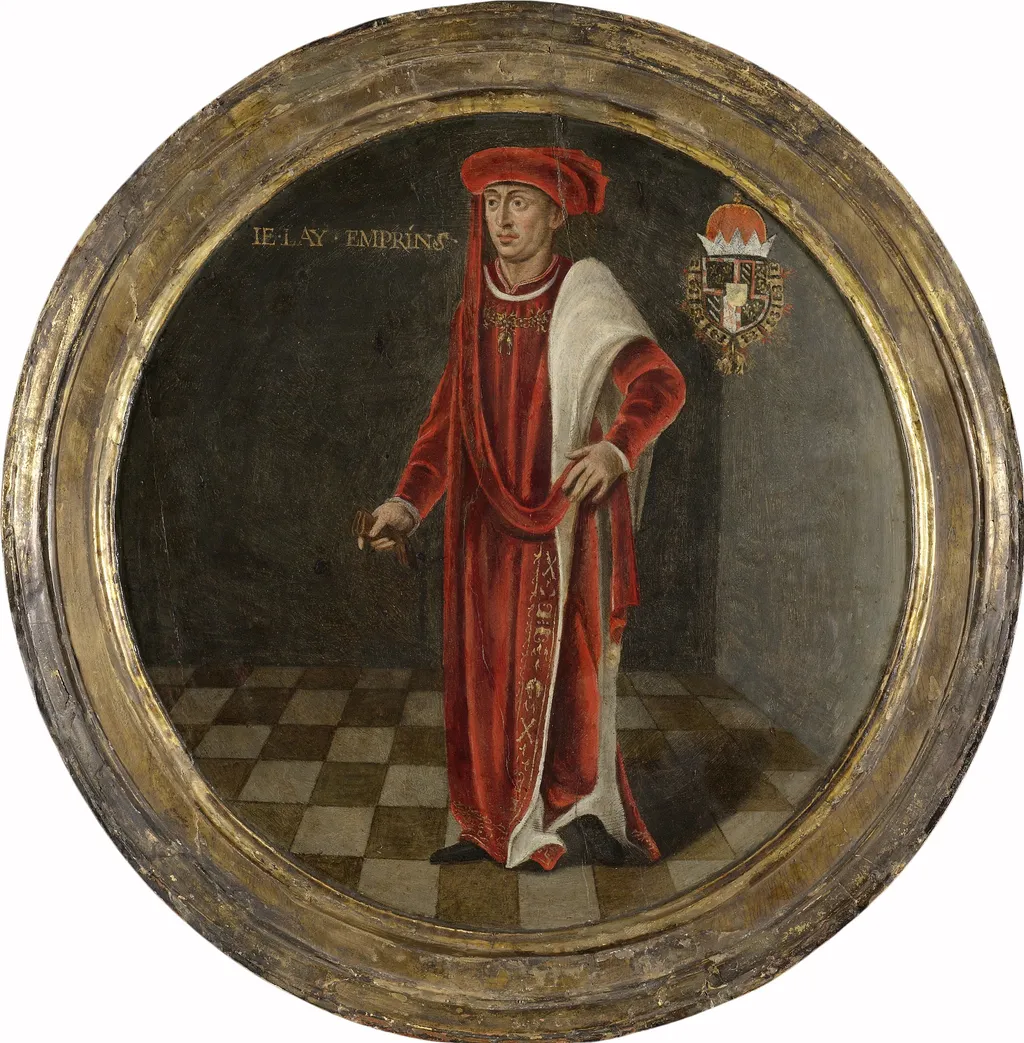
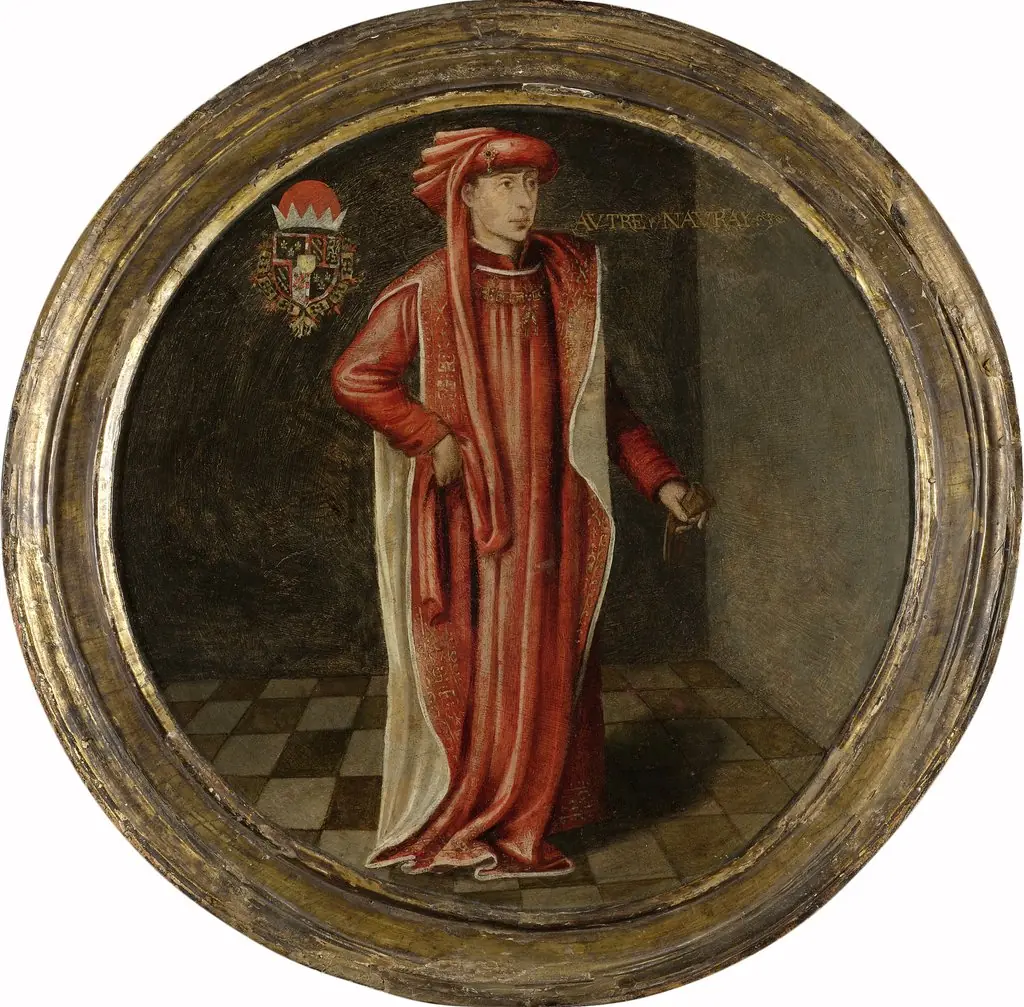
Portrait of Charles the Bold (1433-1477 ), Duke of Burgundy is an oil painting. It dates from 1460 and is held in the collection of the Rijksmuseum. The work is an oil painting portraying Charles the Bold, Duke of Burgundy (1433–1477).
About this work
Overview
The work is an oil painting portraying Charles the Bold, Duke of Burgundy (1433–1477). The figure stands before a dark, plain wall with a tiled floor, dressed in a vivid red robe edged in white, topped by a matching red hat. He holds an object in his right hand and looks toward his left, while a heraldic shield with a crown and cross is displayed on the wall behind him.
Subject & Meaning
Charles the Bold is presented as a sovereign ruler, his sumptuous garments and the prominent coat of arms underscoring his authority and lineage. The direct gaze and poised stance convey confidence and command, typical of portraiture intended to affirm the duke’s political stature and dynastic legitimacy within the Burgundian court.
Technique & Style
Executed in oil on panel, the painting employs a limited palette of reds, whites, and deep shadows to model the figure’s form. The smooth handling of the fabric and the subtle chiaroscuro on the face reveal a careful attention to texture and three‑dimensionality, while the flat, dark background isolates the subject, a compositional choice common in early Northern Renaissance portraiture.
History & Provenance
The portrait dates from the mid‑15th century, contemporaneous with Charles the Bold’s reign. Though the original commission details are unknown, the work later entered various private collections before being acquired by a museum in the early 20th century, where it has remained on public display.
Context
Created during a period when Burgundian dukes asserted their independence from both France and the Holy Roman Empire, the portrait reflects the court’s emphasis on visual propaganda. The inclusion of heraldic symbols aligns with the era’s practice of reinforcing noble identity through art, situating the painting within the broader tradition of courtly portraiture in the Low Countries.
Artist & collection