Artwork
Scene from the Ramayana
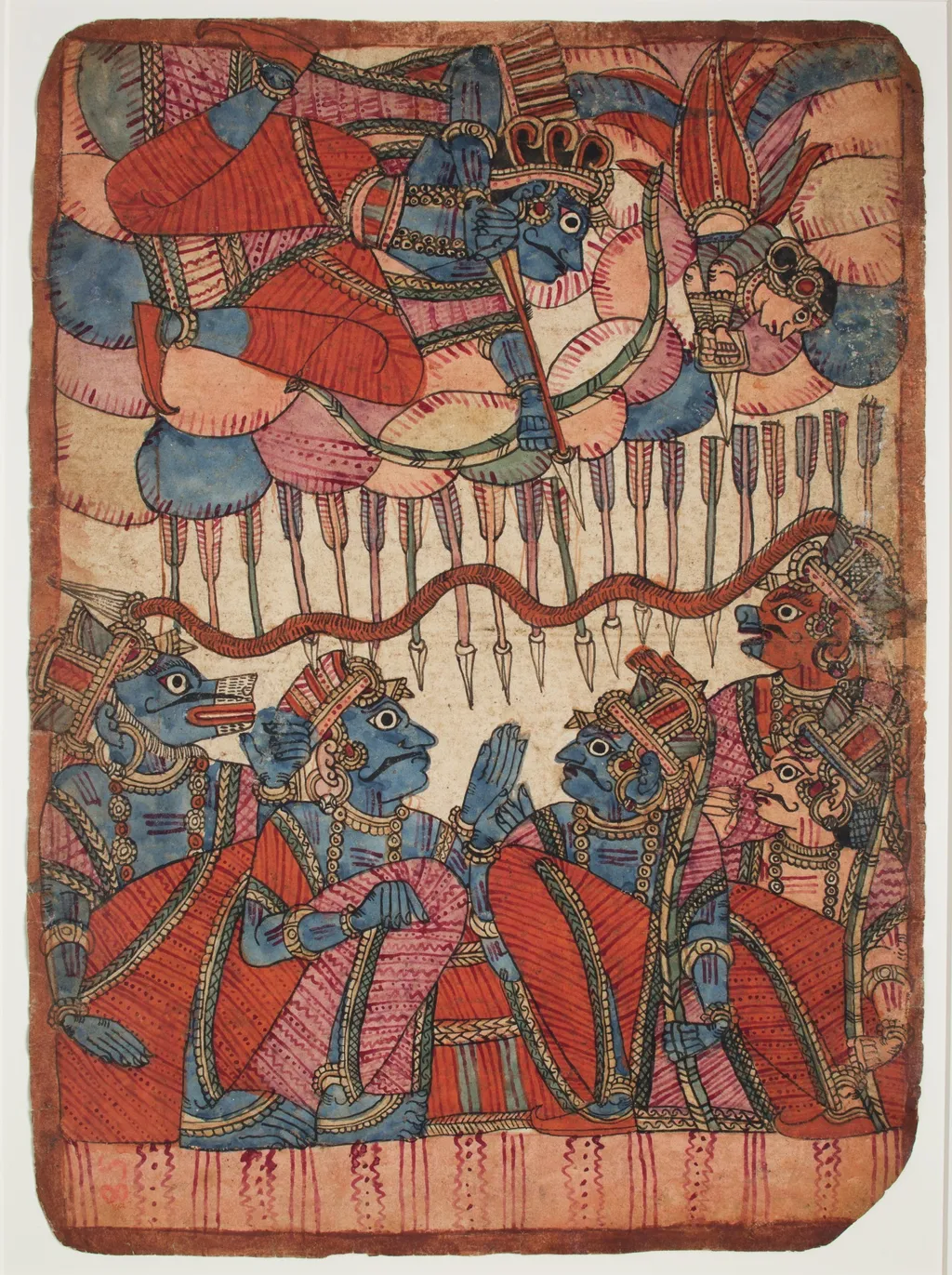
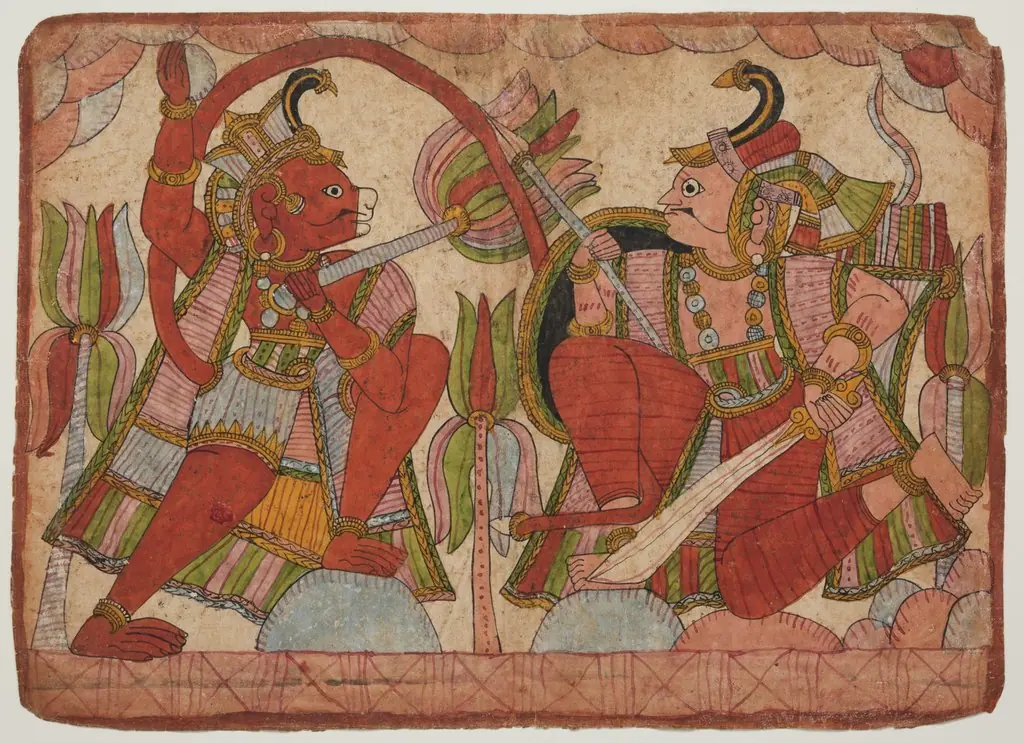
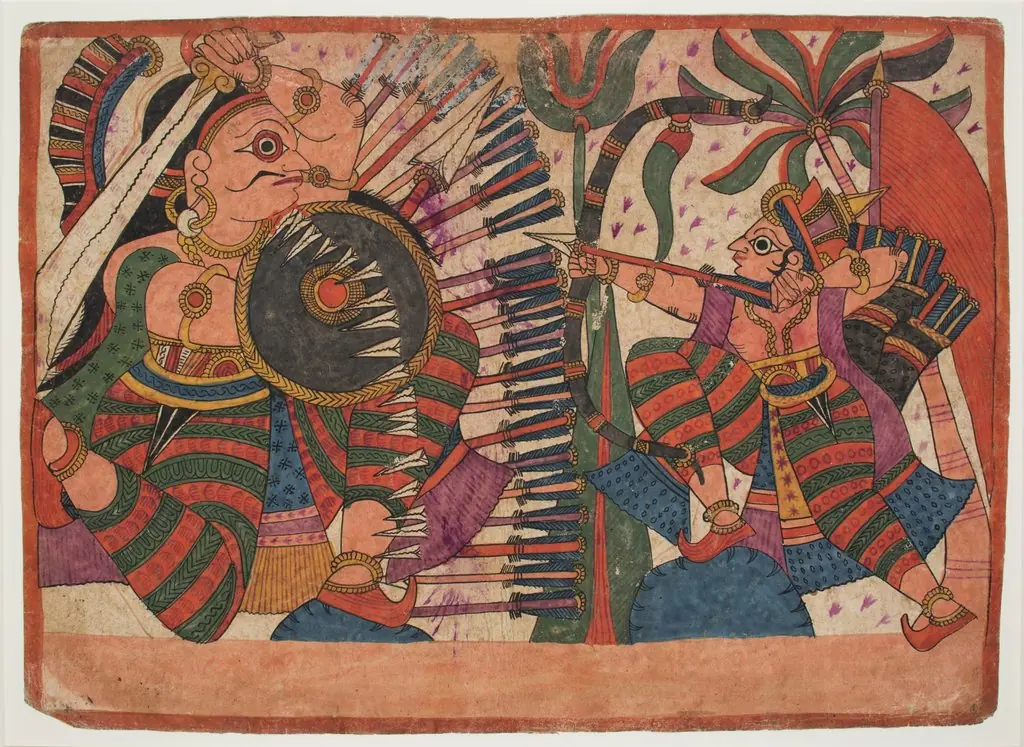
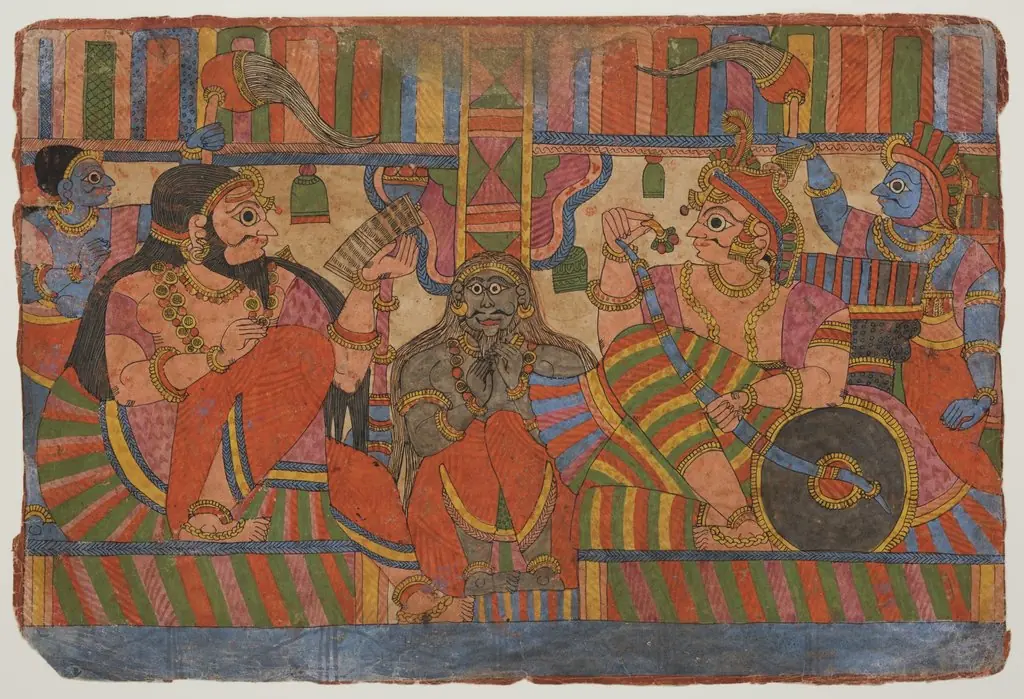
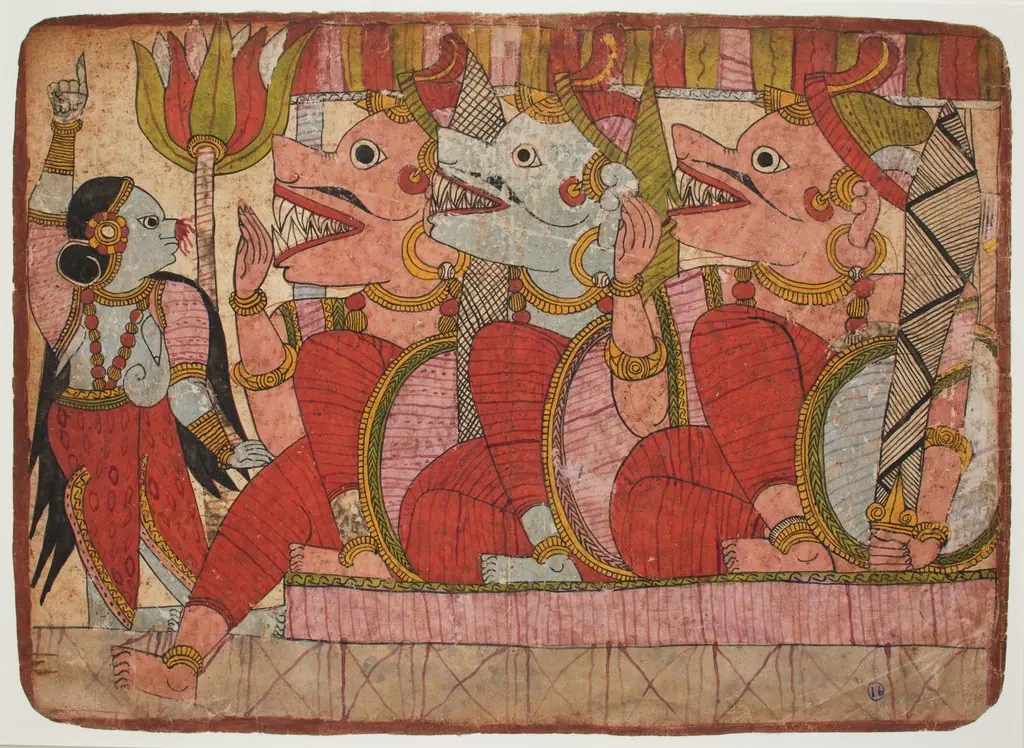
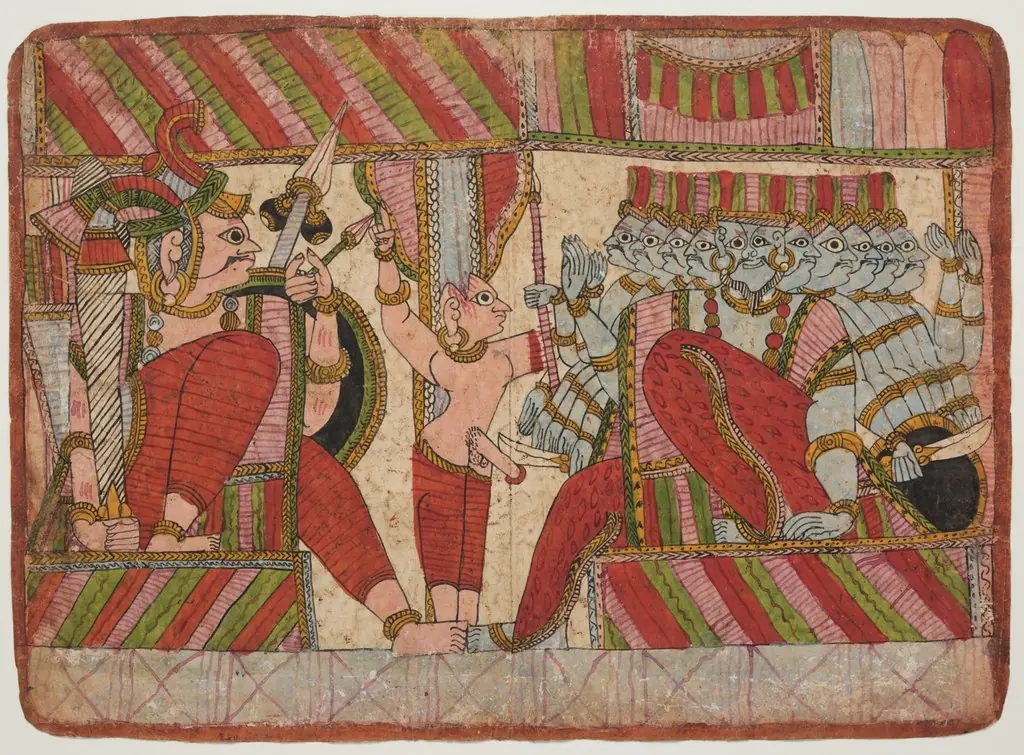
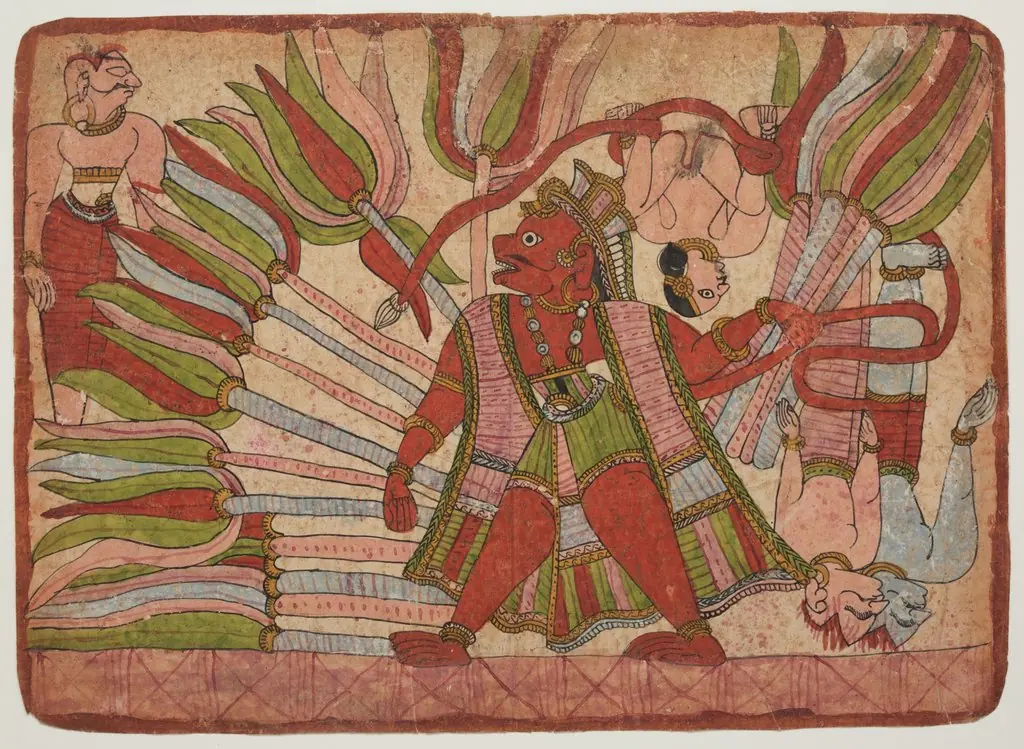
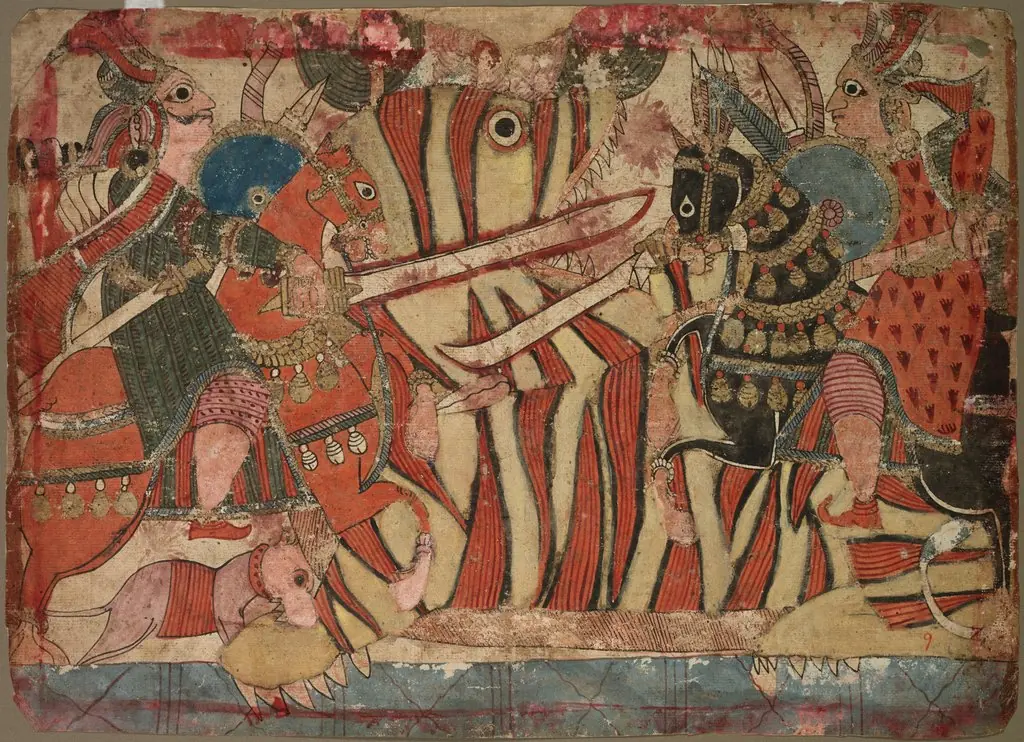
Scene from the Ramayana is an unspecified painting by Unknown. It dates from 1800 and is held in the collection of the Detroit Institute of Arts.
About this work
Overview
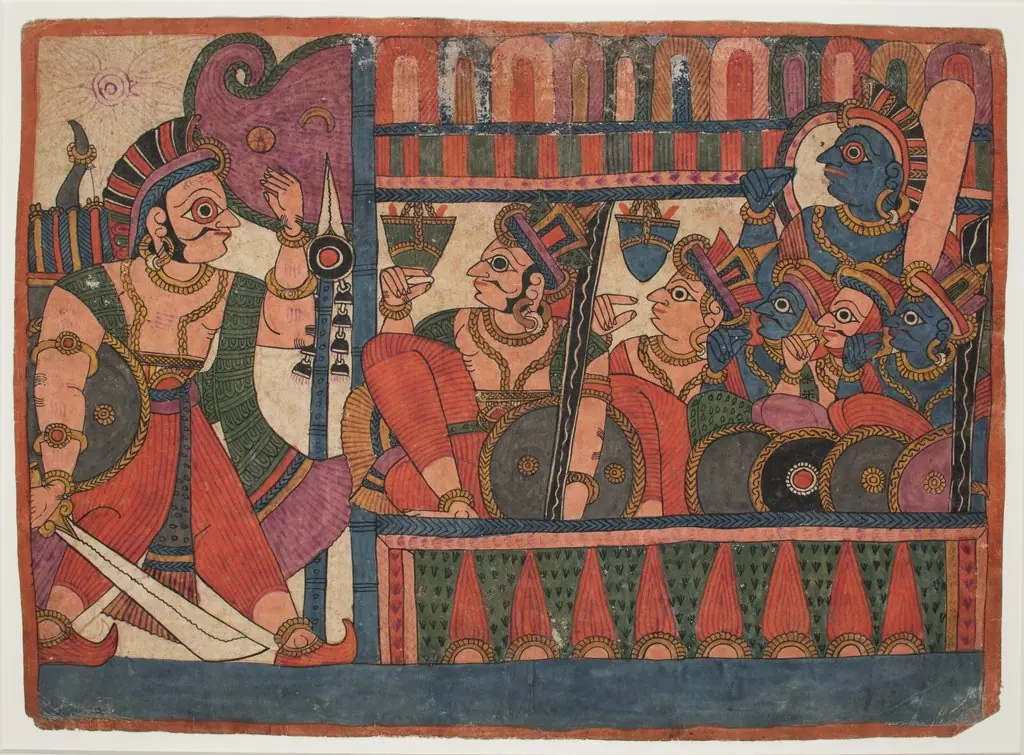
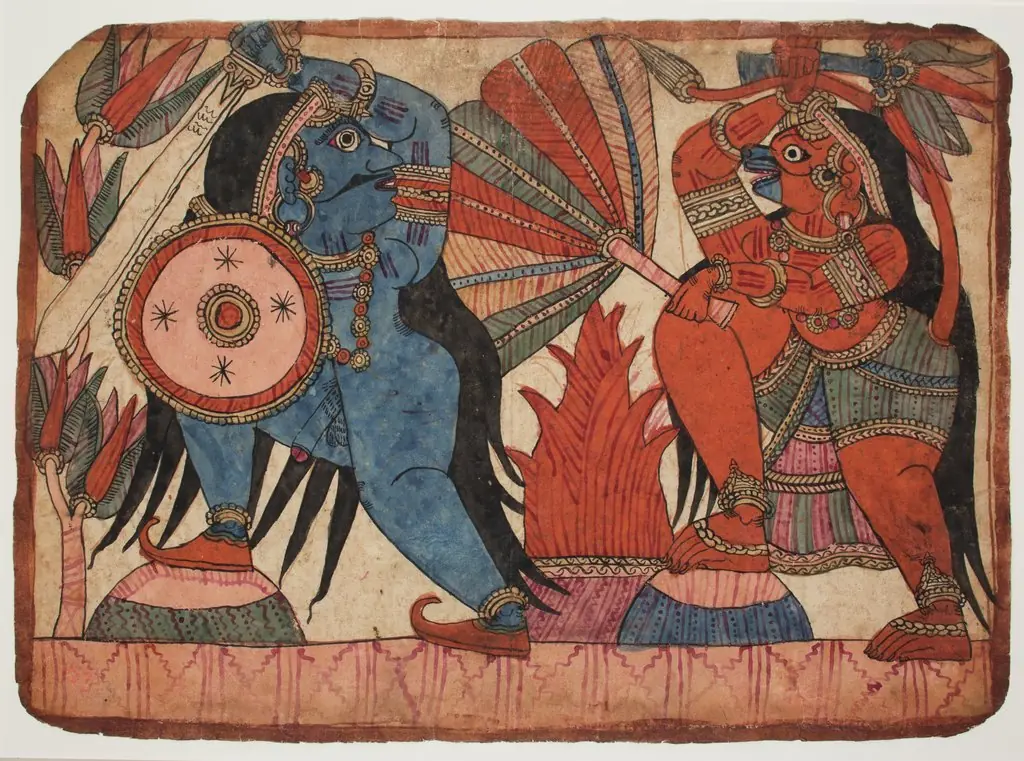
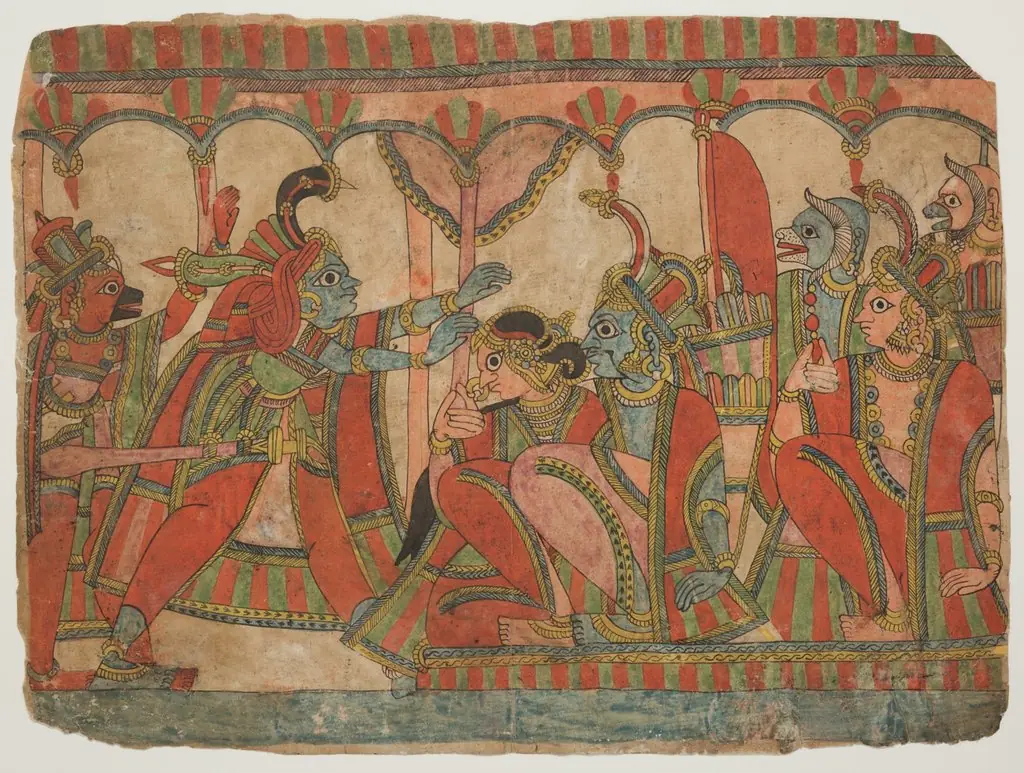
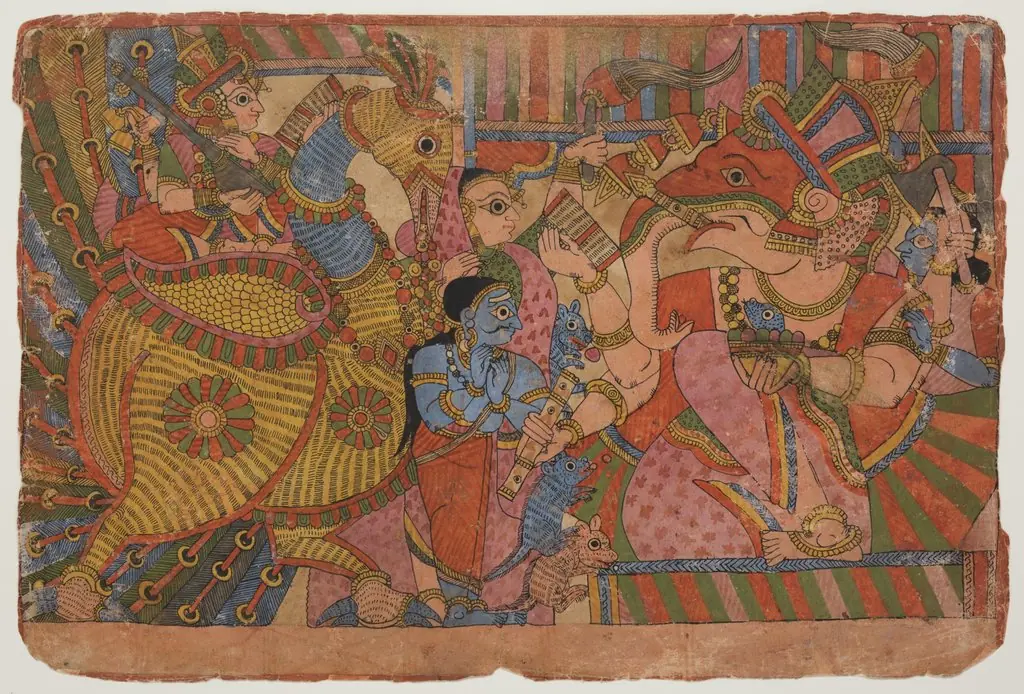
This painting illustrates a moment from the Ramayana, an ancient Indian epic centered on Prince Rama’s quest to rescue his wife Sita from the demon king Ravana. Executed in a traditional Indian miniature style, the work combines intricate detail with symbolic color use, typical of regional court ateliers during the late Mughal or early Rajput period.
Subject & Meaning
The scene depicts Rama, Sita, and Lakshmana in a forest setting, likely during their exile. Rama’s poised stance and Sita’s gentle demeanor reflect moral order and devotion, while the surrounding flora and fauna signify the natural world as a witness to dharma. The narrative emphasizes duty, loyalty, and the triumph of righteousness over chaos.
Technique & Style
The painting employs fine brushwork, mineral pigments, and gold leaf accents characteristic of Indian miniature traditions. Figures are rendered with elongated eyes and stylized postures, while spatial depth is suggested through layered planes rather than linear perspective. Background elements are rendered with delicate patterning, enhancing the rhythmic composition.
History & Provenance
The work likely originated in a Rajput court, possibly in Rajasthan or the Punjab Hills, during the 17th or 18th century. It may have been commissioned by a local ruler as part of a larger illustrated manuscript or as a devotional object. Its survival suggests continued patronage of Hindu epics despite shifting political powers in the region.
Context
During this period, regional courts increasingly turned to indigenous narratives as Mughal influence waned. The Ramayana was not only a religious text but a cultural touchstone, used to affirm royal legitimacy and moral authority. Paintings like this served both aesthetic and didactic functions within courtly life.
Legacy
This painting contributes to a broader visual tradition that preserved Hindu epics through centuries of social change. Its stylistic choices influenced later regional schools and remain referenced in contemporary Indian art. As a surviving example of pre-colonial narrative painting, it offers insight into how sacred stories were visually codified and transmitted.
Artist & collection

 Domestic Scene
 Giacomo and Cardinal Marco, investing Andrea, Abbot of San Zeno, with his Benefice
 The Nymph of Fontainebleau
 Portrait of a Woman
 Madonna and Child with Saints in the Enclosed Garden
 Venus and Minerva
 Family Group of Four on Sofa
 Wall painting from Room H of the Villa of P. Fannius Synistor at Boscoreale