Artwork
Scene from the Ramayana
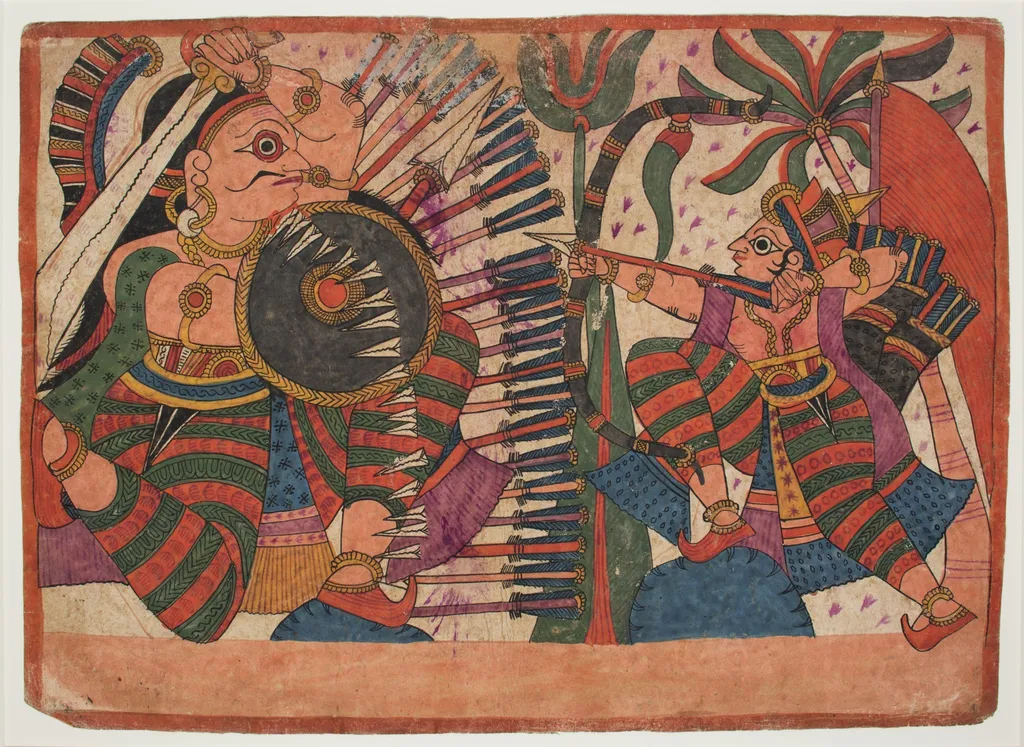
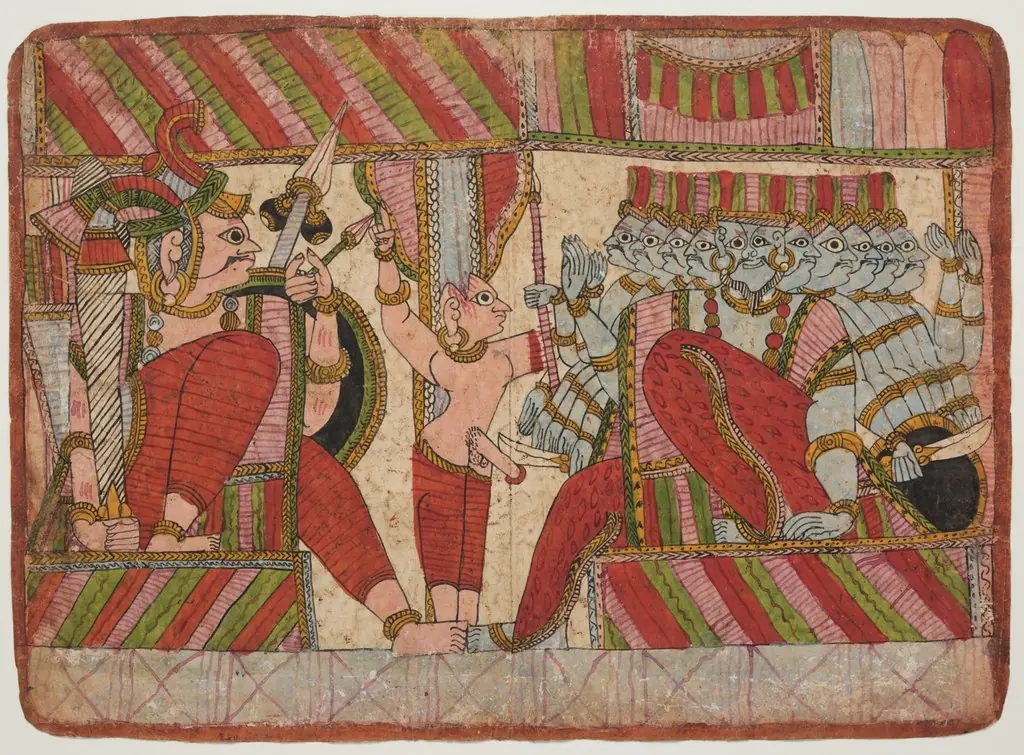
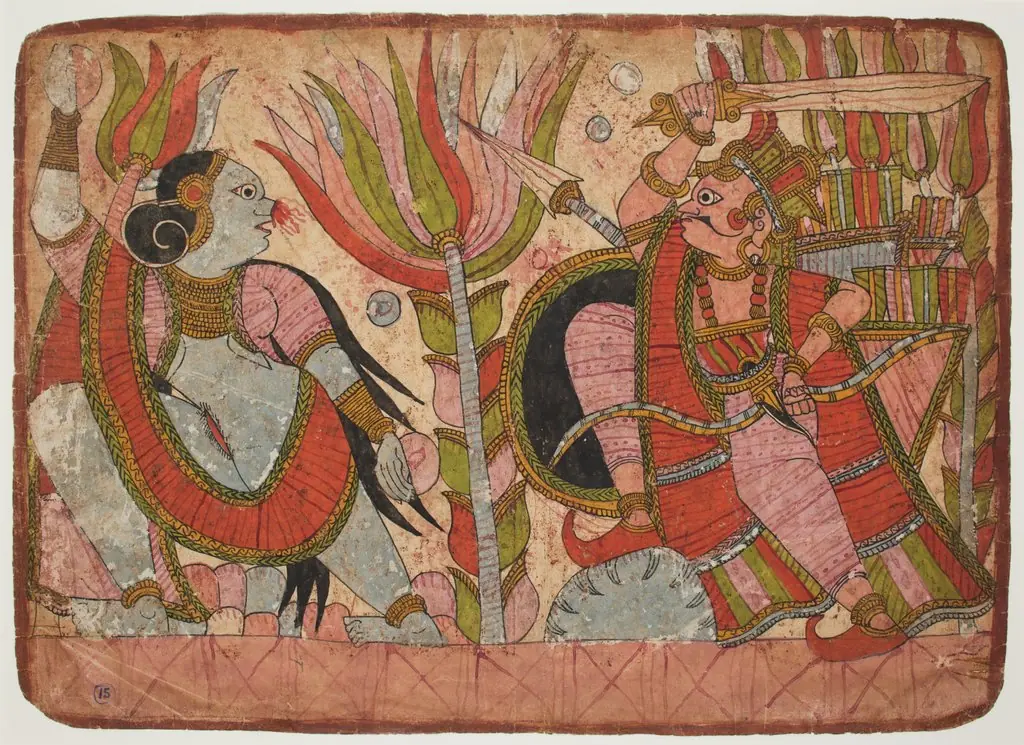
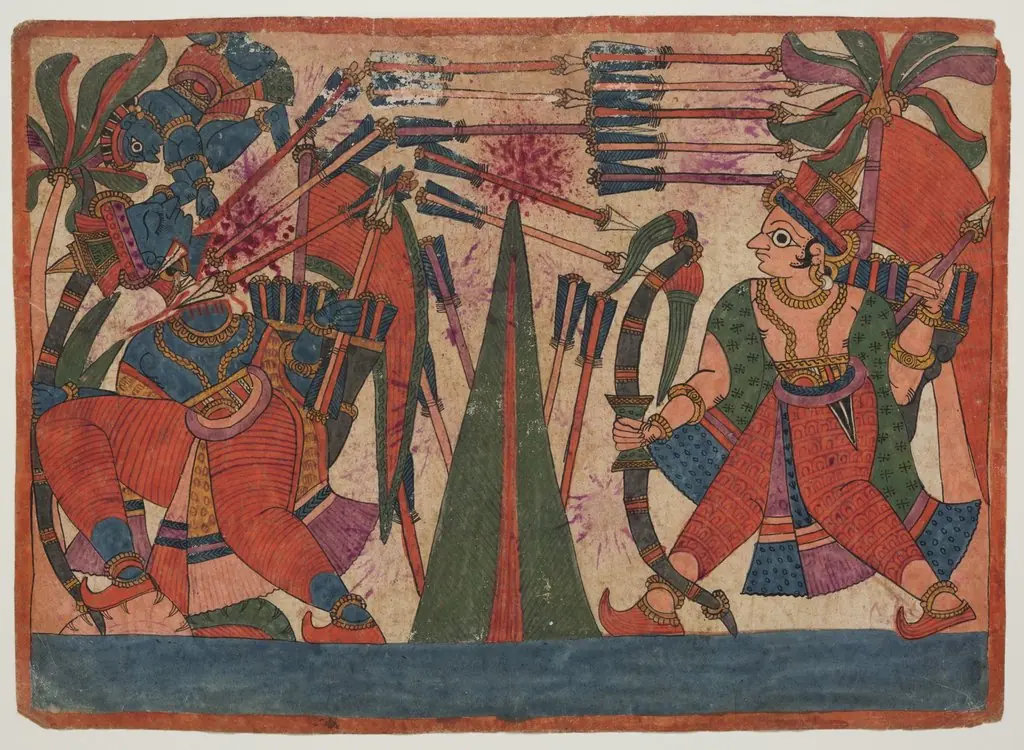
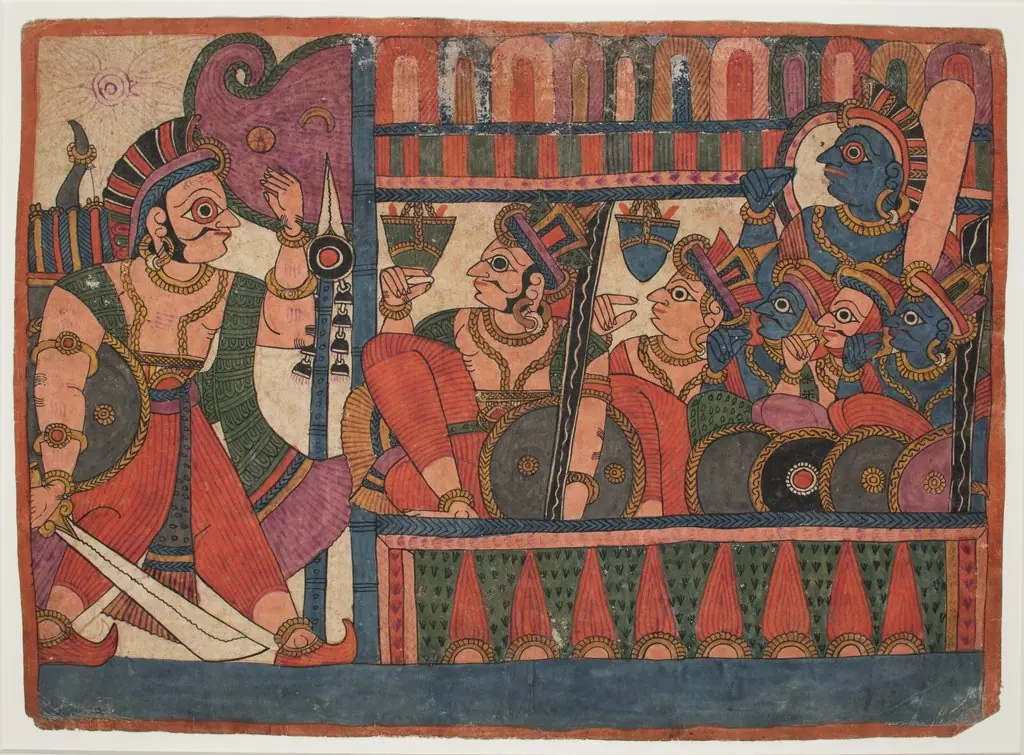
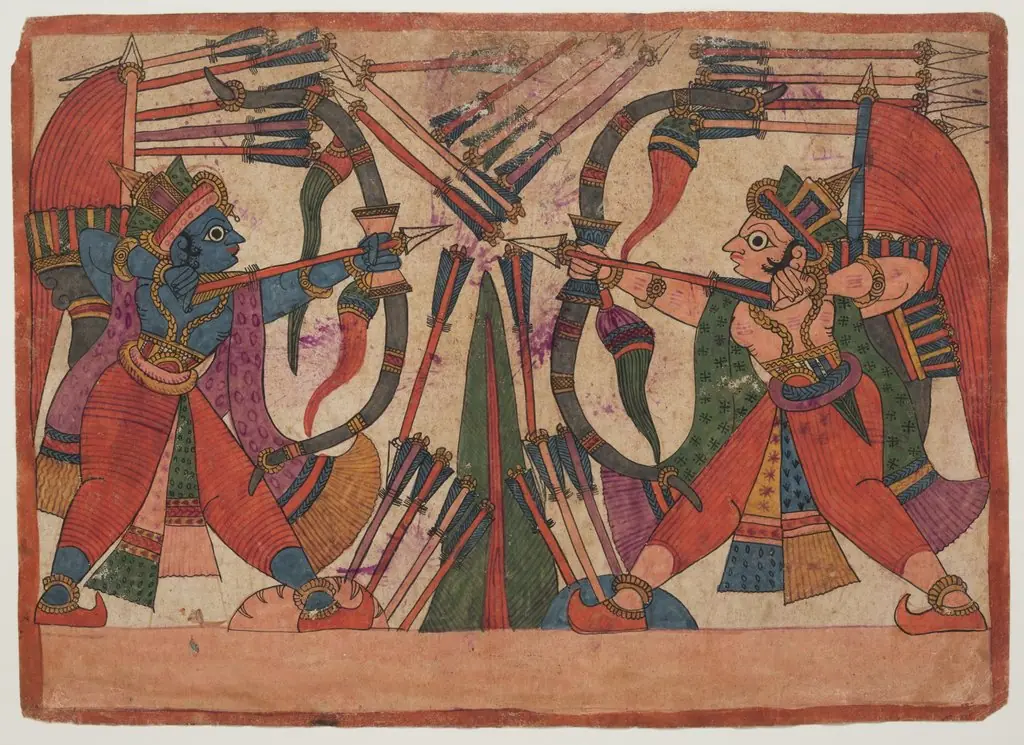
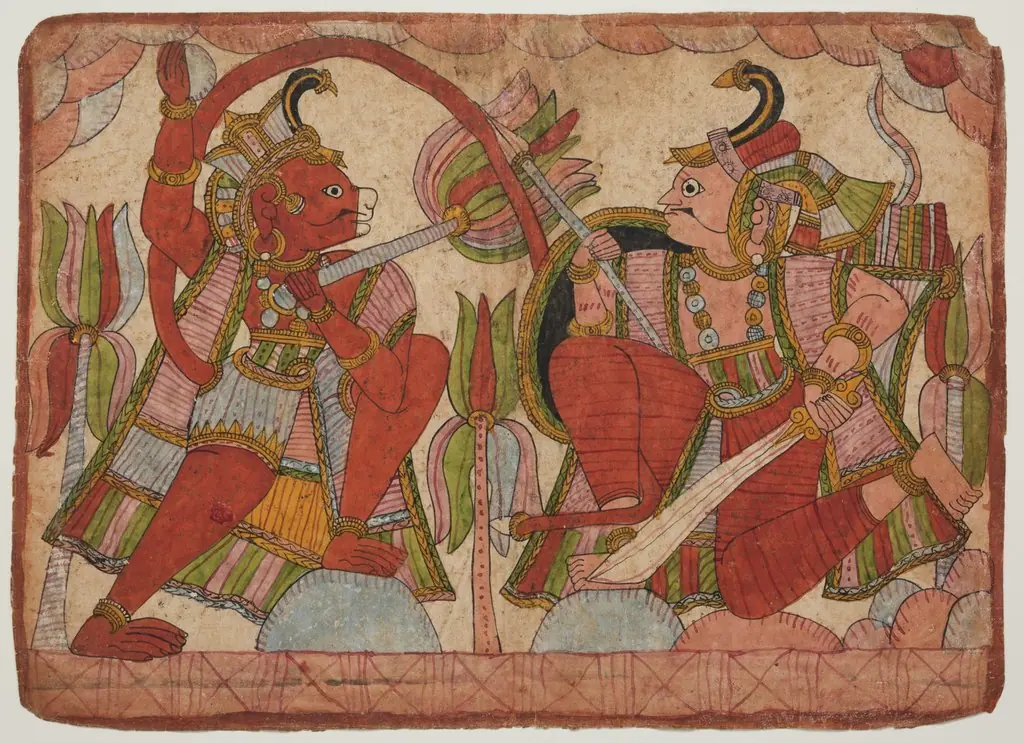
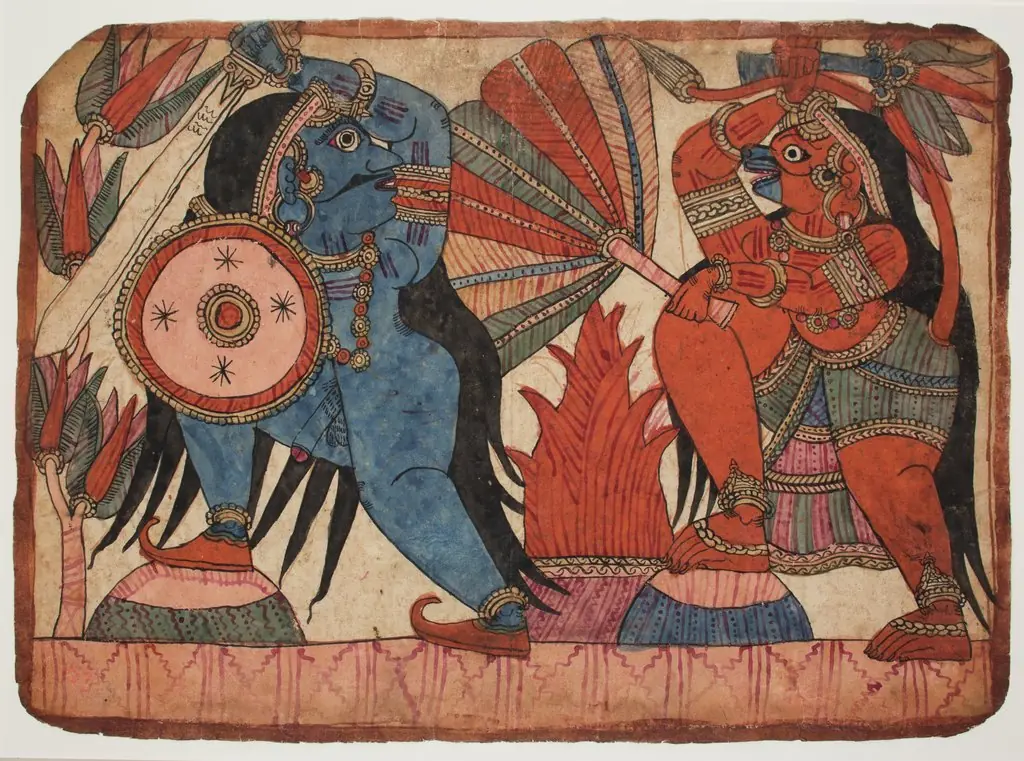
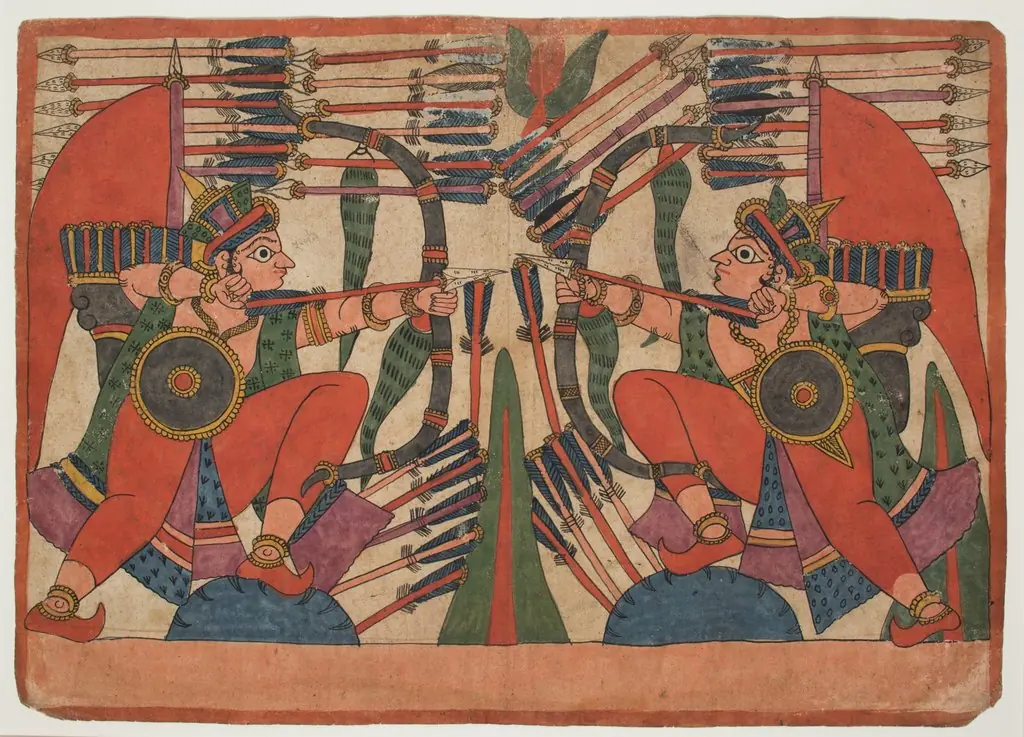
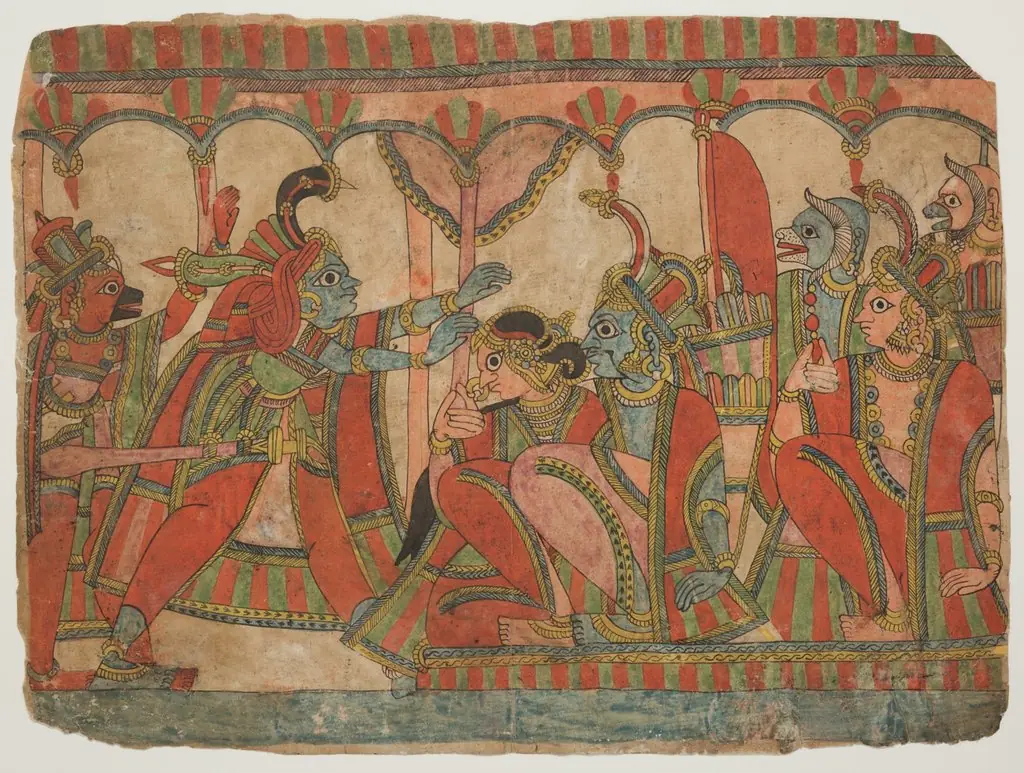
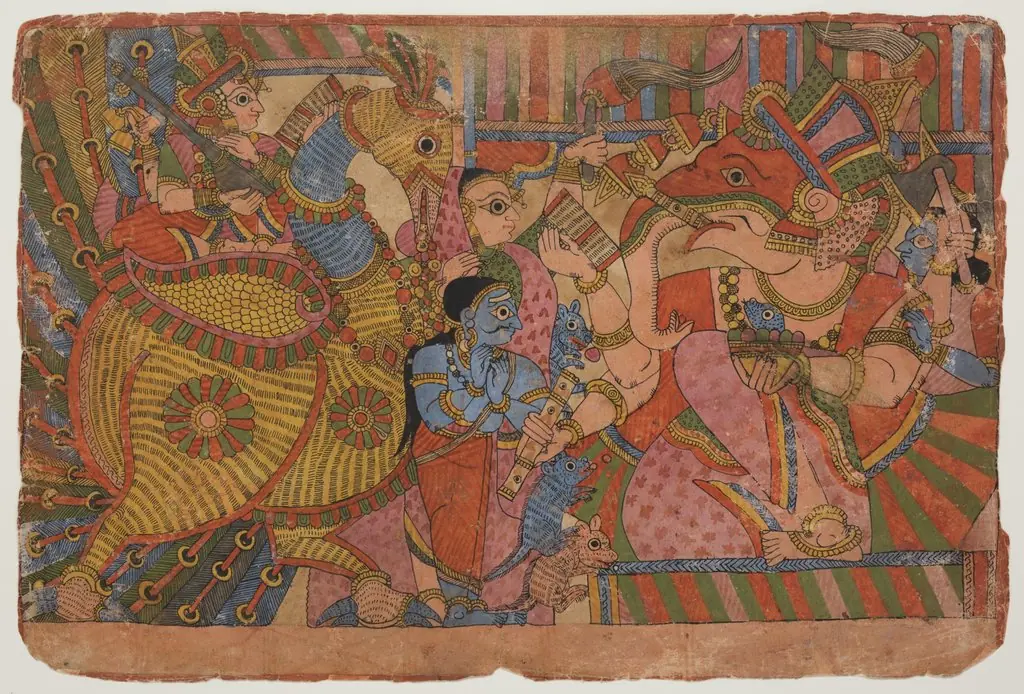
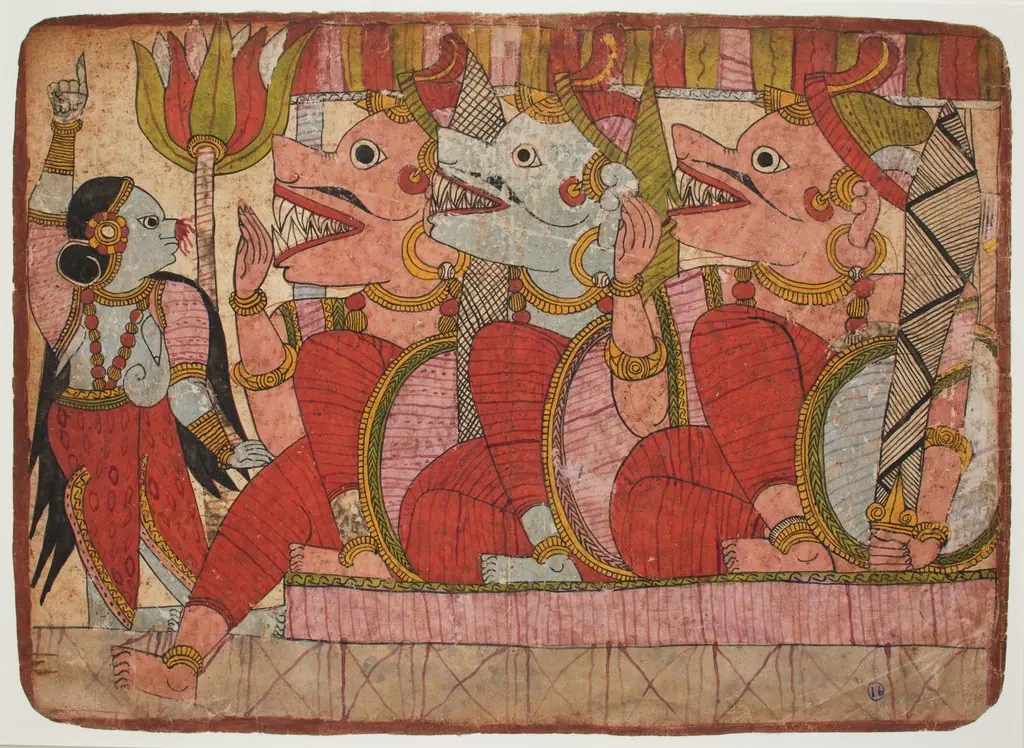
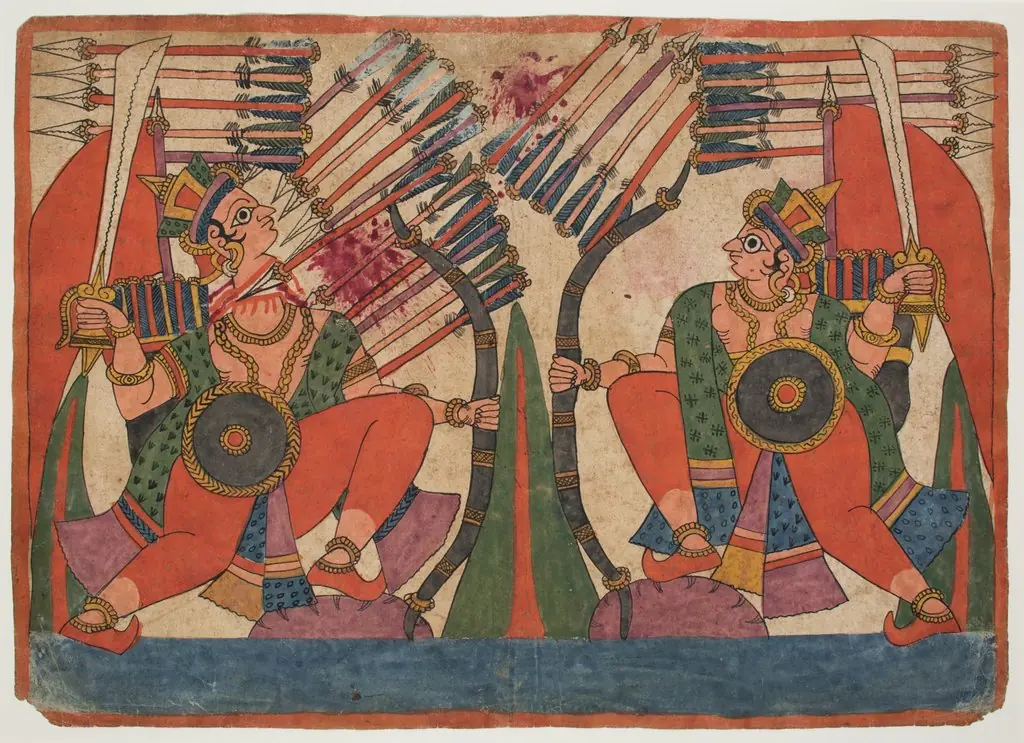
Scene from the Ramayana is an unspecified painting by Unknown. It dates from 1800 and is held in the collection of the Detroit Institute of Arts. The work portrays a moment taken from the ancient Indian epic the Ramayana.
About this work
Overview
The work portrays a moment taken from the ancient Indian epic the Ramayana. Two central figures dominate the composition, each adorned in vivid garments and ornamental jewelry, set against a light‑toned backdrop that hints at a landscape through subtle darker lines and shapes.
Subject & Meaning
The figure on the left clutches a large, black, spiked disc, while the counterpart on the right bears a long staff. These attributes correspond to specific characters and narrative episodes within the Ramayana, suggesting a scene of confrontation or divine intervention that reflects the epic’s moral and mythological themes.
Technique & Style
Executed in a traditional Indian painting manner, the piece relies on intricate patterning and fine detailing. The clothing and accessories are rendered with elaborate motifs, and the palette features bright, saturated hues that contrast with the muted background, creating visual depth through decorative surface treatment.
History & Provenance
The painting originates from a period when the Ramayana was a common source of visual storytelling in Indian art, likely produced for devotional or illustrative purposes. Its precise date and ownership lineage are not documented, but the stylistic traits align with regional workshop practices that circulated such narrative scenes.
Context
Narrative paintings of the Ramayana served both educational and ritual functions, reinforcing cultural values and religious devotion. This work fits within a broader tradition of manuscript illumination and wall art that visualized epic episodes for audiences ranging from courtly patrons to temple visitors.
Legacy
Images like this continue to inform contemporary understandings of how Indian artists historically engaged with literary texts, offering insight into visual conventions, iconography, and the transmission of mythic stories across generations.
Artist & collection

 Domestic Scene
 Giacomo and Cardinal Marco, investing Andrea, Abbot of San Zeno, with his Benefice
 The Nymph of Fontainebleau
 Portrait of a Woman
 Madonna and Child with Saints in the Enclosed Garden
 Venus and Minerva
 Family Group of Four on Sofa
 Wall painting from Room H of the Villa of P. Fannius Synistor at Boscoreale