Artwork
A Mughal Prince, Perhaps Danyal, Holding a Sprig of Flowers
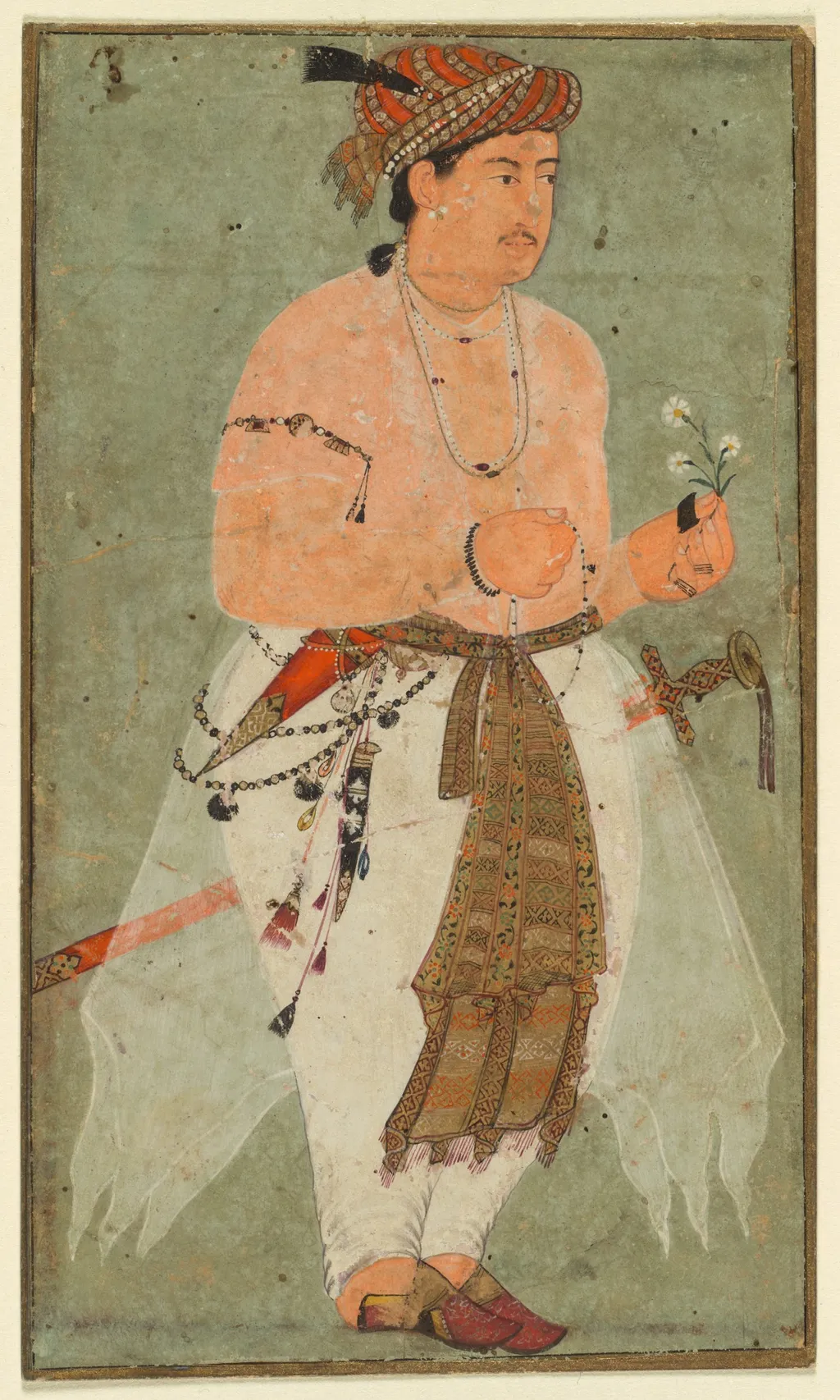
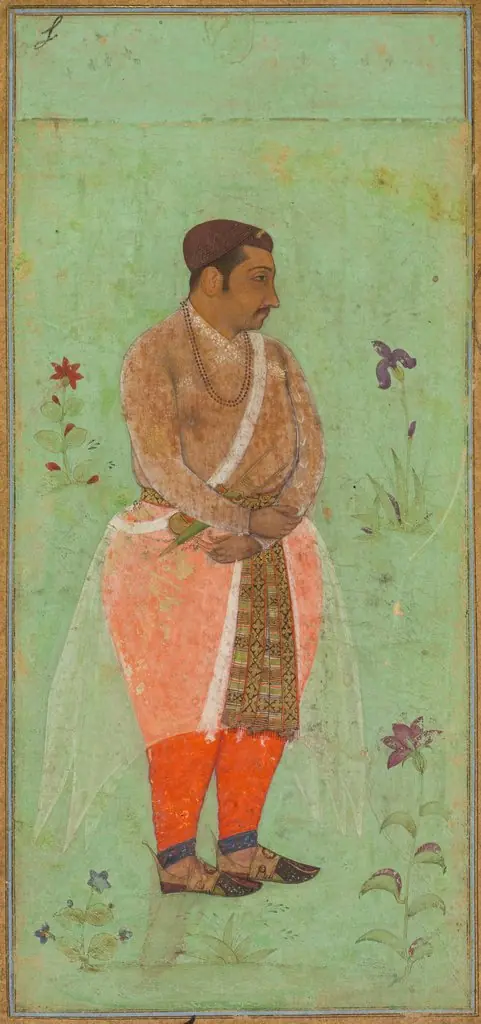
A Mughal Prince, Perhaps Danyal, Holding a Sprig of Flowers is an unspecified painting. It dates from 1593 and is held in the collection of the Cleveland Museum of Art. The work depicts a solitary figure dressed in vivid, uncomplicated hues.
About this work
Overview
He wears a peach‑toned shirt, a white lower garment edged with orange patterning, and a tall red headdress trimmed in gold.
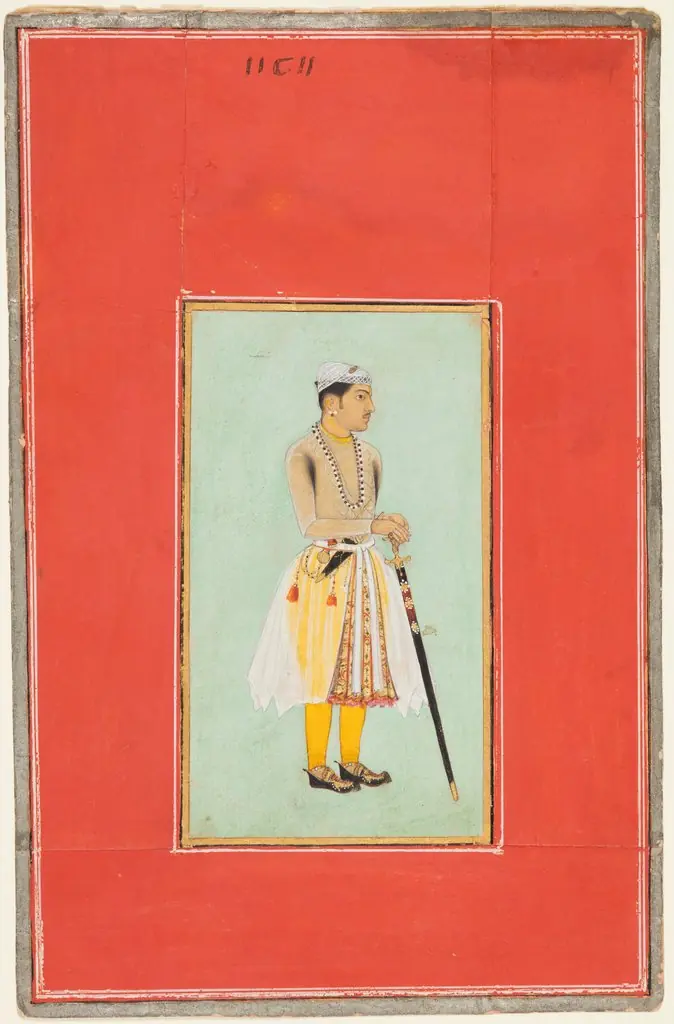
The work depicts a solitary figure dressed in vivid, uncomplicated hues. He wears a peach‑toned shirt, a white lower garment edged with orange patterning, and a tall red headdress trimmed in gold. In his left hand he holds a small bowl, while his right hand presents a sprig of white flowers. A sword hangs at his side, and a necklace with a pendant rests around his neck, set against a muted green‑gray backdrop.
Subject & Meaning
The portrait is identified as a Mughal prince, possibly Danyal, suggested by the princely attire and the presence of a ceremonial sword. The flower sprig may symbolize refinement or a courtly pastime, while the bowl could indicate a ritual offering. Together the objects convey a blend of regal authority and cultured leisure typical of elite Mughal portraiture.
Technique & Style
Executed in a flat, decorative manner, the painting relies on bold blocks of color rather than detailed modeling. The background is rendered in a uniform green‑gray tone, allowing the figure’s garments to dominate the visual field. The brushwork appears smooth and the surface shows signs of age, indicating a traditional Mughal studio technique that favored clear outlines and stylized forms.
History & Provenance
The canvas shows wear consistent with considerable age, suggesting it has been in collection for many decades. Although specific ownership records are not provided, the work aligns with Mughal court paintings that circulated among royal patrons and later entered museum holdings, such as those found in institutions like the Cleveland Museum of Art.
Context
Mughal portraiture often combined Persian artistic conventions with Indian courtly themes, emphasizing status through elaborate dress and symbolic accessories. The use of bright, contrasting colors and a simplified background reflects a period when artists sought to highlight the sitter’s identity rather than elaborate narrative settings.
Legacy
Paintings of Mughal princes continue to inform scholarly understanding of courtly fashion, ceremonial objects, and the visual language of power in early modern South Asia. The work serves as a reference point for comparative studies of royal portraiture across the Mughal empire and its artistic legacy.
Artist & collection