Artwork
Virgin and Child
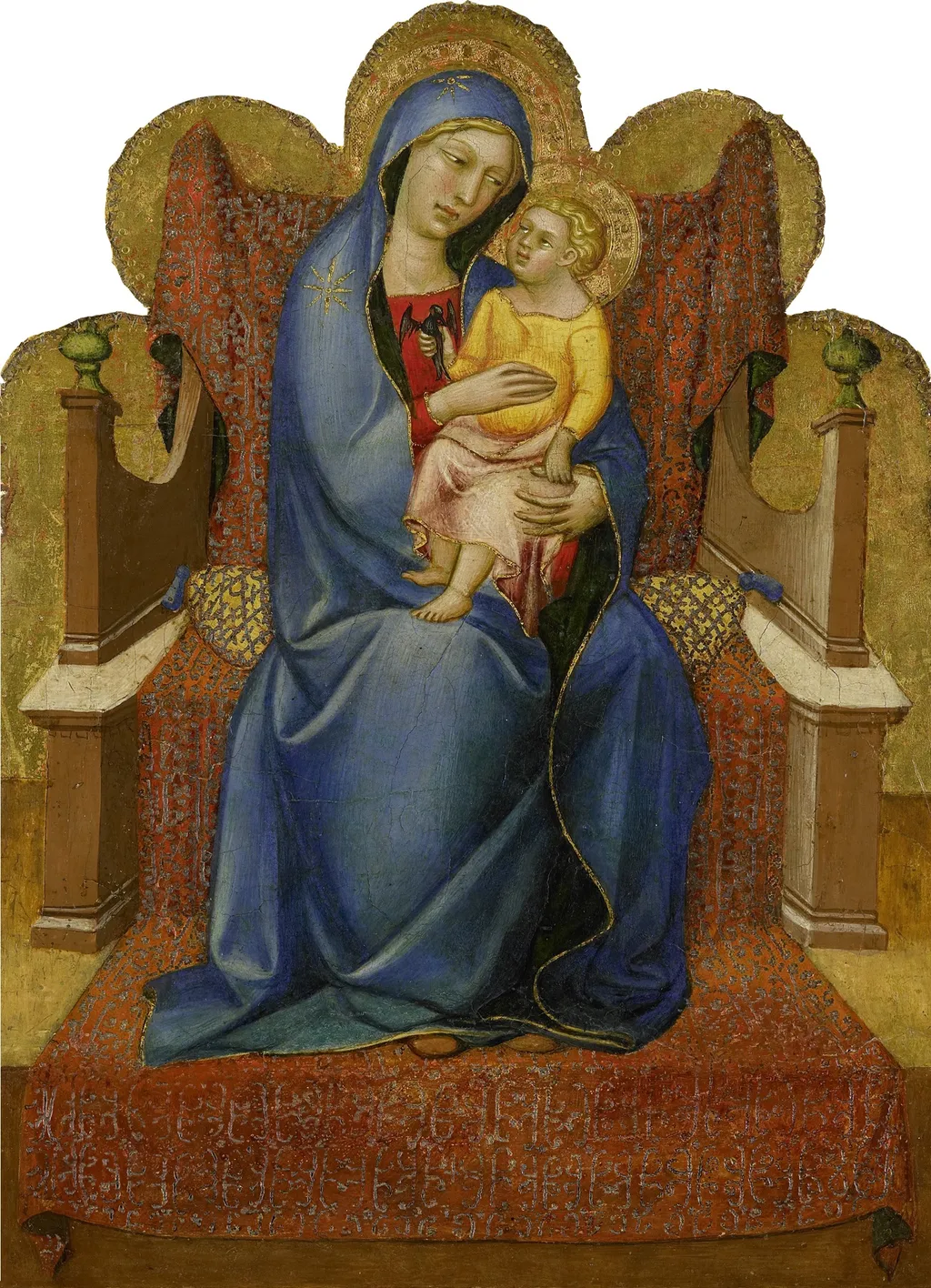
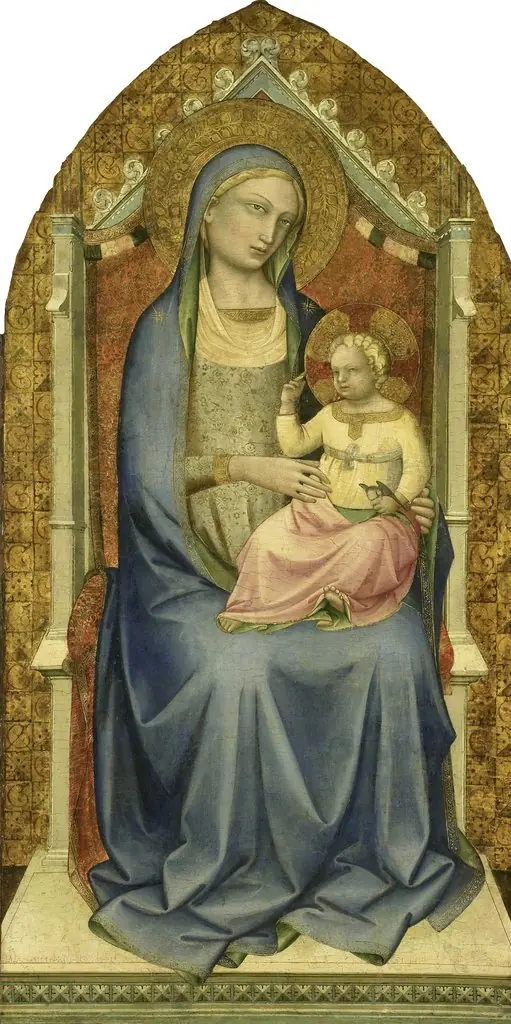
Virgin and Child is a tempera painting by the Early Renaissance artist Bartolo di Fredi. It is held in the collection of the Rijksmuseum.
About this work
Overview
Created circa 1450 by Bartolo di Fredi, a painter associated with the Sienese tradition, this tempera panel presents a devotional image of the Virgin Mary and the infant Jesus. The work is part of the early Renaissance corpus and is currently conserved in the Rijksmuseum’s collection.
Subject & Meaning
The composition centers on a serene woman in blue, identified as the Virgin, cradling the Christ Child, both encircled by luminous halos that signify sanctity. The child's outstretched hand suggests a tender interaction, while the surrounding angels, rendered with red and gold plumage, reinforce the sacred narrative.
Technique & Style
Executed in egg‑tempera, the painting displays the medium’s characteristic flat, vivid coloration without extensive modeling. The figures are outlined with clear contours, and the surface is adorned with decorative details such as the richly carved throne, whose gilded edging and deep reds enhance the visual impact.
History & Provenance
After its creation in mid‑15th‑century Siena, the panel entered various private holdings before being acquired by the Rijksmuseum, where it now resides. Its attribution to Bartolo di Fredi rests on stylistic parallels with other works from the Sienese school of the same period.
Context
The work reflects the devotional trends of early Renaissance Italy, where intimate portrayals of the Virgin and Child were favored for private contemplation. The use of tempera aligns with the period’s standard practice prior to the widespread adoption of oil painting in the region.
Artist & collection
Artist
Bartolo di Fredi (c. 1330 – 26 January 1410), also called Bartolo Battiloro, was an Italian painter, born in Siena, classified as a member of the Sienese School.