Artwork
Madonna of the Pomegranate
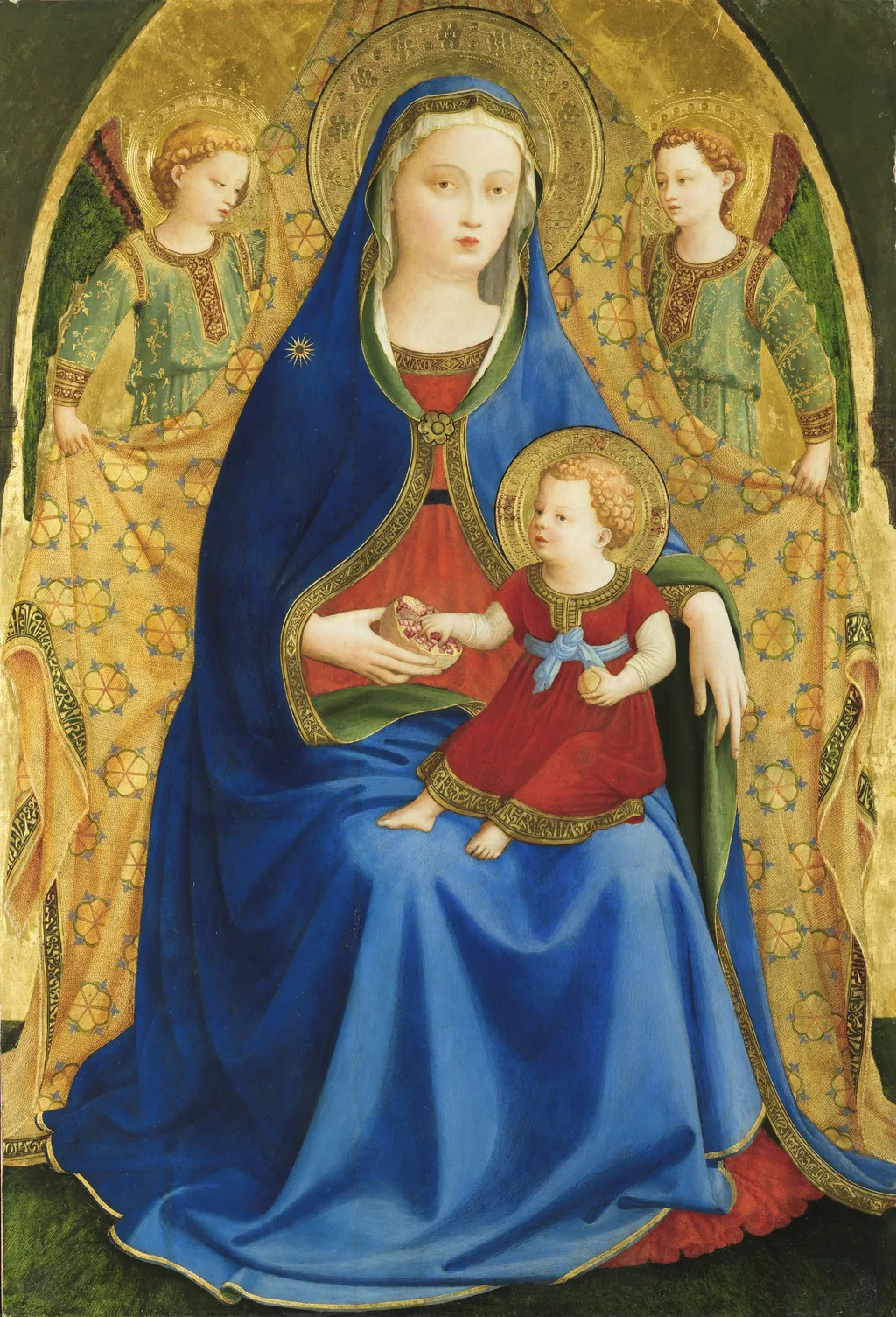
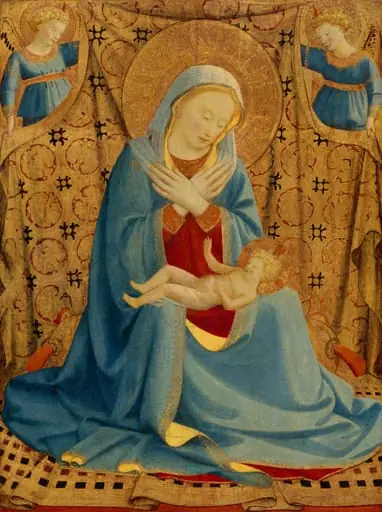
Madonna of the Pomegranate is a tempera painting by the Early Renaissance artist Fra Angelico. It dates from 1426 and is held in the collection of the Museo del Prado.
About this work
Overview
Created in 1426 by the Dominican friar Fra Angelico, this tempera panel presents the Virgin Mary cradling the infant Jesus, flanked by two angels. The composition is set against a luminous gold backdrop adorned with delicate floral motifs, and the child clutches a red pomegranate, a focal point of the work.
Subject & Meaning
The central figures—Mary, the Christ Child, and the attendant angels—reflect a conventional devotional theme. The pomegranate, held by the infant, traditionally conveys ideas of resurrection and the blood of Christ, reinforcing the painting’s theological intent.
Technique & Style
Executed in egg‑tempera, the artist mixed pigments with egg yolk to achieve a luminous, enduring surface. Fra Angelico’s handling of color—bright blue for the Virgin’s robe, vivid red for the child’s attire, and gold for the angels’ garments—exemplifies the early Florentine Renaissance’s emphasis on clarity, linear precision, and spiritual radiance.
History & Provenance
Originally intended for a Dominican setting, likely a convent such as San Marco in Florence, the panel eventually entered the collection of the Museo del Prado, where it remains on display as part of the museum’s early Renaissance holdings.
Context
Fra Angelico’s oeuvre was devoted almost entirely to religious subjects, produced for monastic patrons during a period when Florentine artists were redefining pictorial space and narrative clarity. This work illustrates his synthesis of devotional function with emerging Renaissance aesthetics.
Artist & collection

Artist
Fra Giovanni da Fiesole (born Guido di Pietro; c. 1395 – 18 February 1455), known posthumously as Fra Angelico ( FRAH an-JEL-ik-oh, Italian: ), was an Italian Dominican friar and painter active during the early…