Artwork
Hearing her declaration of love, Ayaz falls at the feet of Mahmuda at the holy shrine. The scene is witnessed by Salim, Ayaz’s friend, and a maid, from a Tuti-nama (Tales of a Parrot): Thirty-third Night
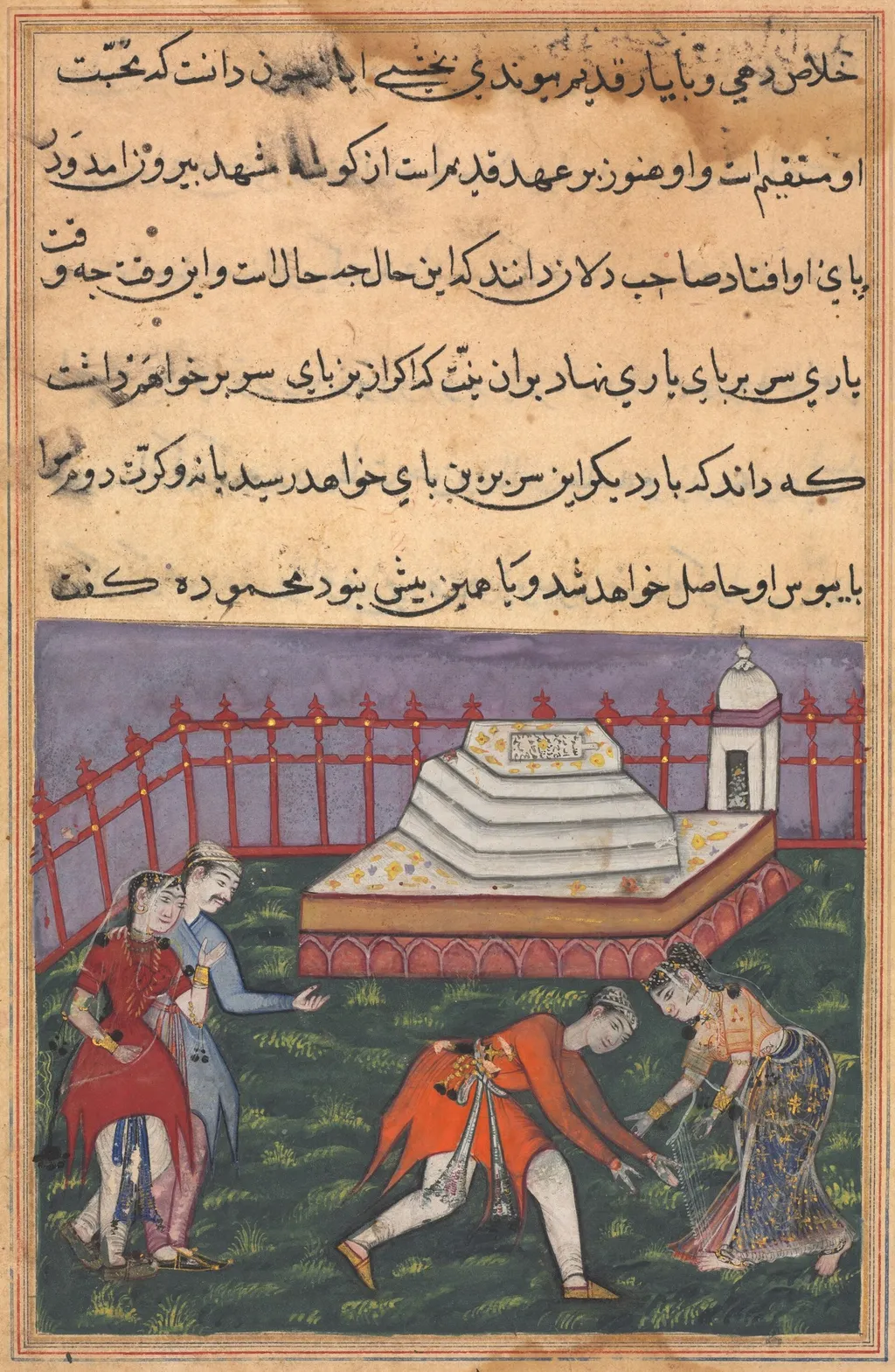
Hearing her declaration of love, Ayaz falls at the feet of Mahmuda at the holy shrine. The scene is witnessed by Salim, Ayaz’s friend, and a maid, from a Tuti-nama (Tales of a Parrot): Thirty-third Night is an unspecified painting. It dates from 1560 and is held in the collection of the Cleveland Museum of Art. The painting illustrates a narrative episode from the thirty‑third night of a Persian “Tuti‑nama,” or Tales of a Parrot.
About this work
Overview
The painting illustrates a narrative episode from the thirty‑third night of a Persian “Tuti‑nama,” or Tales of a Parrot.
The painting illustrates a narrative episode from the thirty‑third night of a Persian “Tuti‑nama,” or Tales of a Parrot. Set before a white shrine adorned with gold, the scene captures a moment of emotional intensity as a man in red kneels, reaching toward a woman in blue, while another man in orange also kneels nearby. A maid in patterned dress observes, and a friend named Salim watches from the side.
Subject & Meaning
The composition conveys a declaration of love: Ayaz, having heard his beloved Mahmuda’s words, falls at her feet in reverence at the holy shrine. The presence of Salim, Ayaz’s companion, and the maid underscores the public nature of the confession, highlighting themes of devotion, humility, and the intertwining of romantic and spiritual devotion.
Technique & Style
Executed in vivid, flat colors, the work relies on simple geometric forms and a decorative Persian script that crowns the scene. The artist’s use of bright reds, blues, and oranges creates visual contrast, while the gold detailing on the shrine adds a sense of sanctity. The style is narrative and illustrative, prioritizing clear storytelling over naturalistic modeling.
History & Provenance
The painting is part of the Cleveland Museum of Art’s collection, acquired as an example of Persian miniature narrative art. Its provenance traces back to the tradition of illustrated manuscripts that paired poetic text with visual episodes, a practice common in the Safavid period and later.
Context
Illustrations such as this one were commonly used to accompany literary works, providing visual commentary on stories from the Tuti‑nama, a collection of moral and romantic tales. The shrine setting reflects the cultural practice of linking love narratives with sacred spaces, a motif prevalent in Persian artistic conventions.
Artist & collection

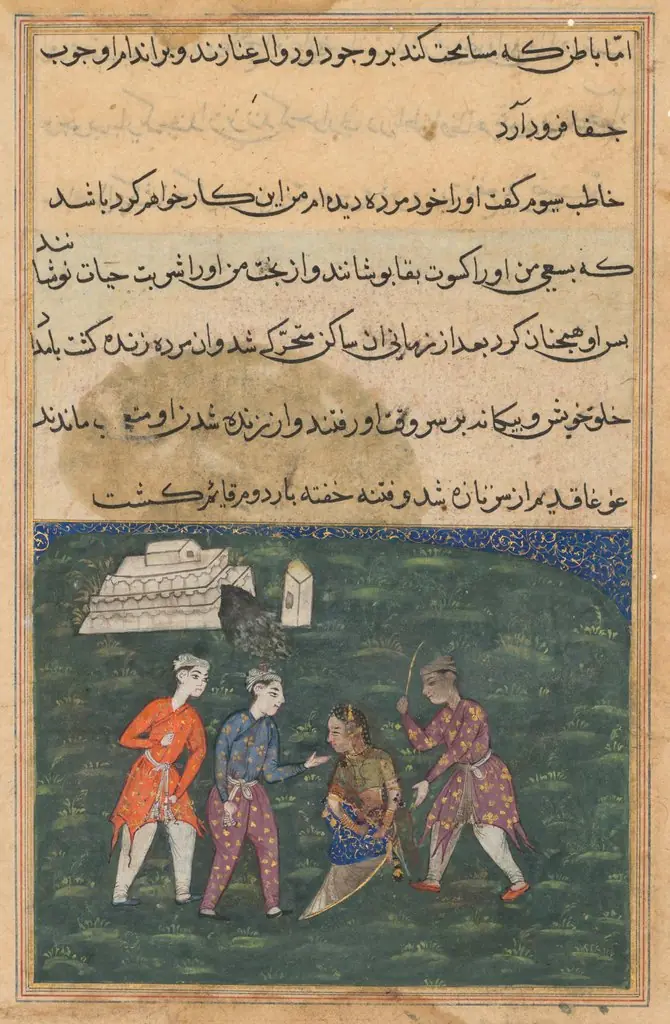 The third suitor strikes the devotee’s daughter and thus restores her to life, from a Tuti-nama (Tales of a Parrot): Twentieth Night
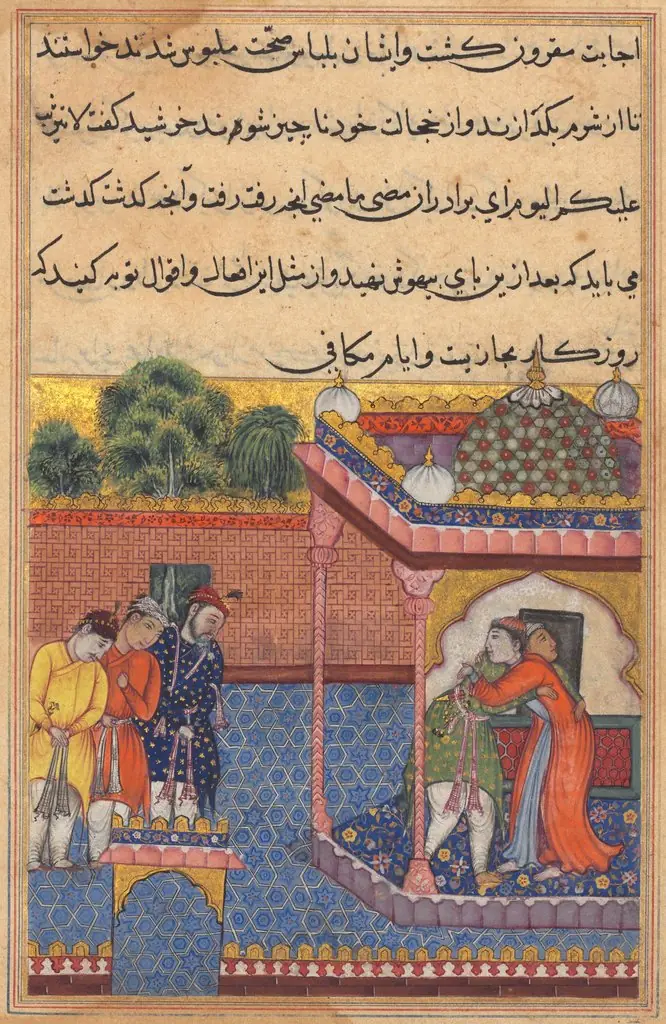 Khurshid reunited with her husband Utarid, from a Tuti-nama (Tales of a Parrot): Thirty-second Night
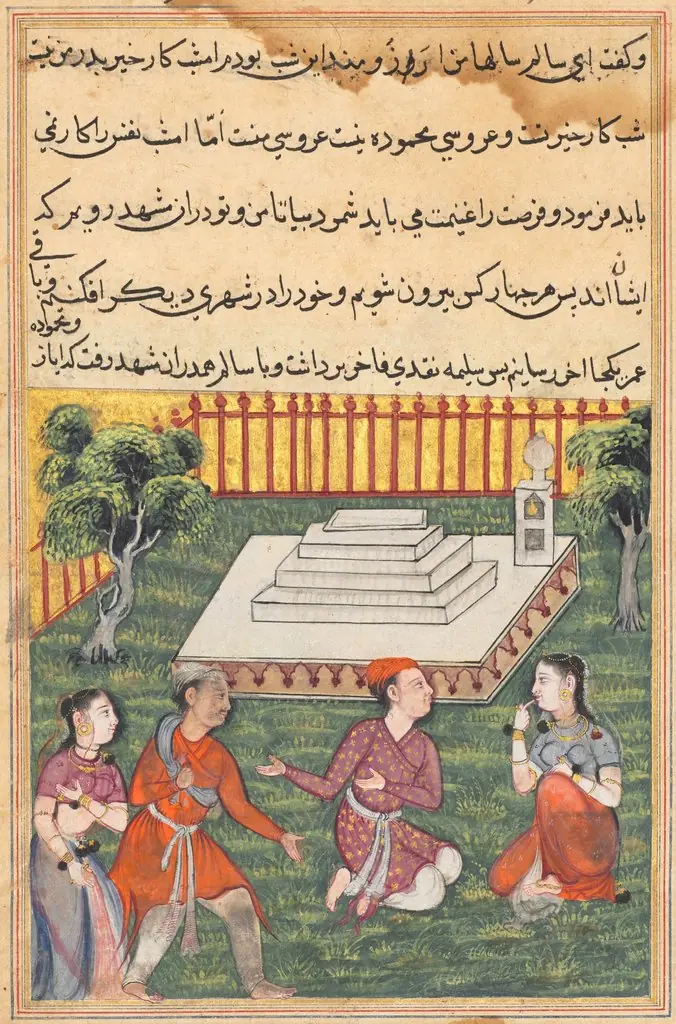 Salim and Salima return to Ayaz and Mahmuda in the sanctuary, from a Tuti-nama (Tales of a Parrot): Thirty-third Night