Artwork
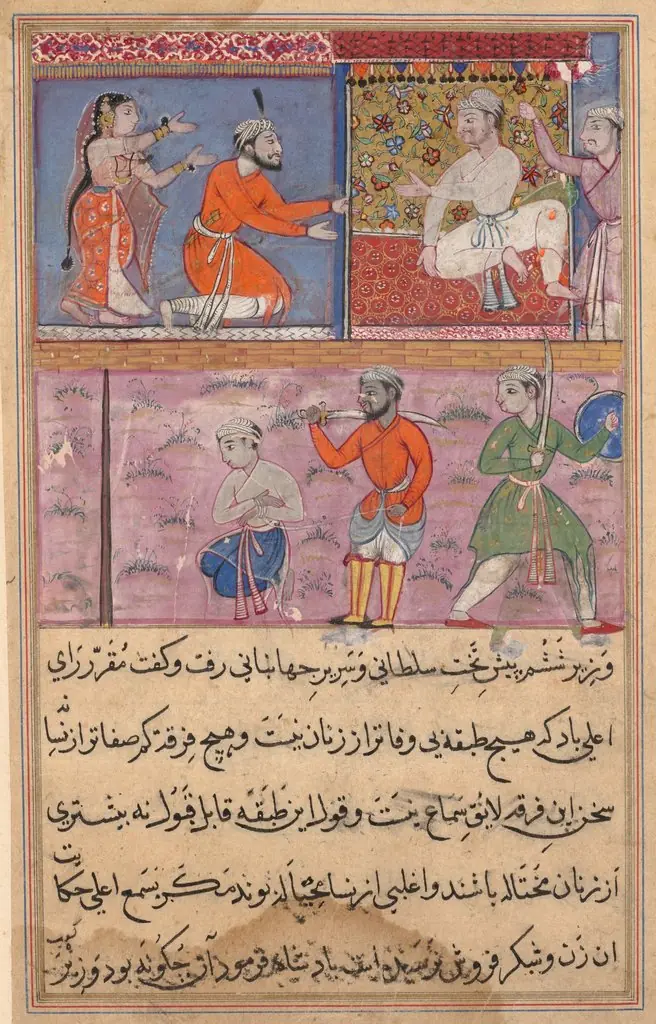
Khurshid reunited with her husband Utarid, from a Tuti-nama (Tales of a Parrot): Thirty-second Night
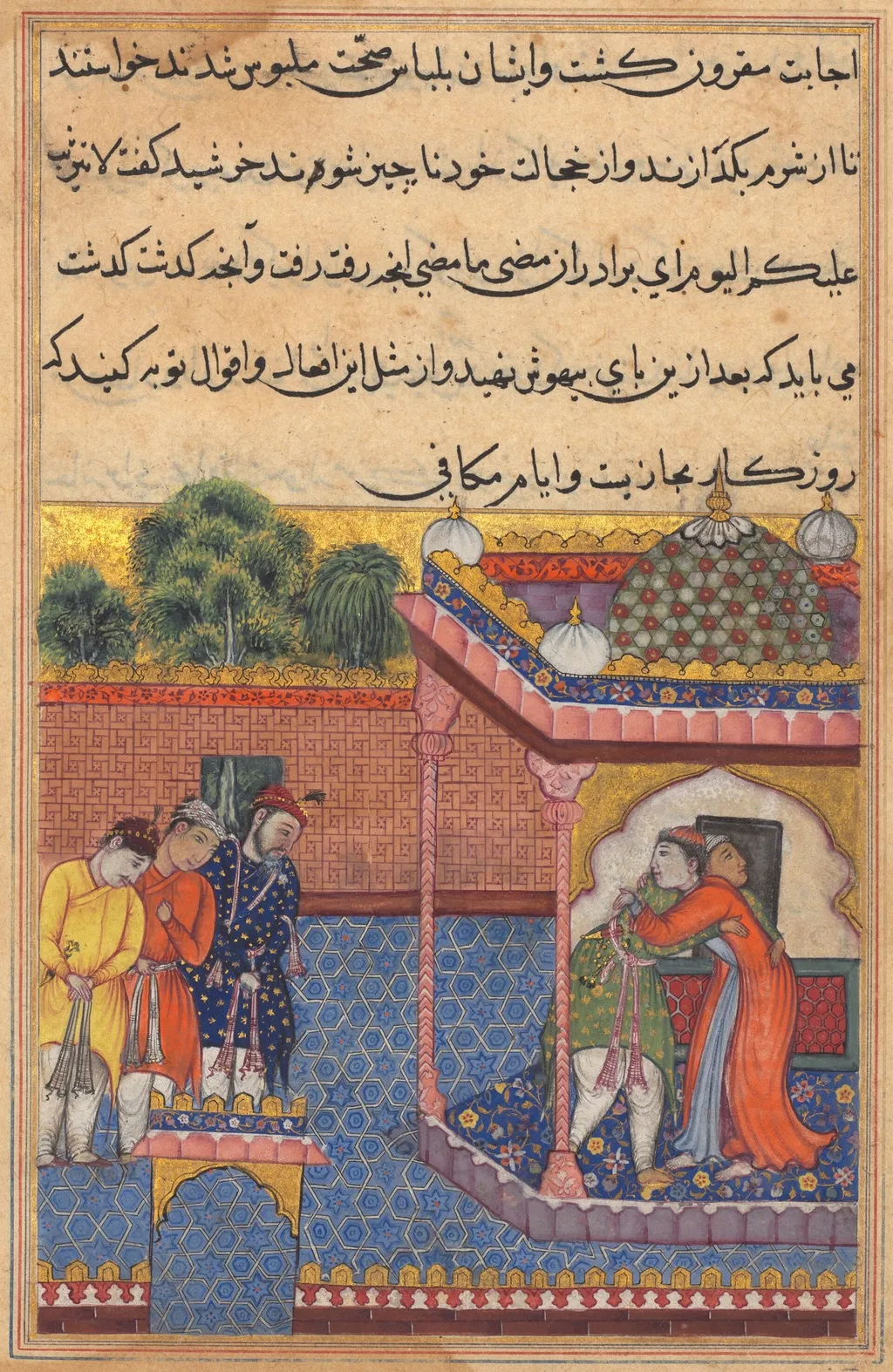
Khurshid reunited with her husband Utarid, from a Tuti-nama (Tales of a Parrot): Thirty-second Night is an unspecified painting. It dates from 1560 and is held in the collection of the Cleveland Museum of Art.
About this work
Overview
The work illustrates a narrative from the thirty‑second episode of the Persian illustrated manuscript known as the Tuti‑nama, or "Tales of a Parrot.
The work illustrates a narrative from the thirty‑second episode of the Persian illustrated manuscript known as the Tuti‑nama, or "Tales of a Parrot." It is divided into two juxtaposed scenes: on the left, three figures in vivid yellow, orange and blue garments stand before a tiled wall; on the right, a kneeling man in red and green embraces a woman in white beside a bed, with a patterned wall and a balcony with domes visible beyond.
Subject & Meaning
The paired images depict the reunion of Khurshid with her husband Utarid, a moment recounted in the story’s romantic episode. The left panel sets a formal, possibly ceremonial context, while the right panel focuses on the intimate embrace, emphasizing the emotional resolution of the tale.
Technique & Style
Executed in flat, saturated pigments, the painting relies on bold color blocks rather than chiaroscuro to model form. Geometric motifs decorate the tiled surfaces and textiles, and the composition is organized with clear, linear outlines, characteristic of Persian miniature conventions that prioritize decorative pattern over realistic depth.
History & Provenance
The piece originates from a hand‑copied Tuti‑nama manuscript produced in the Persianate world, likely between the 16th and 18th centuries. It entered the collection of the Cleveland Museum of Art through acquisition in the early 20th century, where it has been displayed as part of the museum’s Islamic art holdings.
Context
Illustrated manuscripts such as the Tuti‑nama served both literary and visual functions, providing lavishly painted scenes to accompany poetic narratives. The work reflects the cultural exchange between Persian literary traditions and the artistic practices of courtly workshops that favored intricate ornamentation and vivid storytelling.
Artist & collection

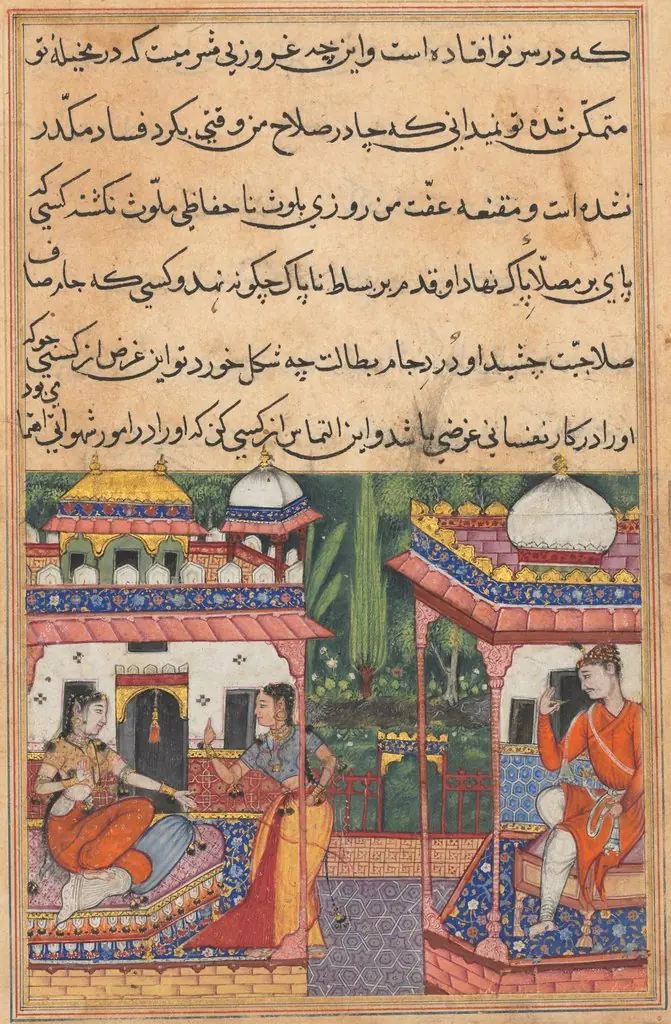 Kaiwan sends a message of love to Khurshid, wife of his brother Utarid who is away on a journey, from a Tuti-nama (Tales of a Parrot): Thirty-second Night
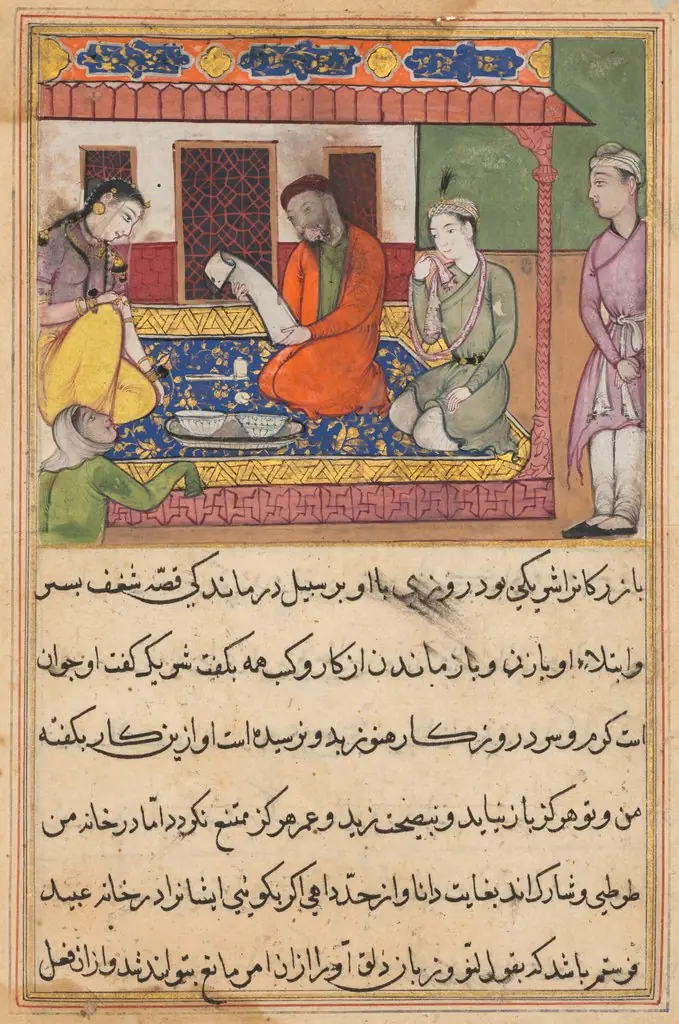 The marriage of ‘Ubaid, son of a merchant of Tirmiz, from a Tuti-nama (Tales of a Parrot): Forty-second Night
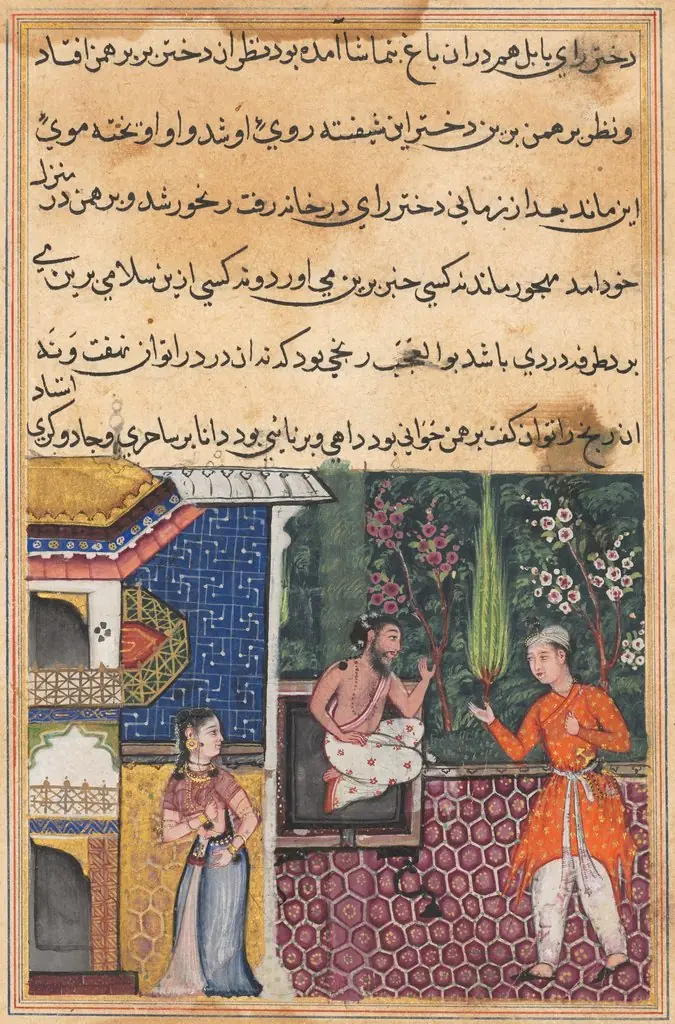 The Brahman gives an account of his falling in love with the king of Babylon’s daughter to his friend, the magician, from a Tuti-nama (Tales of a Parrot): Thirty-fifth Night
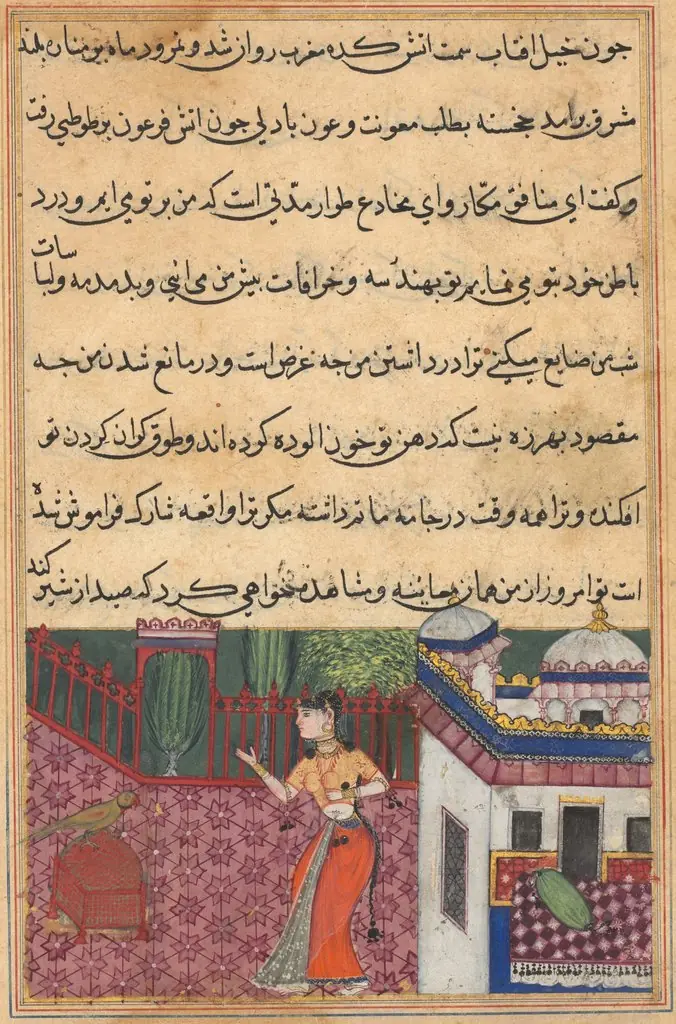 The parrot addresses Khujasta at the beginning of the thirty-third night, from a Tuti-nama (Tales of a Parrot)
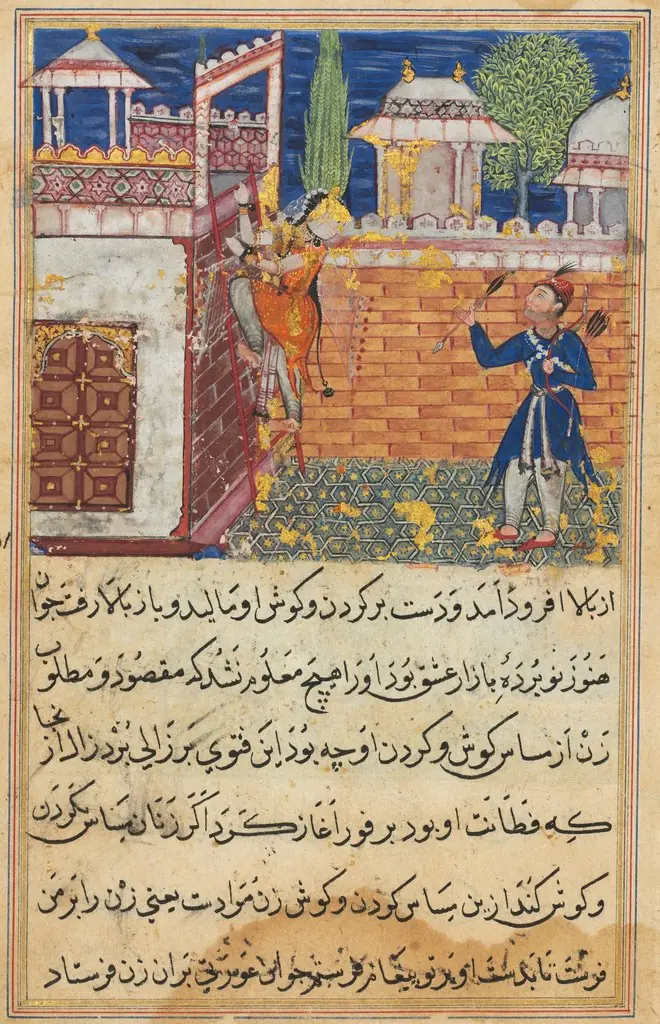 The deceitful wife returns to her terrace after caressing her lover, from a Tuti-nama (Tales of a Parrot): Eighth Night
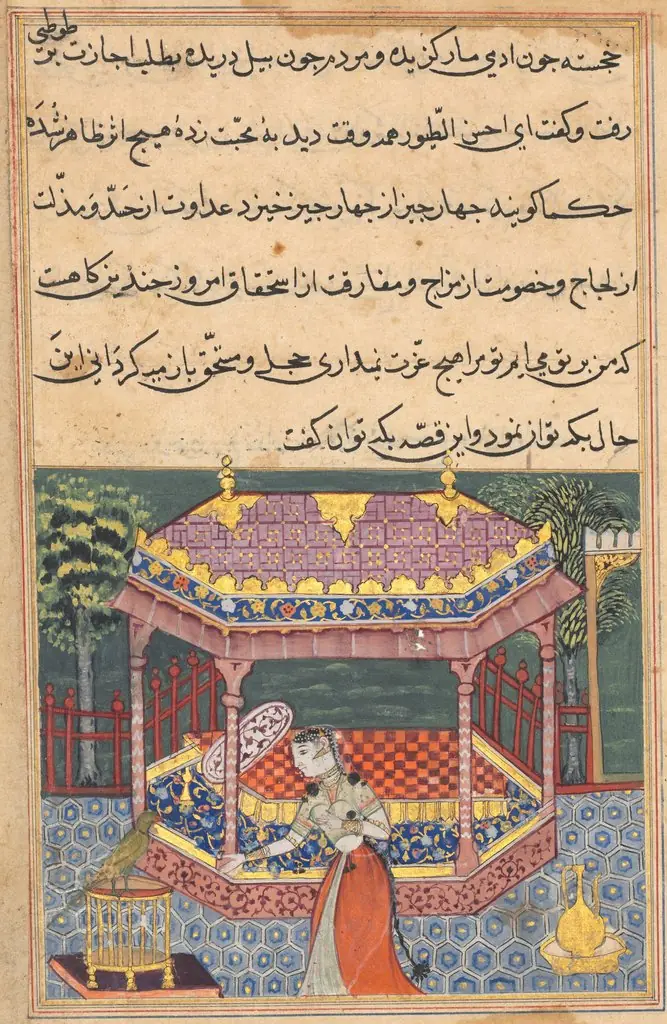 The parrot addresses Khujasta at the beginning of the thirty-seventh night, from a Tuti-nama (Tales of a Parrot)
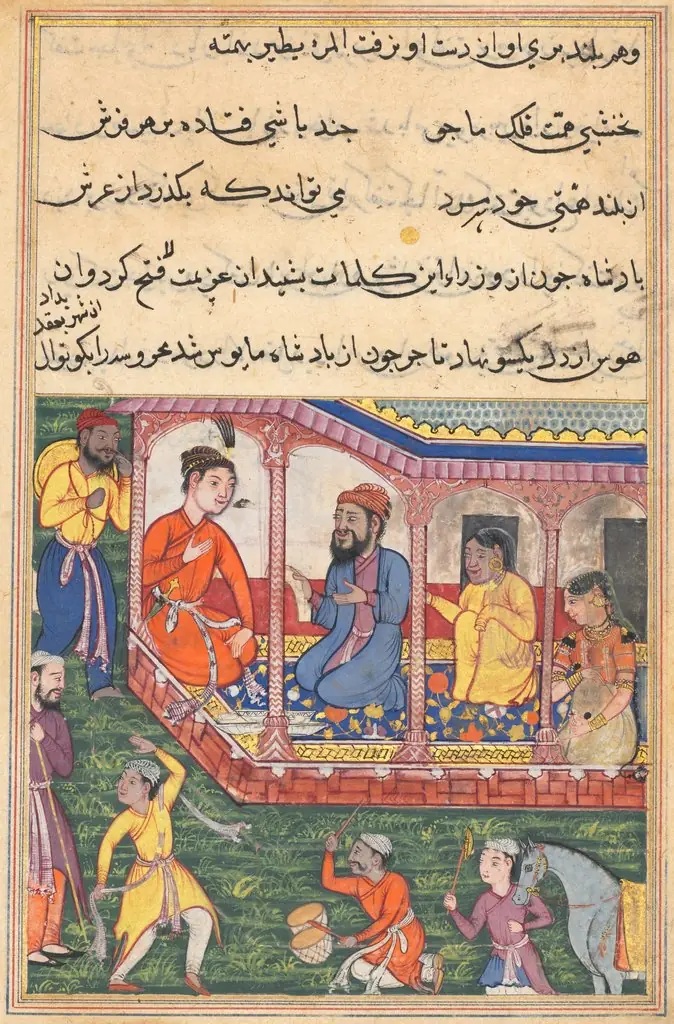 Mahrusa’s marriage to the prefect of the city, from a Tuti-nama (Tales of a Parrot): Thirty-sixth Night
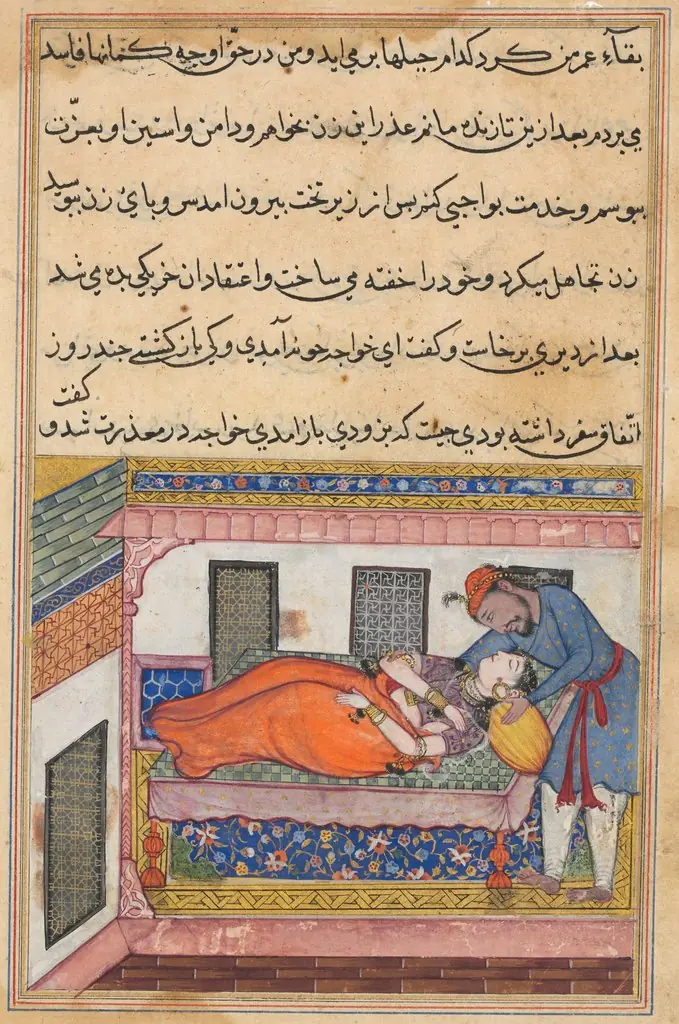 Shahr-Arai’s husband bends to kiss his wife who feigns sleep, from a Tuti-nama (Tales of a Parrot): Fortieth Night
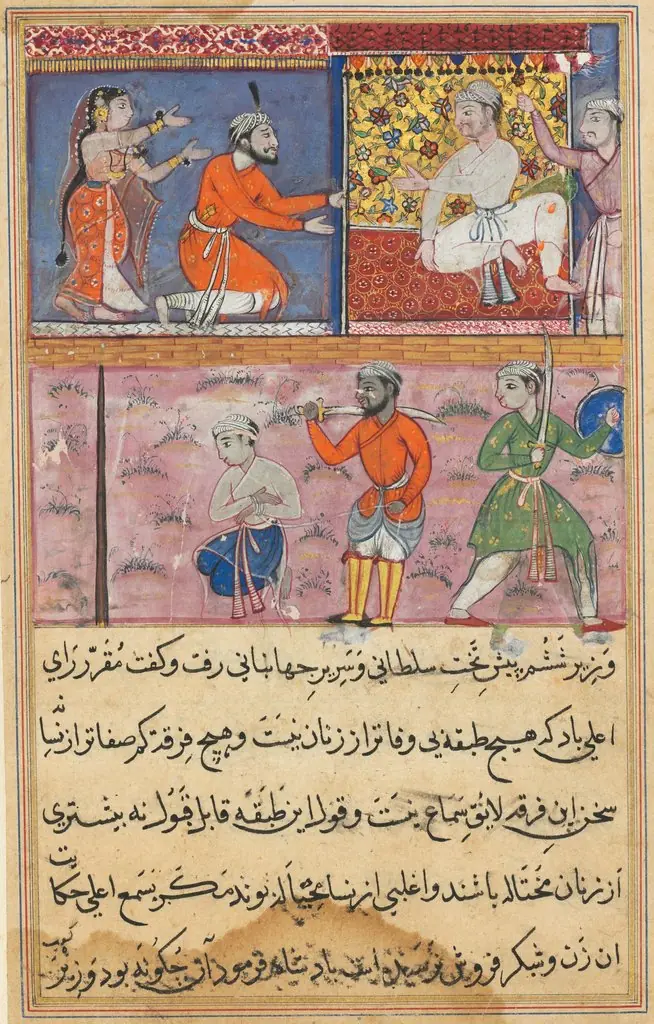 The prince sent back to the place of execution for the sixth time, from a Tuti-nama (Tales of a Parrot): Eighth Night
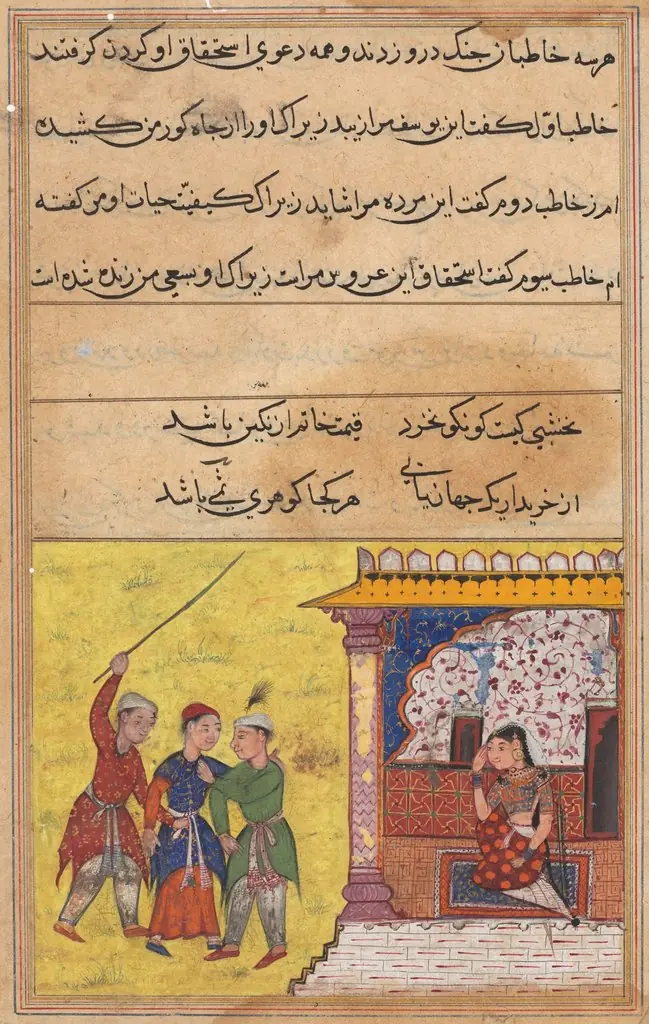 The three suitors again begin to quarrel among themselves for the hand of the devotee’s daughter, from a Tuti-nama (Tales of a Parrot): Twentieth Night
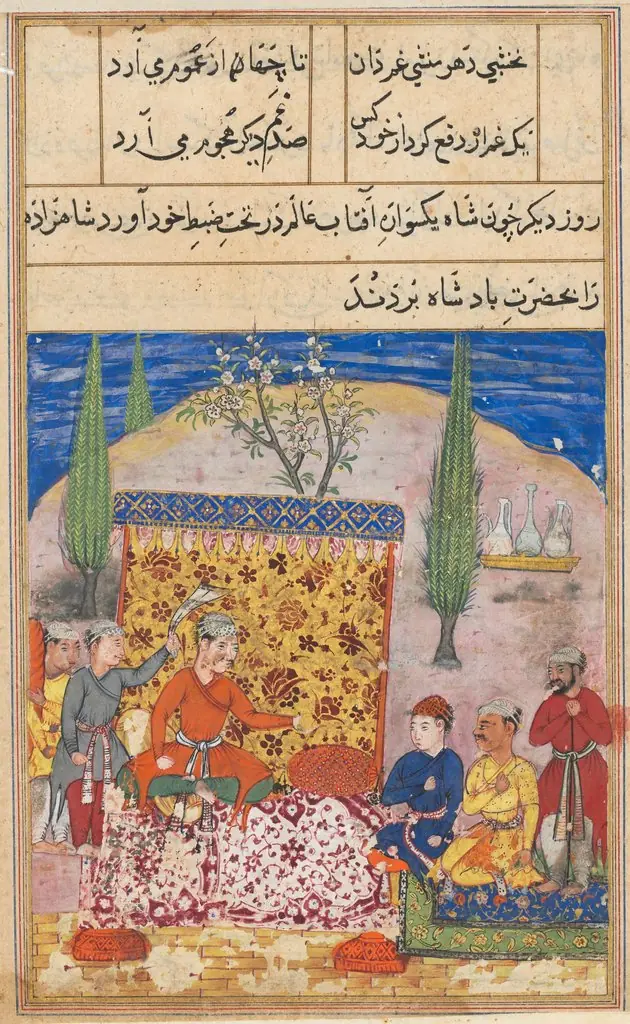 The young prince is presented to the king, his father, by his teacher, but refuses to speak, from a Tuti-nama (Tales of a Parrot): Eighth Night
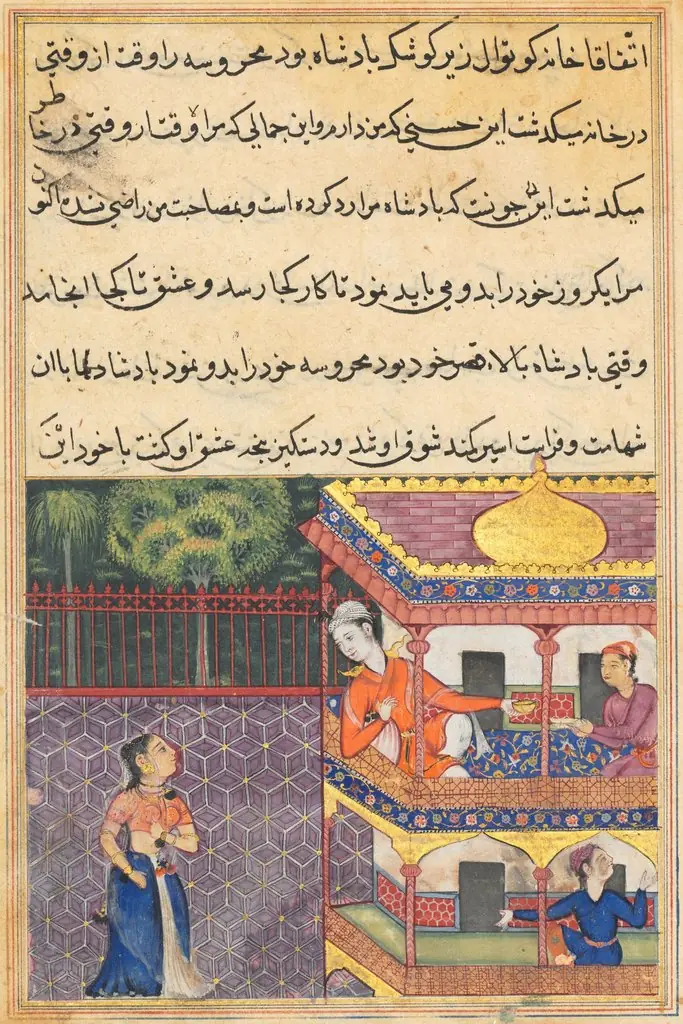 The king of Zabul sees Mahrusa from his palace balcony, from a Tuti-nama (Tales of a Parrot): Thirty-sixth Night
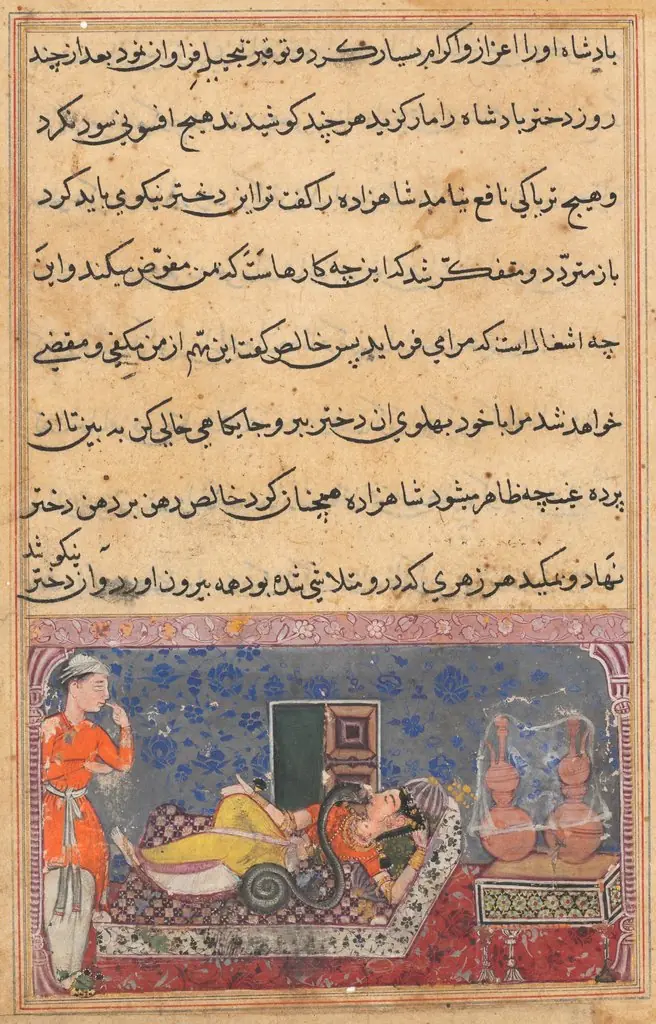 Khalis repays the prince for his kindness by changing into a snake and sucking the poison from the king’s daughter, from a Tuti-nama (Tales of a Parrot): Eighteenth Night
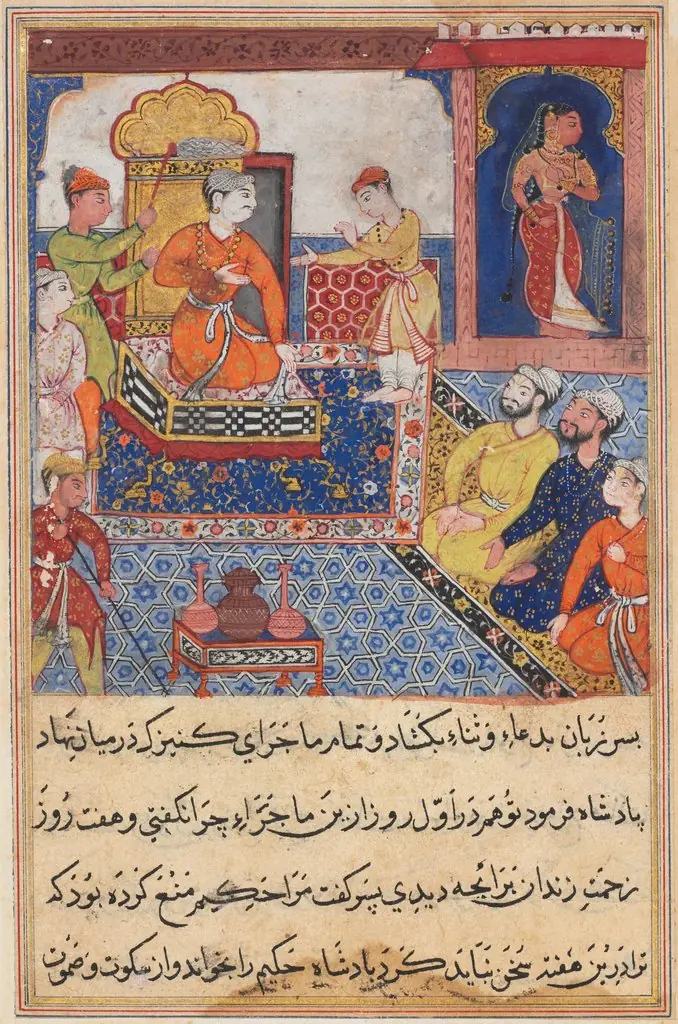 The young prince recounts his experiences to his father, the king, from a Tuti-nama (Tales of a Parrot): Eighth Night
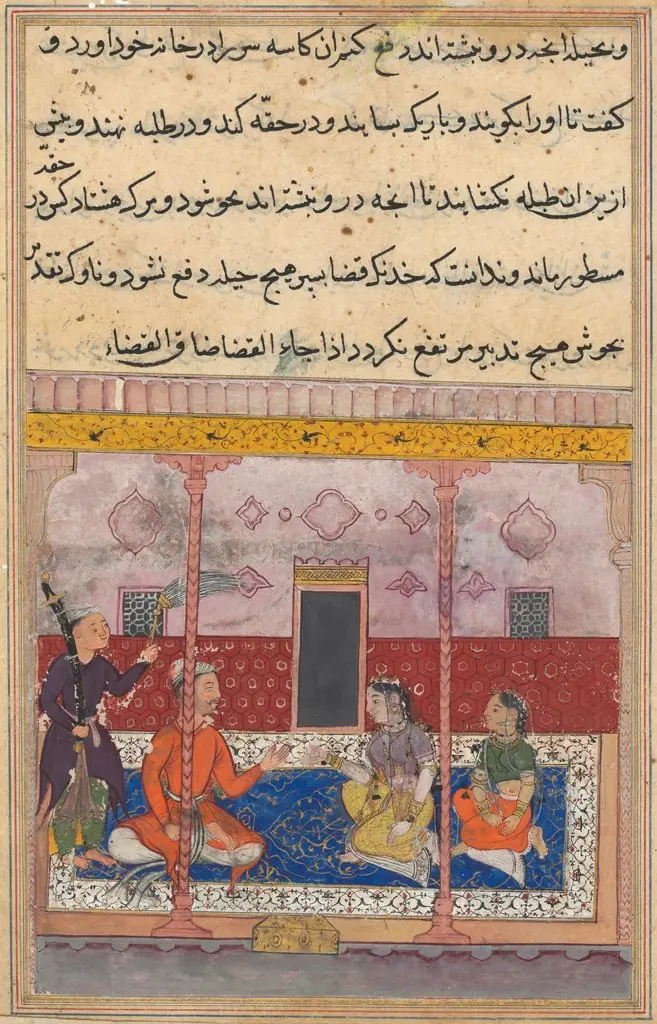 The merchant has the hateful skull ground and put into a box, from a Tuti-nama (Tales of a Parrot): Twenty-third Night
 Page from Tales of a Parrot (Tuti-nama): text page