Artwork
The Continence of Scipio
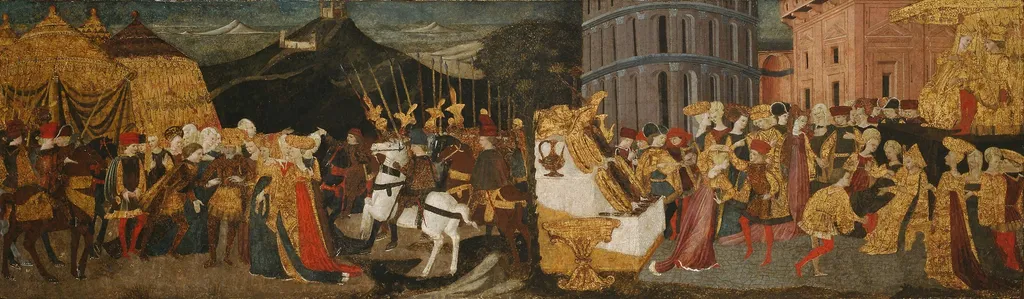
The Continence of Scipio is an unspecified painting by the Early Renaissance artist Unknown. It dates from 1455 and is held in the collection of the Art Institute of Chicago.
About this work
Overview
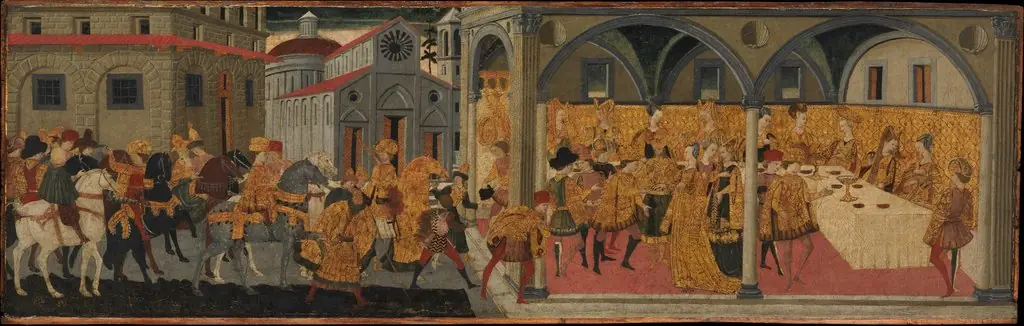
The scene unfolds in a grand architectural setting with a tent and stone structures, populated by a diverse group of onlookers.
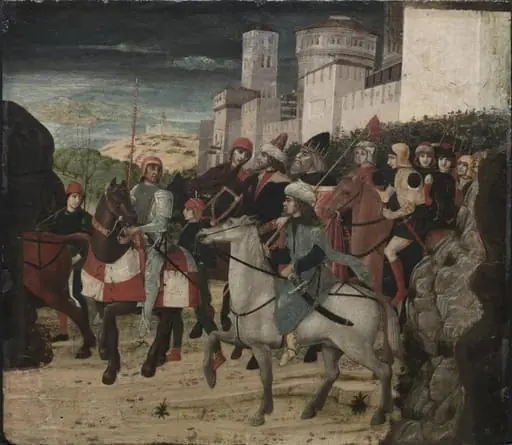
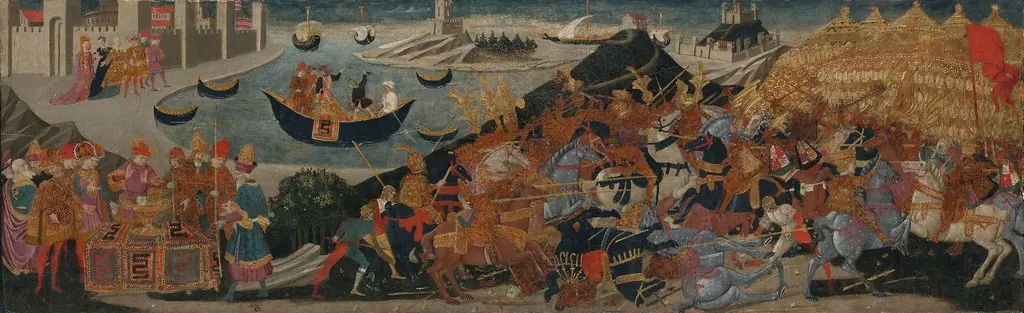
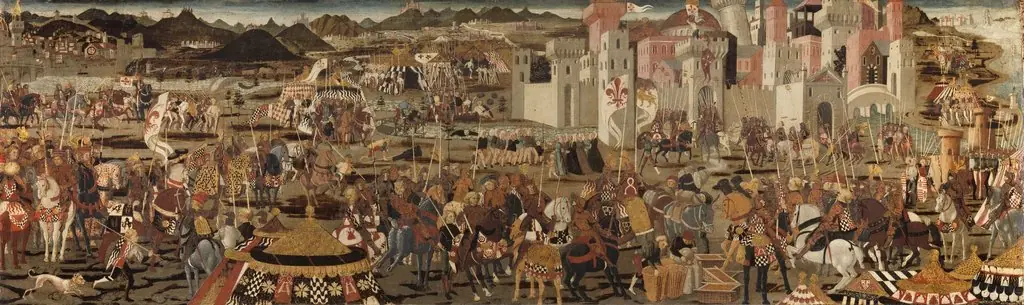
This painting portrays the Roman general Scipio Africanus rejecting a sexual advance from a captured enemy woman, an act of moral restraint celebrated in classical antiquity. The scene unfolds in a grand architectural setting with a tent and stone structures, populated by a diverse group of onlookers. A white horse stands near the central figures, reinforcing Scipio’s status. Gold leaf accents adorn garments and surfaces, signaling wealth and ceremonial importance.
Subject & Meaning
The scene illustrates Scipio’s virtue in refusing the advances of a captive princess, choosing honor over personal desire. This act, drawn from Roman historical accounts, was emblematic of disciplined leadership during the Punic Wars. The composition emphasizes Scipio’s calm authority amid the bustling crowd, contrasting his restraint with the emotional intensity of those around him. The narrative underscores ideals of clemency and self-control valued in Renaissance humanism.
Technique & Style
The artist employs gold leaf extensively to highlight textiles and architectural details, enhancing the scene’s ceremonial grandeur. Rich reds and golds dominate the palette, creating visual harmony and depth. Figures are arranged dynamically, with gestures and drapery guiding the viewer’s eye across the composition. While sfumato is not evident here, the rendering of fabrics and facial expressions reflects a refined attention to texture and individual character.
History & Provenance
Created in the early 16th century, the painting likely originated in Italy during a period of renewed interest in classical virtue. It may have been commissioned by a noble patron seeking to align themselves with Roman ideals of leadership. The work passed through private collections before entering a public museum, where its historical and artistic significance continues to be studied.
Context
Renaissance artists frequently turned to Roman history to illustrate civic virtue and moral leadership. Scipio’s story was a favored subject, symbolizing the triumph of reason over passion. This painting reflects the era’s fascination with antiquity as a model for contemporary governance and personal conduct, particularly among ruling elites who commissioned such works to affirm their own legitimacy.
Legacy
The painting contributed to the enduring visual language of classical virtue in Western art. Its emphasis on moral restraint influenced later depictions of leadership in both religious and secular contexts. Though not widely reproduced, its composition and use of gold leaf remain examples of how Renaissance painters fused historical narrative with decorative splendor to convey ethical ideals.
Artist & collection

 Domestic Scene
 Giacomo and Cardinal Marco, investing Andrea, Abbot of San Zeno, with his Benefice
 The Nymph of Fontainebleau
 Portrait of a Woman
 Madonna and Child with Saints in the Enclosed Garden
 Venus and Minerva
 Family Group of Four on Sofa
 Wall painting from Room H of the Villa of P. Fannius Synistor at Boscoreale