Artwork
Parable of the Pearl of Great Price
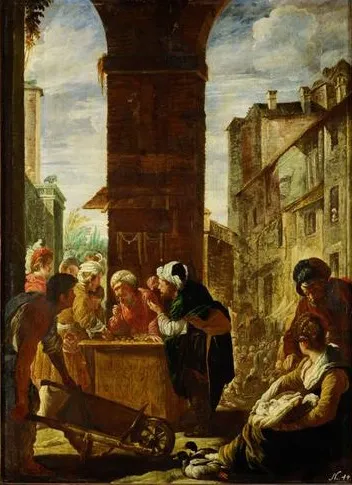
Parable of the Pearl of Great Price is an unspecified painting by the Early Baroque Italian artist Unknown. It dates from 1610 and is held in the collection of the Kunsthistorisches Museum.
About this work
Overview
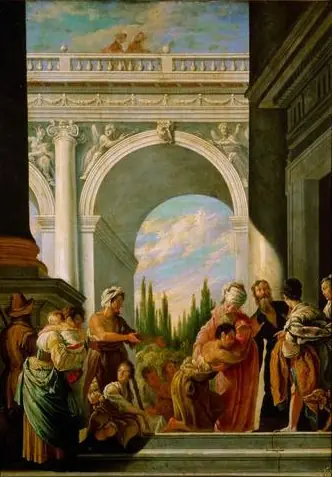
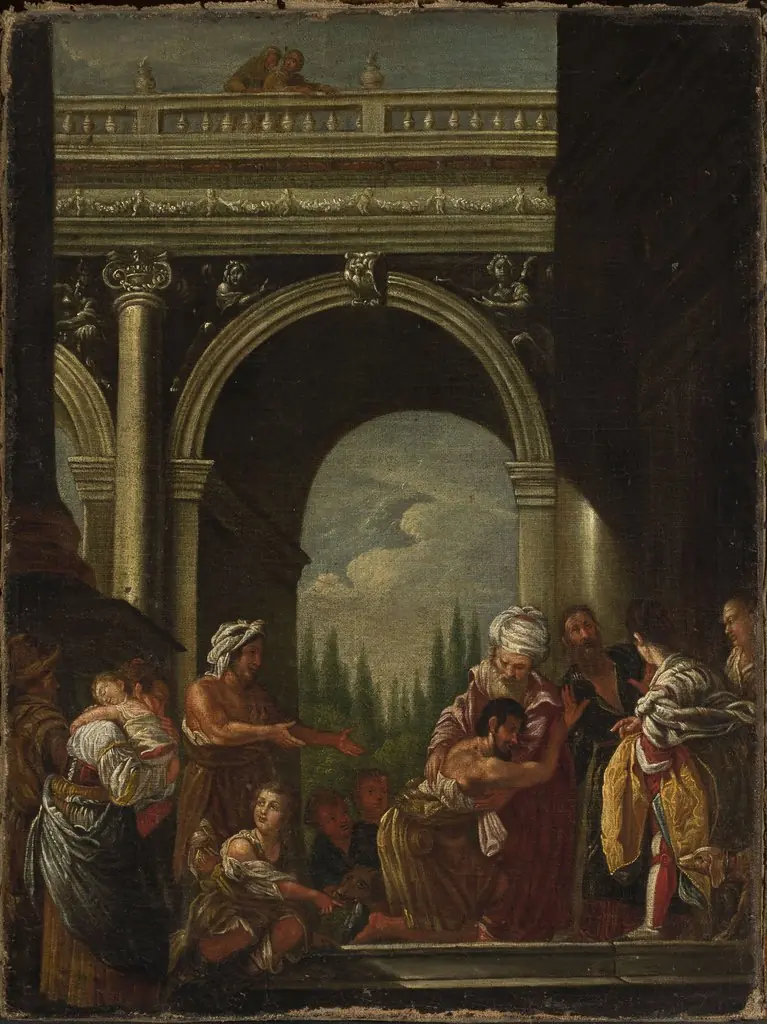
This painting depicts a moment of quiet revelation centered on a small, luminous object held by a figure in dark robes and a white head covering.
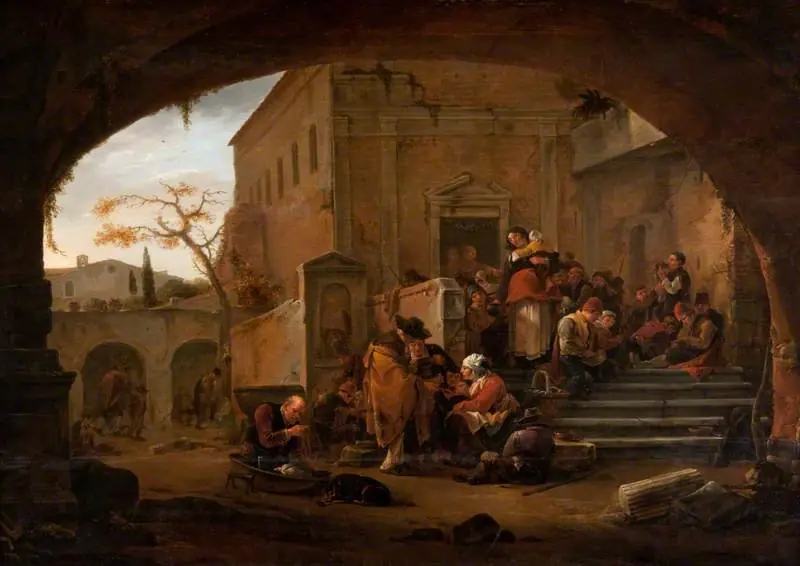
This painting depicts a moment of quiet revelation centered on a small, luminous object held by a figure in dark robes and a white head covering. Surrounding him, a group of onlookers gathers in a stone courtyard framed by arches and distant buildings. The composition directs attention inward, emphasizing stillness and focus. Light and shadow are carefully modulated to heighten the sense of intimacy and weight in the scene.
Subject & Meaning
The scene illustrates the biblical parable in which a merchant sells all he owns to acquire a single pearl of immense value. The central figure, likely the merchant, holds the pearl as others observe in silence. The moment captures the gravity of sacrifice and spiritual discernment. No dramatic gestures accompany the act; instead, the meaning unfolds through stillness and shared attention.
Technique & Style
Chiaroscuro is employed to model forms and create spatial depth, with strong contrasts between the illuminated pearl and the shadowed figures. The figures are rendered with restrained detail, their clothing and postures suggesting varied social roles without individualizing them. The architectural backdrop is simplified, serving as a neutral stage that focuses the viewer’s gaze on the central object and its significance.
History & Provenance
The painting’s origins are not well documented, but its style and subject align with early modern religious art from regions where biblical narratives were commonly rendered in domestic or courtyard settings. It likely dates to the 17th century, a period when parables were frequently visualized for private devotion. Its early ownership remains untraced, and it entered public collections in the 20th century.
Context
In the 17th century, religious imagery often served devotional purposes, especially in communities with strong scriptural traditions. Parables like this one were favored for their moral clarity and emotional resonance. The choice of a courtyard setting reflects a trend toward intimate, everyday spaces for sacred moments, distancing the scene from grand ecclesiastical settings while deepening its accessibility.
Legacy
The painting contributes to a broader tradition of visualizing spiritual choice through quiet, human-scale moments. Its emphasis on contemplation over spectacle influenced later depictions of religious insight in secular contexts. While not widely reproduced, it remains a thoughtful example of how narrative theology was rendered with restraint and psychological nuance in early modern art.
Artist & collection

 Domestic Scene
 Giacomo and Cardinal Marco, investing Andrea, Abbot of San Zeno, with his Benefice
 The Nymph of Fontainebleau
 Portrait of a Woman
 Madonna and Child with Saints in the Enclosed Garden
 Venus and Minerva
 Family Group of Four on Sofa
 Wall painting from Room H of the Villa of P. Fannius Synistor at Boscoreale