Artwork
Shipwreck
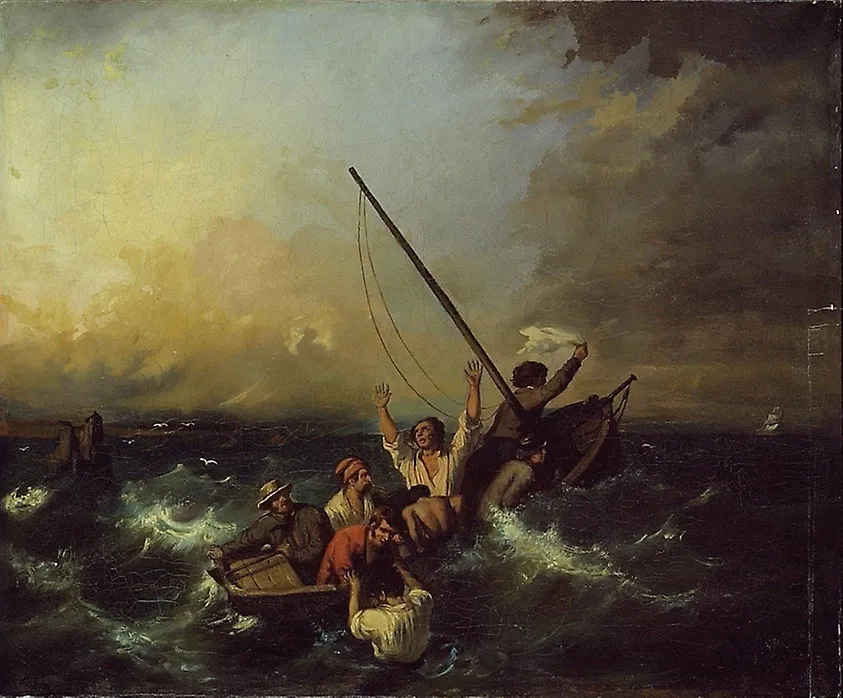
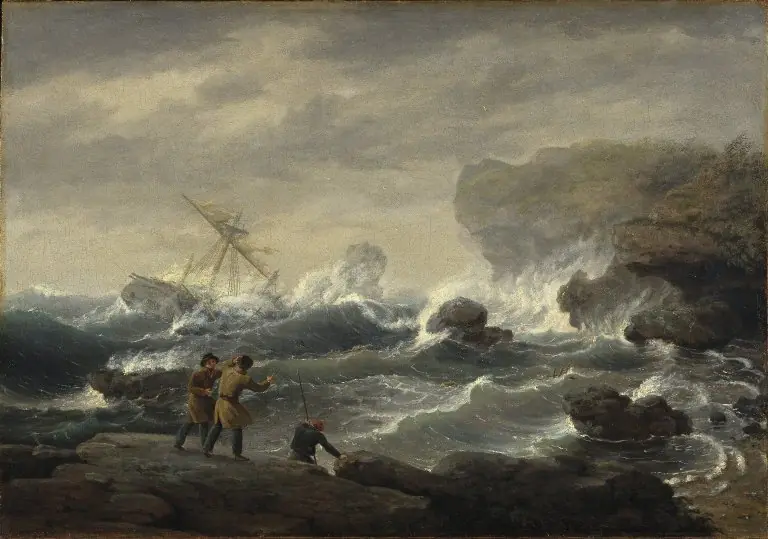
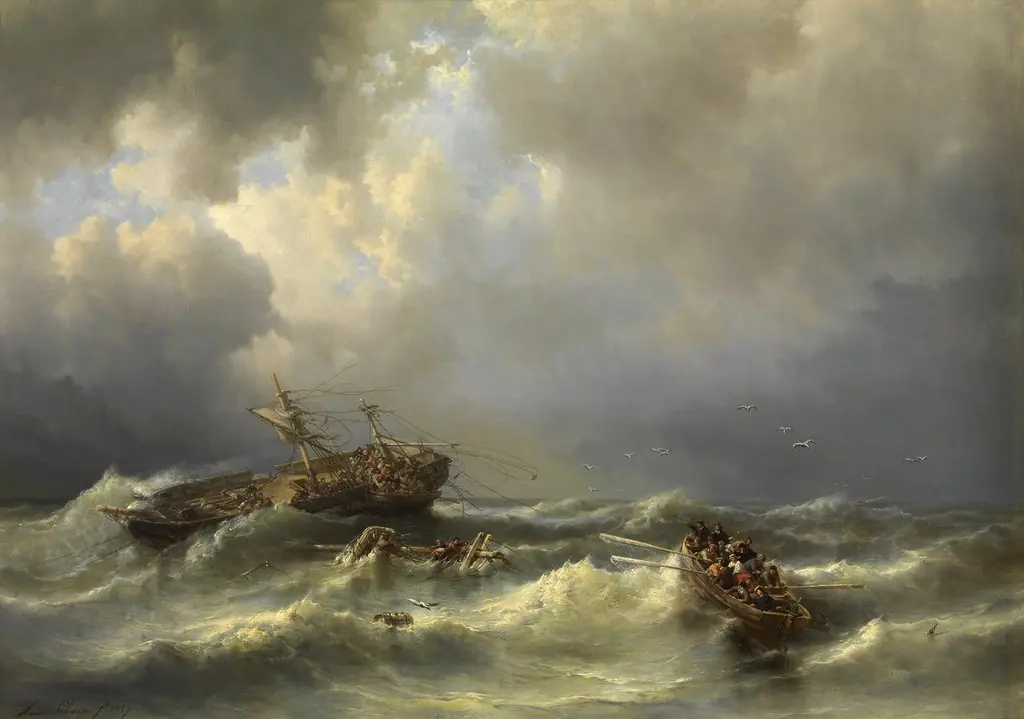
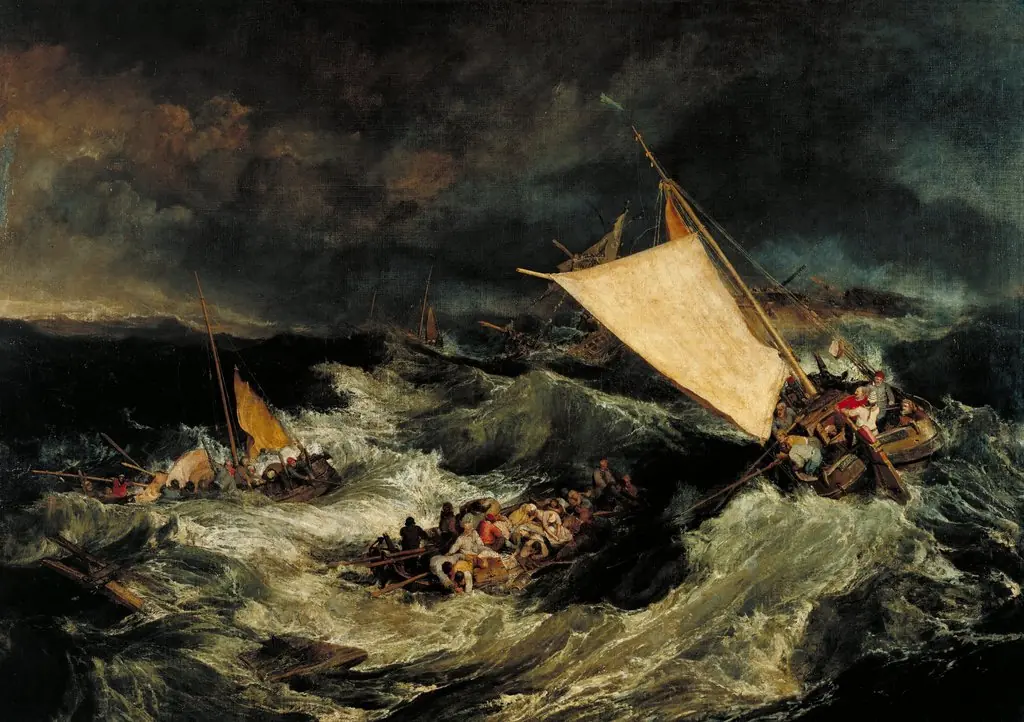
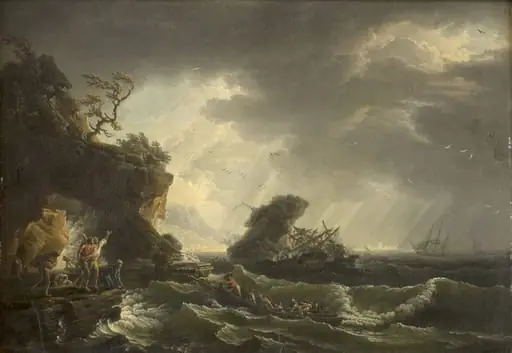
Shipwreck is an oil painting by Unknown. It dates from 1850 and is held in the collection of the Art Institute of Chicago. This oil painting portrays a violent maritime disaster, capturing the moment of rescue amid chaotic seas.
About this work
Overview
The scene is rendered with intense contrasts of light and shadow, heightening the emotional stakes and physical peril.
This oil painting portrays a violent maritime disaster, capturing the moment of rescue amid chaotic seas. A group of figures struggles in the water, their movements urgent and uncoordinated. The composition centers on a woman being hauled toward a overcrowded boat, while another man clings to her leg. The scene is rendered with intense contrasts of light and shadow, heightening the emotional stakes and physical peril.
Subject & Meaning
The scene depicts human vulnerability in the face of nature’s force. The figures represent collective desperation, with no clear hero or narrative resolution. The woman’s central position suggests a focal point of empathy, yet her fate remains ambiguous. The painting avoids moralizing, instead presenting survival as a raw, physical struggle without divine intervention or clear outcome.
Technique & Style
The artist employs bold, energetic brushwork to convey motion and turbulence. Chiaroscuro is used aggressively to isolate figures against dark, churning water, enhancing the sense of danger. Highlights fall sharply on faces and limbs, drawing attention to expressions of fear and exertion. The paint is applied thickly in places, reinforcing the physicality of the moment and the weight of the sea.
History & Provenance
The painting is held by the Art Institute of Chicago, where it has been part of the collection since the early 20th century. Its origins trace to the early 1800s, likely created during a period when maritime disasters were common subjects in European art. The artist’s identity remains unconfirmed, though stylistic elements align with Romantic-era tendencies in coastal drama.
Context
Created during a time when sea travel was perilous and shipwrecks frequently made headlines, the work reflects public fascination with survival and loss at sea. It aligns with broader artistic trends that emphasized emotion over idealism, favoring raw human experience over classical order. Such scenes often served as reminders of nature’s indifference to human endeavor.
Legacy
Though not widely reproduced, the painting contributes to a genre of 19th-century maritime art that prioritized emotional intensity over narrative clarity. Its unflinching depiction of chaos influenced later realist and impressionist treatments of crisis. The work remains a quiet example of how art captured the fragility of life in an age of expanding seafaring.
Artist & collection

 Domestic Scene
 Giacomo and Cardinal Marco, investing Andrea, Abbot of San Zeno, with his Benefice
 The Nymph of Fontainebleau
 Portrait of a Woman
 Madonna and Child with Saints in the Enclosed Garden
 Venus and Minerva
 Family Group of Four on Sofa
 Wall painting from Room H of the Villa of P. Fannius Synistor at Boscoreale