Artwork
Mater Dolorosa
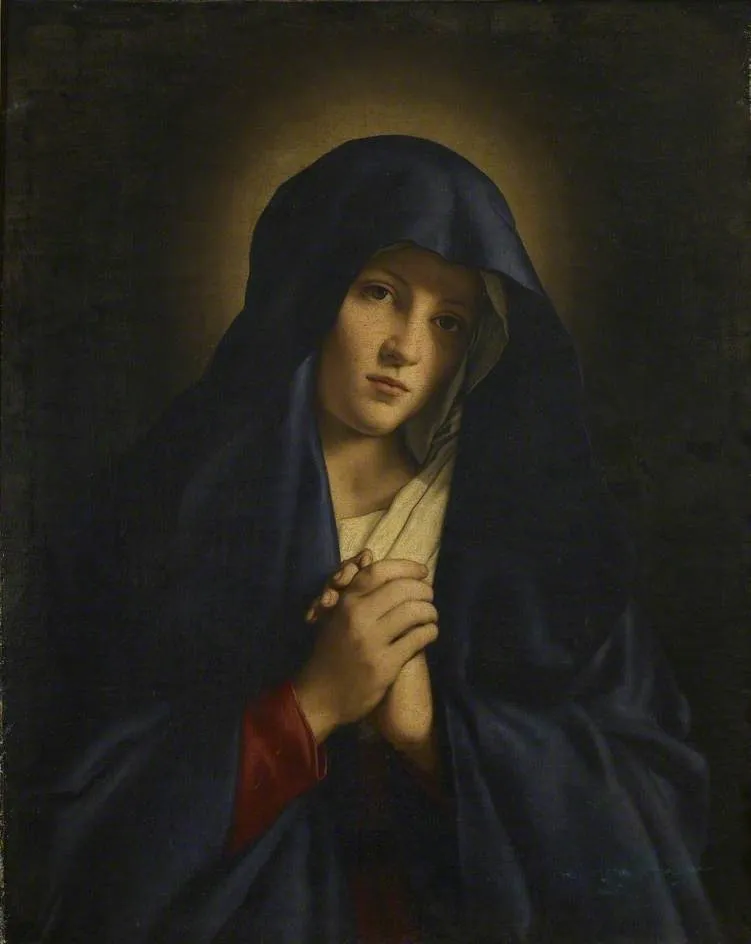
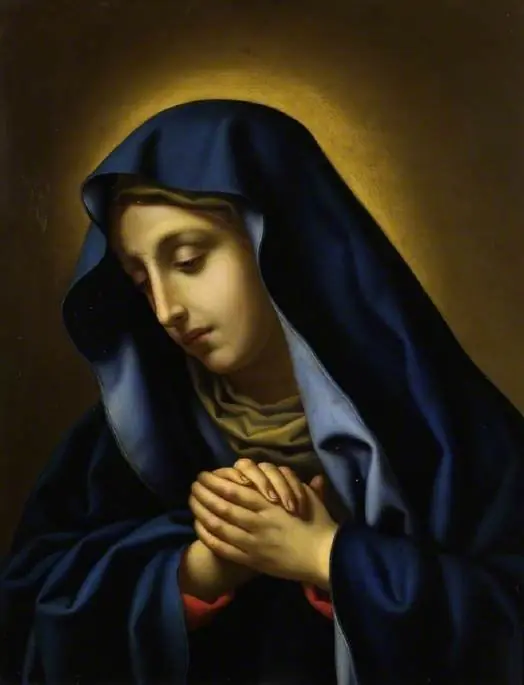
Mater Dolorosa is an oil painting by Unknown. It dates from 1700 and is held in the collection of the Ashmolean Museum. This oil painting portrays a solitary female figure in a moment of quiet sorrow.
About this work
Overview
This oil painting portrays a solitary female figure in a moment of quiet sorrow. Dressed in a blue robe with a white head covering and a hint of red beneath, she sits with hands clasped in prayer. The dark, unbroken background enhances the focus on her form, while a faint luminous halo encircles her head, suggesting spiritual presence without overt symbolism.
Subject & Meaning
The figure is likely the Virgin Mary in her role as Mater Dolorosa, the sorrowful mother mourning Christ’s suffering.
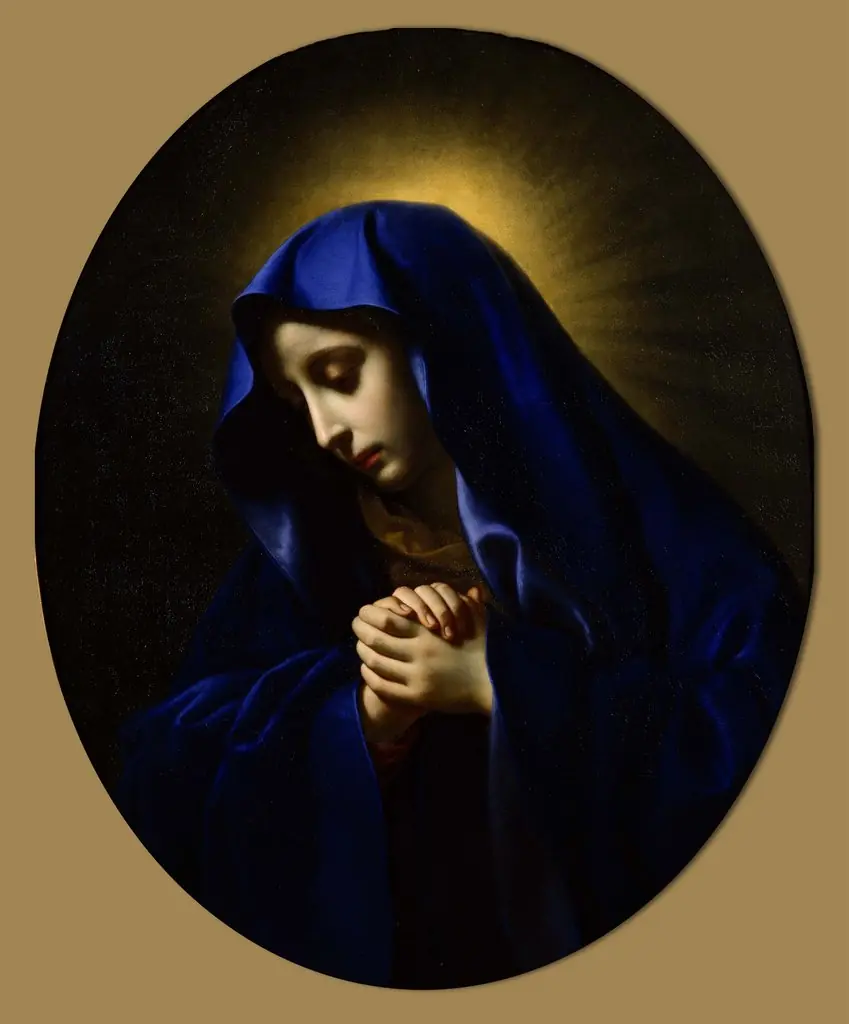
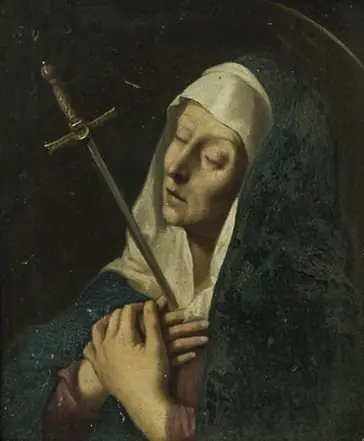
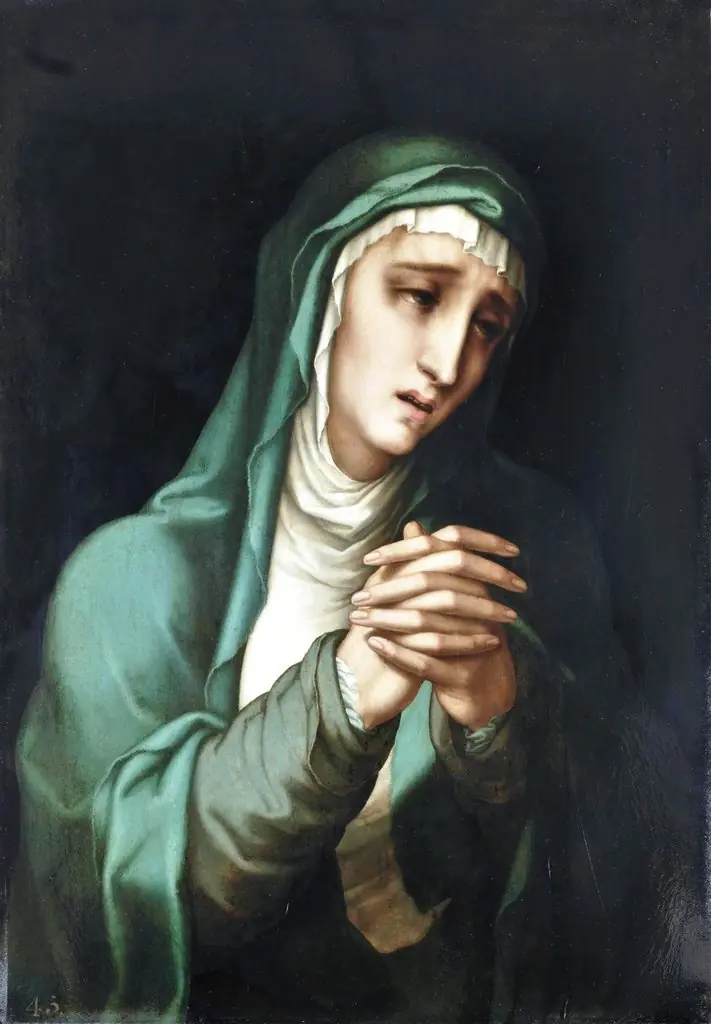
The figure is likely the Virgin Mary in her role as Mater Dolorosa, the sorrowful mother mourning Christ’s suffering. Her downcast gaze and still posture convey deep, internalized grief rather than outward lament. The absence of narrative elements directs attention to her emotional state, emphasizing contemplation over action, aligning with devotional traditions that invite personal reflection on loss.
Technique & Style
The artist employs chiaroscuro to model the figure with strong contrasts between light and shadow, isolating the face and hands as focal points. The subtle glow around the head is achieved through thin glazes, not direct highlights, creating an ethereal effect. Brushwork is restrained, favoring smooth transitions and muted tones to sustain the somber mood, avoiding theatricality.
History & Provenance
The painting’s origin and early ownership are undocumented. Its style suggests a late medieval or early Renaissance devotional work, possibly from a Northern European workshop. No known records link it to a specific artist or commission, and its survival likely stems from private religious use rather than public display.
Context
In the late Middle Ages, images of the grieving Virgin were common in private prayer books and altarpieces, meant to cultivate empathy and penitence among viewers. This work fits within a broader tradition where emotional restraint was valued over dramatic expression, reflecting a spiritual ideal of quiet endurance in suffering.
Legacy
Though not widely reproduced or studied, the painting exemplifies the quiet intensity of devotional portraiture from its era. Its emphasis on inner sorrow over spectacle influenced later representations of sacred grief, preserving a mode of religious imagery that prioritized introspection over spectacle.
Artist & collection

 Domestic Scene
 Giacomo and Cardinal Marco, investing Andrea, Abbot of San Zeno, with his Benefice
 The Nymph of Fontainebleau
 Portrait of a Woman
 Madonna and Child with Saints in the Enclosed Garden
 Venus and Minerva
 Family Group of Four on Sofa
 Wall painting from Room H of the Villa of P. Fannius Synistor at Boscoreale