Artwork
Portrait of a Boy, possibly Louis of Nassau, later Lord of Beverweerd, De Leck, Odijk and Lekkerkerk, Illegitimate Son of Maurice, Prince of Orange, and Margaretha van Mechelen
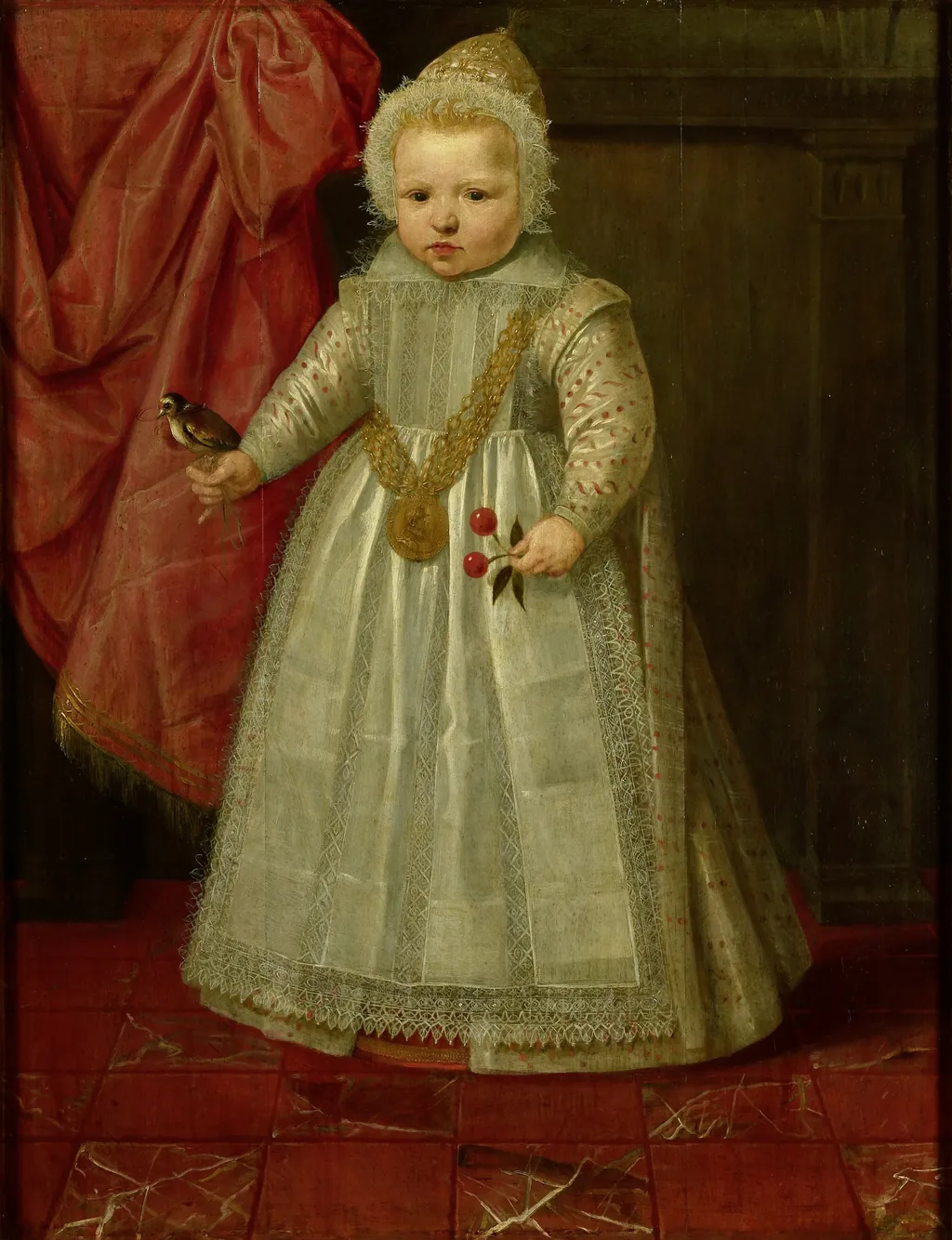
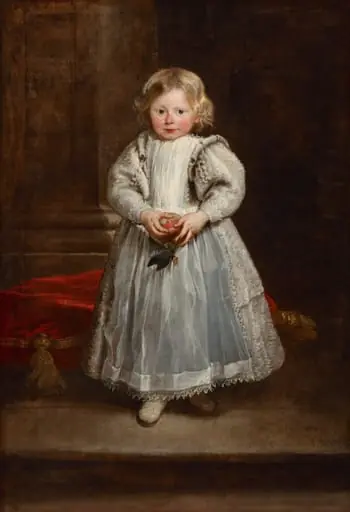
Portrait of a Boy, possibly Louis of Nassau, later Lord of Beverweerd, De Leck, Odijk and Lekkerkerk, Illegitimate Son of Maurice, Prince of Orange, and Margaretha van Mechelen is an oil painting. It dates from 1604 and is held in the collection of the Rijksmuseum. The oil painting depicts a young boy standing in a dimly lit interior.
About this work
Overview
The oil painting depicts a young boy standing in a dimly lit interior. He wears a light‑green garment trimmed with lace and accented by red dots, complemented by a large white collar. In his left hand he holds a small bird perched on a stand, while his right hand grasps a bunch of grapes with two vivid red berries. A red curtain frames the background, emphasizing the figure’s pale complexion.
Subject & Meaning
The sitter is identified as a possible illegitimate son of Maurice, Prince of Orange, named Louis of Nassau, who later held the lordships of Beverweerd, De Leck, Odijk and Lekkerkerk. The inclusion of luxurious clothing, a bird, and fruit serves to convey status, wealth, and perhaps the virtues of innocence and abundance associated with youth.
Technique & Style
The work employs chiaroscuro, contrasting the dark interior with a focused light that illuminates the boy’s face and attire. The delicate rendering of lace, the texture of the bird’s feathers, and the glossy grapes demonstrate a careful handling of oil paint to achieve both realism and a subtle symbolic resonance.
History & Provenance
The painting’s provenance traces to collections linked to the Nassau family, though exact documentation of its early ownership remains limited. It has been referenced in inventories of Dutch aristocratic holdings, suggesting it remained within the family’s estates before entering public view through museum acquisition.
Artist & collection