Artwork
The Crucifixion
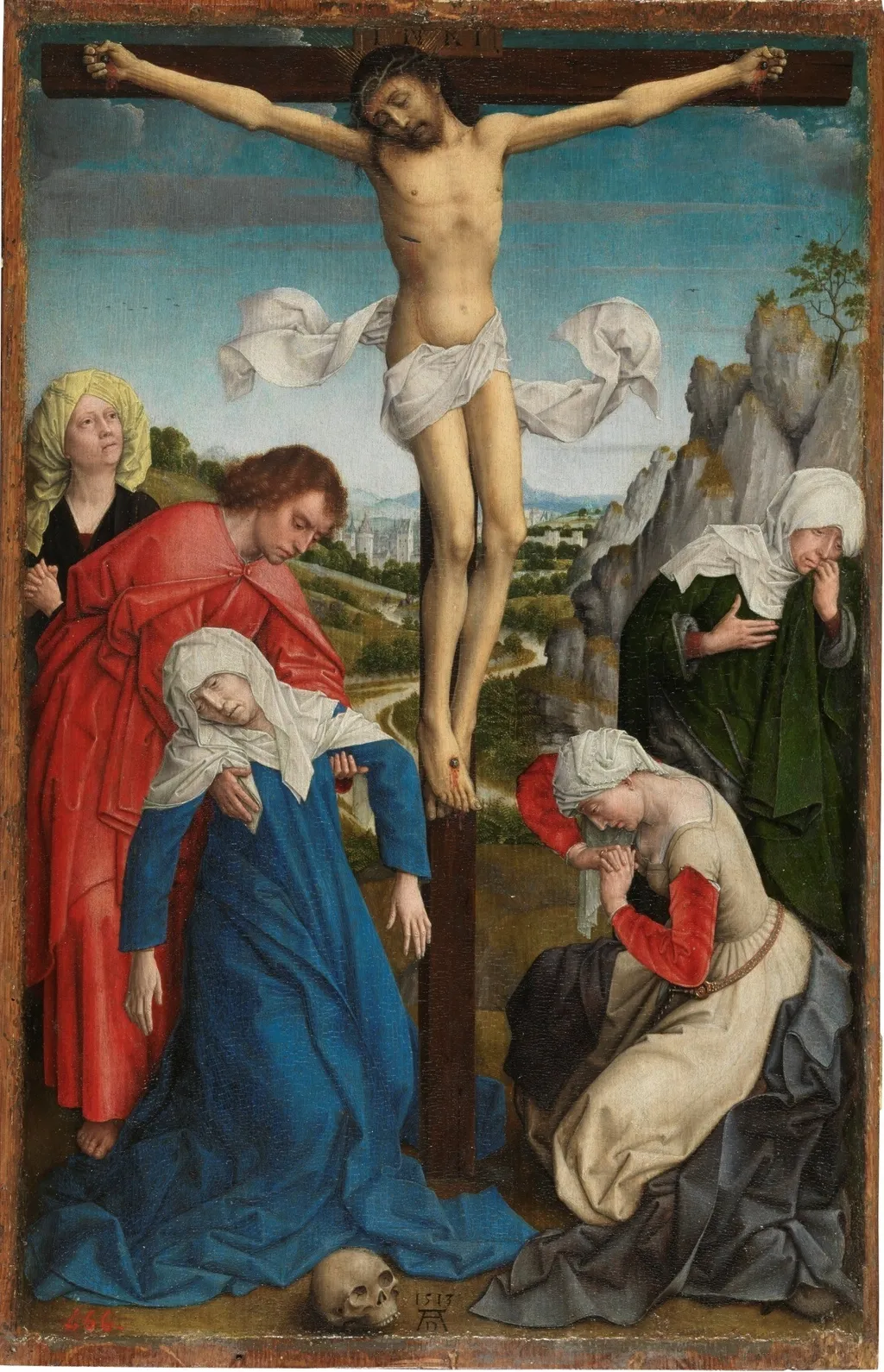
The Crucifixion is an oil painting. It dates from 1510 and is held in the collection of the Museo del Prado. The work depicts a crucifixion scene rendered in oil on canvas.
About this work
Overview
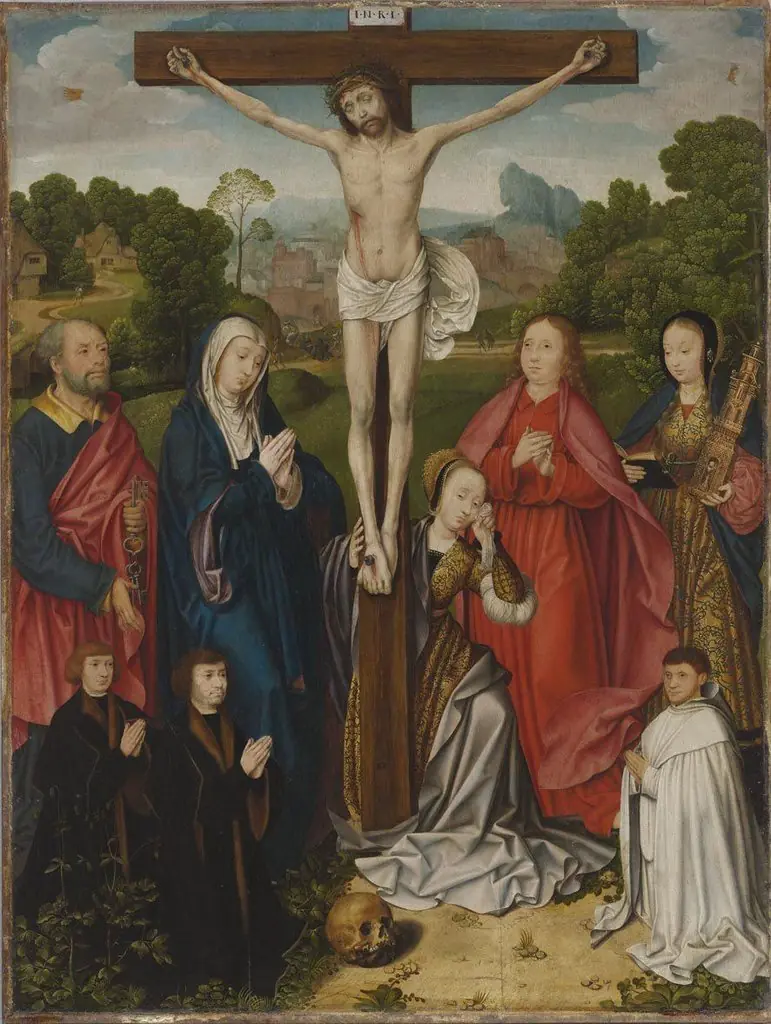
The work depicts a crucifixion scene rendered in oil on canvas. At its centre, a gaunt figure hangs from a wooden cross, his limbs taut and pallid. Surrounding him are five individuals, each positioned differently—some kneeling, others standing—clad in vivid reds, blues and whites. A skull rests at the foot of the cross, while a rocky hillside and a distant town appear beneath a cloud‑filled sky.
Subject & Meaning
The composition centers on the moment of Christ’s death, emphasizing both the physical suffering of the crucified body and the varied emotional responses of the surrounding witnesses. The presence of the skull alludes to mortality and the biblical reference to Golgotha, the "place of the skull," reinforcing themes of sacrifice and redemption within a communal setting.
Technique & Style
The artist employs oil layers to model form through chiaroscuro, allowing light to strike faces and garments and produce a sculptural illusion of depth. Textural brushwork creates a tactile surface on the rocky terrain and the cross, while the bright clothing colors contrast with the muted landscape, enhancing the visual hierarchy of figures.
History & Provenance
The painting’s medium and stylistic traits suggest it belongs to a tradition of post‑Renaissance religious works, though specific details of its creation and ownership remain undocumented. Its current location and acquisition history have not been publicly recorded, limiting precise dating and attribution.
Artist & collection