Artwork
Calvary
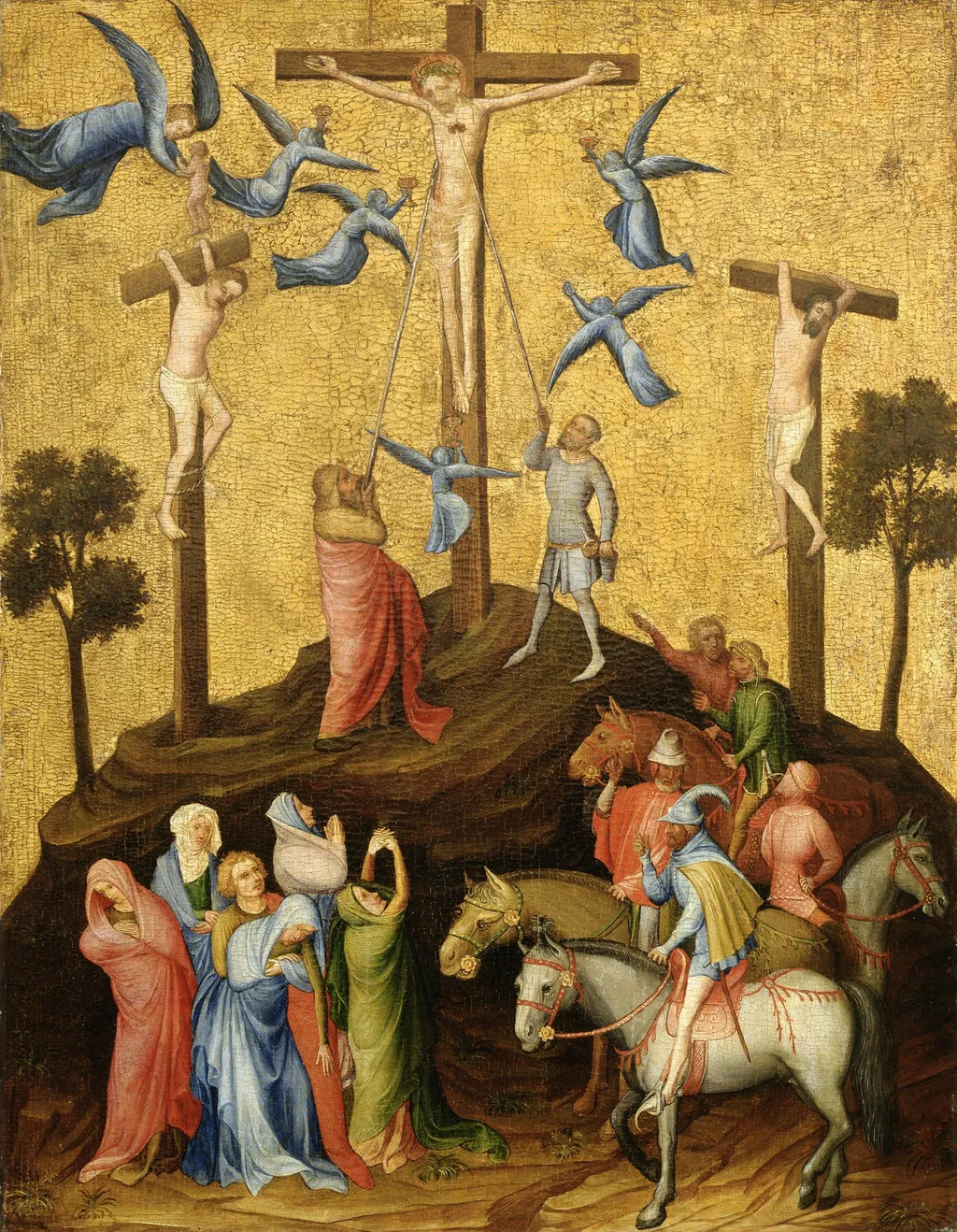
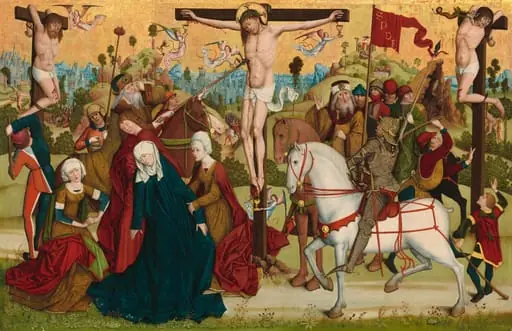
Calvary is a tempera painting by the Northern Renaissance artist Unknown. It dates from 1420 and is held in the collection of the Foundation E.G. Bührle Collection. This tempera painting portrays the Crucifixion of Christ at the center of a solemn religious scene.
About this work
Overview
This tempera painting portrays the Crucifixion of Christ at the center of a solemn religious scene. The figure of Jesus is flanked by two other crucified men, while a crowd of angels and onlookers gathers around. A golden background envelops the composition, with trees framing the sides and mourners clustered in the foreground, their gestures conveying grief and devotion.
Subject & Meaning
The scene depicts the moment of Christ’s death on the cross, a pivotal event in Christian theology. The presence of angels and grieving humans underscores the divine and human dimensions of the sacrifice. The central positioning of Christ and the focused attention of the figures emphasize his role as the focal point of salvation, inviting contemplation rather than narrative action.
Technique & Style
Tempera paint, made from pigment mixed with egg yolk, lends the work a fine, luminous texture and precise detail. The medium allows for layered glazes that enhance the richness of the golden background and the subtle modeling of faces and drapery. Lines are crisp, forms are flattened, and spatial depth is suggested through overlapping figures rather than perspective.
History & Provenance
Though the exact origin and patron are undocumented, the style and technique align with late medieval European devotional panels, likely produced in a monastic or workshop setting between the 13th and 15th centuries. Such works were often created for private prayer or chapel altars, where their intimate scale and sacred imagery supported personal meditation.
Context
In the medieval period, images of the Crucifixion served as tools for spiritual reflection and instruction. The golden background symbolized divine light and eternity, while the inclusion of mourners and angels reinforced the theological belief in Christ’s suffering as both human tragedy and cosmic redemption. These paintings were part of a broader visual culture centered on the Passion.
Legacy
This work exemplifies the enduring power of tempera in pre-Renaissance religious art. Its restrained emotional tone and symbolic composition influenced later devotional imagery, even as oil painting gradually replaced tempera. The painting remains a quiet testament to the medieval approach to sacred narrative—focused, reverent, and rooted in tradition.
Artist & collection

 Domestic Scene
 Giacomo and Cardinal Marco, investing Andrea, Abbot of San Zeno, with his Benefice
 The Nymph of Fontainebleau
 Portrait of a Woman
 Madonna and Child with Saints in the Enclosed Garden
 Venus and Minerva
 Family Group of Four on Sofa
 Wall painting from Room H of the Villa of P. Fannius Synistor at Boscoreale