Artwork
Calvary
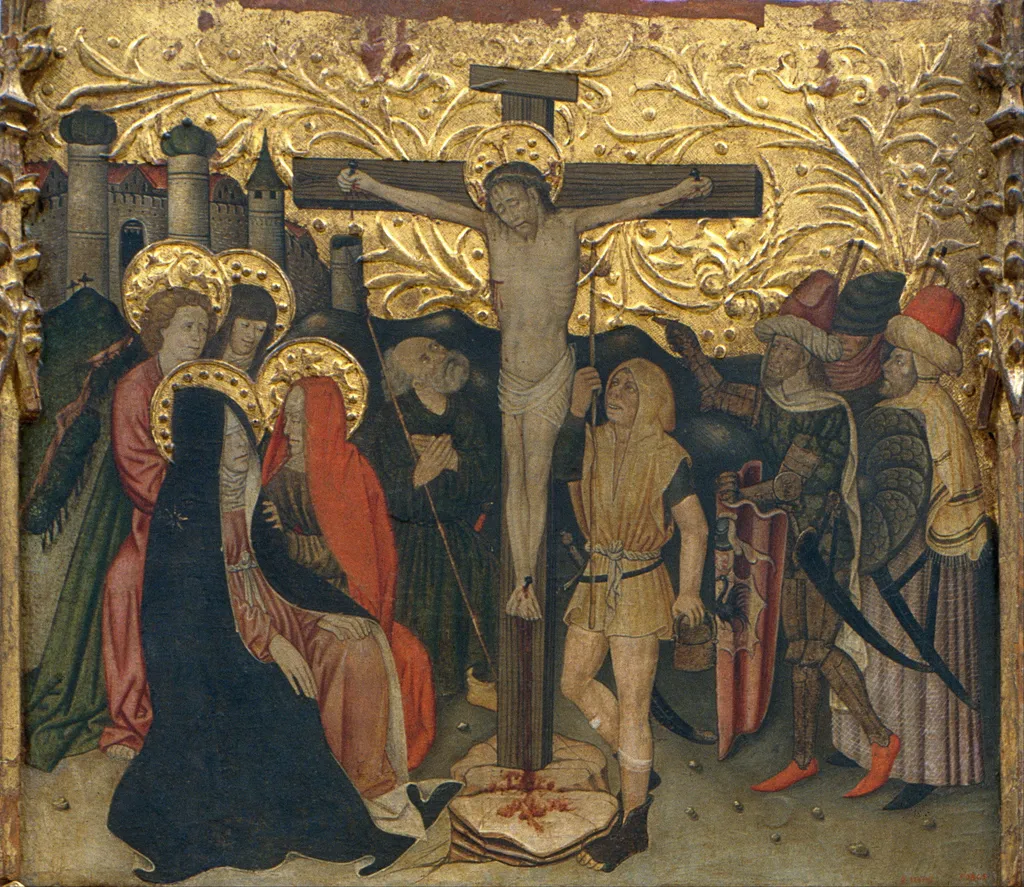
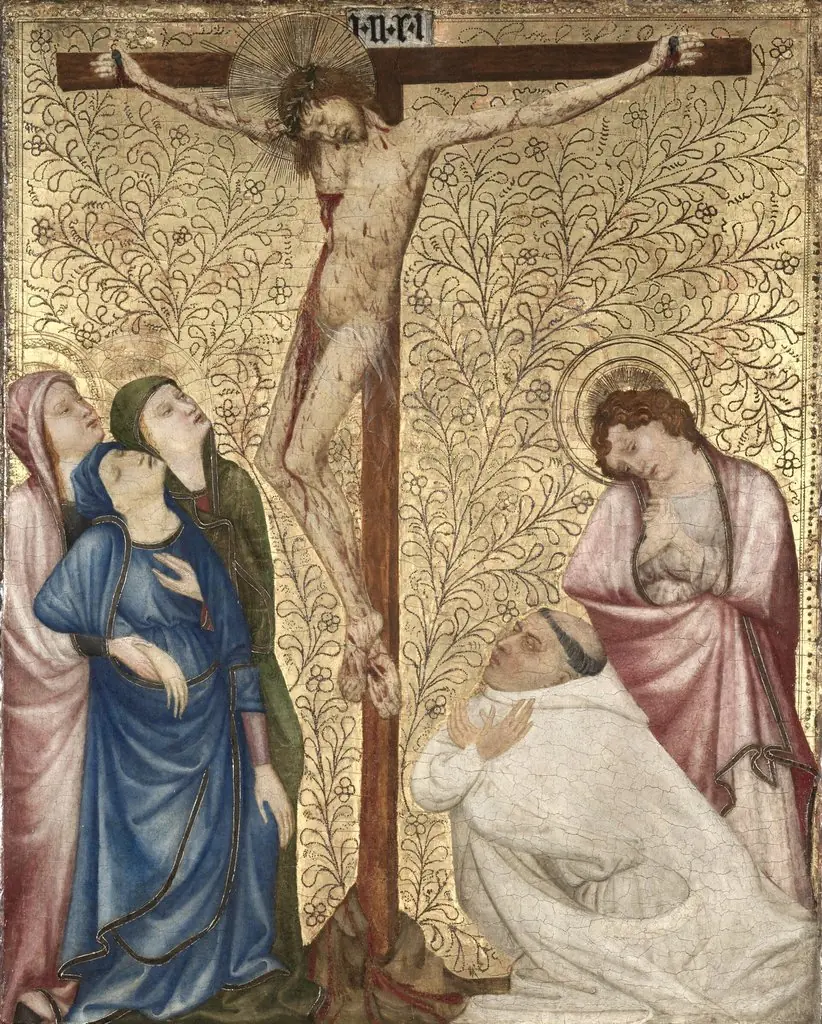
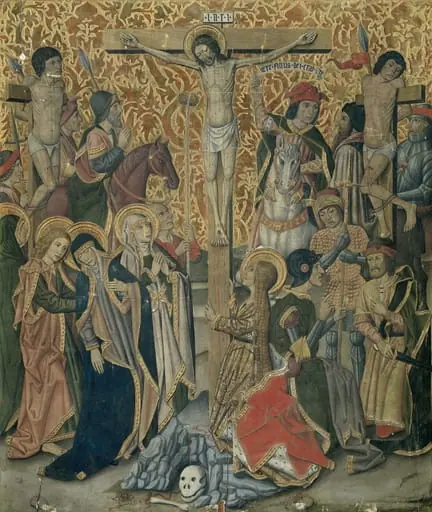
Calvary is an unspecified painting by the Early Renaissance artist Jaume Ferrer II. It dates from 1450 and is held in the collection of the Museu Nacional d'Art de Catalunya.
About this work
Overview
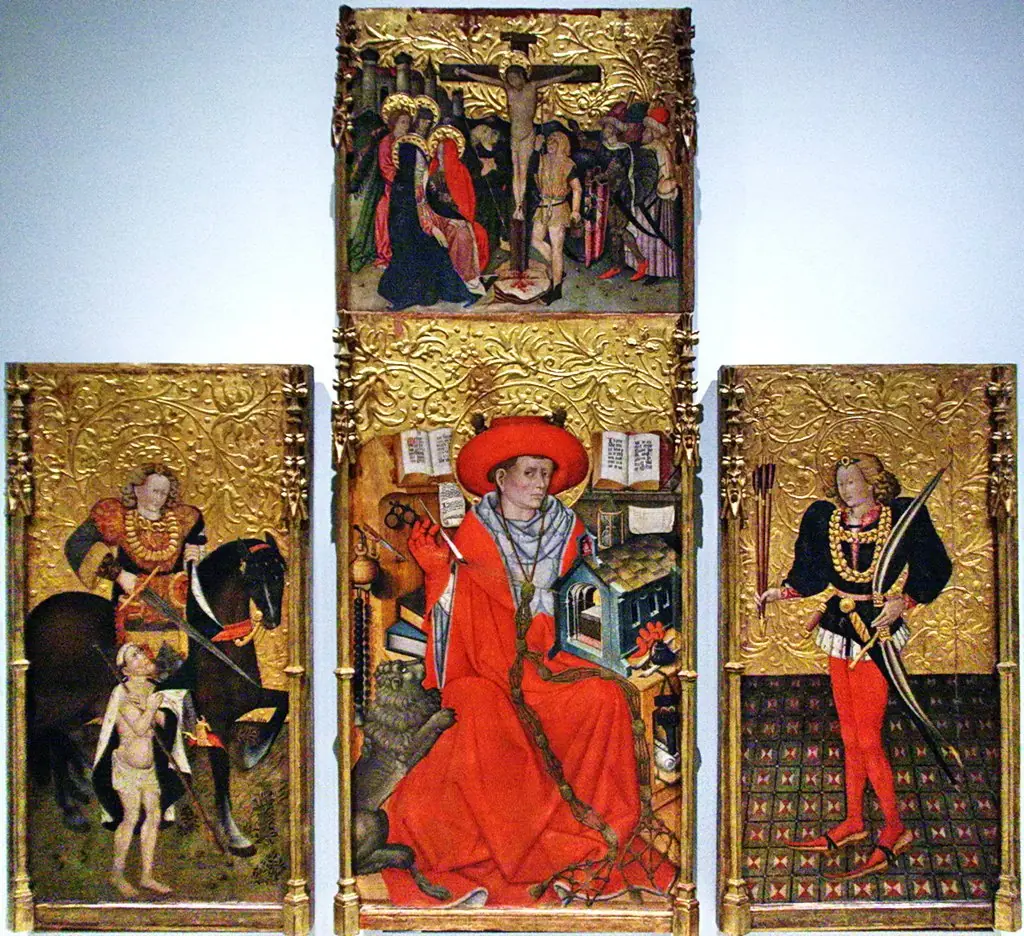
Calvary, painted around 1450 by Jaume Ferrer II, is a devotional work that presents the crucifixion of Jesus Christ. Executed in tempera on panel, the composition is centered on the cross and framed by a luminous gold ground that is patterned with ornamental motifs. The piece belongs to the collection of the Museu Nacional d'Art de Catalunya in Barcelona.
Subject & Meaning
The central figure is the crucified Christ, his arms outstretched and his torso tilted, clothed only in a simple white loincloth. Around the cross stand a small crowd of onlookers, rendered in vivid attire, some bearing hats or objects that suggest mourning or witness. The arrangement invites contemplation of the Passion and the human response to sacrifice.
Technique & Style
Ferrer employs a restrained palette dominated by gold, brown, and muted earth tones, punctuated by brighter colors in the surrounding figures.
Ferrer employs a restrained palette dominated by gold, brown, and muted earth tones, punctuated by brighter colors in the surrounding figures. The gold background, a common feature of mid‑15th‑century Iberian panels, creates a timeless, otherworldly space. Delicate linear detailing outlines the garments and decorative borders, while the modeling of Christ’s body remains relatively flat, emphasizing symbolic presence over naturalistic depth.
History & Provenance
Created in the mid‑Quattrocento, the work likely served a private devotional setting before entering public ownership. It was acquired by the Museu Nacional d'Art de Catalunya, where it has been displayed as part of the museum’s medieval Catalan painting collection, providing insight into regional religious art of the period.
Context
The painting reflects the devotional practices of 15th‑century Catalonia, where gold‑leaf backgrounds and narrative clarity were favored for liturgical images. Ferrer’s treatment aligns with contemporary Iberian trends that blended Gothic compositional conventions with emerging naturalistic touches, situating Calvary within the transitional artistic currents preceding the Renaissance in the region.
Artist & collection