Artwork
Hunting Scene
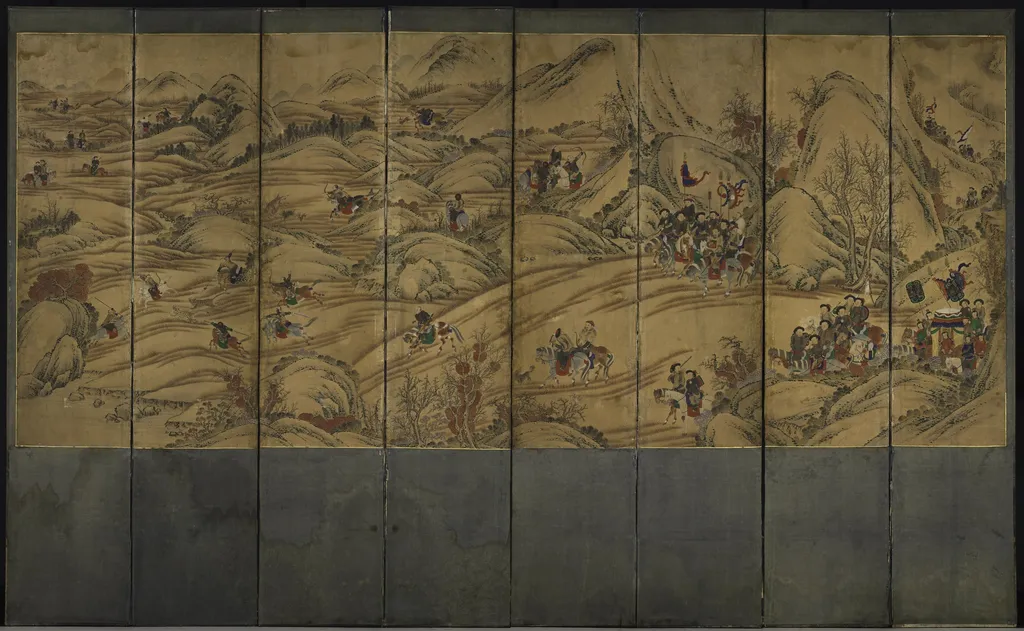
Hunting Scene is an unspecified painting. It dates from 1849 and is held in the collection of the Cleveland Museum of Art. The work is a painted narrative divided into six narrow panels that together form a continuous landscape.
About this work
Overview
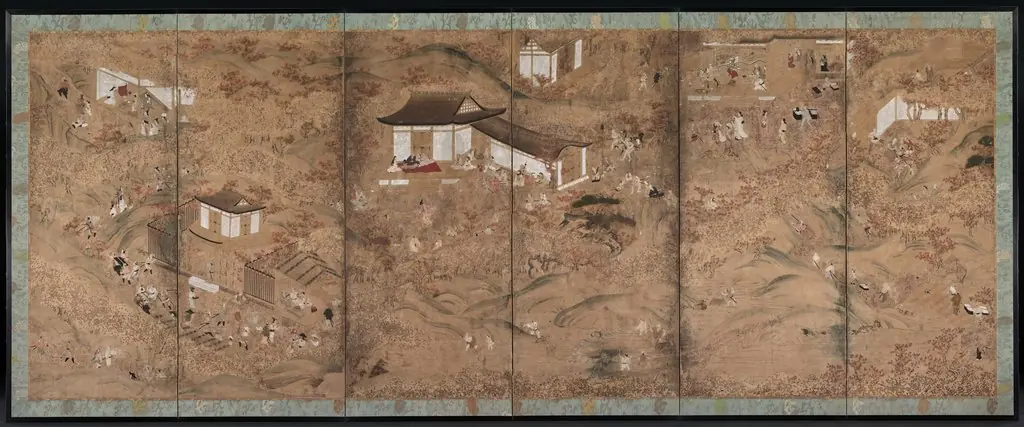
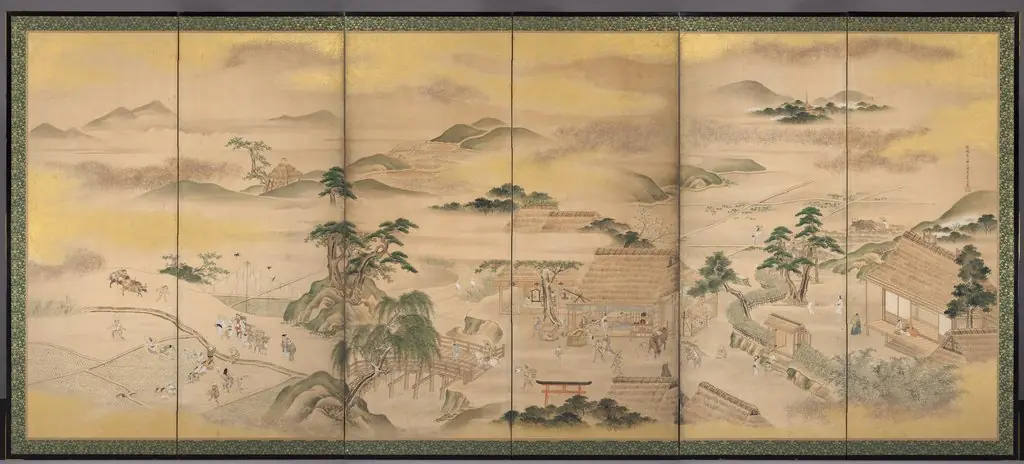
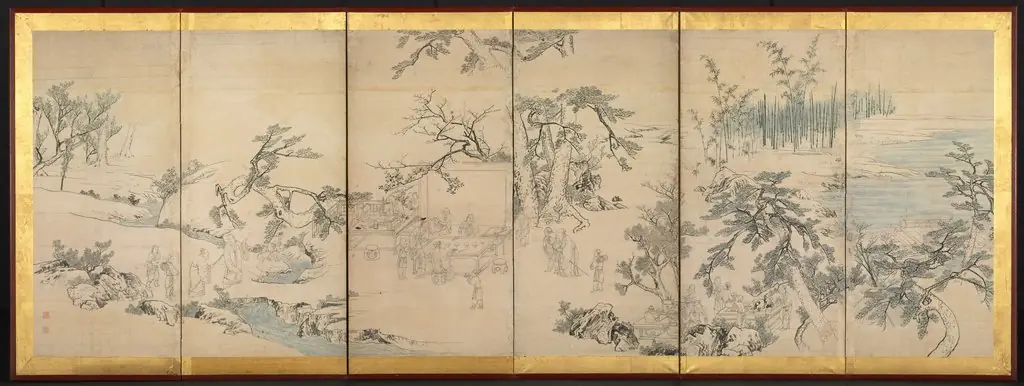
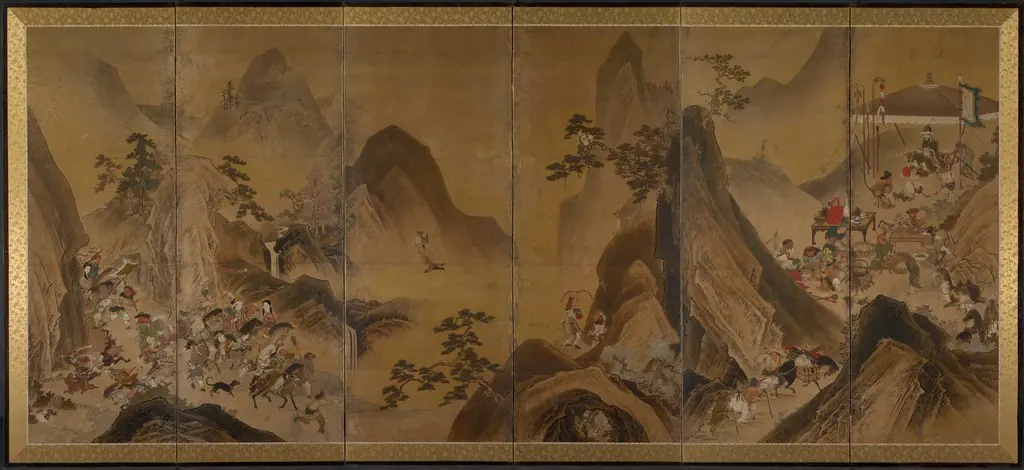
The work is a painted narrative divided into six narrow panels that together form a continuous landscape. Each segment presents groups of figures on horseback or on foot moving across rolling, earth‑toned hills. The composition is organized like a sequential story, with recurring motifs of spears, bows, flags and banners guiding the eye from panel to panel.
Subject & Meaning
The figures appear to be engaged in a coordinated hunt or a communal journey, suggested by the presence of weapons, hunting dogs and the rhythmic procession of riders. The repeated use of banners and flags may indicate a ceremonial or tribal context, emphasizing collective identity rather than individual heroism.
Technique & Style
Executed in a limited palette of browns, greens, reds and occasional blues and whites, the painting relies on flat areas of color and simplified line work to delineate the hills and figures. The linear, almost graphic rendering of the terrain gives the scene a stylized, storybook quality, reminiscent of early narrative scrolls.
History & Provenance
The piece is catalogued under the title “Hunting Scene” and is part of the collection at the Cleveland Museum of Art. No further details on its creator, date or original ownership are provided in the available documentation.
Context
The format of multiple sequential panels aligns with traditions of narrative illustration found in medieval and early modern European art, where stories were often broken into discrete scenes for easier visual consumption. The emphasis on communal hunting reflects a common theme in societies that relied on collective pursuits for sustenance and social cohesion.
Artist & collection