Artwork
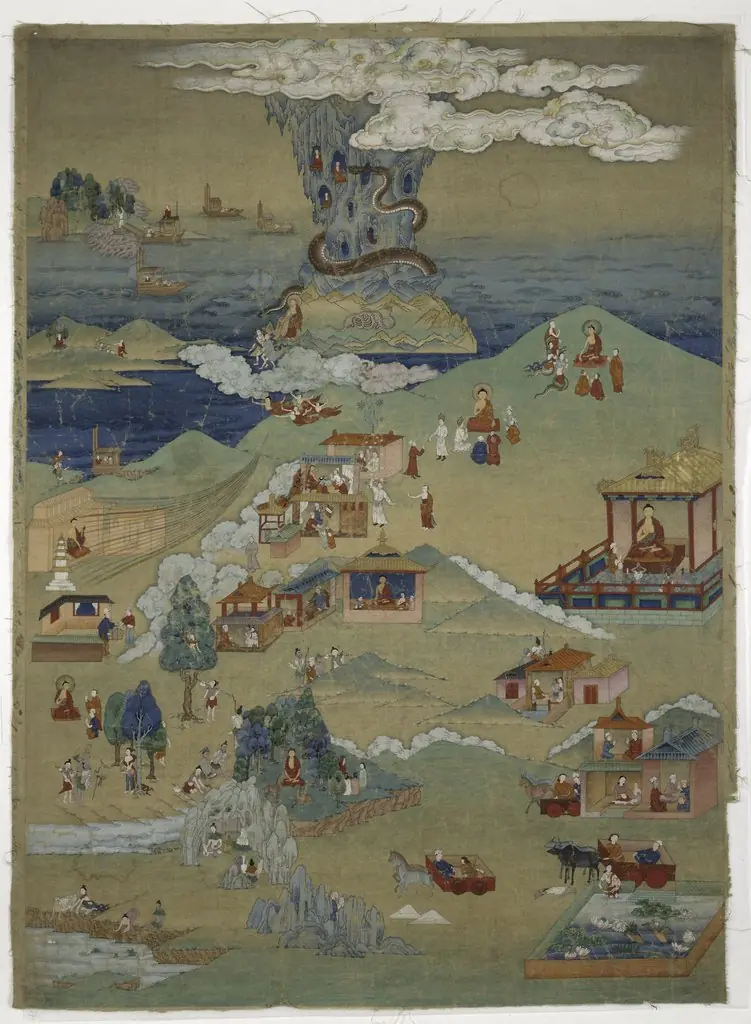
The Story of King Mandhatar; The Story of King Candraprabha; The Tale of the Island of Vadaradvipa, Painting from an Avadana Kalpalata Jataka Series
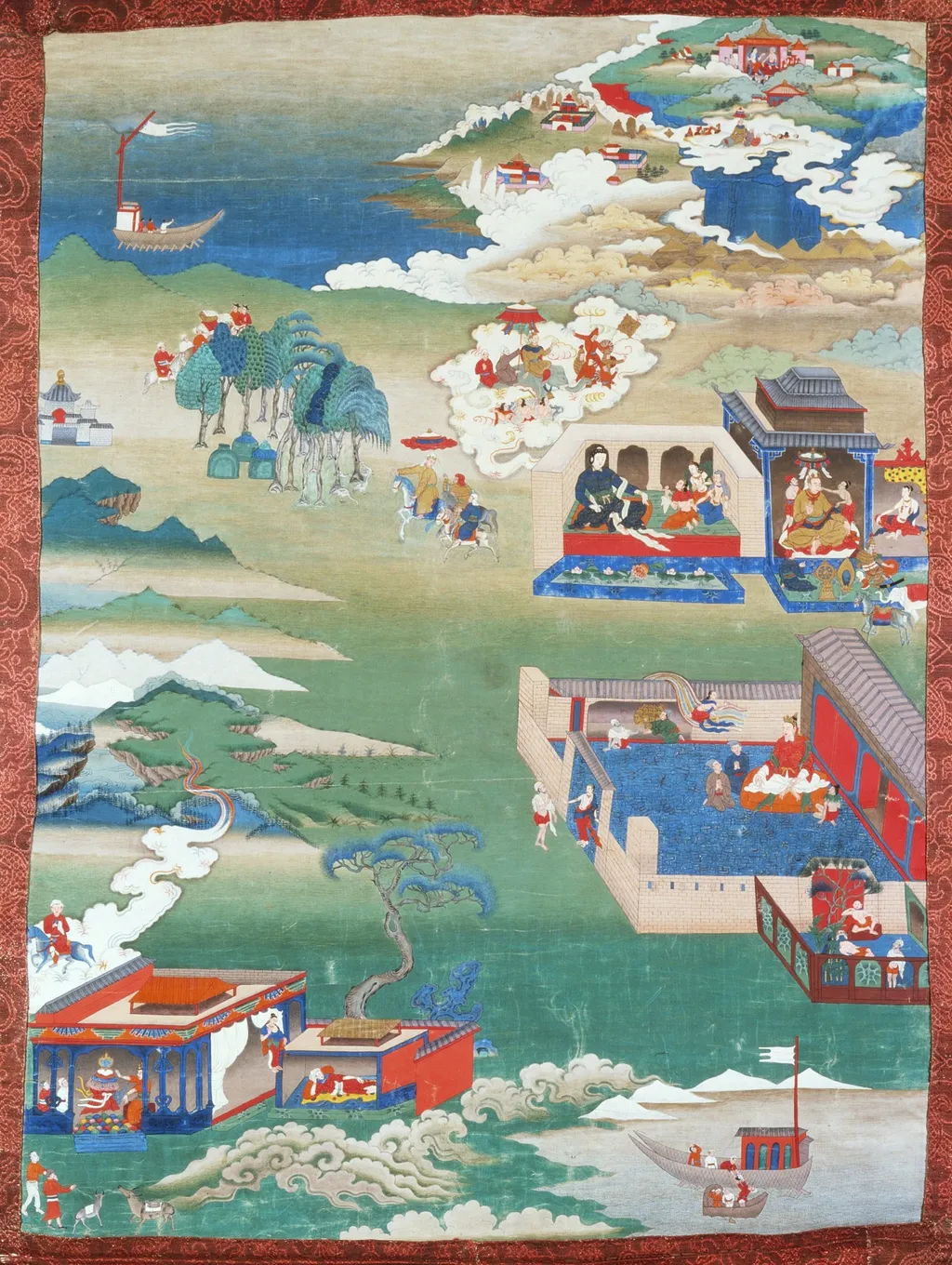
The Story of King Mandhatar; The Story of King Candraprabha; The Tale of the Island of Vadaradvipa, Painting from an Avadana Kalpalata Jataka Series is an unspecified painting by the Rococo painting artist Unknown. It dates from 1750 and is held in the collection of the Los Angeles County Museum of Art. This painting belongs to a series illustrating episodes from the Avadana Kalpalata, a collection of Buddhist moral tales.
About this work
Overview
It combines three distinct narratives—King Mandhatar, King Candraprabha, and the Island of Vadaradvipa—into a single continuous composition.
This painting belongs to a series illustrating episodes from the Avadana Kalpalata, a collection of Buddhist moral tales. It combines three distinct narratives—King Mandhatar, King Candraprabha, and the Island of Vadaradvipa—into a single continuous composition. Each segment is visually separated yet spatially linked, creating a narrative flow across the surface. The work is rendered in rich pigments and fine brushwork, typical of regional Indian manuscript illustration traditions.
Subject & Meaning
The painting conveys Buddhist teachings on karma, generosity, and righteous rule through three royal legends. King Mandhatar’s rise and fall illustrates the impermanence of power; King Candraprabha’s compassion exemplifies virtuous leadership; and the Island of Vadaradvipa symbolizes spiritual refuge. Each scene functions as a moral lesson, urging viewers to reflect on ethical conduct and detachment from worldly gain.
Technique & Style
Executed in opaque watercolor on paper, the painting employs bold outlines and flat planes of vivid color to define figures and landscapes. Details such as clothing patterns, architectural elements, and natural features are rendered with precision. The composition uses multiple perspectives within one frame, allowing simultaneous depiction of sequential events without spatial depth, a hallmark of pre-modern Indian narrative painting.
History & Provenance
The painting likely originated in western India during the 16th or 17th century, produced for a Jain or Buddhist patron interested in didactic literature. It was probably part of a bound manuscript, with each folio containing a single tale. Its survival suggests it was carefully preserved, possibly in a temple or monastic library, where such texts were used for teaching and ritual contemplation.
Context
This work emerged during a period when illustrated manuscripts of religious narratives flourished across India, particularly in Gujarat and Rajasthan. The Avadana Kalpalata was widely circulated among Jain and Buddhist communities as a tool for ethical instruction. The visual style reflects local artistic conventions, blending folk elements with courtly aesthetics, and aligns with broader trends in devotional illustration of the era.
Legacy
Though not widely known outside specialized circles, this painting contributes to the understanding of how Buddhist moral stories were visually transmitted in pre-colonial India. Its preservation offers insight into the role of art in religious education and the continuity of narrative techniques across centuries. It remains a valuable artifact for studying the intersection of text, image, and spiritual practice in South Asian traditions.
Artist & collection

 Domestic Scene
 Giacomo and Cardinal Marco, investing Andrea, Abbot of San Zeno, with his Benefice
 The Nymph of Fontainebleau
 Portrait of a Woman
 Madonna and Child with Saints in the Enclosed Garden
 Venus and Minerva
 Family Group of Four on Sofa
 Wall painting from Room H of the Villa of P. Fannius Synistor at Boscoreale
 Buddha Shakyamuni and Narrative Scenes
 Buddha Shakyamuni and the Eighteen Arhats
 The White Path Between Two Rivers
 Kunga Tashi and Incidents from His Life (Abbot of Sakya Monastery, 1688-1711)
 当麻曼荼羅|Taima Mandala
 Painted Banner (Thangka) from a Set of Seven Honoring Gayadhara, a Sakya Pandit from India
 Previous Birth Stories of the Buddha
 Nehan: Death of the Buddha
 Untitled
 Chōmeiji Temple Pilgrimage Mandala
 Illustrated Legends of the Tenchi-in (Tenchi-in engi)
 Painted Banner (Thangka) of Five Morality Tales from the Avadana...