Artwork
Scene from the Ramayana
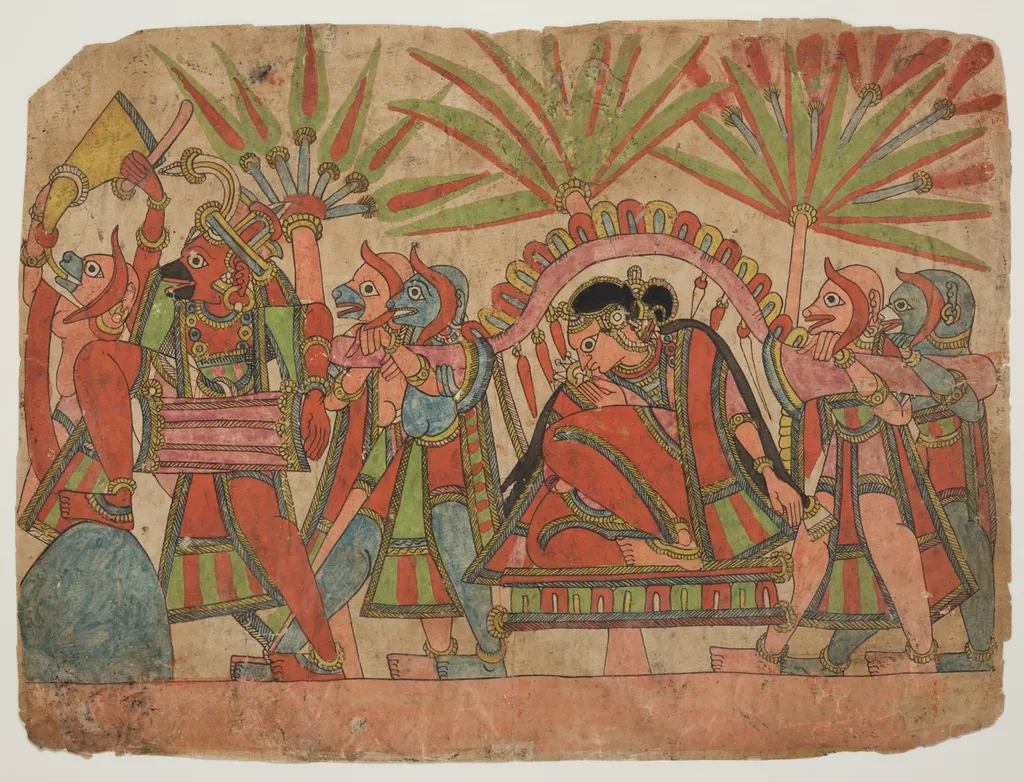
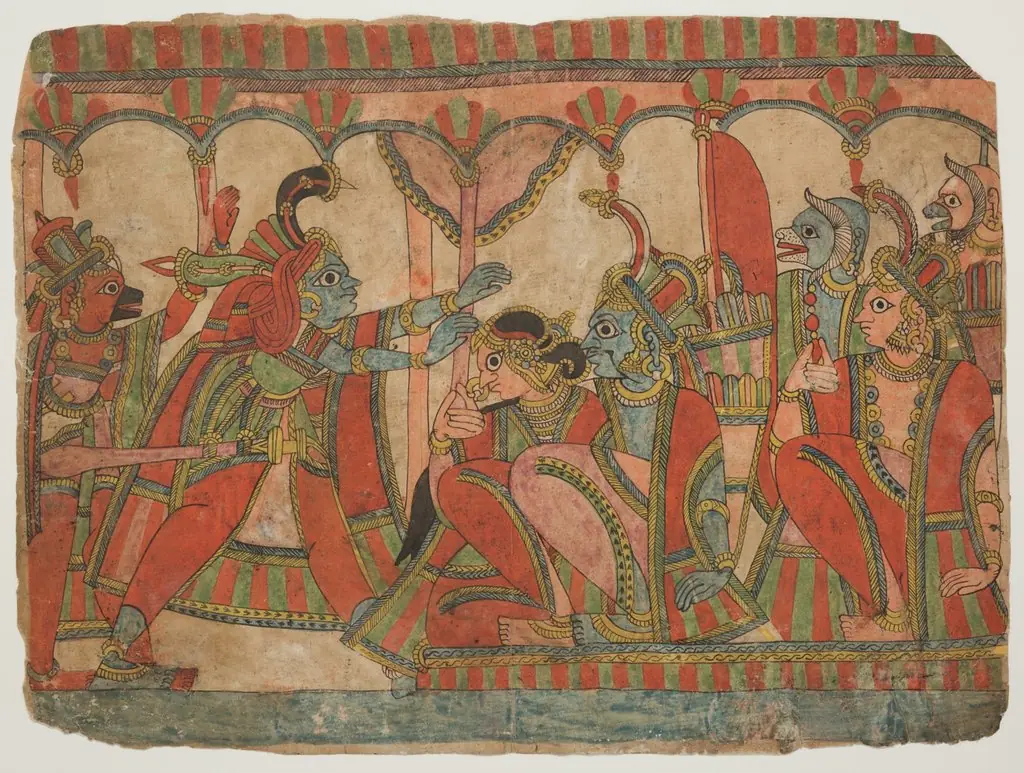
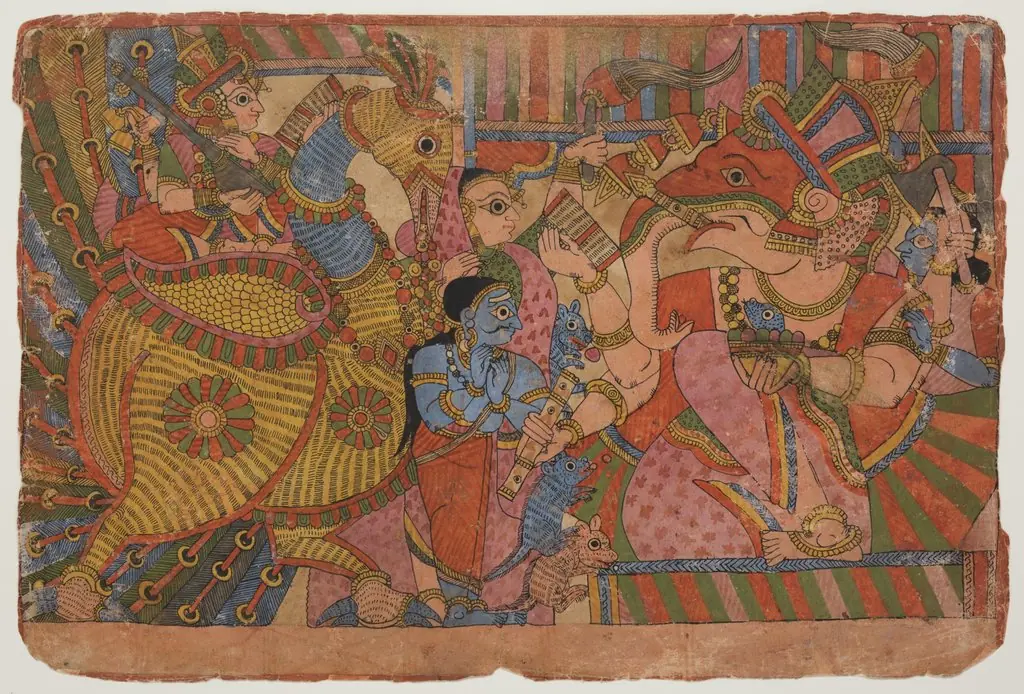
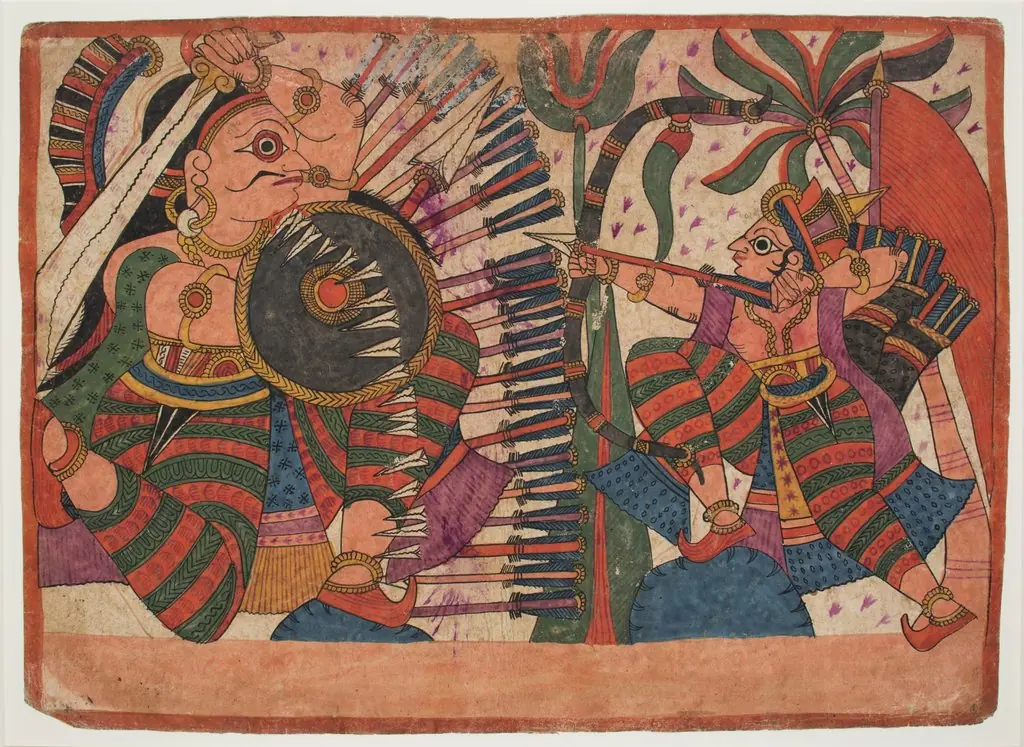
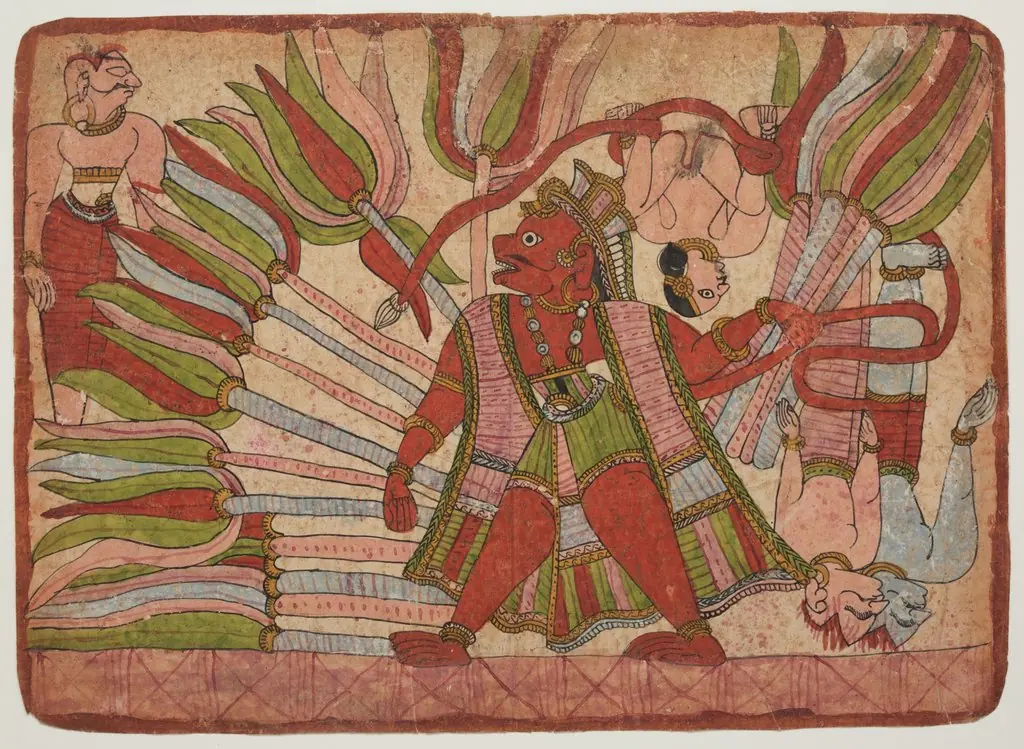
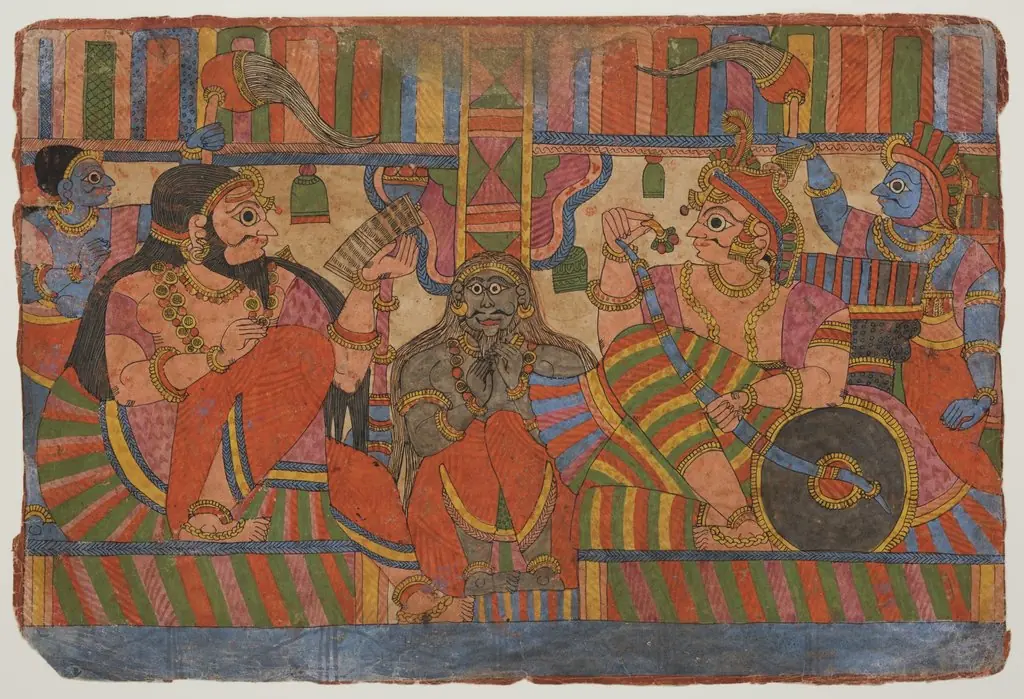
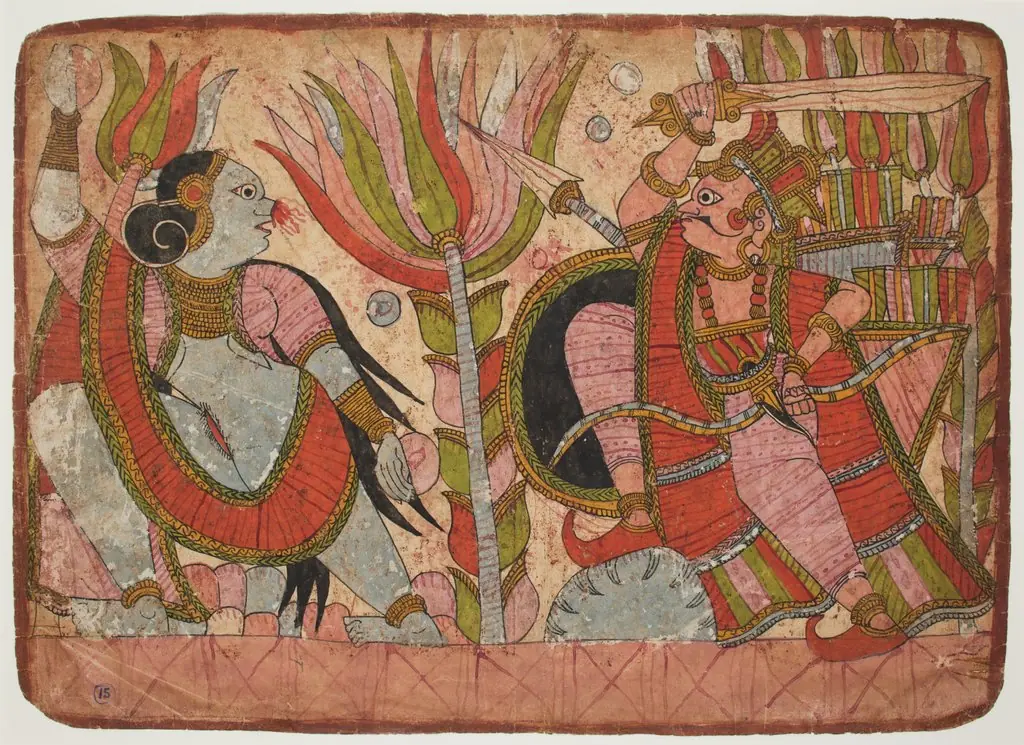
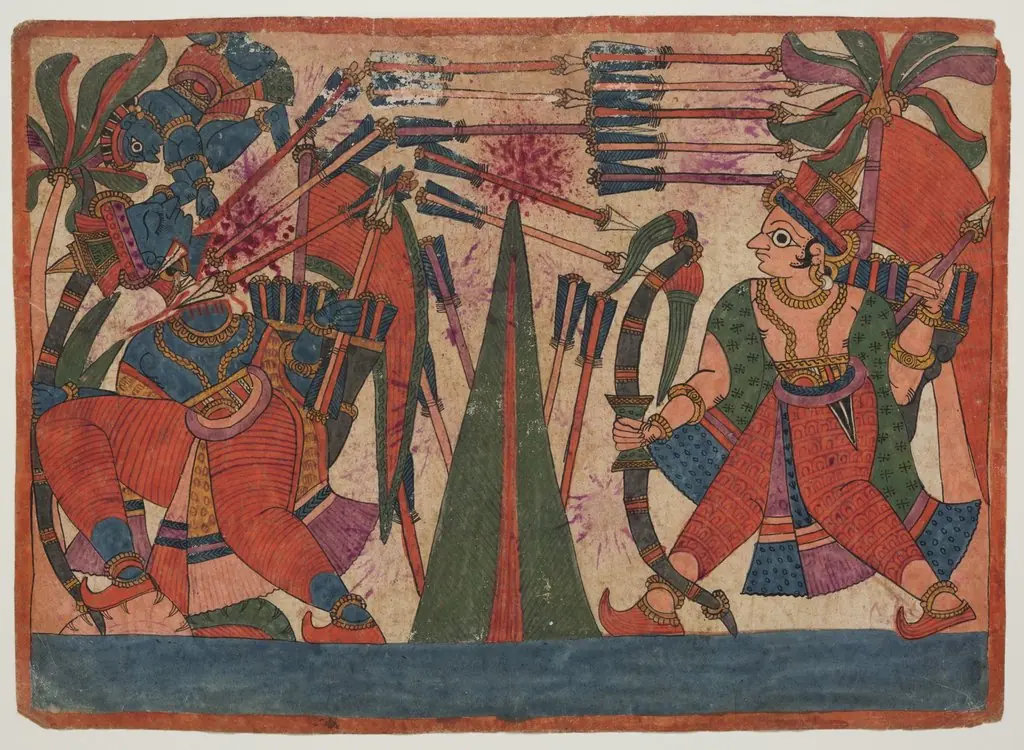
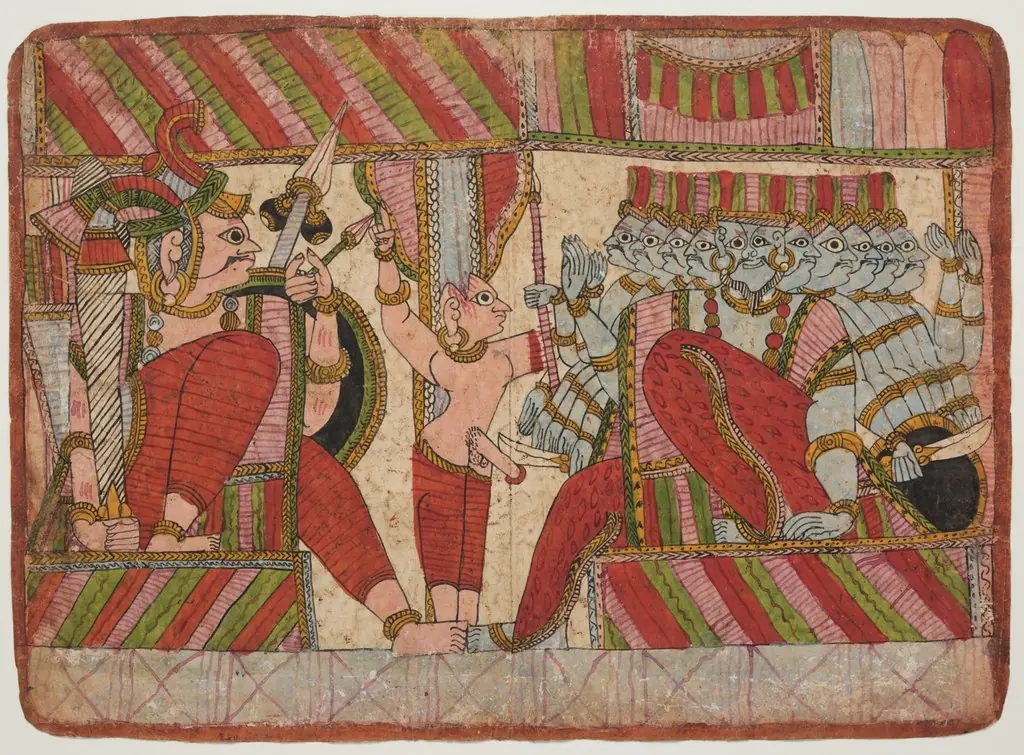
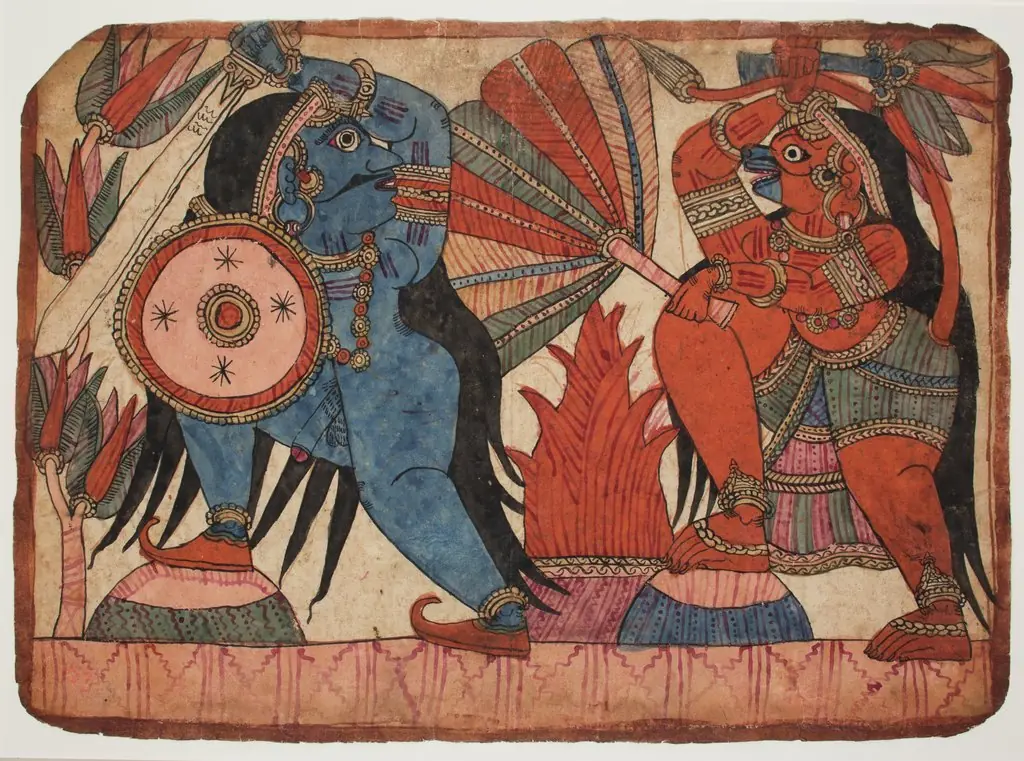
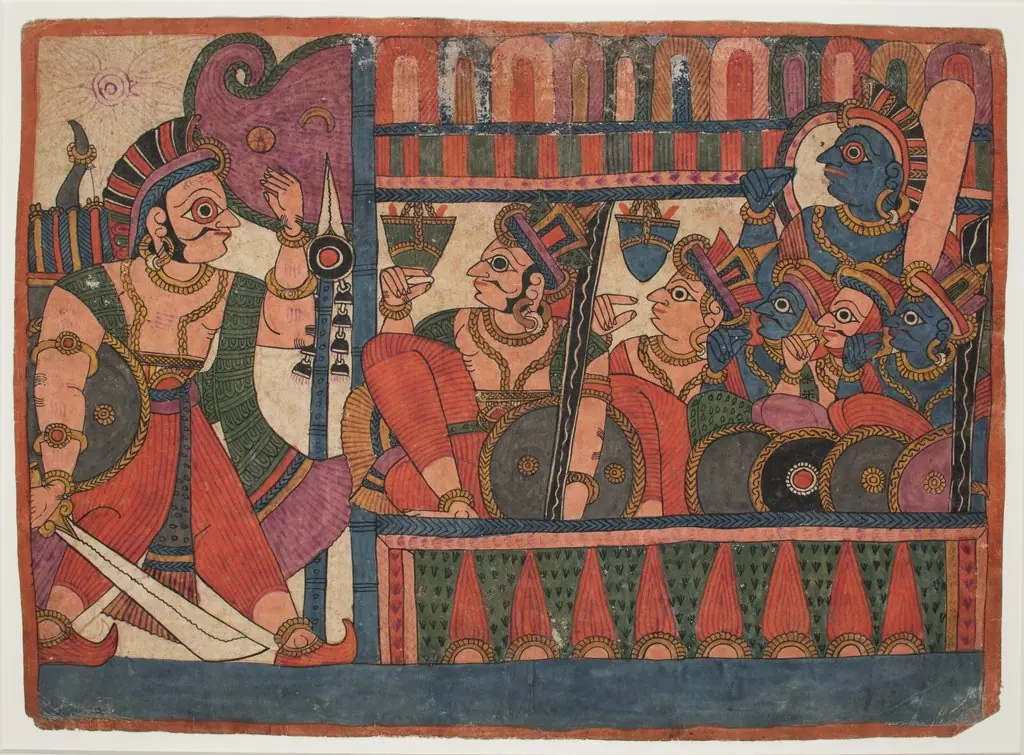
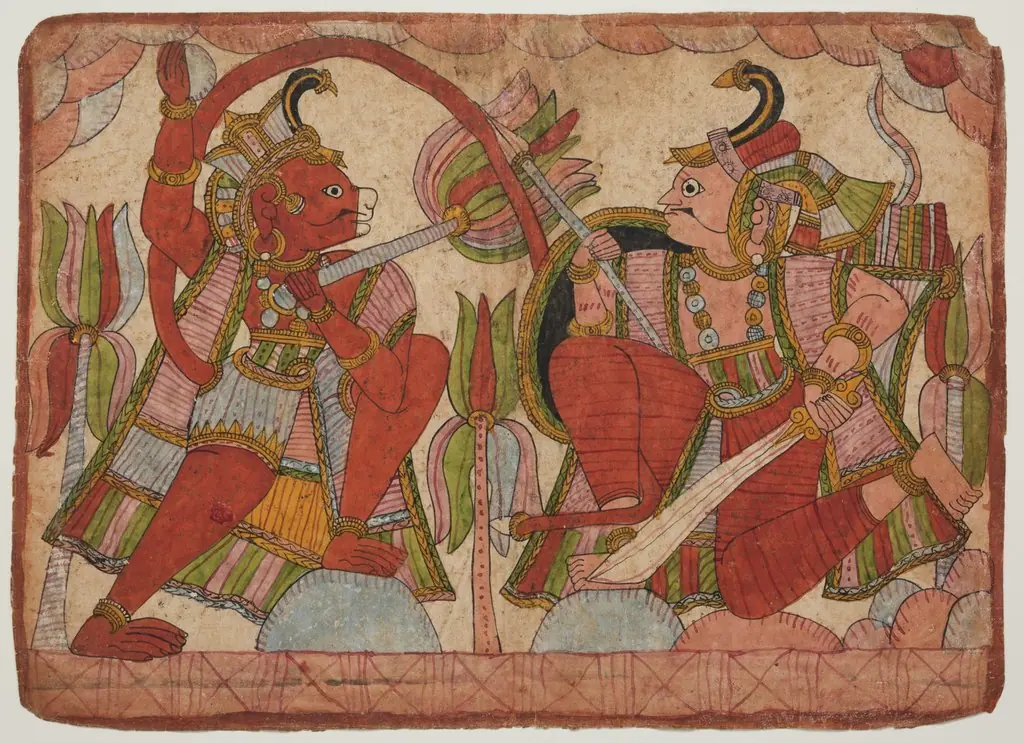
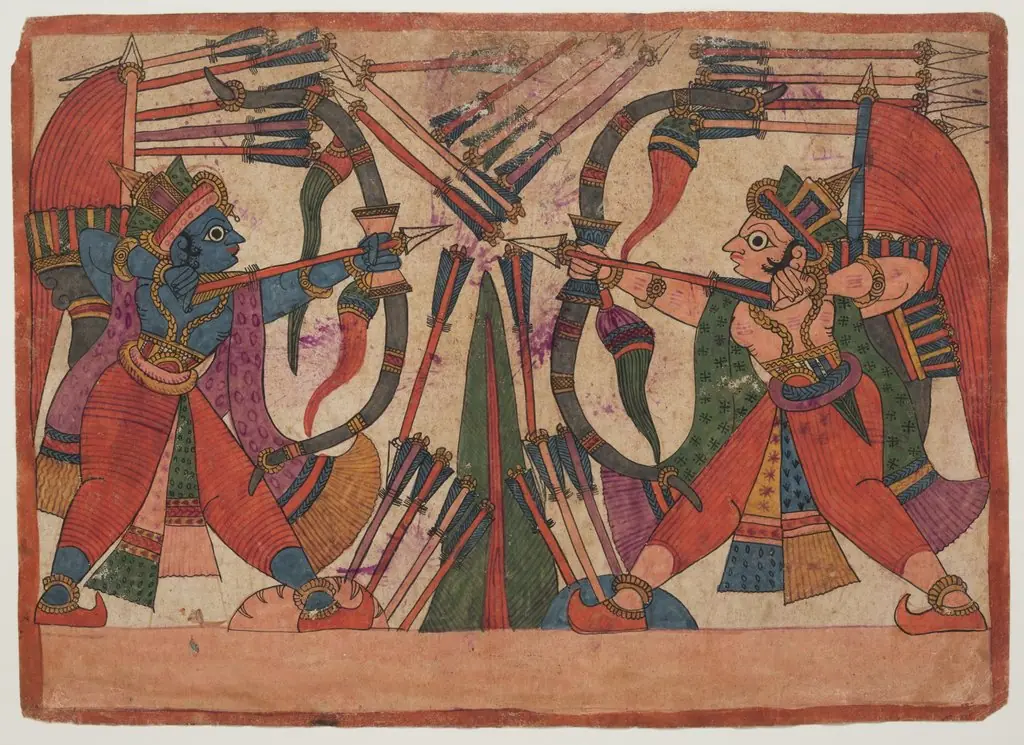
Scene from the Ramayana is an unspecified painting by Unknown. It dates from 1800 and is held in the collection of the Detroit Institute of Arts. This painting depicts a narrative moment from the Ramayana, an ancient Indian epic.
About this work
Overview
Rendered in a detailed, courtly style, it captures a seated central figure beneath an ornate arch, surrounded by attendants and observers.
This painting depicts a narrative moment from the Ramayana, an ancient Indian epic. Rendered in a detailed, courtly style, it captures a seated central figure beneath an ornate arch, surrounded by attendants and observers. The composition is tightly organized, with figures arranged to suggest dynamic interaction. Muted tones of red, green, and blue dominate, creating a restrained yet rich visual field. The work exemplifies the precision and decorative sensibility characteristic of regional Indian painting traditions.
Subject & Meaning
The central figure, clad in red, likely represents Rama or another key protagonist from the Ramayana, seated in a moment of authority or reflection. Surrounding figures, adorned in elaborate robes and headdresses, may be allies, servants, or divine beings. Their gestures and positioning imply dialogue or ritual, reinforcing the epic’s themes of duty and divine order. The arch above, with its fan-like motif, may symbolize sacred space or celestial endorsement, anchoring the scene in mythic significance.
Technique & Style
The painting employs fine brushwork to render intricate patterns on garments, jewelry, and architectural elements. Colors are applied in subtle gradations, avoiding bold contrasts while maintaining clarity. Textures are suggested through delicate linework rather than heavy impasto, emphasizing flatness and surface decoration. The figures are stylized with elongated proportions and expressive postures, enhancing narrative energy without naturalistic realism. This reflects a tradition prioritizing symbolic clarity over spatial illusion.
History & Provenance
The work likely originated in a royal atelier in northern or central India during the 17th or 18th century, a period when illustrated manuscripts of the Ramayana flourished under patronage. Its style aligns with regional schools such as Mughal-influenced Rajput or Pahari traditions. While its exact origin remains undocumented, the quality of execution suggests commission by a noble or temple authority. The painting may have once been part of a larger illustrated manuscript or devotional album.
Context
During the early modern period, illustrated epics like the Ramayana served both religious and political functions, reinforcing royal legitimacy through association with divine narratives. Artists in regional courts adapted Mughal techniques to local aesthetics, blending Persian precision with indigenous color palettes and iconography. This painting reflects a broader cultural trend in which storytelling through visual art became a vehicle for spiritual contemplation and dynastic identity.
Legacy
Though not widely known outside specialized collections, this painting contributes to the understanding of how Indian visual culture preserved and transmitted sacred narratives across generations. Its meticulous detail and restrained palette influenced later regional styles and continue to inform contemporary interpretations of classical themes. As a surviving fragment of a once-larger tradition, it stands as a testament to the enduring role of art in religious and literary life.
Artist & collection

 Domestic Scene
 Giacomo and Cardinal Marco, investing Andrea, Abbot of San Zeno, with his Benefice
 The Nymph of Fontainebleau
 Portrait of a Woman
 Madonna and Child with Saints in the Enclosed Garden
 Venus and Minerva
 Family Group of Four on Sofa
 Wall painting from Room H of the Villa of P. Fannius Synistor at Boscoreale