Artwork
Dance at the Inn
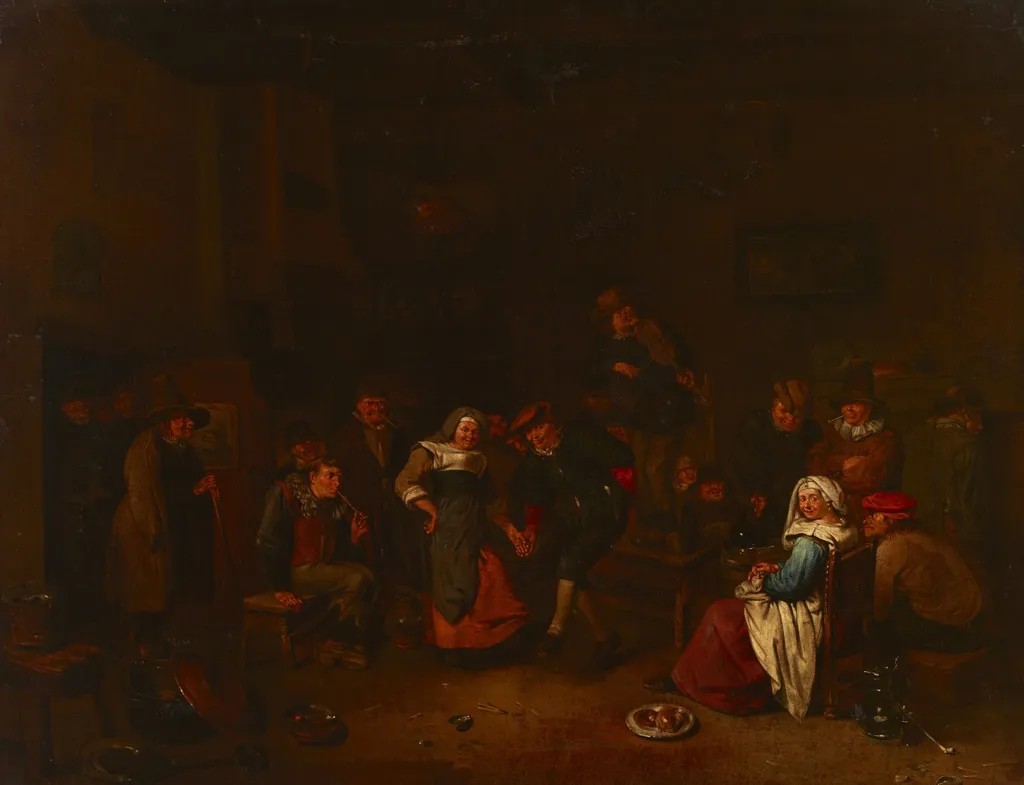
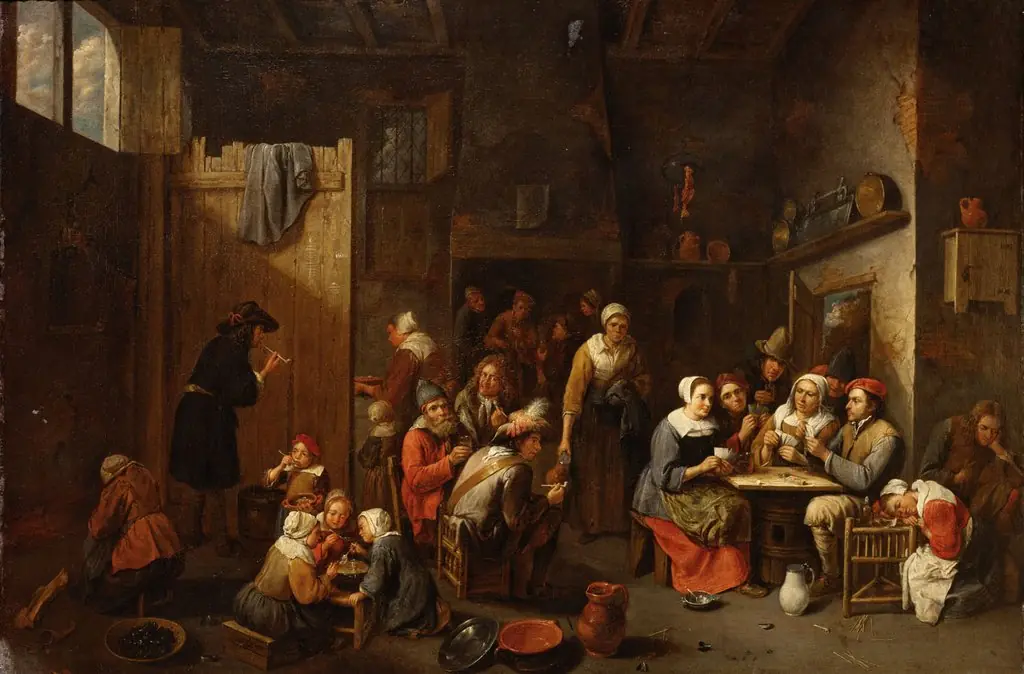
Dance at the Inn is an oil painting by the Rococo painting artist Unknown. It dates from 1700 and is held in the collection of the National Museum in Kraków.
About this work
Overview
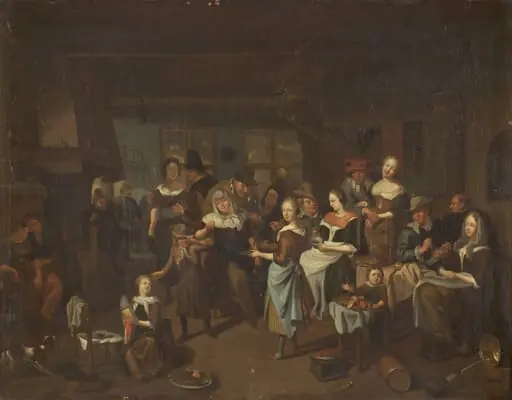
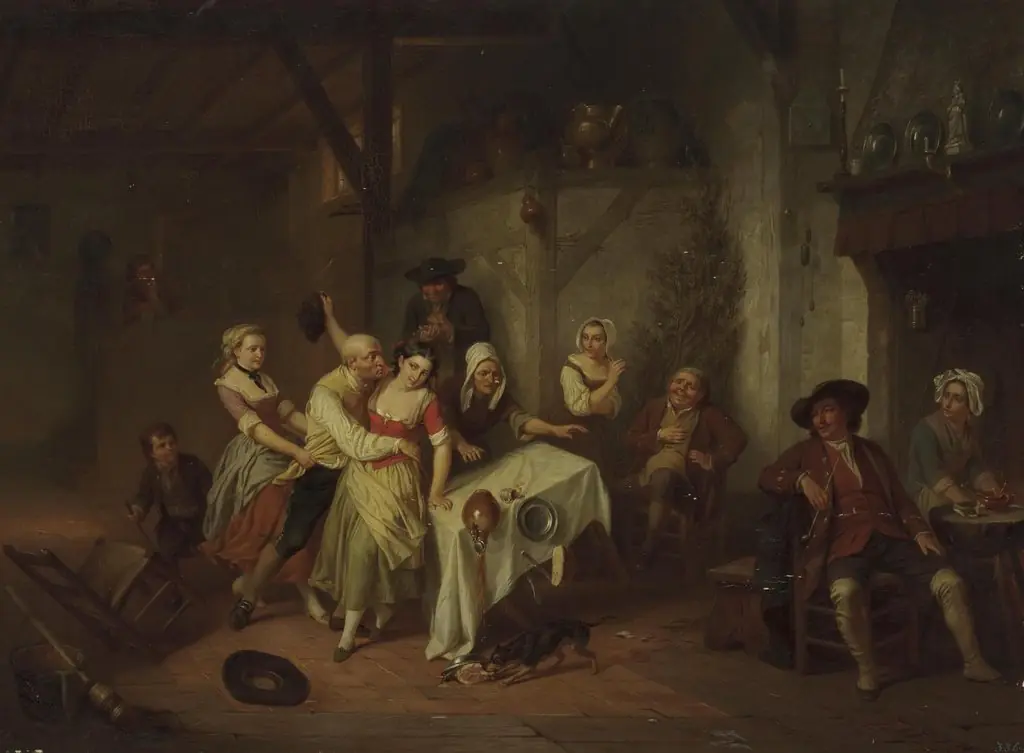
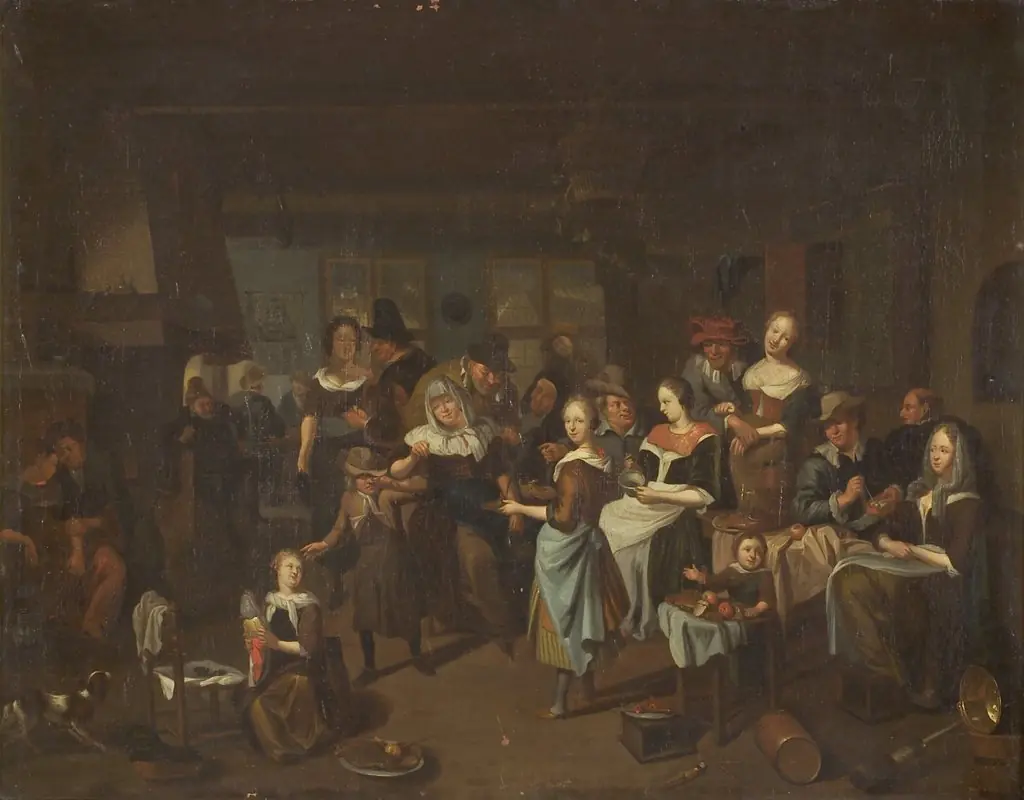
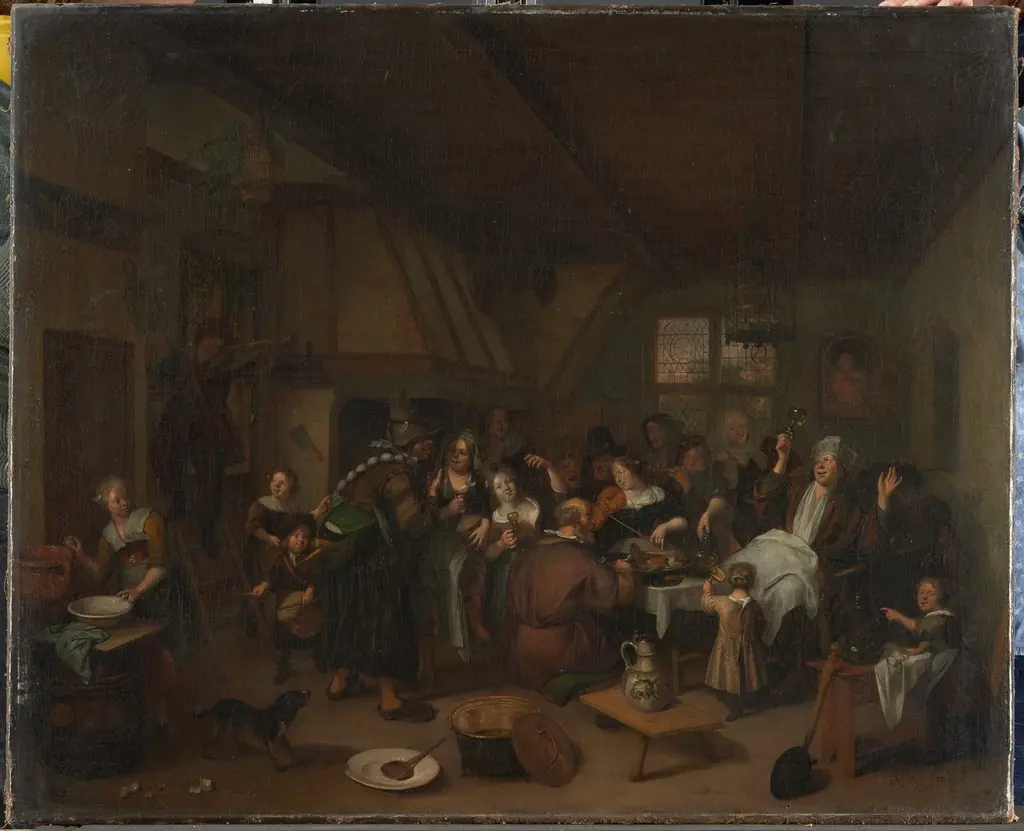
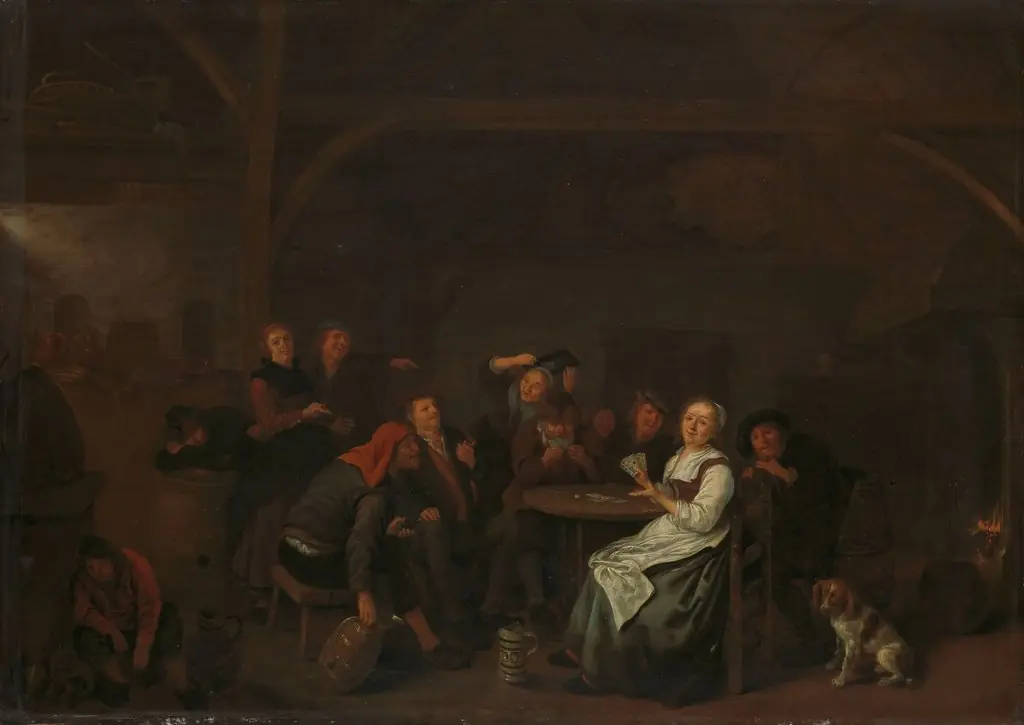
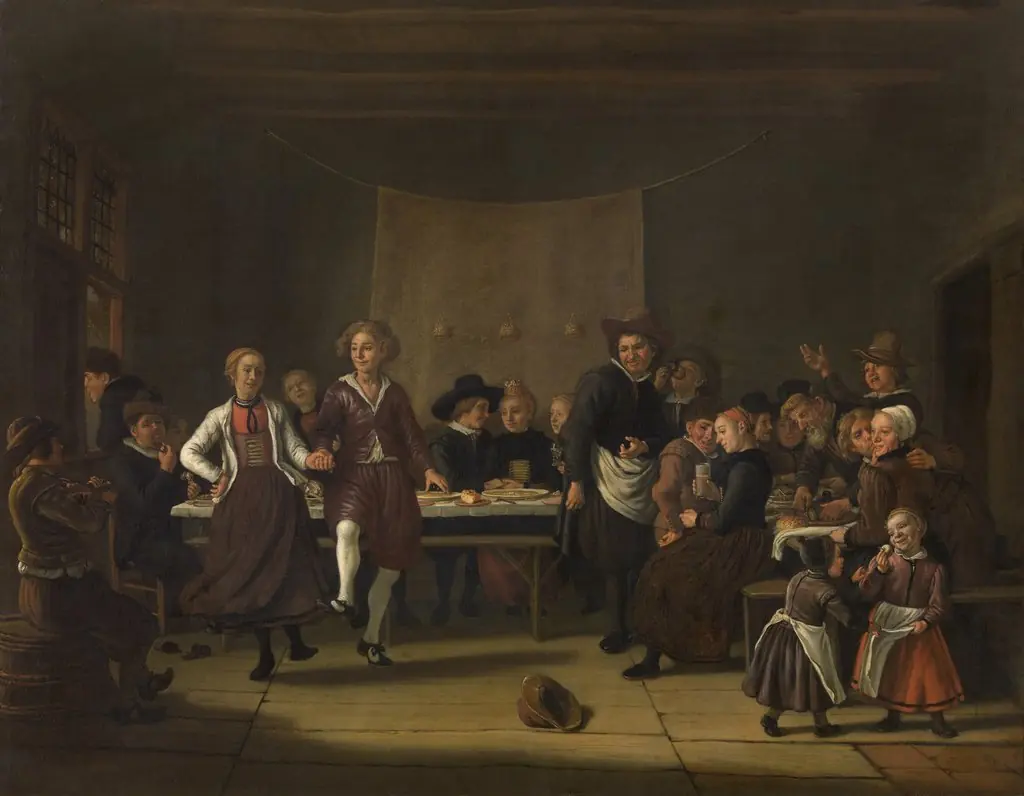
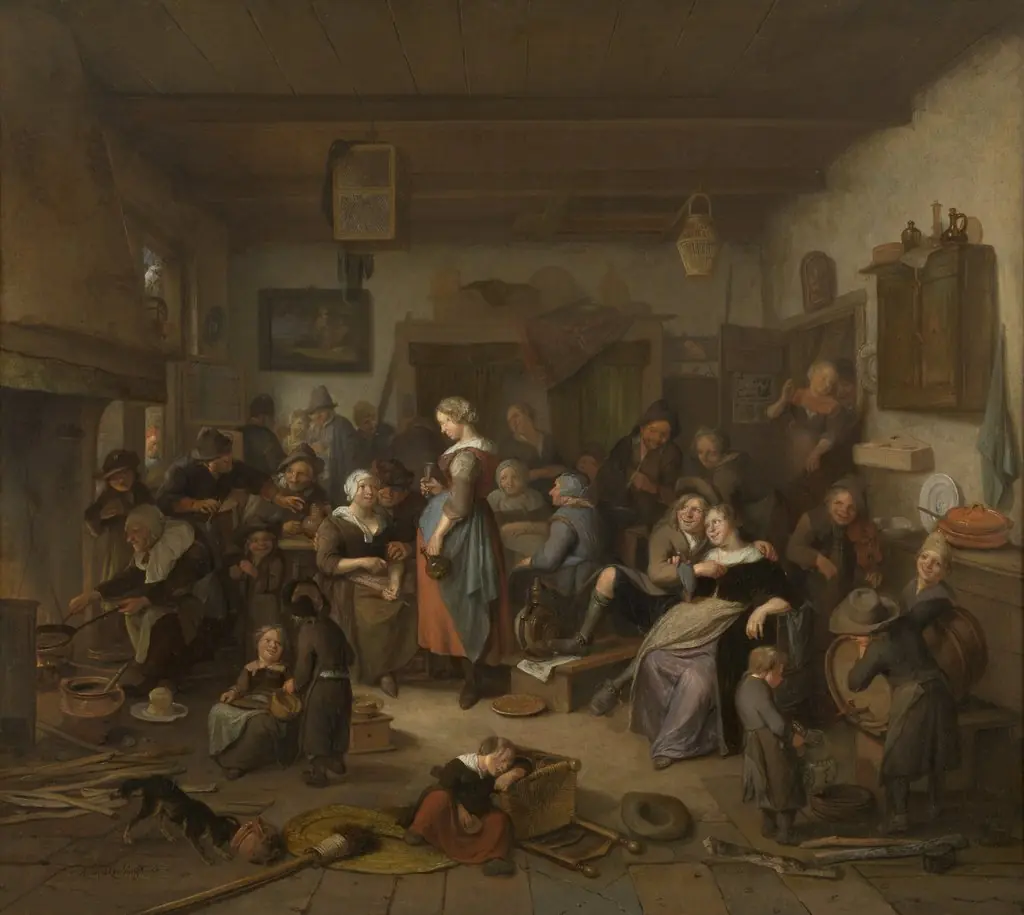
An oil painting titled Dance at the Inn depicts a lively interior scene of people engaged in social dancing. The composition centers on movement and interaction, capturing a moment of communal celebration in a modest, candlelit setting. The work belongs to a tradition of genre painting that documented everyday life, emphasizing atmosphere over grand narrative.
Subject & Meaning
The painting portrays a group of villagers or townspeople dancing in an inn, with figures arranged in loose, naturalistic poses. A fiddler stands to one side, providing music, while others observe or join in. The scene suggests a moment of respite from labor, reflecting the cultural role of communal dance in rural or working-class life during the period.
Technique & Style
Oil paint is applied with a restrained palette and soft modeling, favoring muted earth tones over vivid color. Brushwork is loose yet deliberate, suggesting movement through gesture rather than detailed anatomy. Light is drawn from a single source, likely a candle or hearth, creating pockets of warmth amid shadowed corners.
History & Provenance
The painting’s early ownership is undocumented, but it likely originated in a regional workshop or artist’s studio in northern Europe during the late 16th or early 17th century. It entered a public collection in the 19th century, possibly through acquisition from a private estate, though its exact path before then remains unclear.
Context
This work aligns with a broader trend in Northern European art that favored scenes of peasant life, influenced by artists like Pieter Bruegel the Elder. Such paintings were not merely decorative but offered quiet commentary on social rhythms, often contrasting the simplicity of rural existence with the formality of courtly life.
Legacy
Though not widely known today, Dance at the Inn contributes to the historical record of genre painting’s evolution. It reflects how artists of the time observed and recorded ordinary moments, preserving visual evidence of social customs that might otherwise have been lost to written history.
Artist & collection

 Domestic Scene
 Giacomo and Cardinal Marco, investing Andrea, Abbot of San Zeno, with his Benefice
 The Nymph of Fontainebleau
 Portrait of a Woman
 Madonna and Child with Saints in the Enclosed Garden
 Venus and Minerva
 Family Group of Four on Sofa
 Wall painting from Room H of the Villa of P. Fannius Synistor at Boscoreale