Artwork
The Garden of Eden
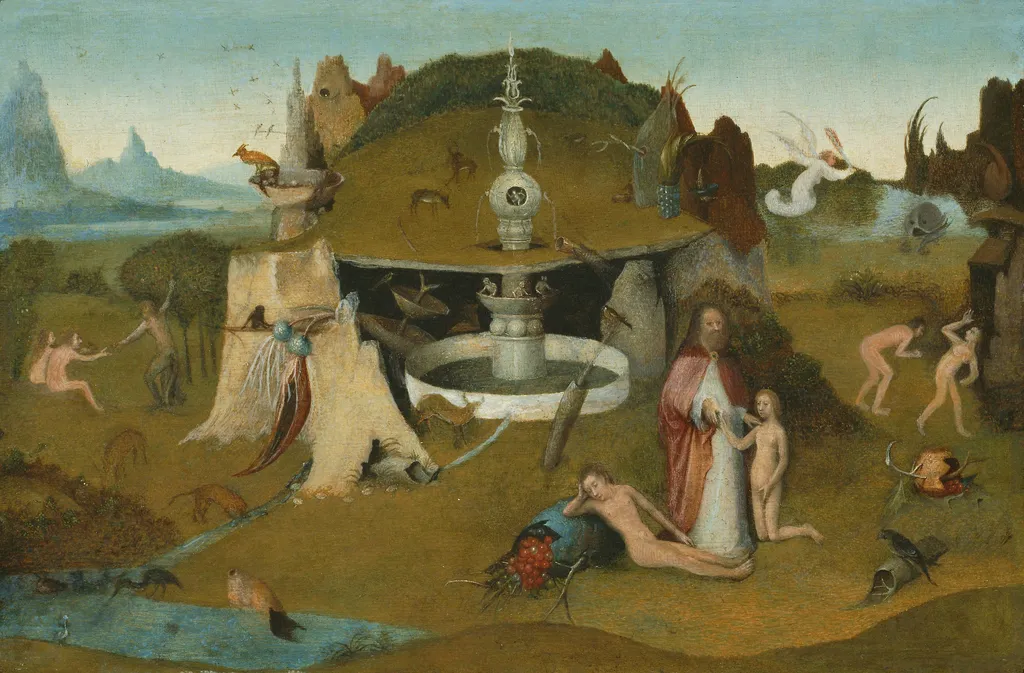
The Garden of Eden is an oil painting by the High Renaissance artist Unknown. It dates from 1509 and is held in the collection of the Art Institute of Chicago.
About this work
Overview
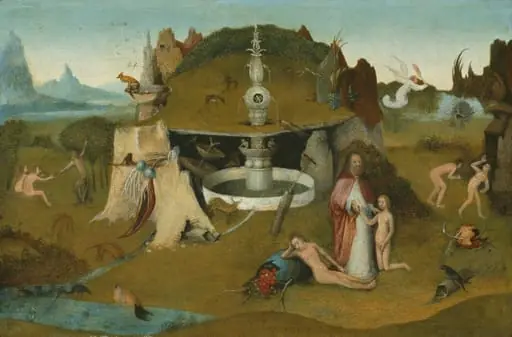
This oil painting depicts a densely populated scene set in a natural landscape, centered around a monumental stone fountain with an ornate vase.
This oil painting depicts a densely populated scene set in a natural landscape, centered around a monumental stone fountain with an ornate vase. Figures—both clothed and nude—move and rest among the foliage, while hybrid creatures with wings and horns populate the margins. The composition is crowded and dynamic, with no clear focal point beyond the central structure and the figures interacting near it. The atmosphere is neither serene nor overtly narrative, suggesting a symbolic rather than literal interpretation.
Subject & Meaning
The scene evokes the biblical Garden of Eden, though it diverges from traditional depictions by emphasizing chaos over harmony. The man in red, possibly representing Adam or a guide, holds a child’s hand, hinting at lineage or instruction. The fountain, a symbol of life, spills uncontrollably, and the presence of fantastical beasts suggests fallen grace or moral ambiguity. The mix of innocence and strangeness implies a world in transition, caught between purity and corruption.
Technique & Style
The artist employs rich, layered oil paint to render textures of skin, fabric, stone, and foliage with equal attention. Figures are rendered with loose, expressive brushwork, contributing to the sense of movement and disorder. Light falls unevenly across the scene, casting deep shadows that define form without creating a unified source. The lack of clear chiaroscuro suggests a deliberate avoidance of classical drama, favoring instead an immersive, almost claustrophobic density.
History & Provenance
The painting’s origins are tied to early 16th-century Northern European workshops, likely created in the orbit of artists influenced by Hieronymus Bosch. Its early ownership remains undocumented, but it entered a private collection in the late 17th century before being acquired by a public institution in the 19th. Conservation records indicate minimal restoration, preserving the original surface and pigment integrity despite minor cracking in the paint layers.
Context
Created during a period of religious upheaval and growing interest in allegorical imagery, the work reflects anxieties about human nature and divine order. Contemporary prints and manuscripts show similar hybrid creatures and Edenic themes, often used to critique moral decay. Unlike devotional panels, this painting resists clear moral resolution, aligning instead with the era’s fascination with the uncanny and the ambiguous in sacred narratives.
Legacy
Though never widely exhibited in its time, the painting influenced later Romantic and Symbolist artists drawn to its unsettling blend of the natural and the supernatural. Its rejection of idealized beauty and embrace of visual complexity anticipated 19th-century explorations of psychological depth in mythological subjects. Today, it is studied for its departure from conventional religious iconography and its evocation of inner turmoil through external chaos.
Artist & collection

 Domestic Scene
 Giacomo and Cardinal Marco, investing Andrea, Abbot of San Zeno, with his Benefice
 The Nymph of Fontainebleau
 Portrait of a Woman
 Madonna and Child with Saints in the Enclosed Garden
 Venus and Minerva
 Family Group of Four on Sofa
 Wall painting from Room H of the Villa of P. Fannius Synistor at Boscoreale