Artwork
The Haywain Triptych
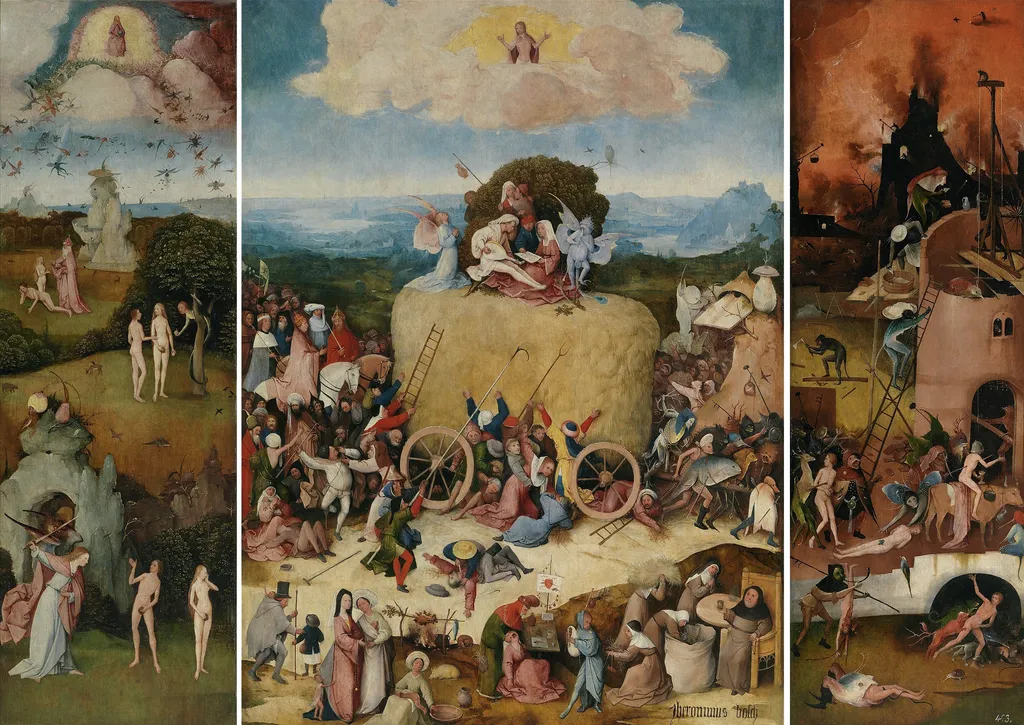
The Haywain Triptych is an oil painting by the Northern Renaissance artist Hieronymus Bosch. It dates from 1510 and is held in the collection of the Museo del Prado.
About this work
The central panel is signed by the artist and measures 135 cm by 200 cm, while each wing is 147 cm by 66 cm.
The Haywain Triptych is a panel painting by Hieronymus Bosch, made with oil paint around 1510. It is a three‑part work, so you’ll see a central image flanked by two wings.
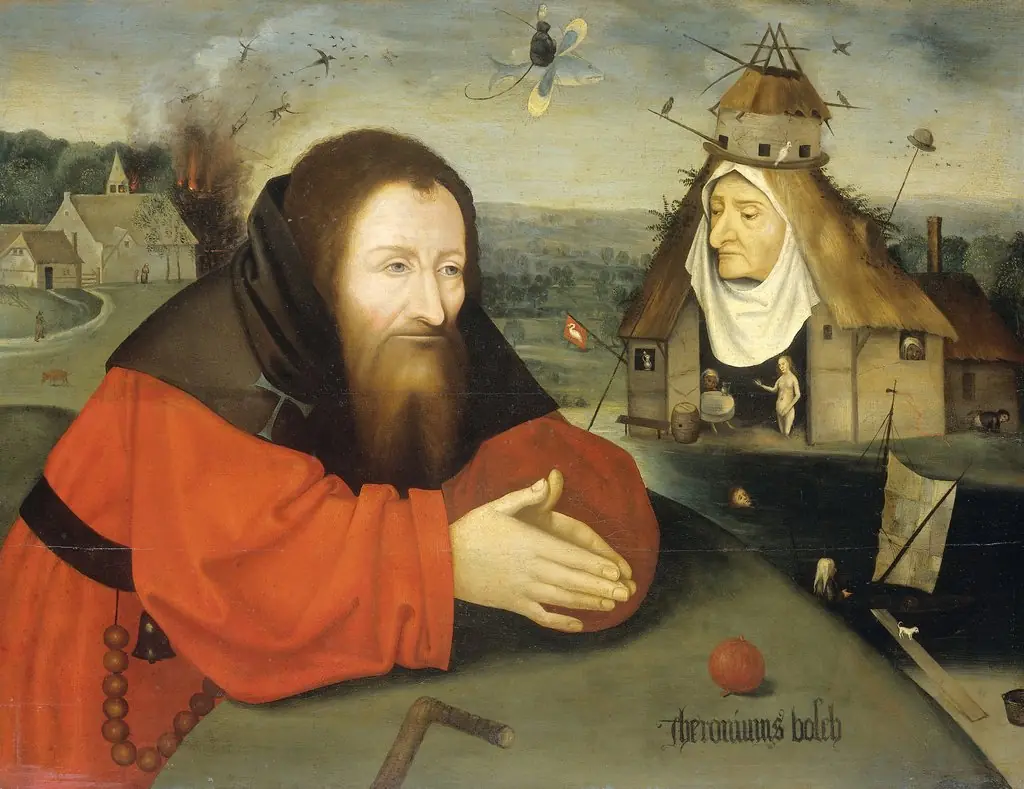
Research on the wood shows a date close to 1516. The central panel is signed by the artist and measures 135 cm by 200 cm, while each wing is 147 cm by 66 cm. The outside shutters repeat a full‑color version of Bosch’s The Wayfarer.
You can see the whole piece at the Museo del Prado.
Overview
The Haywain Triptych, an oil‑on‑panel work by the Early Netherlandish artist Hieronymus Bosch, is displayed in Madrid’s Museo del Prado. Executed circa 1510‑1516, the three‑panel composition consists of a central scene measuring 135 × 200 cm, flanked by two wings each 147 × 66 cm. When closed, the outer shutters present a fully coloured rendition of Bosch’s earlier piece, The Wayfarer.
Subject & Meaning
The central panel depicts a massive hay‑laden cart moving through a bustling landscape, surrounded by figures engaged in various activities that suggest moral commentary on greed and human folly. Bosch’s characteristic allegorical approach invites viewers to contemplate the transitory nature of worldly wealth and the spiritual perils associated with material excess.
Technique & Style
Executed in oil on oak panels, the triptych showcases Bosch’s intricate brushwork and vivid palette, characteristic of his late style. The detailed rendering of figures, fantastical creatures, and natural elements reflects a synthesis of Northern Renaissance realism with the artist’s idiosyncratic, symbolic imagination.
History & Provenance
Scientific analysis of the wooden support, through dendrochronology, places the creation of the work close to 1516. The central panel bears Bosch’s signature, confirming authorship. The painting entered the Spanish royal collection in the 17th century and has been part of the Prado Museum’s holdings since the museum’s foundation.
Context
Created near the end of Bosch’s career, the Haywain Triptych belongs to a period when the artist produced large, complex altarpieces for ecclesiastical patrons. Its moralizing theme aligns with contemporary devotional practices that used vivid visual narratives to instruct viewers on ethical conduct.
Own this work as a print
Artist & collection
Artist
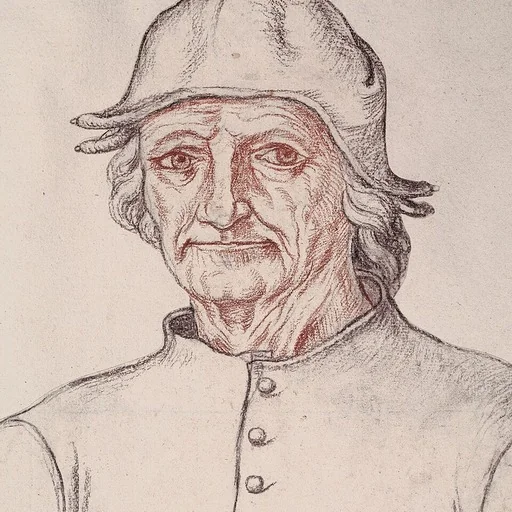
Hieronymus Bosch (; Dutch: ; born Jheronimus van Aken ; c. 1450 – 9 August 1516) was a Dutch painter from Brabant. He is one of the most notable representatives of the Early Netherlandish painting school. His work,…

![The Raising of the Cross [center, left, and right panels], by Master of the Starck Triptych](https://artifactworldgallery.com/img/master-of-the-starck-triptych--the-raising-of-the-cross-center-left-and-right-panels--5f0053e23b45aff7-w320.webp)