Artwork
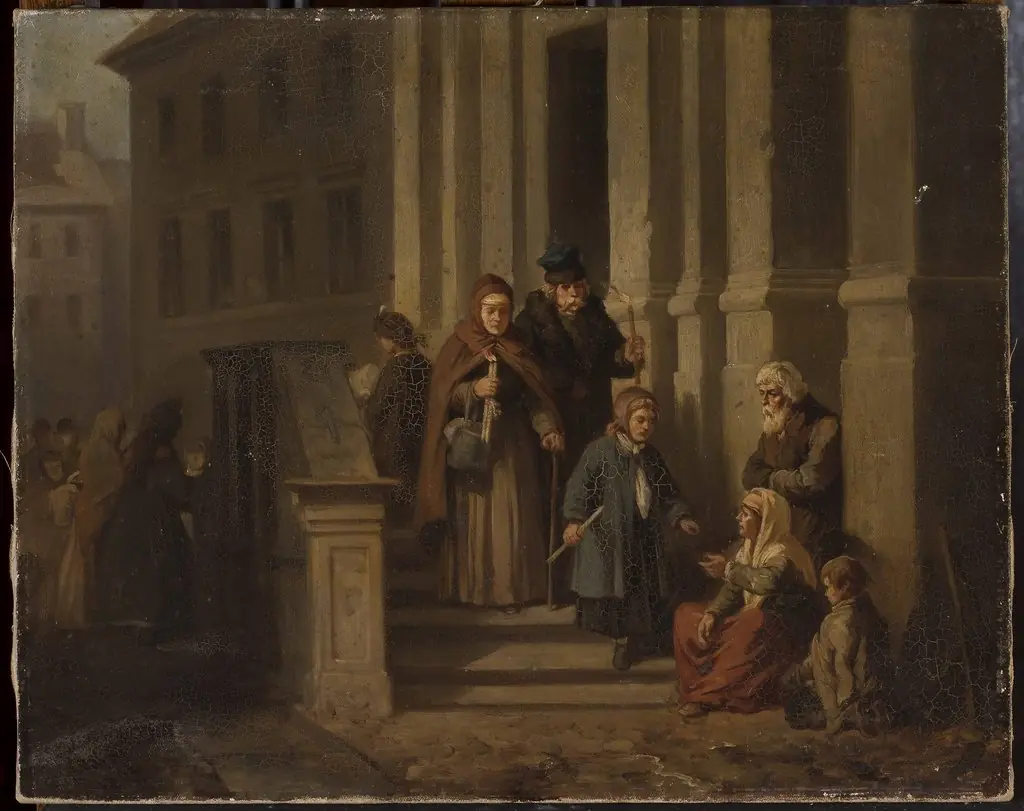
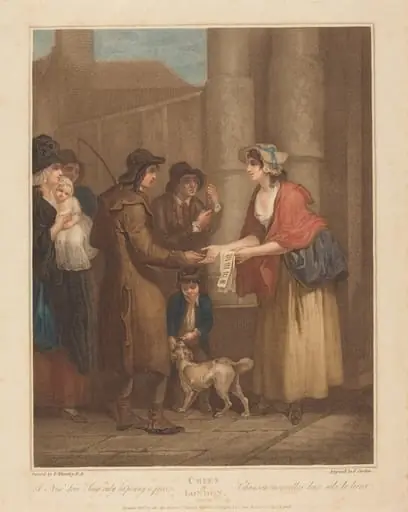
Gadescene i København ved år 1800. Piskebåndsjøden sælger en knipling til en ung pige
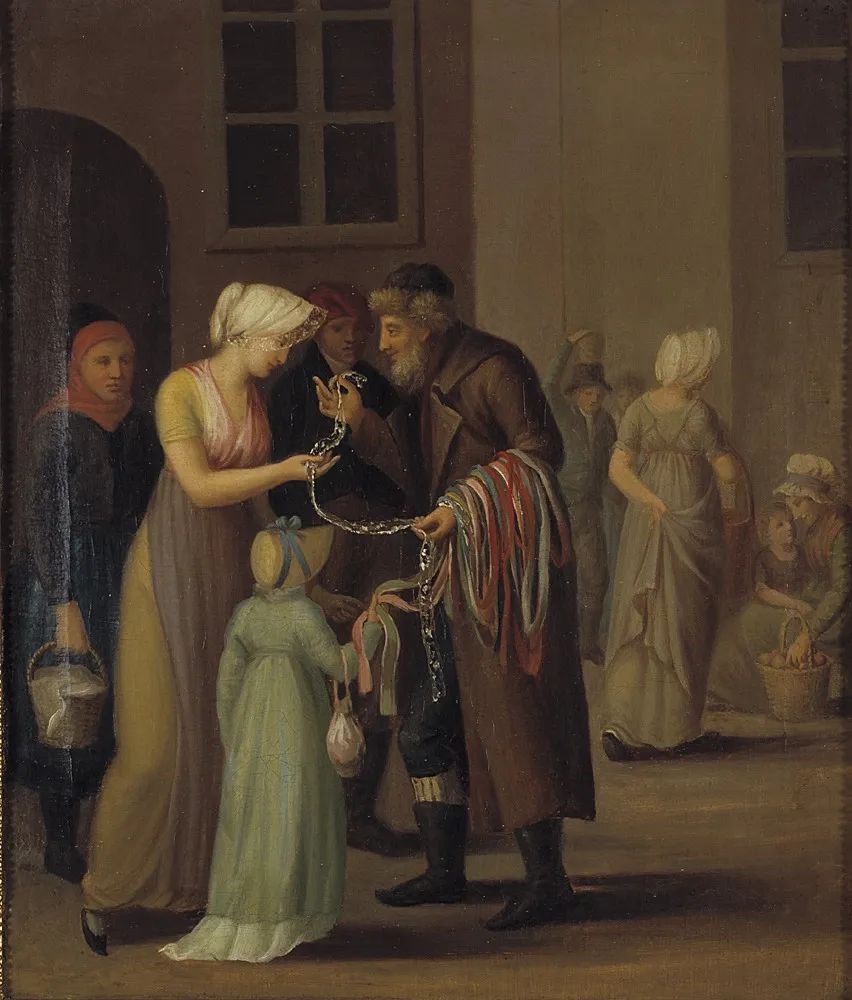
Gadescene i København ved år 1800. Piskebåndsjøden sælger en knipling til en ung pige is an oil painting by Unknown. It dates from 1800 and is held in the collection of the Statens Museum for Kunst. The oil painting captures a lively street scene in Copenhagen at the turn of the nineteenth century.
About this work
The use of chiaroscuro adds depth and dimension to the scene, drawing the viewer's eye to the central figures.
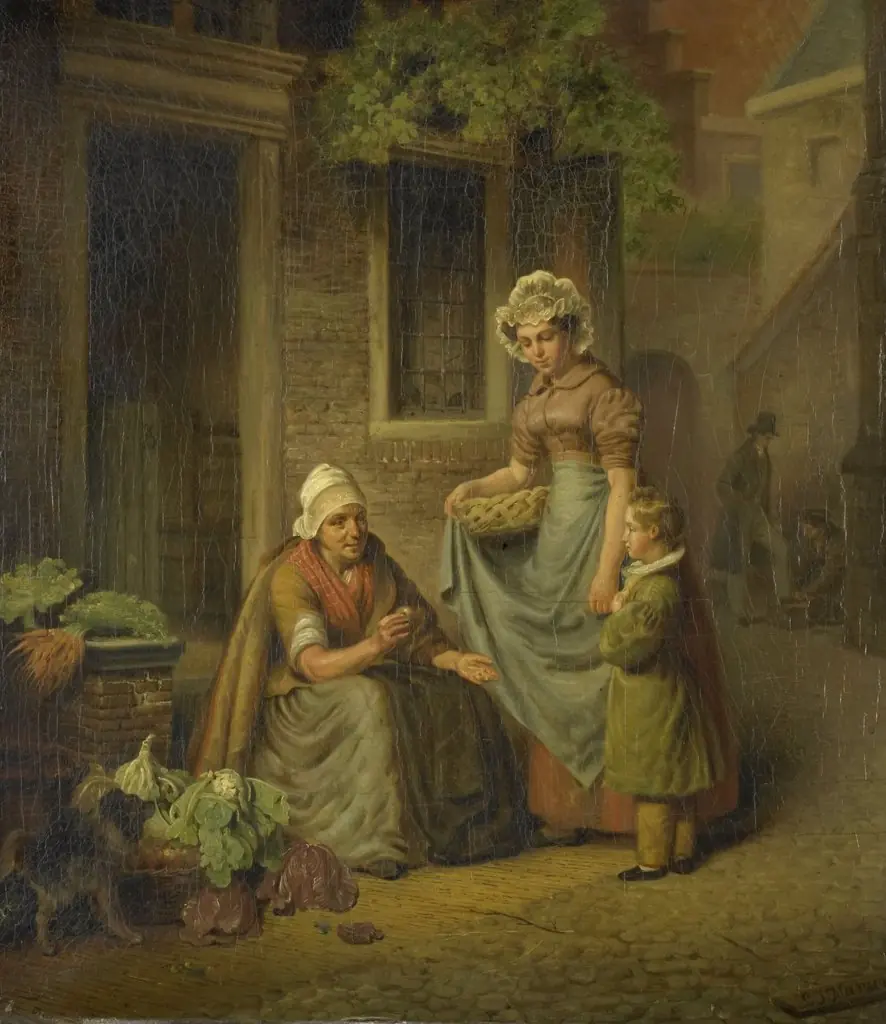
In this painting, a man is shown selling a knipling to a young girl. The man is dressed in a long coat and hat, while the girl wears a dress and headscarf. They are surrounded by other people, including a woman holding a basket and a child. The scene is set in a bustling street or market, with buildings visible in the background. The artist has used warm colors to create a sense of intimacy and connection between the characters. The use of chiaroscuro adds depth and dimension to the scene, drawing the viewer's eye to the central figures. The painting offers a glimpse into everyday life in Copenhagen around 1800.
Overview
The oil painting captures a lively street scene in Copenhagen at the turn of the nineteenth century. A man in a long coat and hat is engaged in selling a small wooden toy, known as a knipling, to a young girl dressed in a simple dress and headscarf. Around them stand other figures—a woman with a basket and a child—set against a backdrop of modest urban architecture.
Subject & Meaning
The central interaction illustrates everyday commerce and social exchange among ordinary citizens. The transaction of a knipling, a popular children’s toy of the period, highlights the role of street vendors in providing affordable leisure items, while the presence of a mother‑like figure and a child underscores the familial context of such purchases in early‑modern Copenhagen.
Technique & Style
The artist employs a warm palette that fosters a sense of intimacy among the figures, while chiaroscuro modeling creates depth and guides the eye toward the seller and the girl. Loose brushwork suggests movement in the bustling crowd, and the rendering of architectural details provides a credible urban setting without detracting from the human focus.
Context
Set around 1800, the work offers visual documentation of Copenhagen’s public spaces during a period of rapid urban growth. The depiction of street vendors, modest clothing, and everyday objects reflects the socioeconomic conditions of the city’s lower and middle classes before the major reforms of the early nineteenth century.
Artist & collection

 Domestic Scene
 Giacomo and Cardinal Marco, investing Andrea, Abbot of San Zeno, with his Benefice
 The Nymph of Fontainebleau
 Portrait of a Woman
 Madonna and Child with Saints in the Enclosed Garden
 Venus and Minerva
 Family Group of Four on Sofa
 Wall painting from Room H of the Villa of P. Fannius Synistor at Boscoreale