Artwork
Vajradhara, Nairatmya, and Mahasiddhas Virupa and Kanha
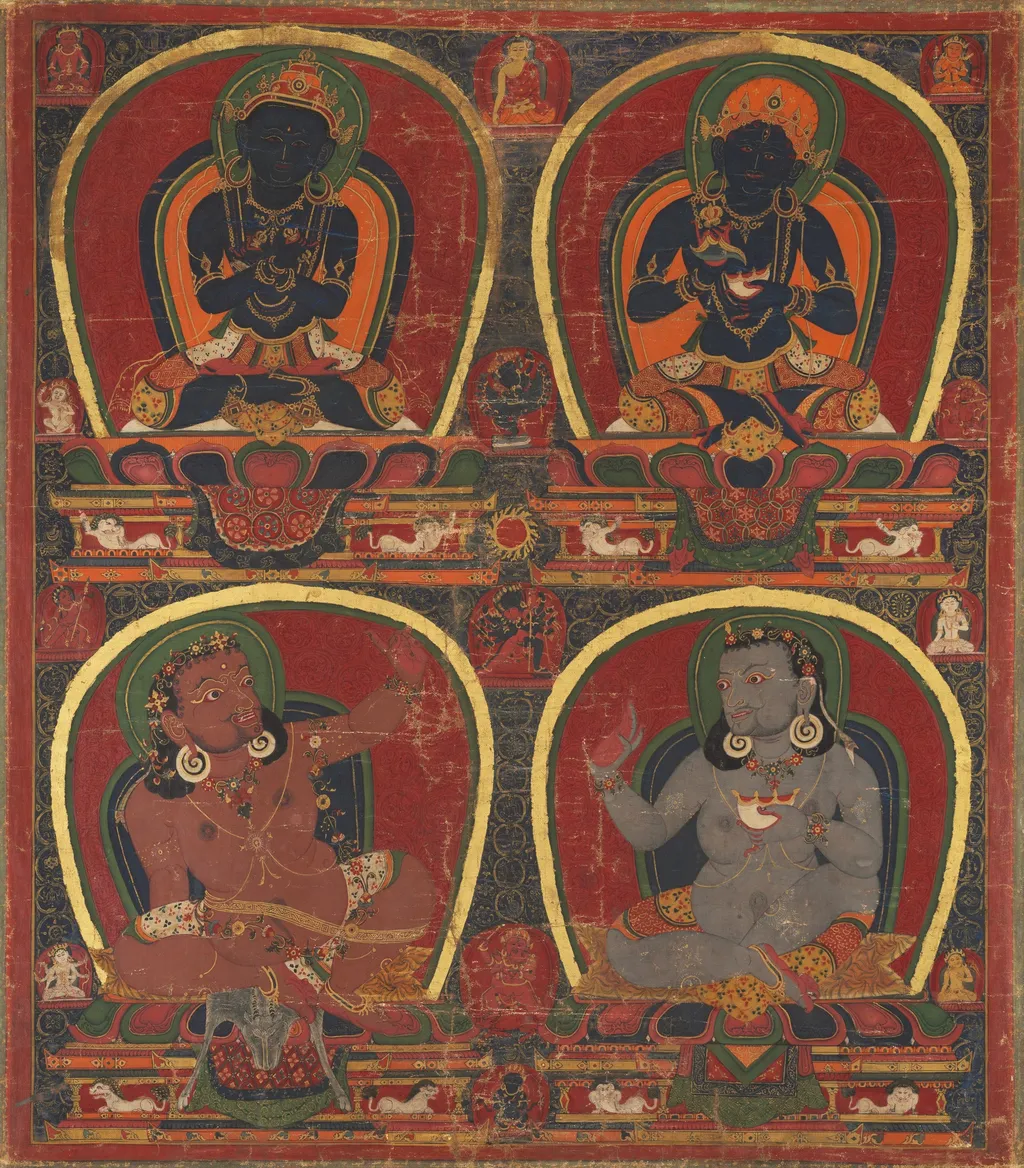
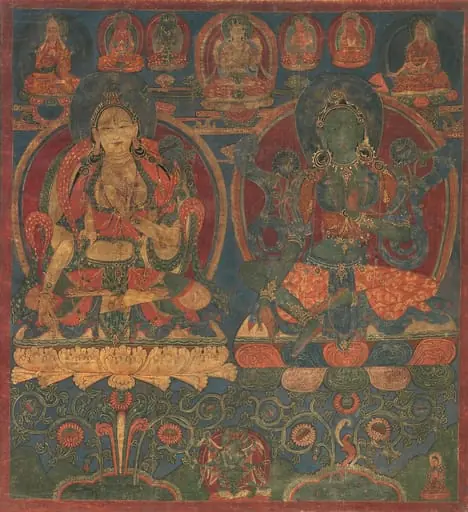
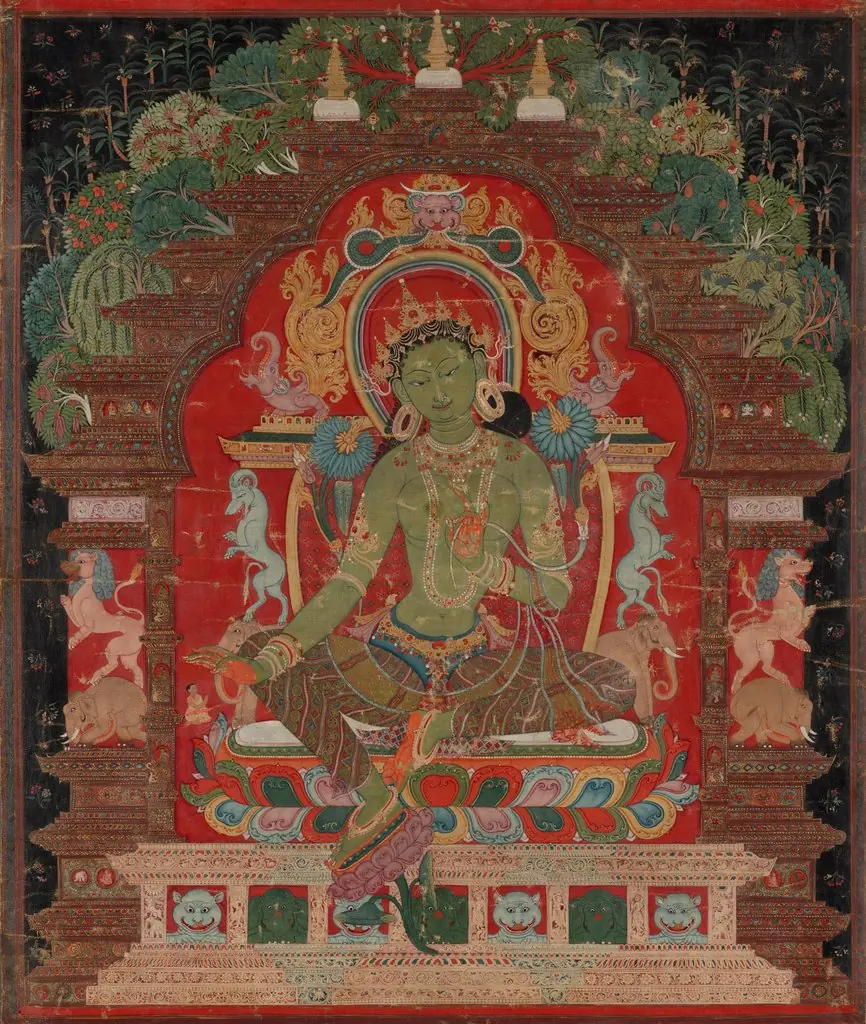
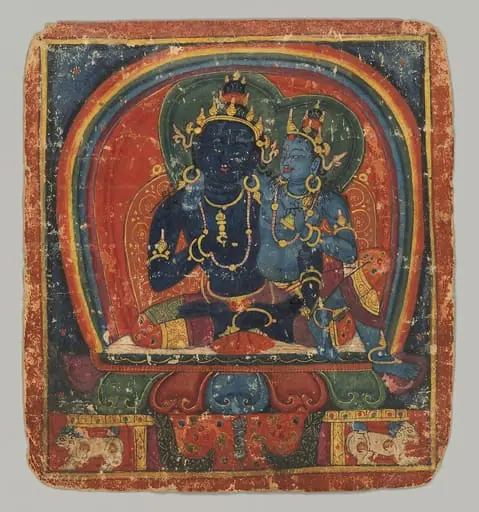
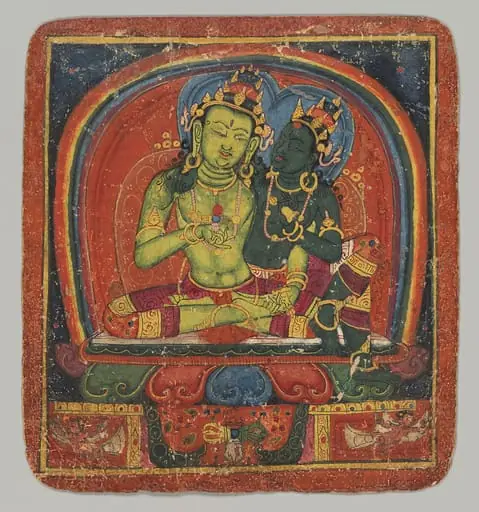
Vajradhara, Nairatmya, and Mahasiddhas Virupa and Kanha is an unspecified painting. It dates from 1450 and is held in the collection of the Cleveland Museum of Art. This painting depicts four robed figures, each enclosed within a vibrant circular frame of red, gold, and black.
About this work
Overview
This painting depicts four robed figures, each enclosed within a vibrant circular frame of red, gold, and black. The composition arranges these figures, identified as Vajradhara, Nairatmya, and the Mahasiddhas Virupa and Kanha, against a dark ground. The overall arrangement emphasizes their individual presence while contributing to a unified visual narrative.
Subject & Meaning
All figures are enthroned upon lotus blossoms, a recurring motif signifying purity and spiritual enlightenment in this artistic tradition.
The artwork features two celestial or enlightened beings at the top, characterized by dark complexions and curly hair, holding symbolic items such as a wheel and a lotus bud. Below them are two human-like figures, identified as Mahasiddhas. One holds a scroll, while the other cradles a small animal, suggesting their distinct spiritual practices or narratives. All figures are enthroned upon lotus blossoms, a recurring motif signifying purity and spiritual enlightenment in this artistic tradition.
Technique & Style
The artist employs a striking palette of bold colors, particularly red and gold, which define the figures and their circular enclosures. Strong, precise outlines delineate each form, creating a clear separation from the dark background and enhancing their visual prominence. The space between the main figures is adorned with delicate golden patterns and small white animal motifs, adding intricate detail and texture to the overall composition.
Artist & collection