Artwork
Seated Portrait of Song Zhezong
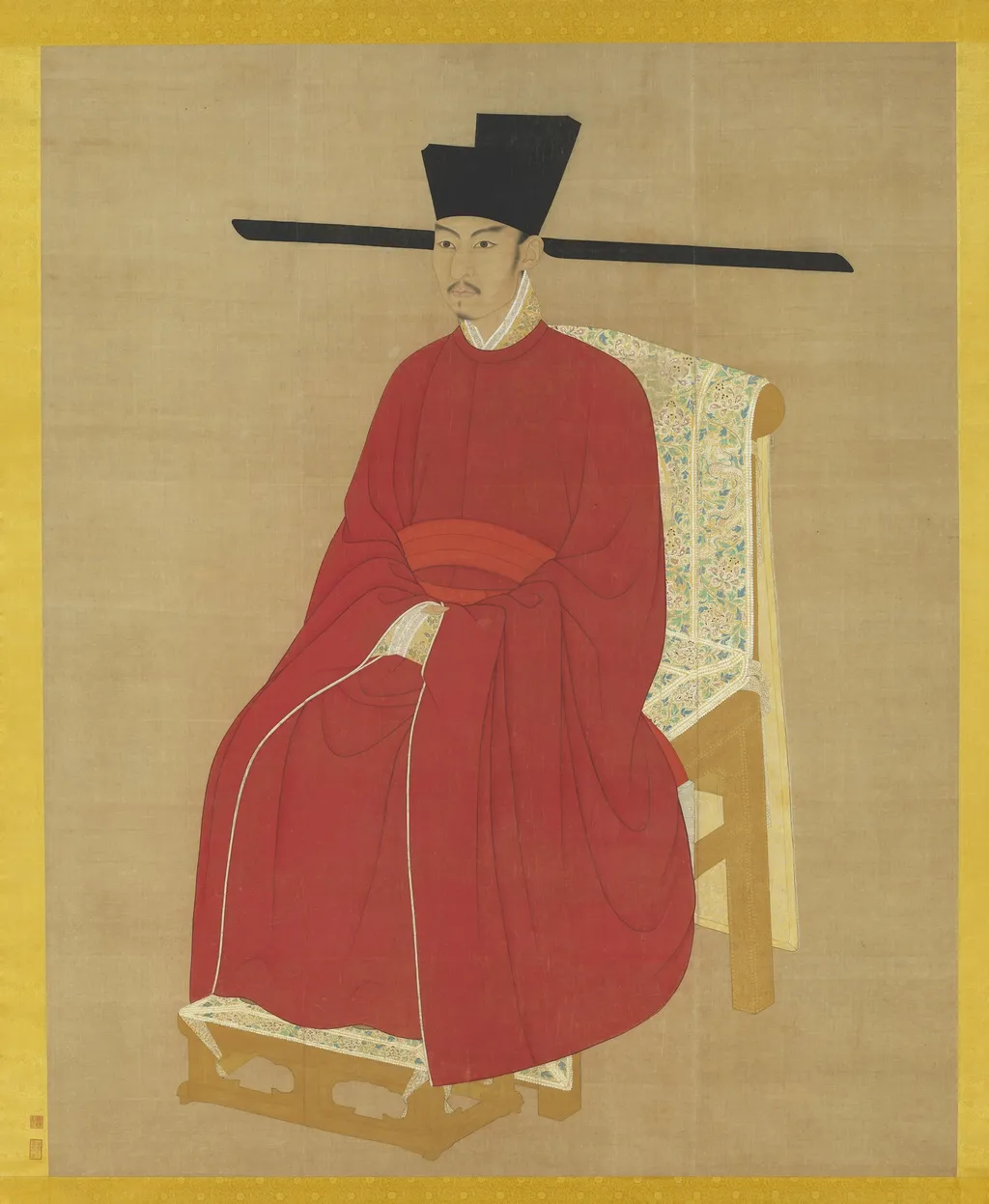
Seated Portrait of Song Zhezong is an unspecified painting by Unknown. It is held in the collection of the National Palace Museum. The work is a seated portrait of a male figure rendered in traditional Chinese painting style.
About this work
Overview
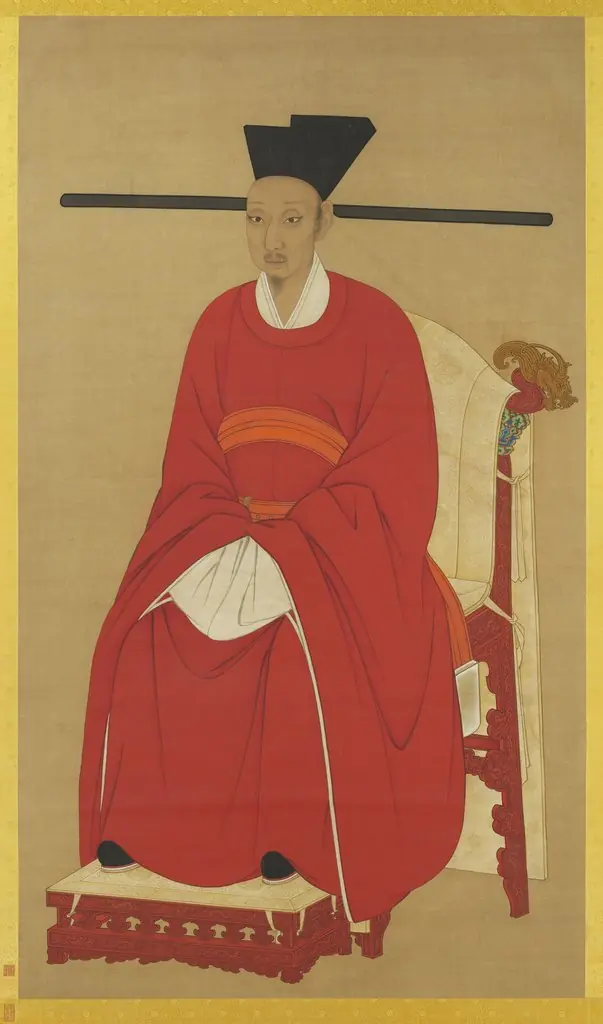
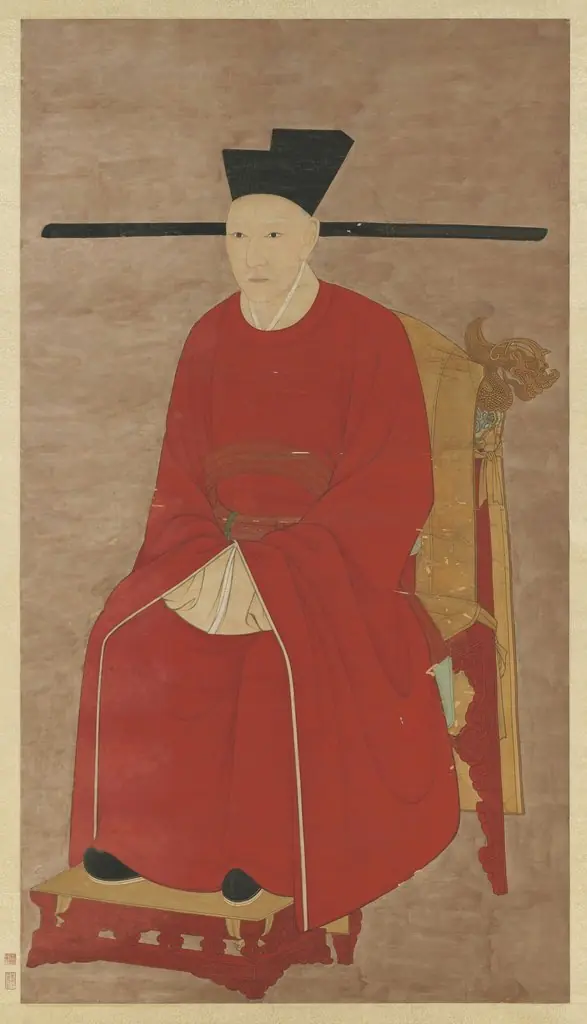
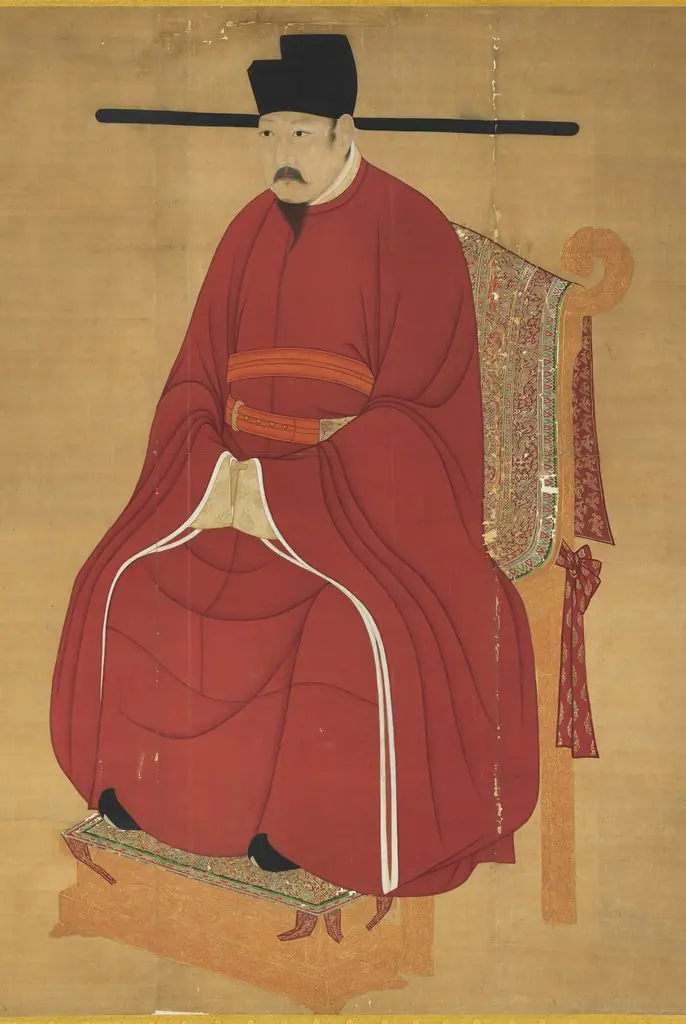
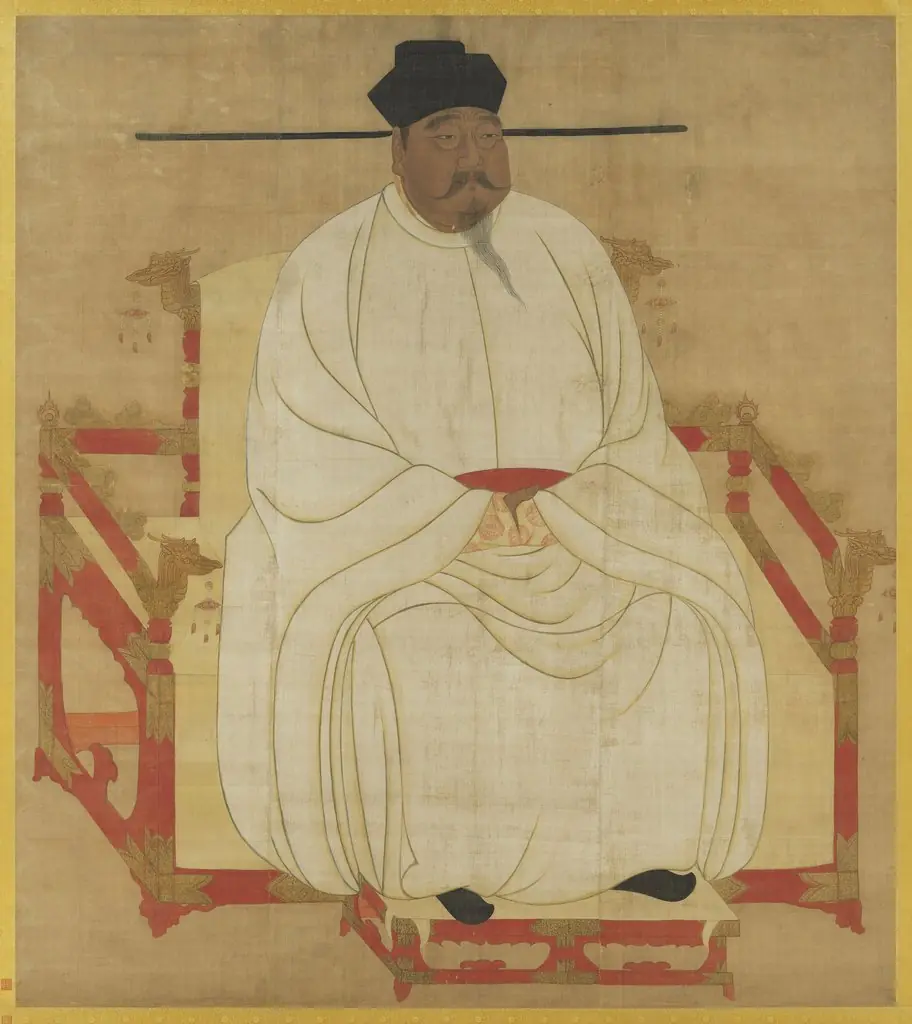
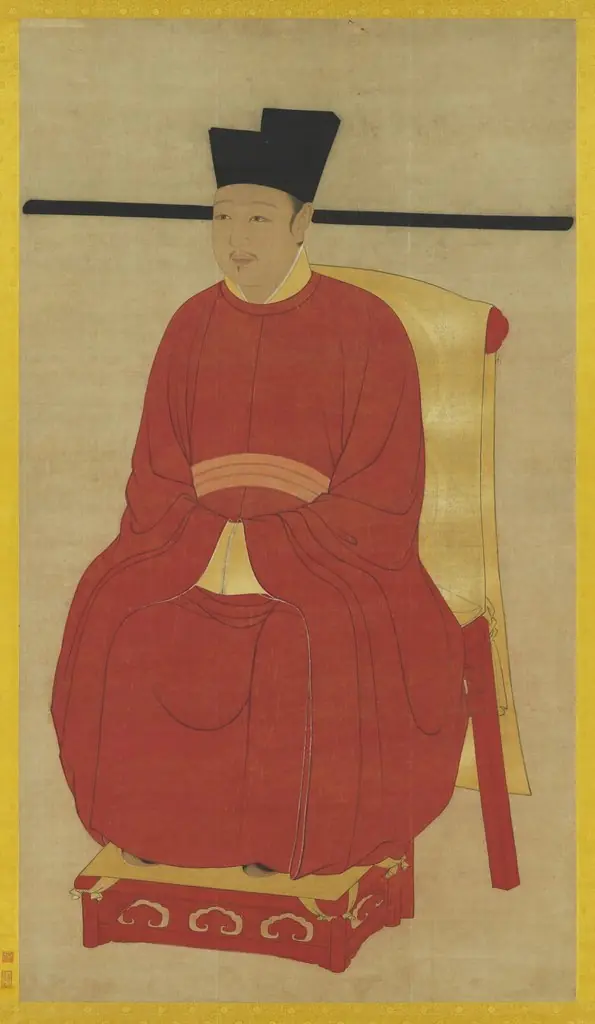
The work is a seated portrait of a male figure rendered in traditional Chinese painting style. He is shown on a chair, dressed in a red robe and a black hat, with a mustache and a forward gaze. The composition is simple, set against a light brown background, and the chair features a floral motif on its back and seat.
Subject & Meaning
The sitter is identified as Song Zhezong, a ruler of the Song dynasty, whose attire and dignified posture convey imperial authority. The calm expression and serene setting reflect the Confucian ideal of a ruler who embodies composure and moral rectitude.
Technique & Style
Executed with bold, flat areas of color, the painting employs the restrained brushwork typical of Song court portraiture. The use of a limited palette—predominantly red, black, and earth tones—highlights the figure while the floral chair adds a decorative contrast without overwhelming the composition.
History & Provenance
The portrait belongs to the tradition of Song dynasty court artists who produced official likenesses of emperors. Its stylistic traits align it with other imperial portraits from the period, suggesting it was likely created for a palace setting or as part of a dynastic record.
Context
During the Song era, portraiture served both political and ceremonial purposes, reinforcing the legitimacy of the sovereign. This work exemplifies the era’s emphasis on realistic yet idealized representation, situating the emperor within a modest yet dignified interior space.
Legacy
The painting continues to inform scholars about Song court aesthetics and the visual conventions used to convey imperial presence. It stands as a reference point for later Chinese portraiture, illustrating how color, composition, and symbolic attire were employed to project authority.
Artist & collection

 Domestic Scene
 Giacomo and Cardinal Marco, investing Andrea, Abbot of San Zeno, with his Benefice
 The Nymph of Fontainebleau
 Portrait of a Woman
 Madonna and Child with Saints in the Enclosed Garden
 Venus and Minerva
 Family Group of Four on Sofa
 Wall painting from Room H of the Villa of P. Fannius Synistor at Boscoreale