Artwork
Two Boys with a Bladder: Candlelight Effect
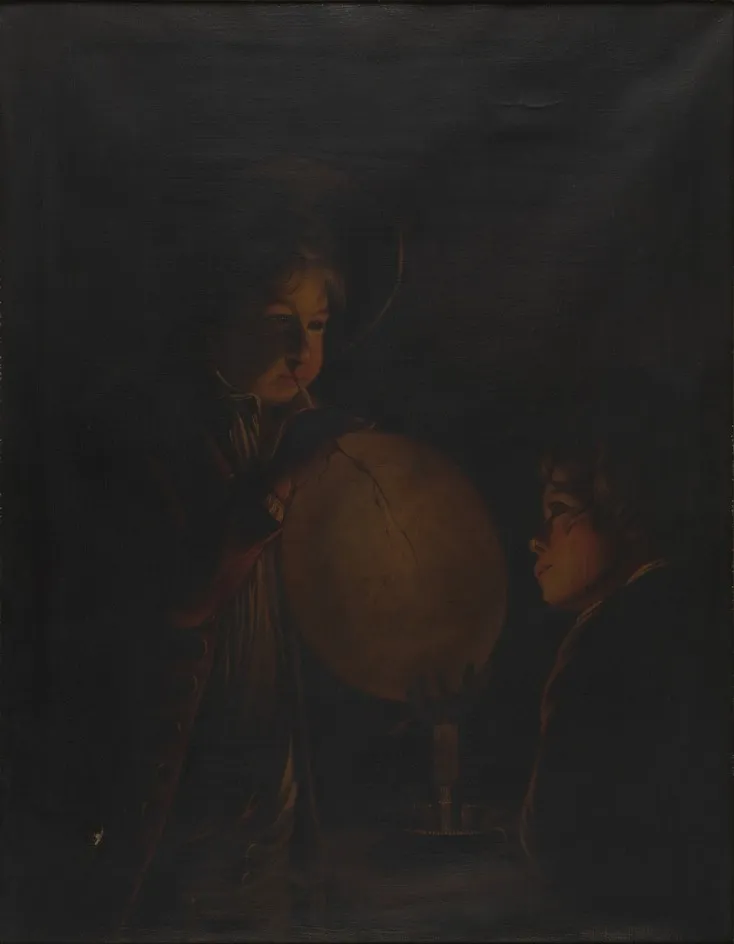
Two Boys with a Bladder: Candlelight Effect is an oil painting by Unknown. It is held in the collection of the Ashmolean Museum. This oil painting depicts two boys in a dim interior, illuminated by a single candle.
About this work
Overview
The composition focuses attention on the boys and the object they interact with, creating a moment of stillness amid the darkness.
This oil painting depicts two boys in a dim interior, illuminated by a single candle. The figure on the left holds an inflated animal bladder, while the other watches with quiet attention. The scene is rendered in warm, golden hues, with strong contrasts between light and shadow that define form and space. The composition focuses attention on the boys and the object they interact with, creating a moment of stillness amid the darkness.
Subject & Meaning
The boys’ interaction with the bladder suggests a moment of childhood play, possibly a game involving air or breath. The object, humble and transient, contrasts with the solemnity of the lighting, hinting at themes of impermanence or fleeting joy. The absence of narrative context invites interpretation, leaving the scene open to contemplation rather than storytelling.
Technique & Style
The artist employs chiaroscuro to model the figures with precision, using the candle’s glow to carve volume from shadow. Skin, fabric, and the bladder’s surface are rendered with subtle gradations of light, enhancing tactile realism. The dark background recedes dramatically, isolating the boys and intensifying the intimacy of the moment. Brushwork is restrained, prioritizing atmospheric effect over detail.
History & Provenance
The painting’s origins are tied to Dutch or Flemish genre painting of the early 17th century, a period known for intimate domestic scenes lit by artificial sources. While the artist remains unidentified, the style aligns with contemporaries who explored nocturnal lighting. Its early ownership is undocumented, but it entered public collections in the 19th century, likely through private European acquisitions.
Context
This work reflects a broader trend in Northern European art where candlelit interiors became vehicles for psychological nuance and technical experimentation. Artists of the time studied light’s behavior in confined spaces, often using humble subjects to explore human emotion and material texture. The bladder, a common toy, anchors the scene in everyday life rather than myth or religion.
Legacy
Though not widely reproduced, the painting contributes to the understanding of how early modern painters used light to convey mood and presence. Its quiet intensity influenced later genre works that favored subtlety over spectacle. It remains a quiet example of how ordinary moments, when framed with careful observation, can hold enduring visual power.
Artist & collection

 Domestic Scene
 Giacomo and Cardinal Marco, investing Andrea, Abbot of San Zeno, with his Benefice
 The Nymph of Fontainebleau
 Portrait of a Woman
 Madonna and Child with Saints in the Enclosed Garden
 Venus and Minerva
 Family Group of Four on Sofa
 Wall painting from Room H of the Villa of P. Fannius Synistor at Boscoreale
 Junge Frau mit brennender Kerze
 A man with a pipe and a man filling his glass
 The Smoker (A Man with a Pipe and a Man Pouring a Beverage into a Glass)
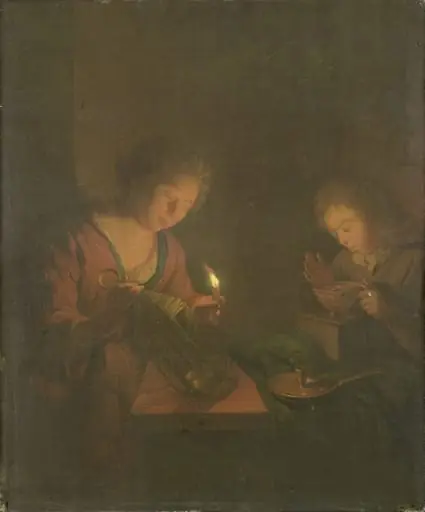 Fire and Light (A Girl Places a Candle in a Lantern and a Boy Blows on the Coals in a Chafing-Dish)
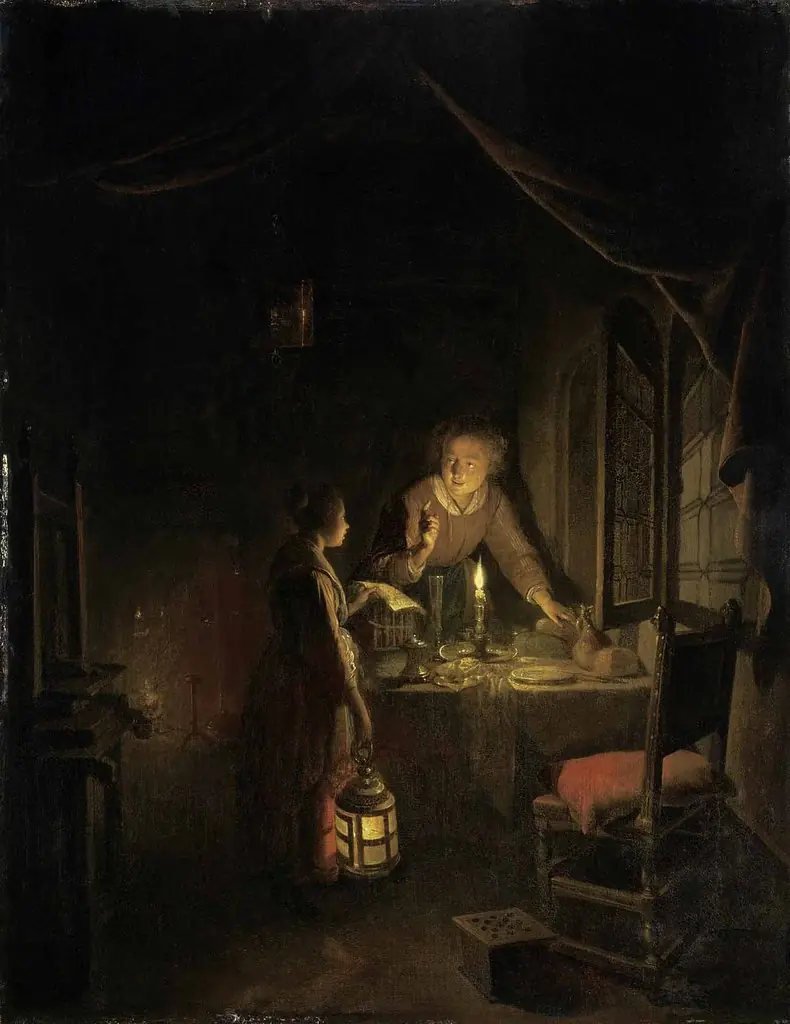 A Young Woman engaged at the Supper-table
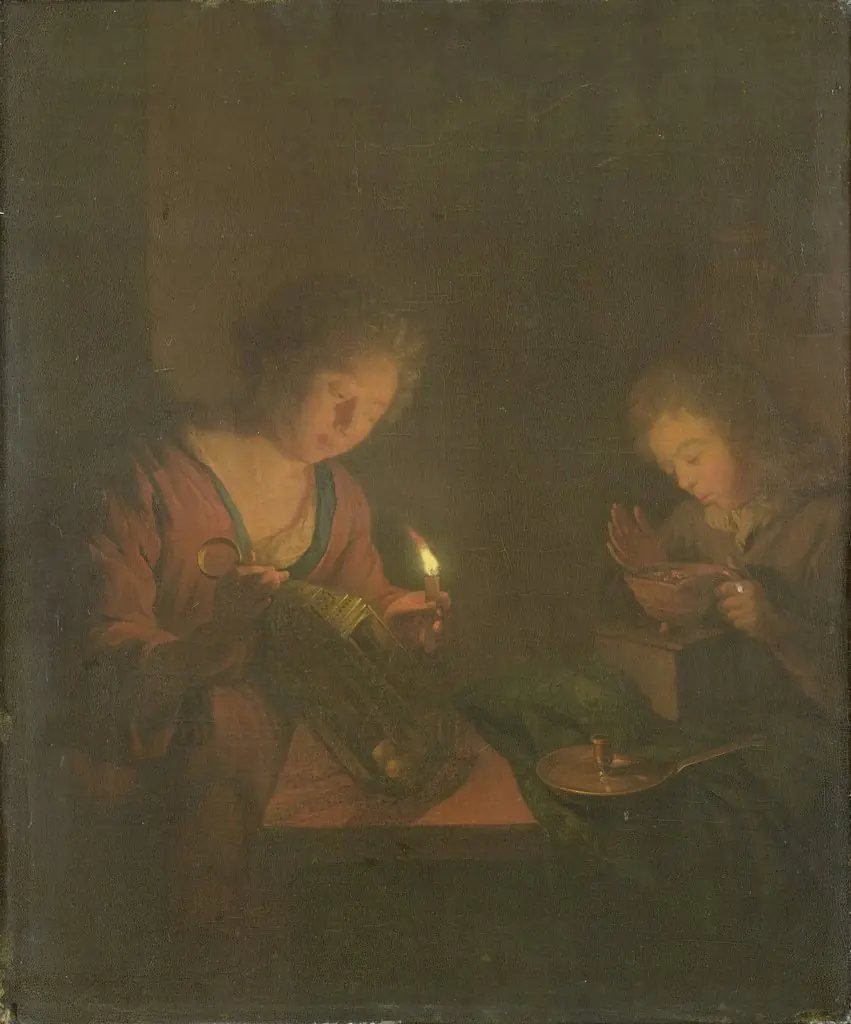 A girl putting a candle in a lantern and a boy testing the fire in a footwarmer
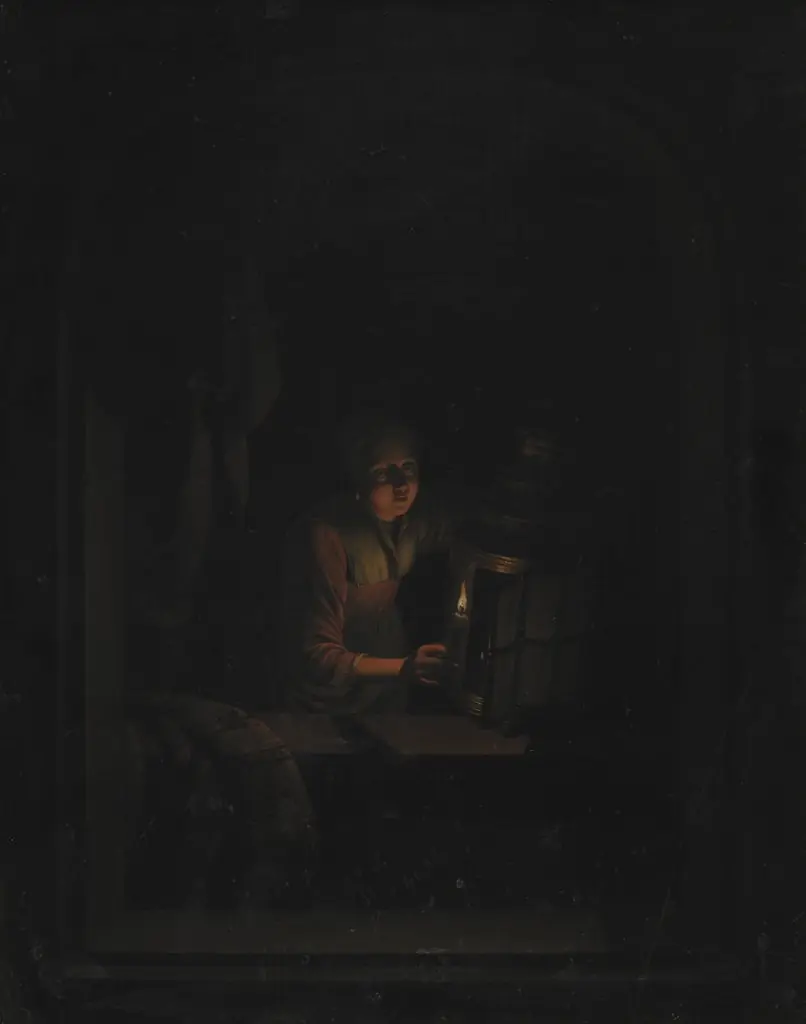 Girl with a Candle