Artwork
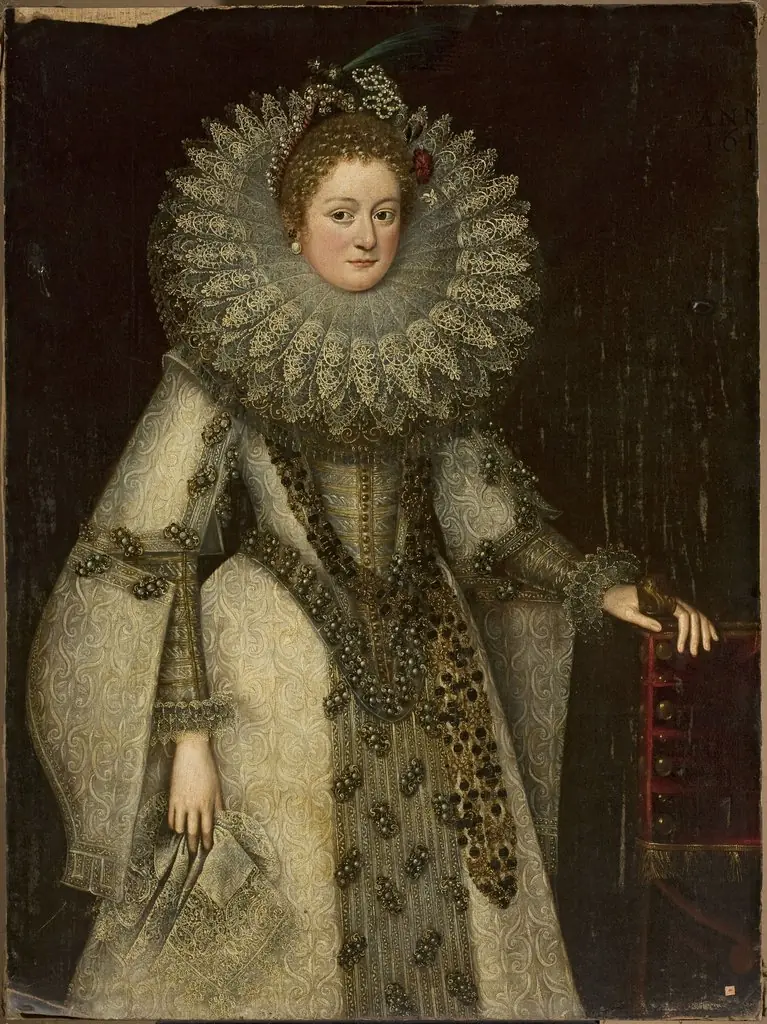
Portret van Marie van de Wouwer, echtgenote van Jean Charles della Faille
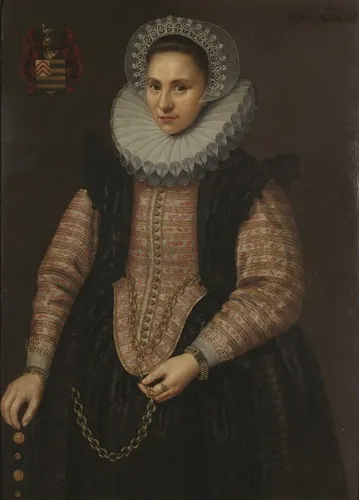
Portret van Marie van de Wouwer, echtgenote van Jean Charles della Faille is an oil painting by the Early Baroque Italian artist Unknown. It dates from 1600 and is held in the collection of the Royal Museums of Fine Arts of Belgium.
About this work
Overview
The oil painting portrays a seated woman dressed in an elaborate costume featuring a voluminous ruffled collar, a black doublet, and a patterned gown. Her dark hair is neatly gathered, and a decorative chain encircles her waist. The figure is set against a uniform dark backdrop, while a modest heraldic shield appears in the upper left corner, indicating her aristocratic status.
Subject & Meaning
The sitter is identified as Marie van de Wouwer, the spouse of the merchant Jean Charles della Faille. Her attire and the inclusion of a coat of arms emphasize her social rank and familial connections, suggesting the work functioned as a commemorative portrait intended to affirm lineage and marital alliance within the mercantile elite of the period.
Technique & Style
Executed in oil on canvas, the artist employs a pronounced chiaroscuro that models the figure through contrasts of light and shadow, imparting a three‑dimensional presence. The rendering of textiles—particularly the intricate lace of the collar and the sheen of the black vest—demonstrates meticulous attention to surface texture, while the muted background isolates the subject, focusing attention on her visage and attire.
History & Provenance
The portrait originates from the early 17th‑century Flemish tradition, though the precise date and artist remain undocumented. It entered the collection of the van de Wouwer family shortly after its creation and was later transferred to a regional museum through donation in the mid‑20th century, where it remains part of the permanent holdings.
Context
The inclusion of heraldic symbols was common among the rising bourgeoisie, who sought to emulate noble conventions.
During the period, portraiture served both as a personal record and a visual assertion of status. The inclusion of heraldic symbols was common among the rising bourgeoisie, who sought to emulate noble conventions. The painting reflects contemporary fashion trends—such as the high collar and tight-fitting vest—while also aligning with the broader Flemish emphasis on realism and controlled lighting.
Artist & collection

Museum
Royal Museums of Fine Arts of Belgium
Continue through works from the same source collection.
 Domestic Scene
 Giacomo and Cardinal Marco, investing Andrea, Abbot of San Zeno, with his Benefice
 The Nymph of Fontainebleau
 Portrait of a Woman
 Madonna and Child with Saints in the Enclosed Garden
 Venus and Minerva
 Family Group of Four on Sofa
 Wall painting from Room H of the Villa of P. Fannius Synistor at Boscoreale
 Portrait of a Woman
 Portrait of a woman
 Untitled
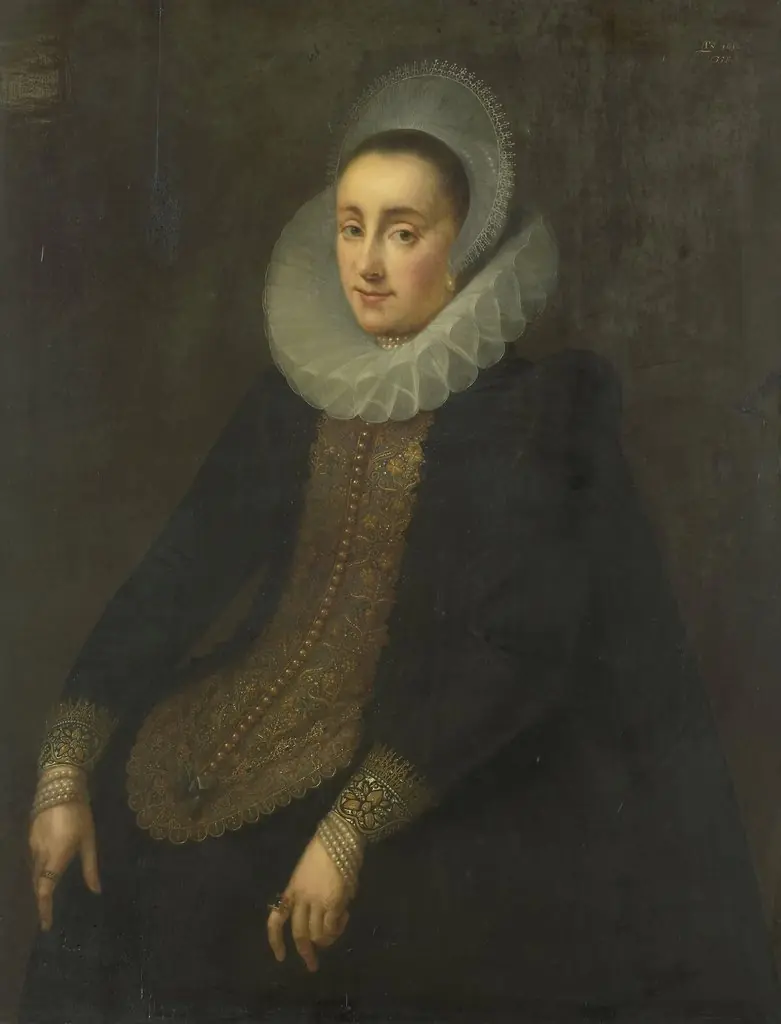 Portrait of Lucretia del Prado, Wife of Jeremias Boudinois
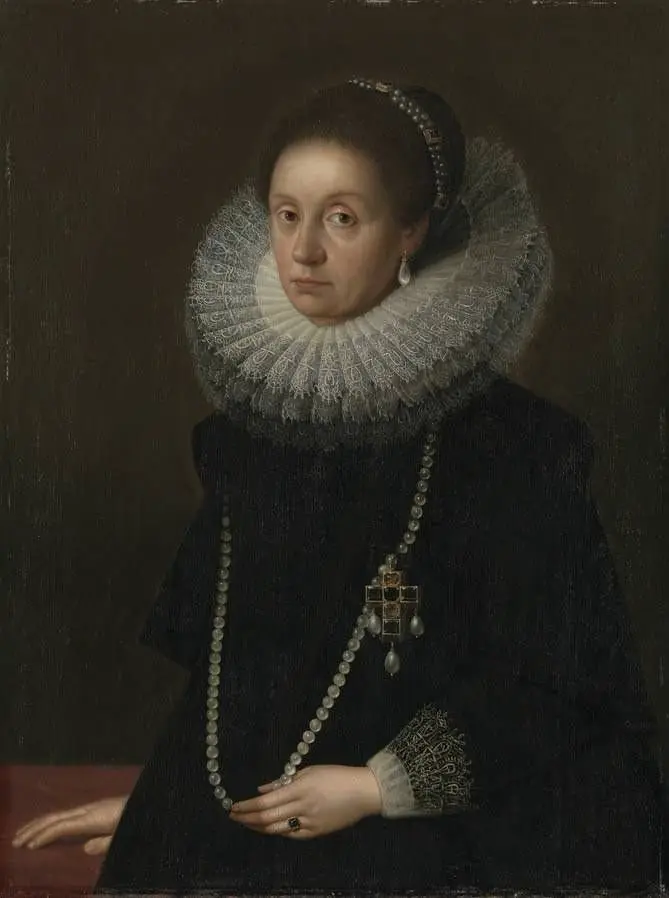 Bildnis der Elisabeth Renata von Lothringen, erste Gemahlin des Kurfürsten Maximilian I. von Bayern (1574-1635)
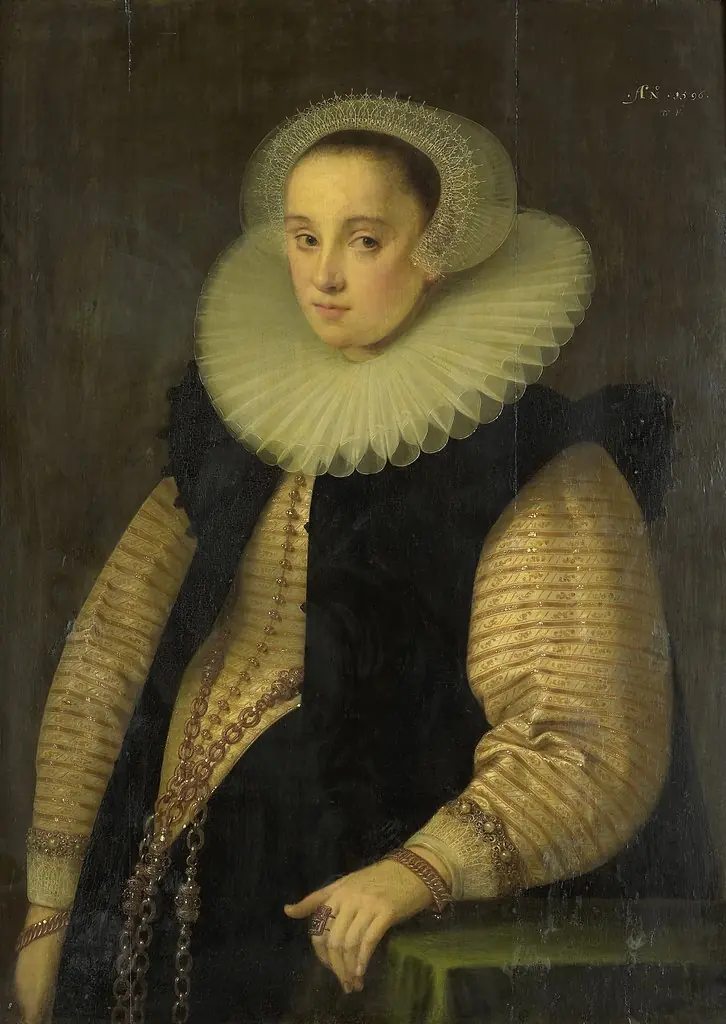 Portrait of Hortensia del Prado (died 1627), Wife of Jean Fourmenois
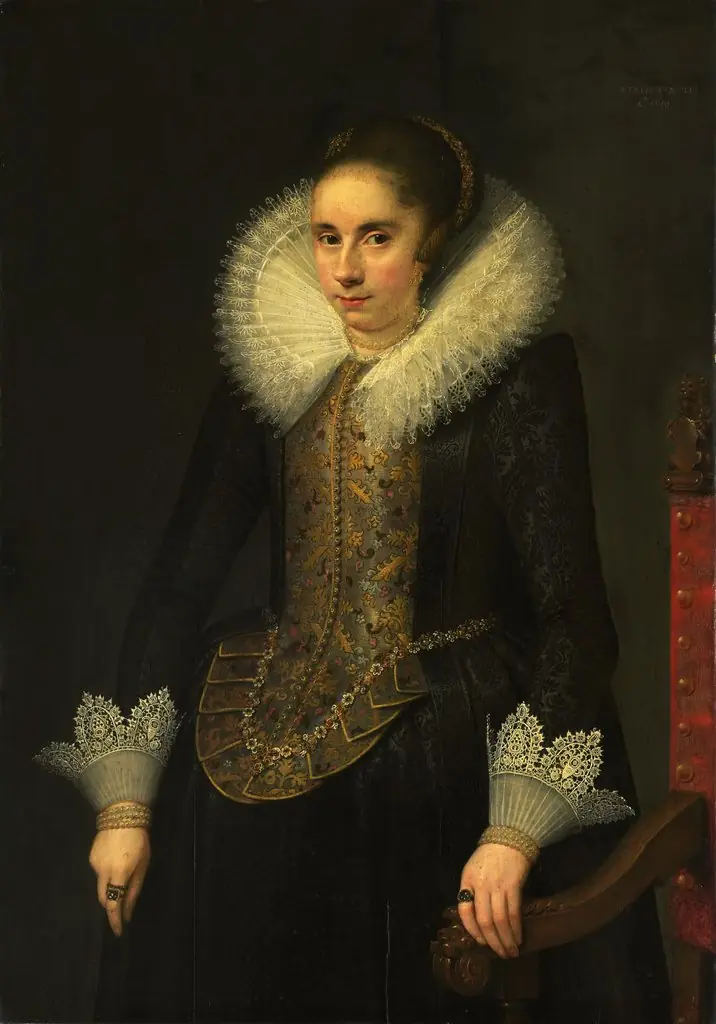 Portrait of Catharina Fourmenois (1598-1665)
 Portrait of a woman, probably Maria Schuurman (1575-1621)
 Portret van een vrouw
 Portrait of a Noblewoman
 Portrait of Anna Boudaen Courten (1599-1622)
 Portrait of a lady in a rich costume leaning on the armchair