Artwork
Jacob de Witt (1589-1674)
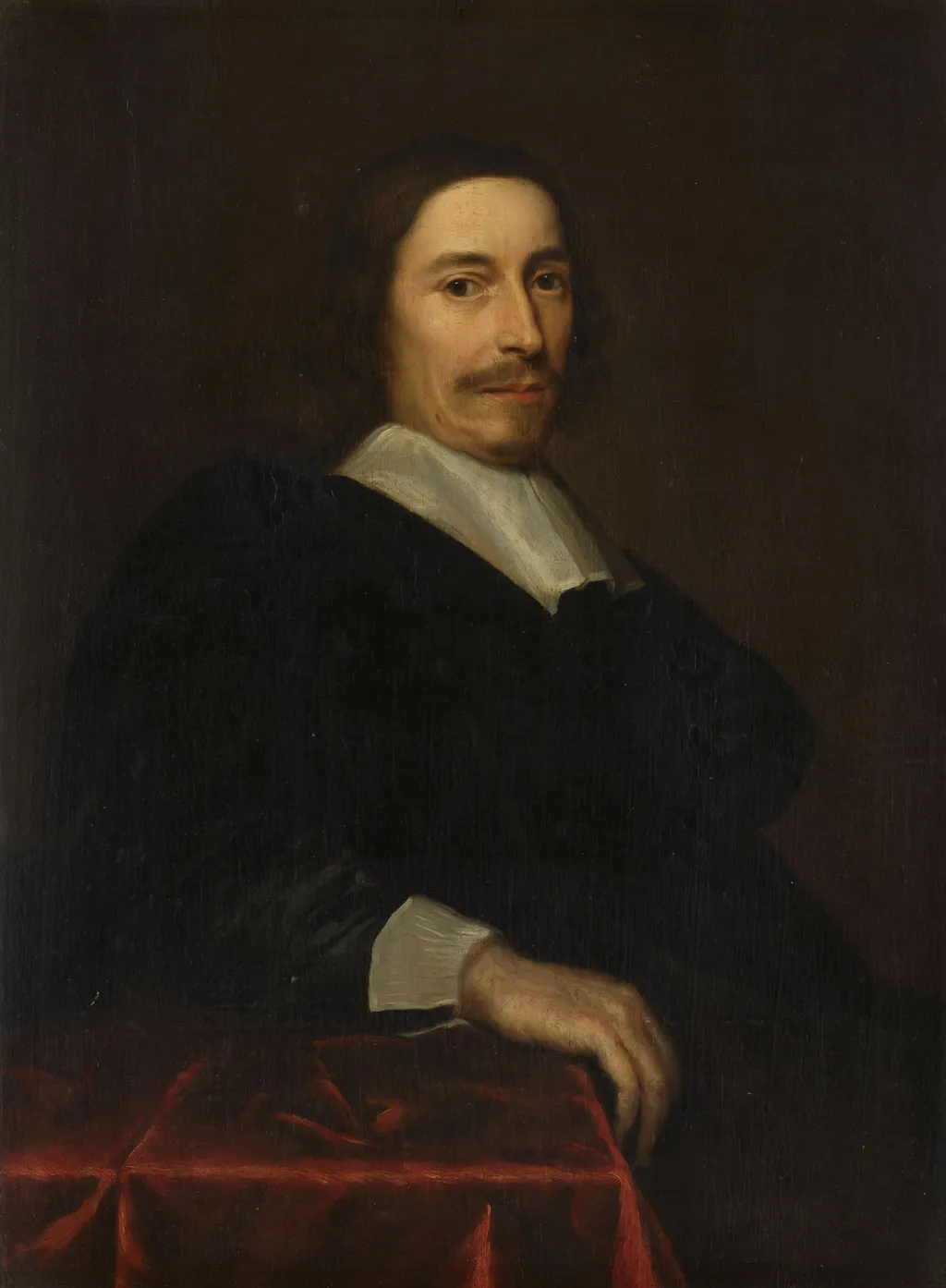
Jacob de Witt (1589-1674) is an oil painting. It dates from 1650 and is held in the collection of the Rijksmuseum. The work is an oil portrait of Jacob de Witt (1589–1674).
About this work
Overview
The work is an oil portrait of Jacob de Witt (1589–1674). Rendered in a restrained palette, the sitter is shown seated, his dark cloak contrasting sharply with a plain black backdrop. A red cushion beneath his arm introduces a modest accent of colour, while his serious expression and neatly trimmed beard convey a dignified presence.
Subject & Meaning
Jacob de Witt, a prominent figure of the Dutch Golden Age, is depicted in formal attire that signals his social standing. The composition’s focus on his face and posture suggests an intention to emphasize personal authority and gravitas rather than narrative content.
Technique & Style
The painting employs chiaroscuro, using strong light to illuminate the sitter against a deep, unlit background. This manipulation of light and shadow creates a three‑dimensional effect, highlighting the texture of the cloak and the subtle flesh tones of the face.
History & Provenance
Created in the 17th century, the portrait has remained within private collections before entering its current institutional setting. Documentation traces its attribution to an anonymous Dutch artist active during de Witt’s lifetime.
Context
Portraiture in the Dutch Republic often served to record civic leaders and merchants, reflecting the era’s emphasis on individual achievement. The stark background and limited colour scheme align with contemporary trends that favored realism and personal representation over elaborate settings.
Artist & collection