Artwork
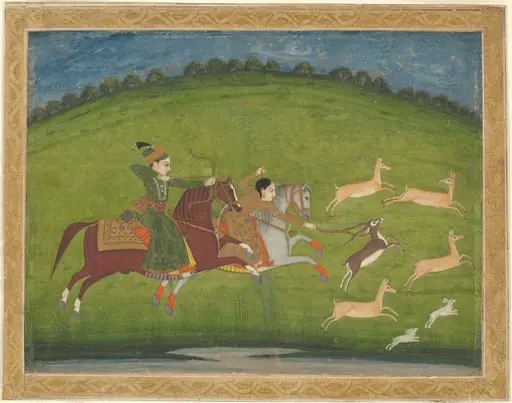
Prince and Princess Hunting Blackbuck
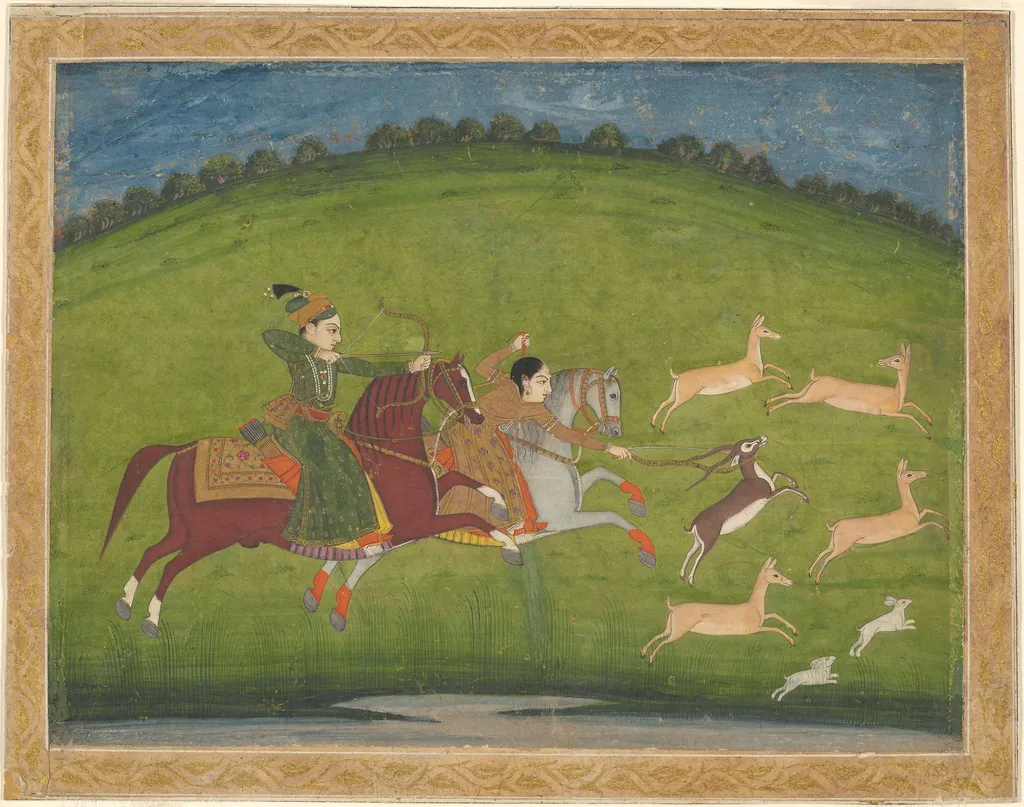
Prince and Princess Hunting Blackbuck is an unspecified painting by the Rococo painting artist Unknown. It dates from 1750 and is held in the collection of the Art Institute of Chicago. This painting captures a royal hunting scene featuring a prince and princess on horseback pursuing blackbuck across a grassy landscape.
About this work
Overview
The composition emphasizes the contrast between the riders’ vibrant attire and the natural setting, with a clear sky and distant trees framing the action.
This painting captures a royal hunting scene featuring a prince and princess on horseback pursuing blackbuck across a grassy landscape. The figures are rendered in motion, their postures suggesting urgency and skill. The composition emphasizes the contrast between the riders’ vibrant attire and the natural setting, with a clear sky and distant trees framing the action. The scene conveys a moment of aristocratic leisure tied to the ritual of the hunt.
Subject & Meaning
The prince and princess are depicted as skilled hunters, their weapons—bow and spear—symbolizing both martial prowess and noble duty. The blackbuck, a native deer species, represents the wild bounty of the land under royal control. Their shared participation in the hunt may reflect ideals of partnership and shared responsibility within the ruling class, blending personal vigor with ceremonial tradition.
Technique & Style
The artist employs bold, saturated hues to heighten the sense of motion and vitality. Brushwork is fluid, particularly in the depiction of the animals’ limbs and the riders’ flowing garments, suggesting speed and tension. The background remains relatively simplified, drawing focus to the foreground figures. The lack of deep perspective reinforces the decorative, almost theatrical quality of the scene.
History & Provenance
The painting originates from a royal atelier in northern India, likely commissioned during the late 18th or early 19th century. It reflects the continued patronage of hunting scenes by regional courts, even as political power shifted under colonial influence. Its survival suggests it was preserved within a royal collection, possibly displayed in a palace chamber as a statement of lineage and authority.
Context
Hunting was more than recreation in Indian courts—it was a ritualized display of martial virtue and territorial dominion. Such paintings often commemorated specific events or reinforced dynastic identity. The presence of both prince and princess aligns with evolving norms in some courts where royal women participated in public ceremonies, including hunts, as symbols of noble capability.
Legacy
This work contributes to a broader tradition of Indian court painting that documented elite life through dynamic, colorful scenes. While less known than Mughal miniatures, such regional works preserve local aesthetics and social customs. Today, it serves as a visual record of how nobility negotiated identity, power, and nature in a changing political landscape.
Artist & collection

 Domestic Scene
 Giacomo and Cardinal Marco, investing Andrea, Abbot of San Zeno, with his Benefice
 The Nymph of Fontainebleau
 Portrait of a Woman
 Madonna and Child with Saints in the Enclosed Garden
 Venus and Minerva
 Family Group of Four on Sofa
 Wall painting from Room H of the Villa of P. Fannius Synistor at Boscoreale
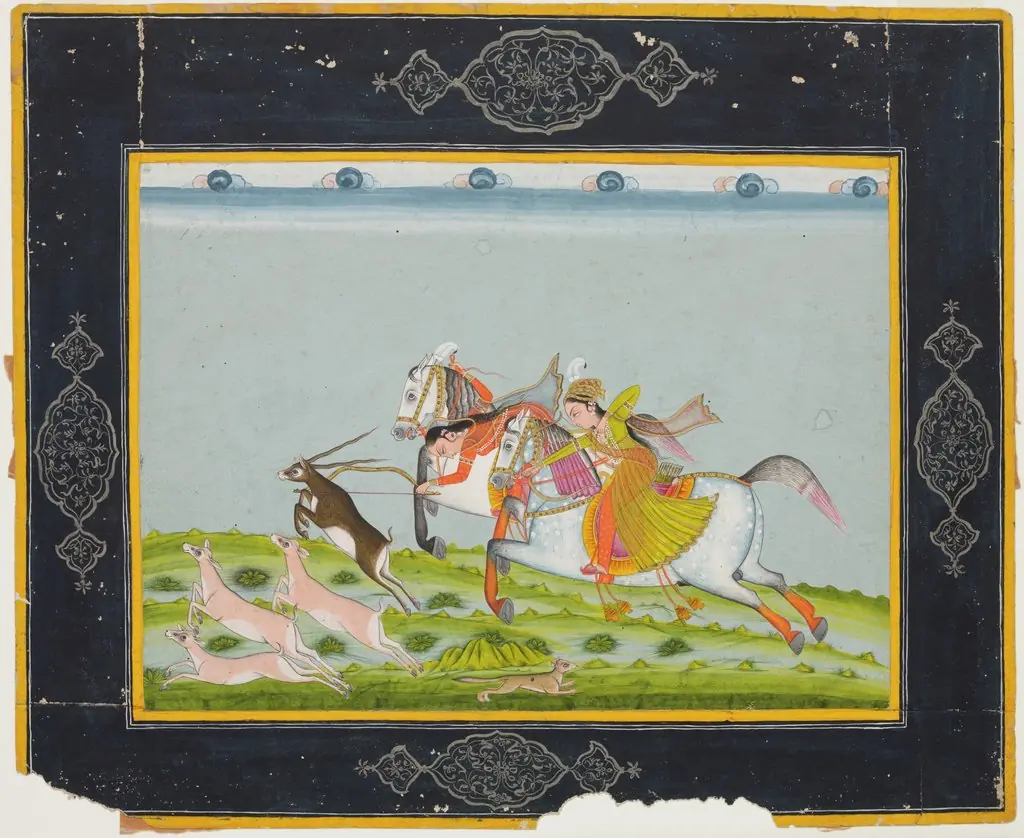 Queen Urda and Companion Hunting Antelope
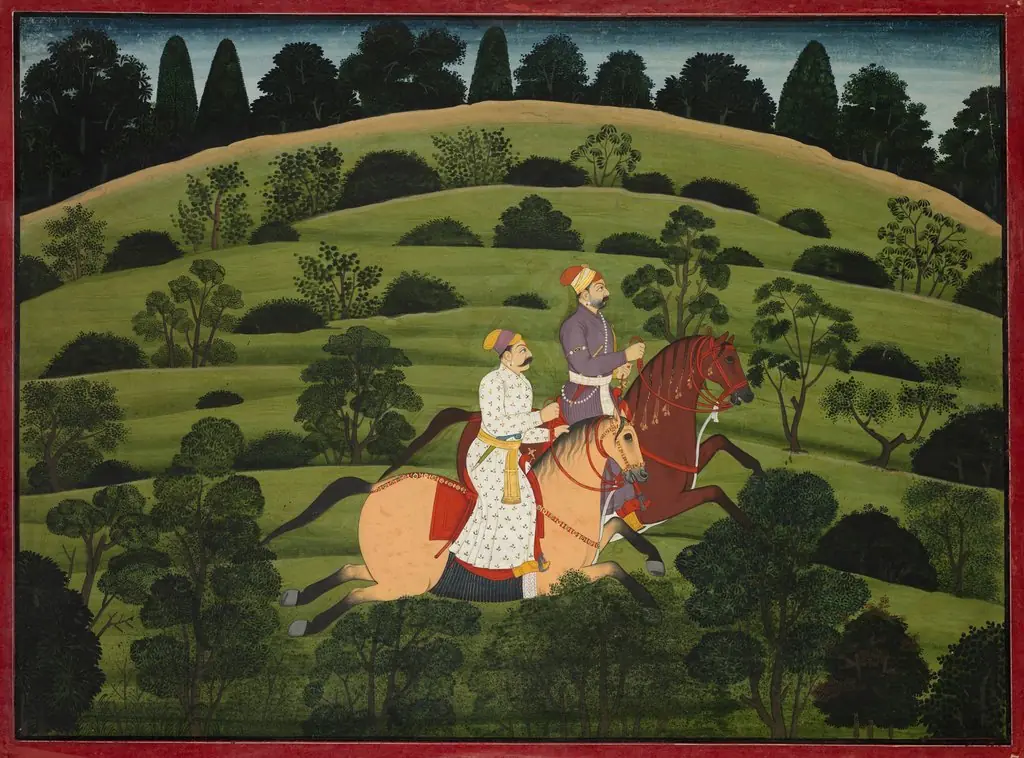 Akrura Rides toward Dwarka, page from the large Basohli Bhagavata Purana
 Untitled
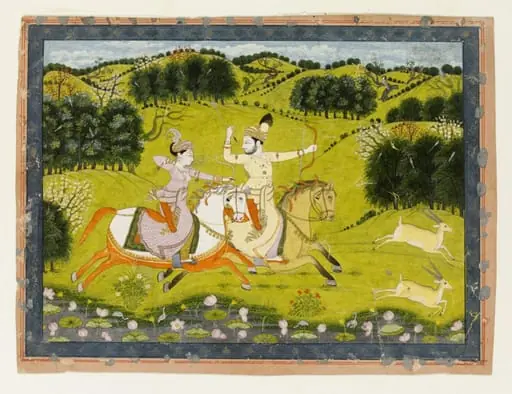 Baz Bahadur and Rupmati
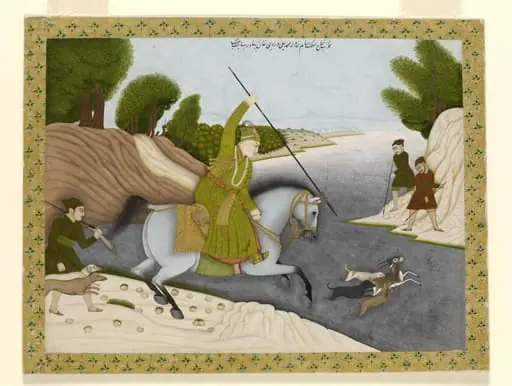 Nawab Alivardi Khan
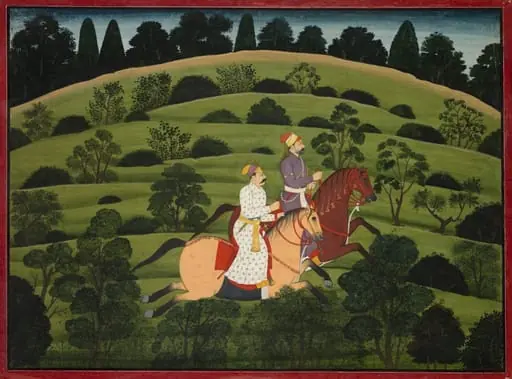 Akrura and Kritavarma flee Dvaraka, page from the "Large Basohli Bhagavata Purana"
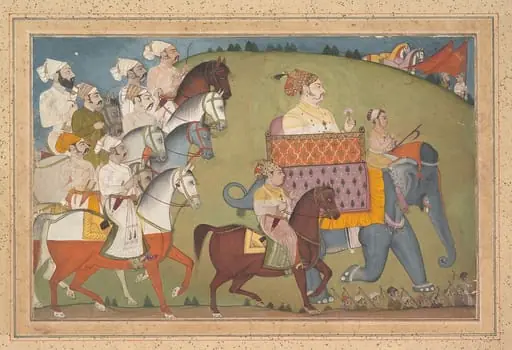 Untitled
 Untitled
 Sagittarius
 Rama and Sita
 Mian Mukund Dev
 Prince and Princess Hunting Blackbuck