Artwork
Krishna Awaiting Radha in a Palace
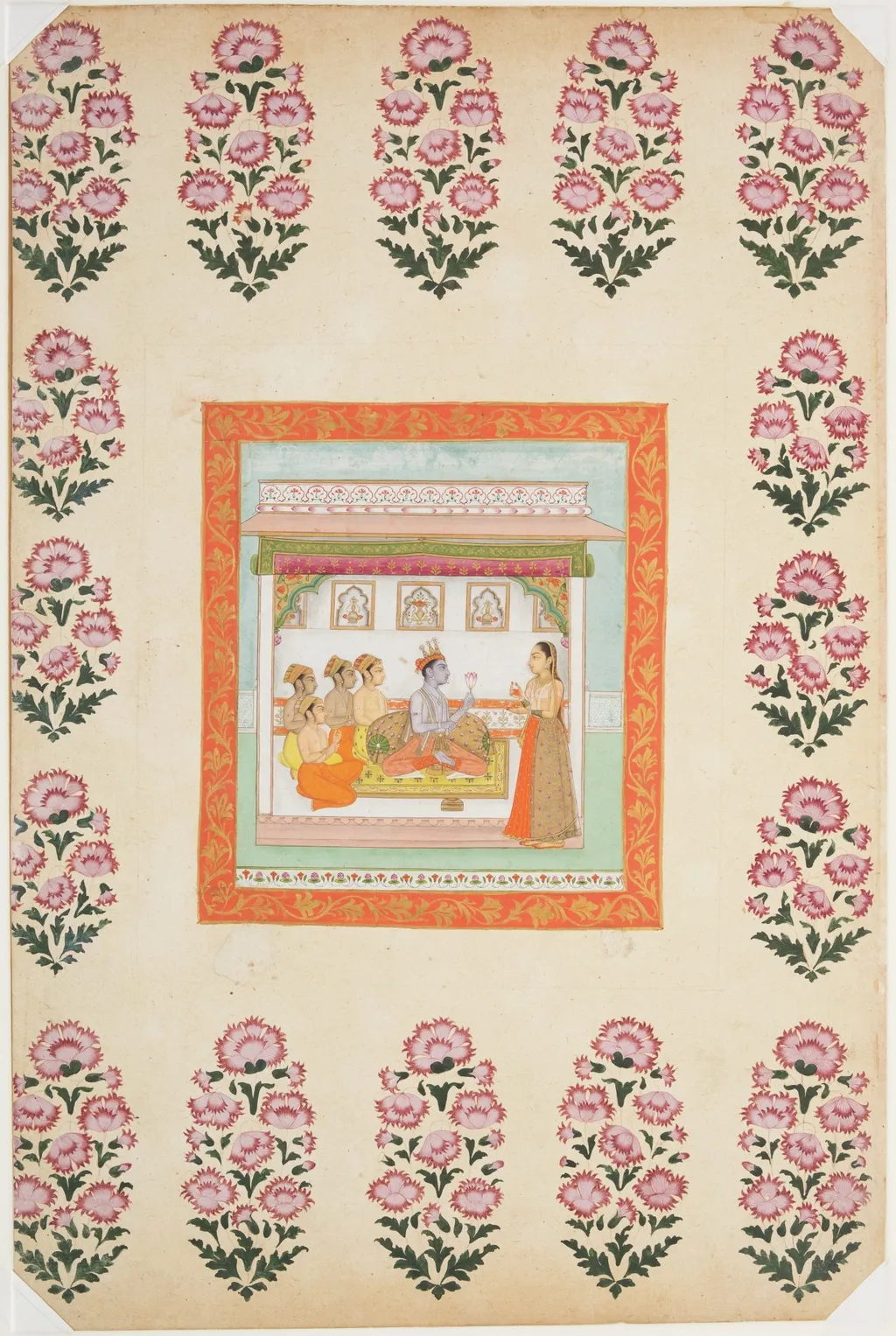
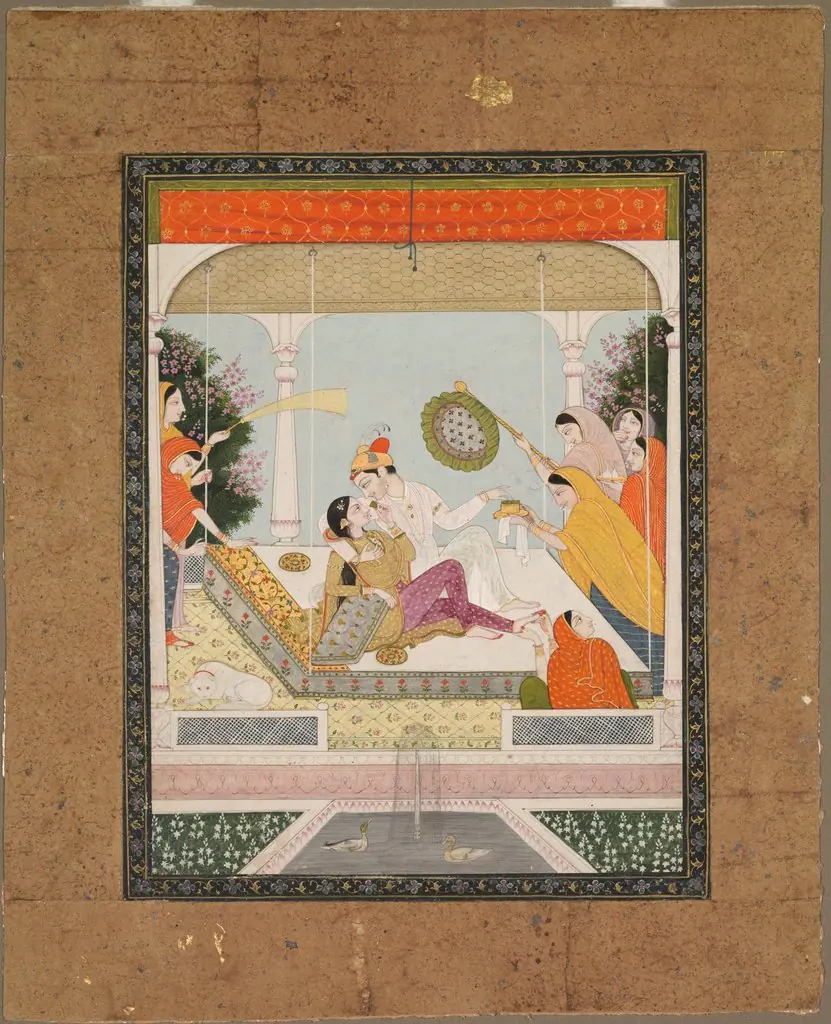
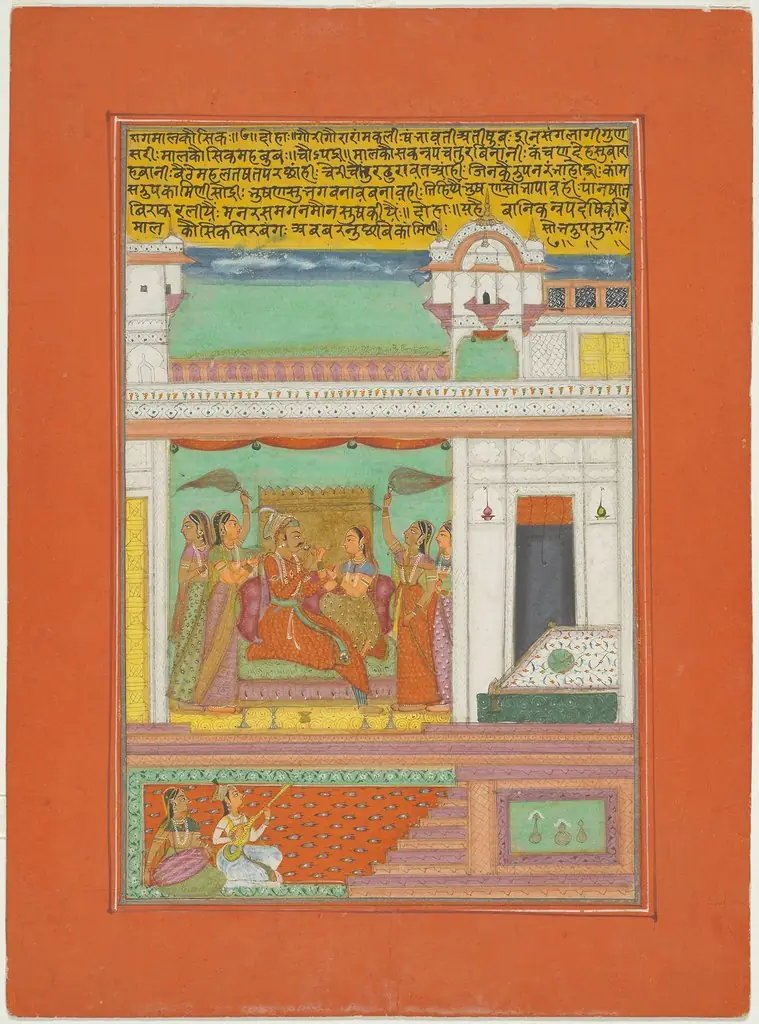
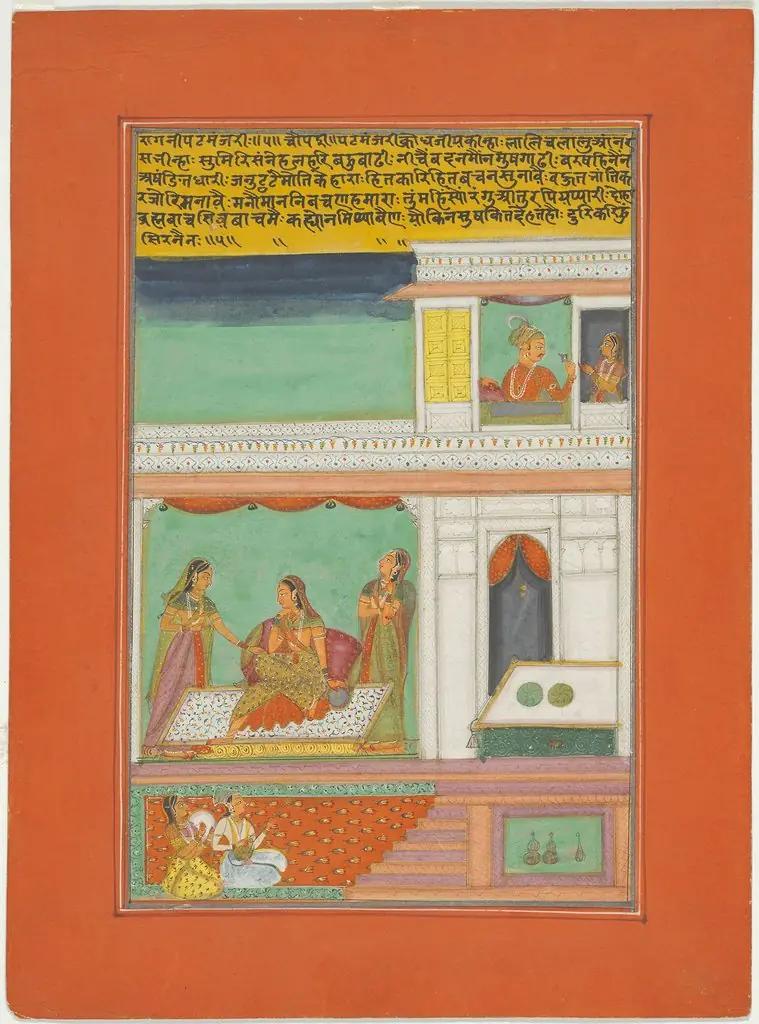
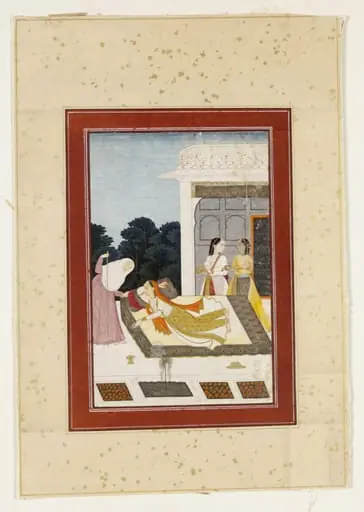
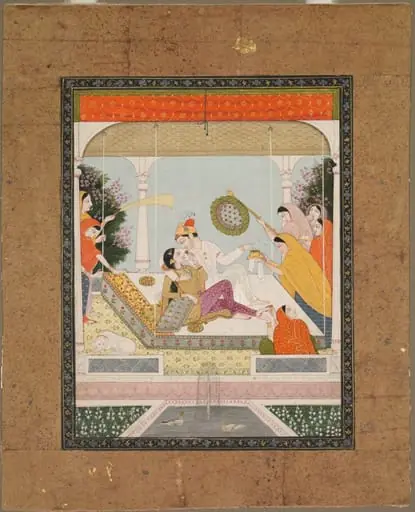
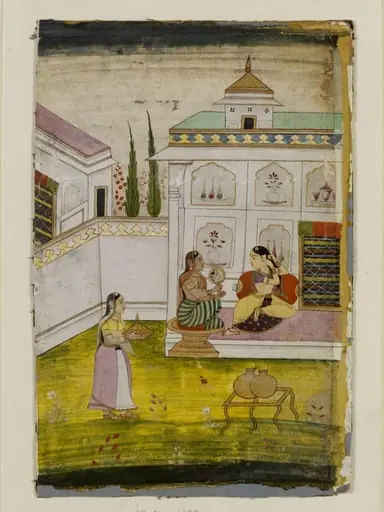
Krishna Awaiting Radha in a Palace is an unspecified painting by Unknown. It is held in the collection of the Detroit Institute of Arts. This painting depicts a moment of quiet expectation within an ornate royal chamber.
About this work
Overview
The composition centers on the seated figure, whose stillness contrasts with the lively textures around him, evoking a pause before an anticipated arrival.
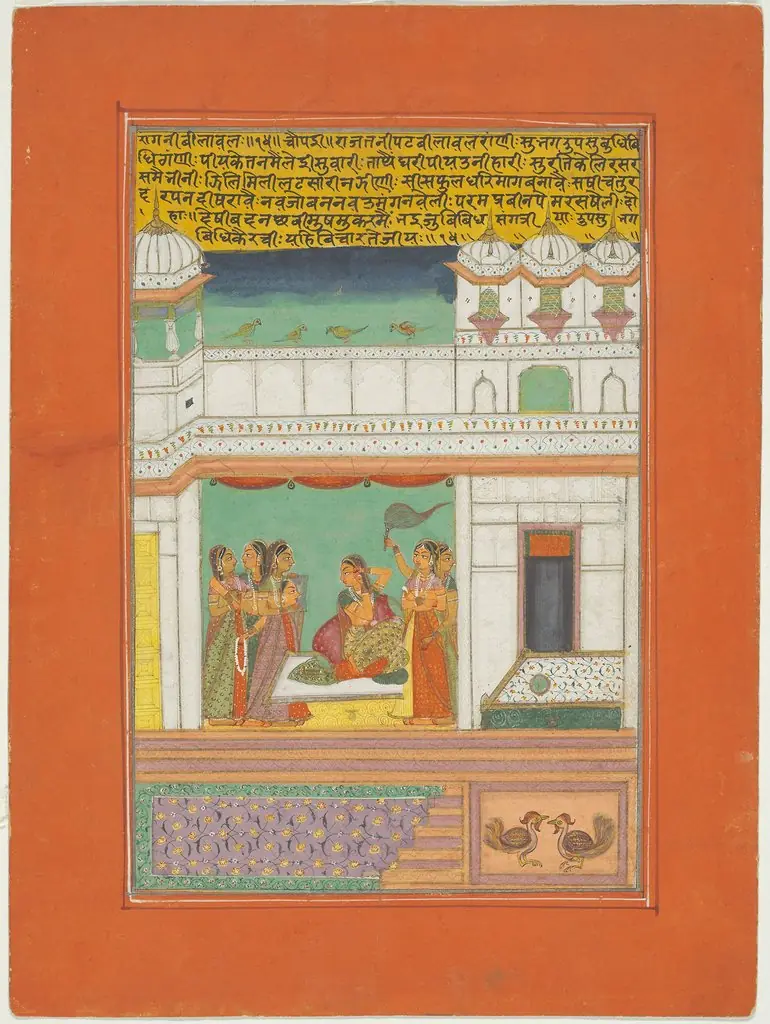
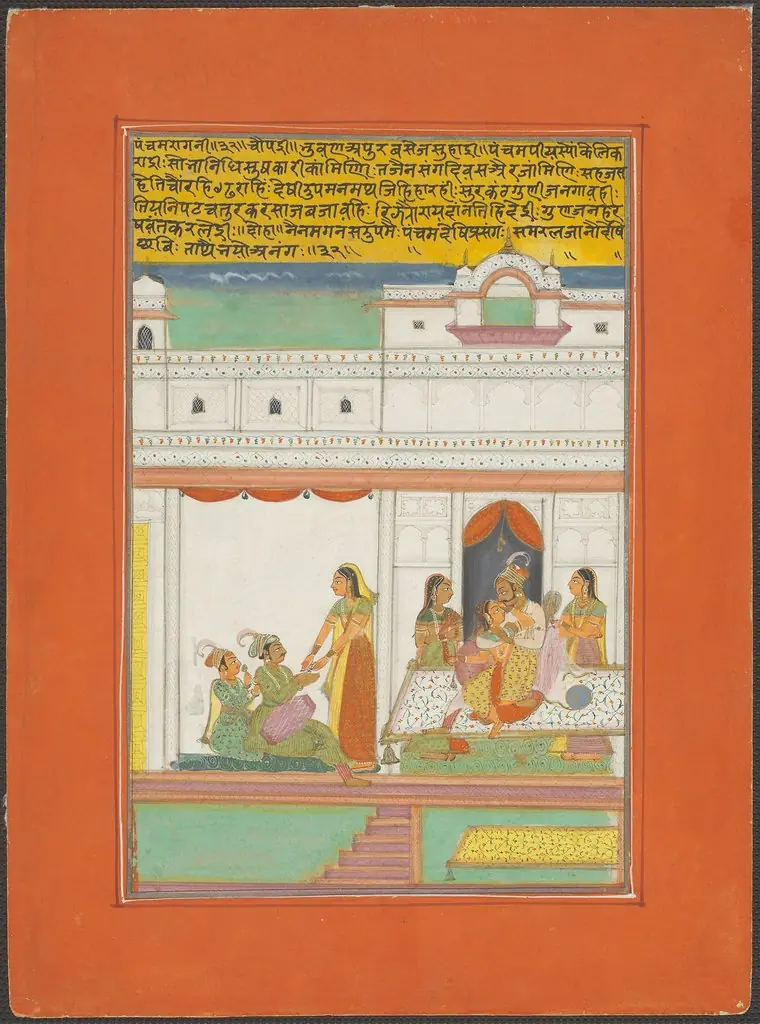
This painting depicts a moment of quiet expectation within an ornate royal chamber. A male figure, adorned with a crown and white garment, sits upon a low couch, surrounded by attendants. The space is richly detailed with floral motifs, patterned textiles, and potted plants, suggesting a palace interior. The composition centers on the seated figure, whose stillness contrasts with the lively textures around him, evoking a pause before an anticipated arrival.
Subject & Meaning
The central figure is identified as Krishna, the Hindu deity often portrayed in amorous contexts with Radha. His posture and gaze suggest he waits for her arrival, a common theme in devotional art symbolizing divine longing and union. The attendants, dressed in traditional attire, reinforce the setting as a royal court, blending earthly luxury with spiritual metaphor. The scene reflects bhakti traditions, where personal devotion is expressed through intimate, humanized divine narratives.
Technique & Style
The artist employs fine brushwork to render intricate patterns on textiles, walls, and flooring, typical of Pahari or Rajasthani miniature traditions. Bright mineral pigments—vermilion, lapis lazuli, gold—create a luminous, decorative effect. Figures are stylized with elongated eyes and delicate features, while spatial depth is suggested through layered planes rather than linear perspective. The emphasis on surface detail over naturalism aligns with courtly aesthetic ideals of the period.
History & Provenance
The painting likely originated in a North Indian royal atelier during the 18th century, possibly from the Kangra or Bundi region, known for Krishna-themed miniatures. It was likely commissioned by a patron devoted to Vaishnavism, intended for private devotion or palace display. No documented provenance is widely recorded, but its style and materials are consistent with works produced in hill-state courts under Mughal artistic influence.
Context
During the 17th and 18th centuries, Rajput courts fostered a flourishing tradition of devotional painting, often illustrating episodes from Krishna’s life. These works served both spiritual and political purposes, reinforcing the ruler’s piety and cultural refinement. The emphasis on intimate, emotional scenes reflected a broader shift in bhakti literature toward personal connection with the divine, moving away from purely ritualistic depictions.
Legacy
This painting contributes to a sustained visual language of Krishna’s courtly romance, influencing later regional styles and modern interpretations of Indian devotional art. Its preservation in museum collections underscores its role in documenting the intersection of religion, royalty, and aesthetics in pre-colonial India. While not widely reproduced, it remains a representative example of how spiritual themes were rendered with refined elegance in miniature painting traditions.
Artist & collection

 Domestic Scene
 Giacomo and Cardinal Marco, investing Andrea, Abbot of San Zeno, with his Benefice
 The Nymph of Fontainebleau
 Portrait of a Woman
 Madonna and Child with Saints in the Enclosed Garden
 Venus and Minerva
 Family Group of Four on Sofa
 Wall painting from Room H of the Villa of P. Fannius Synistor at Boscoreale