Artwork
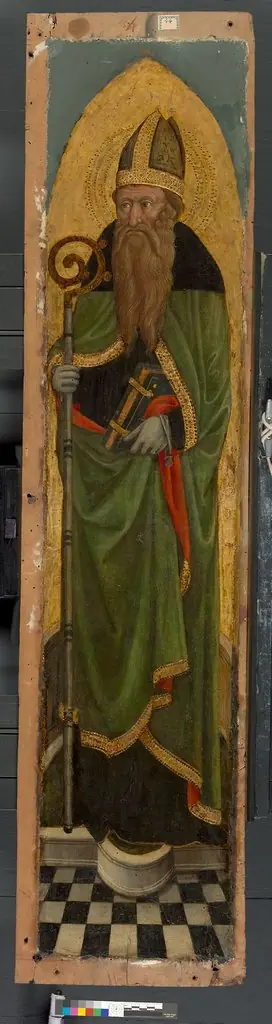
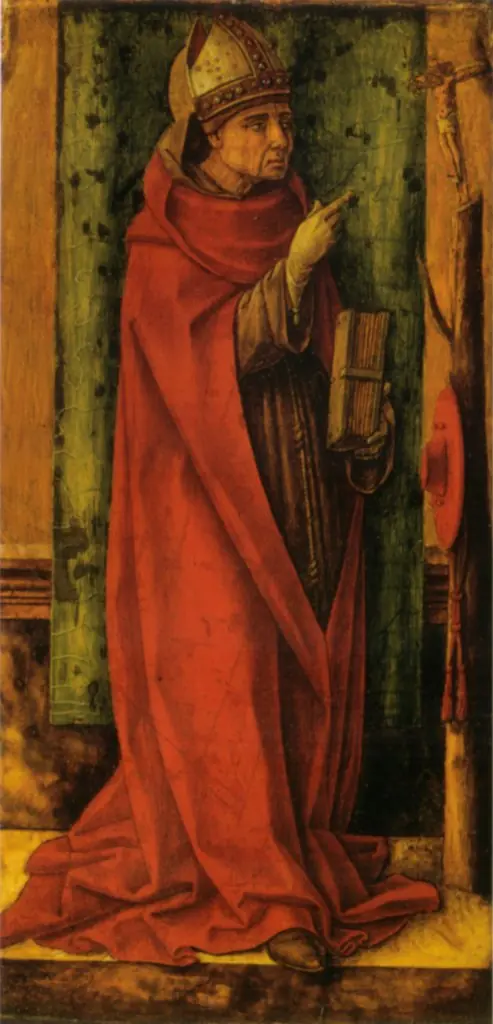
St Adalbert (obverse); Mary from the scene of the Annunciation (reverse). Wing of the altar retable from Snoza
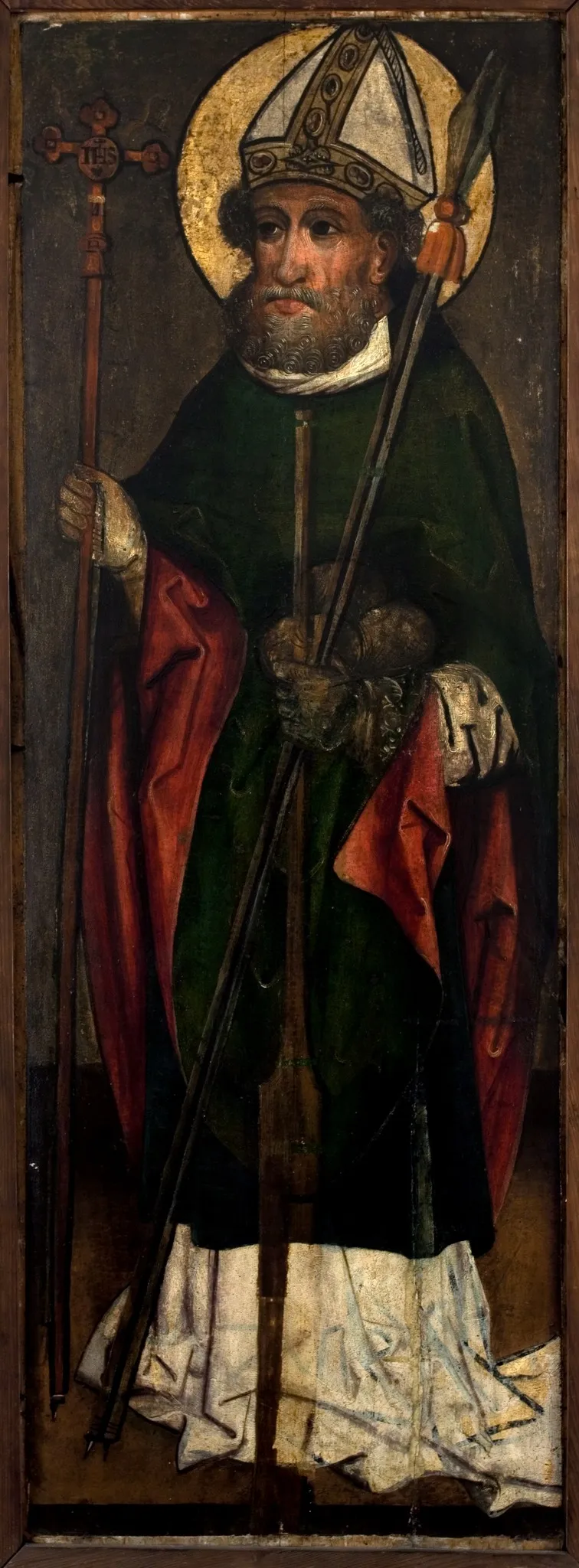
St Adalbert (obverse); Mary from the scene of the Annunciation (reverse). Wing of the altar retable from Snoza is an unspecified painting by the Northern Renaissance artist Unknown. It dates from 1460 and is held in the collection of the National Museum in Kraków. The work is a painted wing of an altar retable originally from the church of Snoza.
About this work
Overview
The work is a painted wing of an altar retable originally from the church of Snoza. Its two sides display distinct religious subjects: the obverse shows St. Adalbert, while the reverse presents the Virgin Mary at the moment of the Annunciation. Both images are executed in a realistic manner, with careful attention to clothing, facial expression, and spatial depth.
Subject & Meaning
St. Adalbert is portrayed in episcopal attire, his green and red vestments and gold‑banded white hat signifying his ecclesiastical rank. He holds a staff, a traditional symbol of pastoral authority, and gazes directly at the viewer, inviting contemplation of his saintly role. The reverse image captures Mary receiving the angelic message, emphasizing themes of divine revelation and obedience.
Technique & Style
The painter employed a naturalistic approach, rendering the folds of the saint’s robes and the texture of his skin with precise brushwork. A dark background isolates the figures, enhancing their three‑dimensional presence. Fine detailing of the white collar and gold trim demonstrates a mastery of material representation typical of late medieval altar panels.
History & Provenance
Originally part of a larger retable in the church of Snoza, the painted wing was later removed and entered museum collections. Its survival offers insight into the devotional art commissioned for regional churches, though the exact date of creation and the artist’s identity remain undocumented.
Context
The pairing of a local saint with the Annunciation reflects a common liturgical practice of juxtaposing local patronage with central Christian narratives. Such dual‑subject retables served both instructional and commemorative functions within the medieval worship space, reinforcing communal identity alongside universal doctrine.
Artist & collection

 Domestic Scene
 Giacomo and Cardinal Marco, investing Andrea, Abbot of San Zeno, with his Benefice
 The Nymph of Fontainebleau
 Portrait of a Woman
 Madonna and Child with Saints in the Enclosed Garden
 Venus and Minerva
 Family Group of Four on Sofa
 Wall painting from Room H of the Villa of P. Fannius Synistor at Boscoreale